









Deburring Services for CNC Machined Parts
Deburring services on every part DEK machines in-house, from 0.1 mm edge breaks to thermal deburring of cross-holes. Edge breaking adds no lead time; tumbling or thermal adds a day.
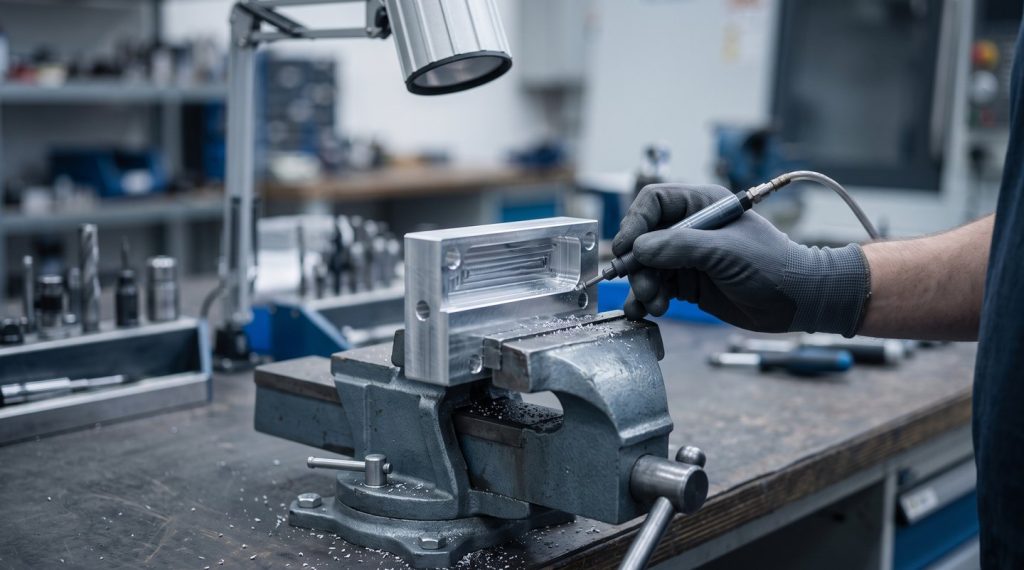
- 0.1 mm Edge Breaks From
- +1 day Tumbling or Thermal
- 10× Inspection Magnifier


Our Deburring Services Process
Deburring CNC parts removes burrs and breaks sharp edges to a defined size. It is planned in the machining program and inspected in the same order; no deburring-only orders.
What Deburring Delivers & Where to Be Mindful
Clean, defined edges protect assembly, seals and fatigue life, but each method has limits on geometry, material and dimensions.
-

Key Benefits
- Clean assembly: no burrs on bore edges or thread starts to stop pins seating or scratch mating faces
- Seal protection: burr-free O-ring grooves so the seal is not cut at installation
- Better fatigue life: a defined edge radius removes stress concentrations on shafts and brackets
- No loose contamination: burrs inside manifolds and valves cannot break off and jam spools
- No added lead time: standard edge breaking is built into every machined part
- Ready for the next finish: edges are finished before any bead blasting or anodizing step
-

Limitations & Alternatives
- Tumbling rounds every edge: it removes 2–10 µm; avoid it on ±0.01 mm fits or plug those features
- Thermal leaves an oxide film: the film must be cleaned off, and the method is not for plastics
- ECD and AFM need tooling: one tool per part; ECD is economic above about 50 pieces
- Medical stainless and titanium: follow manual deburring with electropolishing to remove fine burrs
- Bright surface, not just edges: choose polishing for a smooth, bright finish
- Uniform matte texture: add bead blasting after deburring, then anodizing
Edge and Surface Results
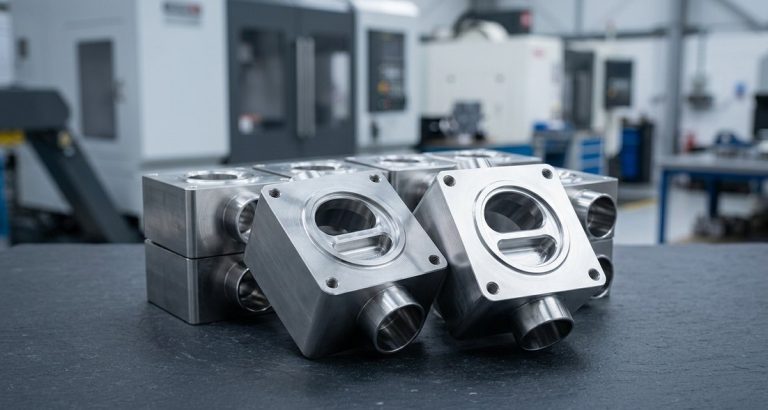
Each deburring method leaves a different edge condition, from a defined chamfer to a lightly rounded, burr-free cross-hole.
-

Defined Chamfers
In-program chamfering gives 0.1–0.5 mm × 45° or R edges held to ±0.05 mm, inspected as a dimension on every accessible edge.
-

Tumbled Edges
Vibratory tumbling rounds all edges to a 0.05–0.3 mm radius and leaves a light satin on small parts processed in batches.
-

Brushed Edges
Abrasive nylon or wire brushes give a 0.05–0.2 mm edge on flat faces, cross-hole edges and gear teeth, automated in-machine.
-

Burr-Free Cross-Holes
Thermal deburring burns off burrs in milliseconds, including internal cross-holes, with the edge lightly rounded and no dimensional change.
-

Targeted Radius
Electrochemical deburring dissolves metal at one targeted edge for a precise 0.1–0.5 mm radius, ideal for a specific manifold cross-hole.
-

Smooth Passages
Abrasive flow machining radiuses intersecting internal edges and brings internal Ra to 0.2 µm in injectors and medical lumens.
Deburring Methods Compared
| Method | How it works | Edge result | Best for | Limits |
|---|---|---|---|---|
| In-program chamfering | Chamfer or radius tool in the CNC cycle | Defined 0.1–0.5 mm × 45° or R, ±0.05 mm | Every accessible edge; the most repeatable method | Needs tool access; adds cycle time |
| Manual deburring | Hand tools, scrapers, abrasive pads under magnification | 0.1–0.5 mm break, operator dependent | Prototypes, complex parts, cosmetic edges | Cost per part; relies on skilled staff |
| Vibratory tumbling | Parts and ceramic or plastic media vibrate in a bowl for 1–8 hours | 0.05–0.3 mm radius on all edges | Small parts in batches: pins, spacers, fittings | Rounds every edge; not for thin walls or fine threads unless plugged |
| Brush deburring | Abrasive nylon or wire brushes on the machine or a bench | 0.05–0.2 mm | Flat faces, cross-hole edges, gear teeth; automated in-machine | Limited reach into bores |
| Thermal deburring (TEM) | Gas mixture ignites in a sealed chamber, burns off burrs in milliseconds | Burr removed, edge lightly rounded; no dimensional change | Internal cross-holes in steel, aluminum and zinc housings | Leaves an oxide film to clean; not for plastics |
| Electrochemical deburring (ECD) | Electrolyte and a shaped cathode dissolve metal at a targeted edge | Precise 0.1–0.5 mm radius at one location | Hydraulic manifold cross-holes, gear teeth, medical parts | Tool per part; economic above about 50 pieces |
| Abrasive flow machining (AFM) | Abrasive-loaded polymer is extruded through passages | Internal edges radiused; internal Ra to 0.2 µm | Intersecting internal channels, injectors, medical lumens | Tool per part; removes material from passage walls |
Materials We Deburr After Machining
DEK deburrs every metal it machines, including aluminum, steel, stainless steel and titanium.
Thermal deburring suits steel, aluminum and zinc housings but not plastics; medical stainless and titanium parts are deburred by hand under magnification, then electropolished.
-
AluminumThermal deburring for manifold blocks; chamfer and manual finish on cosmetic housings before blast and anodize.Recommended
-
SteelThermal deburring clears internal cross-holes in steel blocks and housings with no dimensional change.Recommended
-
Stainless SteelManual deburring under magnification on medical instruments, then electropolishing to remove fine burrs.Good
-
TitaniumMedical titanium parts are deburred by hand under magnification, with electropolishing as the follow-up step.Good
-
ZincZinc housings with internal cross-holes respond to thermal deburring; the oxide film left must be cleaned off.With caveats
-
PlasticsThermal deburring is not suitable for plastics; edges are broken by in-program chamfering or by hand instead.No thermal
Choosing the Right Deburring Approach
The right route depends on the part: cosmetic housings, small turned parts in volume, hydraulic manifolds or medical instruments each call for a different method.
-
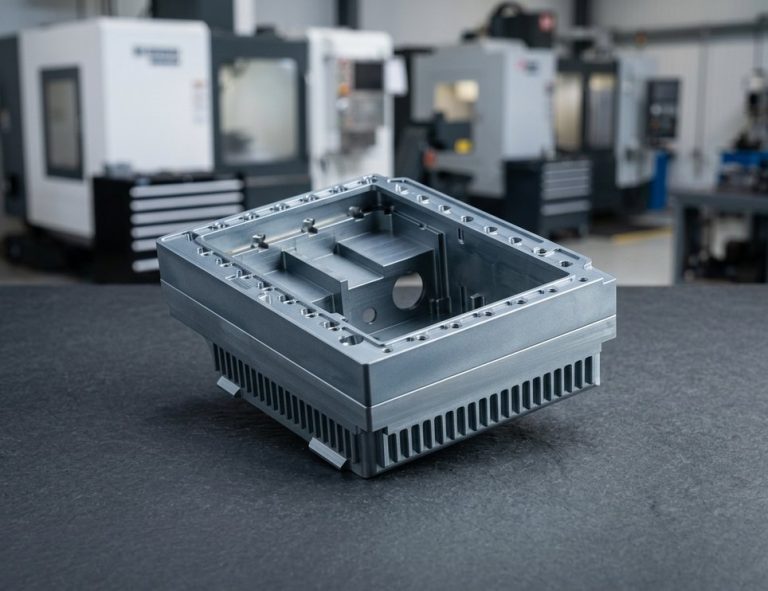 Aluminum HousingsIn-program chamfer on visible edges, manual finish, then bead blast and anodize on cosmetic aluminum housings and brackets.Request a Quote
-
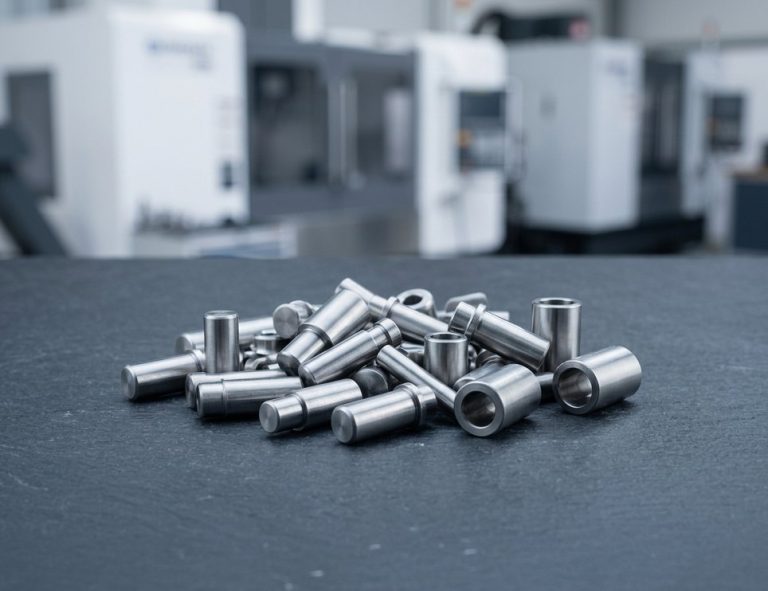 Tumbled Small PartsPins, spacers and fittings: vibratory tumbling services with ceramic media, the most economical route above about 200 pieces.Request a Quote
-
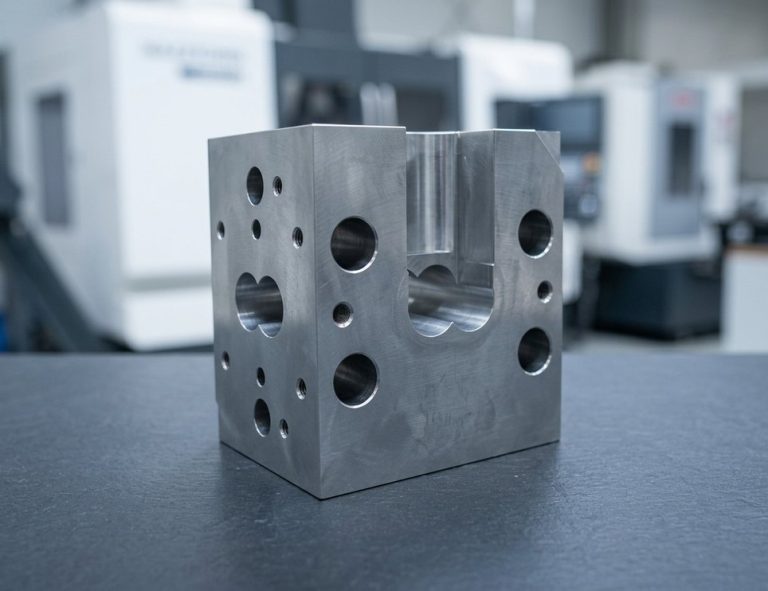 Hydraulic ManifoldsThermal deburring for aluminum and steel blocks, electrochemical for one defined cross-hole radius, then a cleanliness test.Request a Quote
-
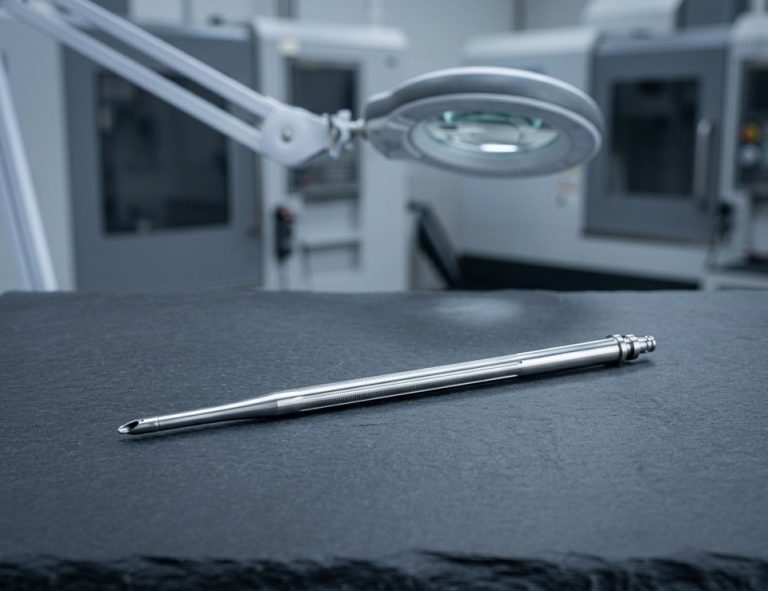 Medical InstrumentsStainless and titanium instruments are deburred by hand under magnification, then electropolished to remove fine burrs.Request a Quote
Edge Break Machined Parts: Drawing Notes
Edge break on machined parts is often left to interpretation. These notes help you call out a defined edge condition and know how each method affects dimensions.
-
Use a General Note
"Break all sharp edges 0.1–0.3 mm" or "Remove all burrs and sharp edges" per ASME Y14.5 is the minimum and lets DEK use the most economical method.
-
ISO 13715 on Critical Edges
The symbol with a value states the allowed condition, e.g. "−0.1 to −0.3" for edge break and "+0.05" as maximum burr. See our engineering drawing symbol guide.
-
Dimension Mating Edges
Call "C0.2", "0.3 × 45°" or "R0.2" on edges that meet seals, bearings or fixtures, so the edge is cut in the program and inspected as a dimension.
-
Mark Sharp Edges
Note "no edge break, sharp edge" on cutting edges, sealing knife edges and cosmetic corners that must stay crisp.
-
Specify Internal Passages
Write "Cross-holes burr-free, borescope inspected" plus a cleanliness requirement such as ISO 16232 or ISO 4406 for hydraulic and fuel parts.
-
Allow for Material Removal
Chamfer, manual, thermal and ECD leave sizes, threads and Ra unchanged; tumbling removes 2–10 µm and abrasive flow 5–50 µm from passage walls.
Deburring Specifications
- Chamfer edge 0.1–0.5 mm × 45° or R, ±0.05 mm
- Manual break 0.1–0.5 mm
- Tumbling radius 0.05–0.3 mm
- Tumbling removal 2–10 µm, all surfaces
- Tumbling cycle 1–8 hours
- Brush edge 0.05–0.2 mm
- ECD radius 0.1–0.5 mm
- AFM removal 5–50 µm from passage walls
- AFM internal Ra To 0.2 µm
- Drawing standards ASME Y14.5, ISO 13715
- Cleanliness ISO 16232, ISO 4406
- Inspection 10× visual, comparator, borescope
- Added lead time Tumbling or thermal: a day
- Certifications ISO 9001:2015, ISO 13485, AS9100D


Thermal and Electrochemical Deburring
For internal cross-holes and passages, DEK quotes these methods when quantity or geometry justifies them.
Frequently Asked Questions
Answers on edge breaks, deburring methods and how DEK handles deburring in your machining order.

Ready to Scale Your Project?
Get started with a stable process and controlled quality. Let's discuss your project.








