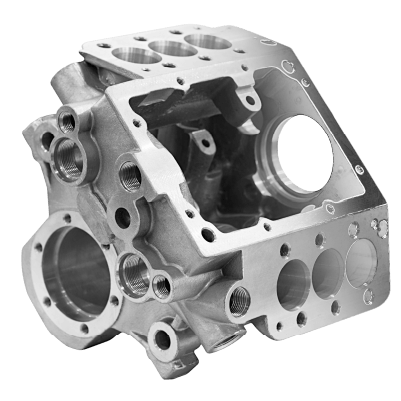









Electropolishing Services for Machined Parts
DEK electropolishing services finish stainless steel, titanium and nickel alloy parts we machine in-house, in the same order. Ra drops about 50% with 5–10 µm removed per side.
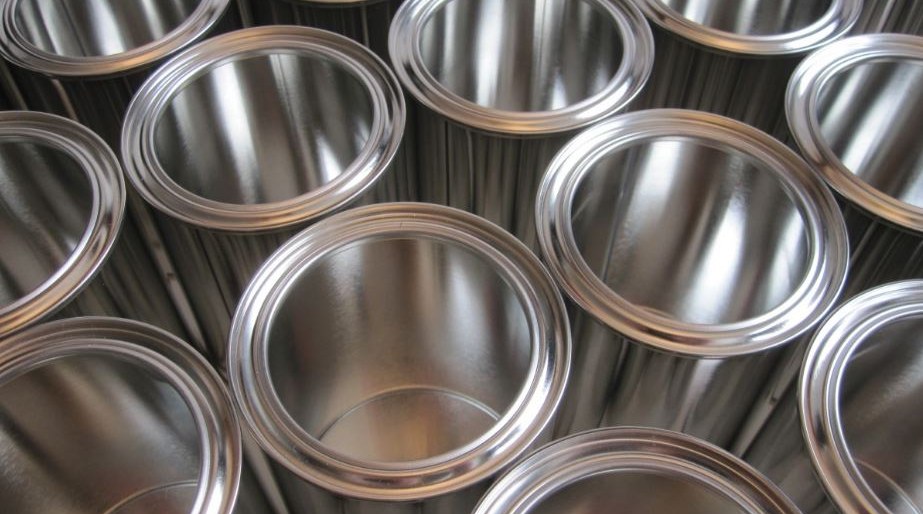
- ~50% Ra Reduction
- 5–10 µm Removal Per Side
- ASTM B912 Process Standard
The Electropolishing Process at DEK
Electropolishing dissolves surface metal in an acid electrolyte. DEK plans it with machining in the same order; we do not accept electropolishing-only orders.
What Electropolishing Delivers & Where to Be Mindful
Electropolishing improves finish, cleanliness and corrosion resistance, but it removes metal and is not the answer for every part.
-

Key Benefits
- About 50% lower Ra: 0.8 µm as-machined drops to about 0.4 µm, or 0.4 µm to about 0.2 µm
- Burrs removed: feathered burrs on cross-holes, thread starts and edges go without hand work
- Contamination dissolved: free iron, embedded tool particles and the smeared machined layer are removed
- Chromium-rich surface: Cr:Fe ratio typically above 1.5, a passive layer that outperforms passivation alone
- Bright, uniform look: a bright but not mirror finish that is easier to clean
-

Limitations & Alternatives
- Corrosion protection only: passivation is cheaper and dimensionally neutral when appearance does not matter
- Mirror or brushed finish: mechanical polishing reaches Ra 0.05 µm; electropolishing can follow it
- Carbon or alloy steel: use black oxide or a plated finish instead
- Uniform matte look: bead blasting then passivation costs less
- Chatter or out-of-round: Ra improves but geometry does not; use precision grinding first
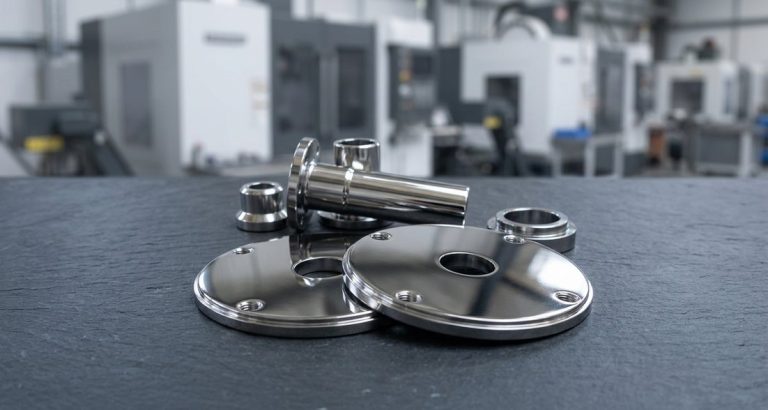
Surface and Protection Results
Electropolished stainless steel parts come out smoother, cleaner and more corrosion resistant than as-machined or passivated-only surfaces.
-

Smoother Surface
A 50% Ra reduction is the safe planning figure: higher on rougher starting surfaces, lower below Ra 0.2 µm.
-

Burr-Free Edges
Current density peaks on burrs, so fine burrs on cross-holes, thread starts and edges dissolve first, with no hand deburring.
-

Corrosion Resistance
A chromium-enriched surface, Cr:Fe ratio typically above 1.5, gives better corrosion resistance than chemical passivation alone.
-

Cleanability
Removing the crevices that hold bioburden makes surfaces easier to clean, with dosing parts at Ra ≤ 0.4 µm for clean-in-place.
-

Particle-Free Surface
Free iron and embedded tool particles are dissolved, giving the low-outgassing, particle-free surface vacuum hardware needs.
-

Bright Appearance
Austenitic grades give the brightest, most uniform result: a bright but not mirror finish across every exposed surface.
Electropolishing vs Passivation
| Criterion | Passivation | Electropolishing |
|---|---|---|
| Metal removal | None | 5–10 µm per side (up to 25 µm on request) |
| Surface roughness | Unchanged | Ra reduced ~50% |
| Deburring effect | None | Yes, on fine burrs |
| Corrosion resistance | Good | Better (higher Cr:Fe ratio, smoother surface) |
| Appearance | Unchanged | Bright, uniform |
| Standard | ASTM A967, AMS 2700 | ASTM B912 |
| Cost impact | Low | Moderate; racking per part |
Electropolishing Stainless Steel & Alloys
Austenitic grades give the best result; see our stainless steel machining page for grade selection. Titanium and nickel alloys electropolish for medical and aerospace parts.
Aluminum and brass are possible but rarely worthwhile: aluminum usually gets anodizing and brass is mechanically polished. Ask before specifying.
-
Electropolish 316LBrightest, most uniform result. The default for medical implants, fluid paths and semiconductor gas hardware.Recommended
-
304 StainlessLike 304L and 316, gives a bright, uniform finish. Specify 304 or 316 when appearance matters.Recommended
-
17-4 PHElectropolishes acceptably but slightly duller, as do 15-5 and 420; heat-treat condition affects the response.Good
-
303 StainlessSulfide inclusions leave micro-pits, so free-machining 303 electropolishes less bright than 304.With caveats
-
Titanium Grade 2Grade 2 and Ti-6Al-4V electropolish in a different electrolyte for orthopedic and dental instruments.Good
-
Inconel 718Inconel 625 and 718 electropolish well and are used for electropolished aerospace parts.Good
Industries and Typical Parts
Electropolished stainless steel parts serve industries that need clean, smooth, corrosion-resistant surfaces, from medical instruments to semiconductor gas hardware.
-
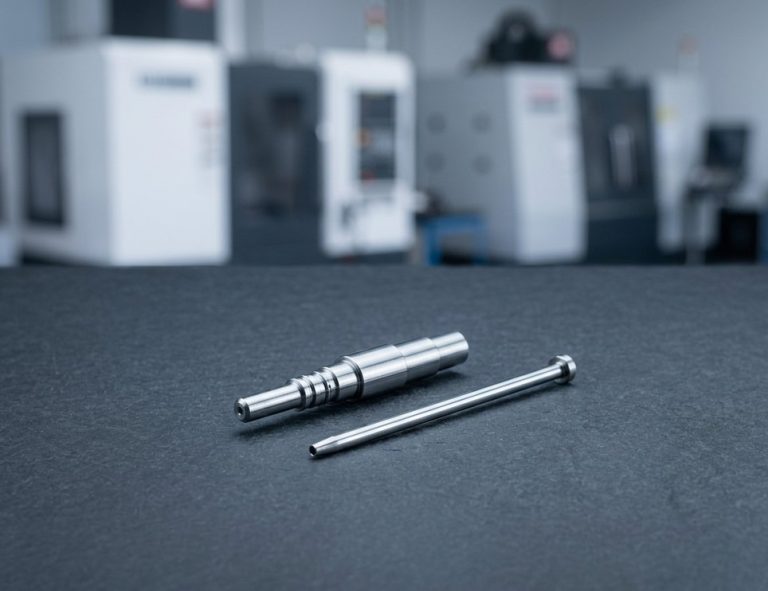 Medical DevicesInstrument shafts, cannulas and implant trials in 316L and titanium, free of the crevices that hold bioburden.Request a Quote
-
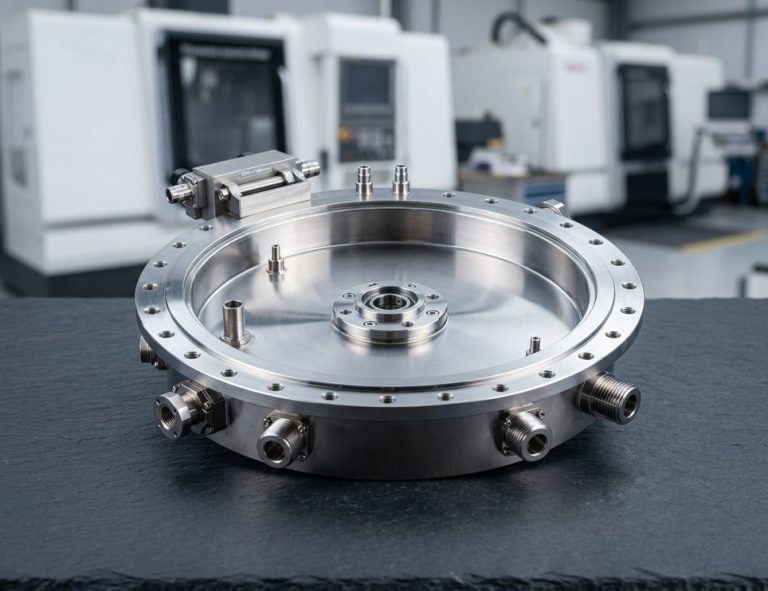 Semiconductor & VacuumGas manifolds, ultra-high-purity fittings and chamber parts needing a low-outgassing, particle-free surface.Request a Quote
-
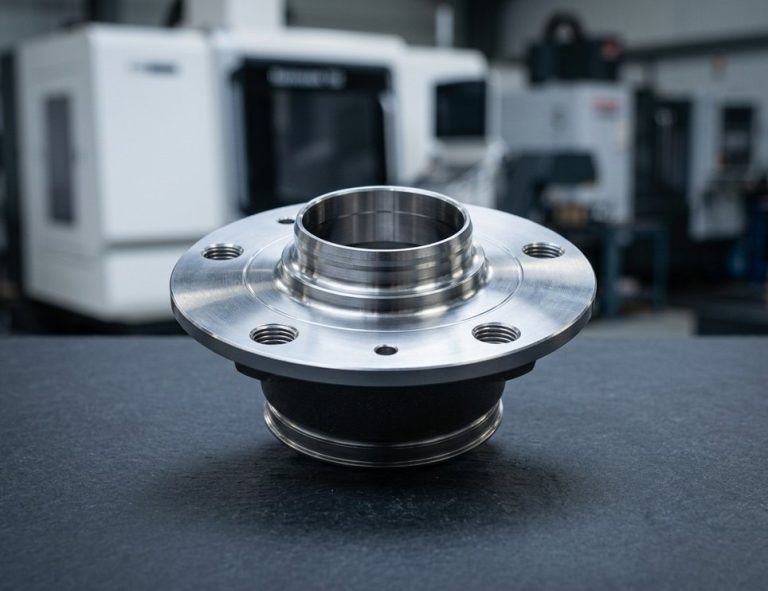 Food and PharmaceuticalDosing components finished at Ra ≤ 0.4 µm for clean-in-place processing lines.Request a Quote
-
 Aerospace and MarineFittings and brackets with a salt-spray requirement, including Inconel 625 and 718 aerospace parts.Request a Quote
How to Specify Electropolishing Services
Electropolishing removes metal, so it is not a zero-change finish. These drawing callouts let DEK machine to the compensated size and land your tolerance.
-
Call Out the Standard
Write "Electropolish per ASTM B912." Add "followed by passivation test per ASTM A967" if your quality plan requires a verification test.
-
State the Finished Ra
Specify, for example, "Ra ≤ 0.4 µm after electropolishing" and the measurement location. DEK verifies with a profilometer.
-
Plan the Removal Allowance
Allow 5–10 µm per side: a Ø10.000 mm pin ends near Ø9.985 mm uncompensated. Dimension ±0.01 mm and tighter "after electropolish".
-
Decide on Masking
Threads, press-fit bores and ground datum faces can be masked but show a faint line; most buyers accept the small shift on threads.
-
Approve the Rack Contact
Every part needs an electrical contact point that leaves a small unpolished mark. Tell us where it is acceptable.
-
Watch Deep Bores
Removal is slower inside bores deeper than about 3 diameters; they see less improvement unless an internal cathode is used.
Electropolishing Specifications
- Process standard ASTM B912
- Verification test ASTM A967 (on request)
- Removal per side 5–10 µm (up to 25 µm on request)
- Removal on diameter 10–20 µm
- Ra reduction ~50%
- Typical Ra result 0.8 → 0.4 µm; 0.4 → 0.2 µm
- Surface Cr:Fe ratio Typically above 1.5
- Electrolyte Phosphoric-sulfuric acid
- Prototype lead time 5–8 days (machined + 316L EP)
- Minimum order No MOQ, 1 to 10,000+ pieces
- Certifications ISO 9001:2015, ISO 13485, AS9100D
- Reports Profilometer Ra, material certs
Frequently Asked Questions
Answers to what buyers ask most about electropolishing machined parts at DEK.

Ready to Scale Your Project?
Get started with a stable process and controlled quality. Let's discuss your project.