








PVC Machining Services
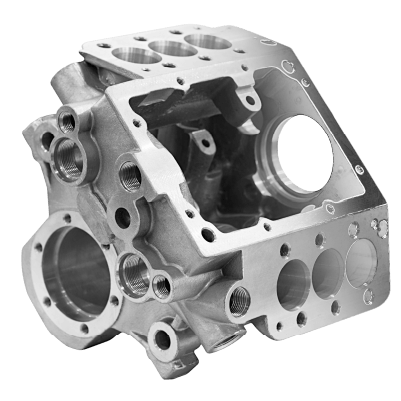
Also known as Rigid PVC · CPVC · Electrical-grade PVCDEK's PVC machining service produces manifolds, valve blocks, tank fittings and plating-line fixtures from rigid PVC and CPVC. We cut PVC on 3-, 4- and 5-axis mills set up for its chlorine outgassing, holding ±0.01 mm on critical features with prototypes in 3–5 days and no MOQ.
-
52 MPaTensile Strength
-
1.40 g/cm³Density
-
60 °CMax Service Temp
-
0.05%Water Absorption
PVC CNC Machining Capabilities and Tolerances
What DEK holds on rigid PVC and CPVC parts, measured at 23 °C, from prototype to production runs.
-

Small Rigid Features
±0.01 mmunder 50 mm
-

Large Plates, Thin Walls
±0.05 mmmeasured at 23 °C
-

As-Machined Finish
Ra 0.8–1.6 µmdeburred, standard
-

O-Ring Faces
Ra 0.8 µmwithout polishing
-

Prototype Lead Time
3–5 daysengineer reviewed
-

Order Quantity
No MOQ1 to 10,000+ pieces
-

Milling Axes
3, 4, 5-axismanifolds, fixtures
-

Port Threads
NPT, BSPcut to full form
PVC Properties and Grades We Machine
Property data for rigid PVC Type 1 and CPVC, the two grades most specified for machined PVC parts in fluid handling.
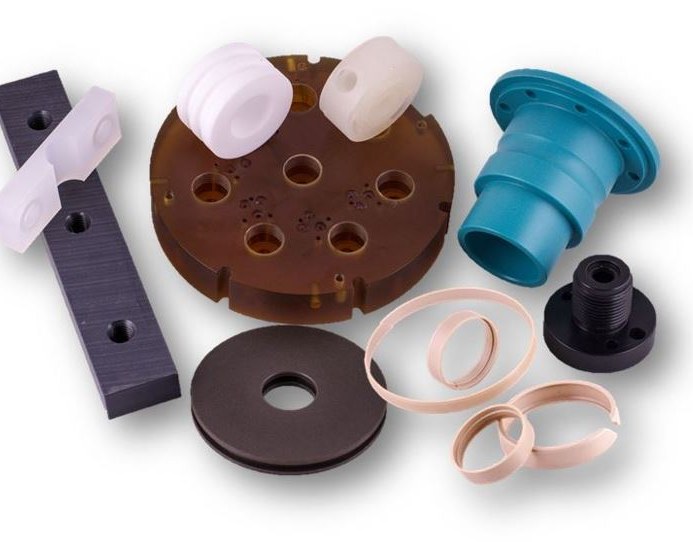

- Density 1.40 g/cm³
- Tensile strength 52 MPa
- Max continuous service 60 °C
- Water absorption (24 h) 0.05%
- Flammability UL 94 V-0
- Thermal expansion 70 × 10⁻⁶/K

- Density 1.55 g/cm³
- Tensile strength 55 MPa
- Max continuous service 95 °C
- Water absorption (24 h) 0.05%
- Flammability UL 94 V-0
- Thermal expansion 65 × 10⁻⁶/K

- Rigid PVC Type 1 Highest chem resistance
- Rigid PVC Type 2 Impact-modified
- CPVC Hot water to 95 °C
- Electrical-grade PVC Insulators, V-0
PVC Machining and Tool Considerations
How rigid PVC and CPVC behave on the mill: heat control, chlorine outgassing, thermal growth and notch sensitivity.
PVC releases hydrogen chloride near 140 °C, the temperature a rubbing tool reaches. We run sharp high-rake carbide, air-blast or water-based coolant and fast chip evacuation, and wipe machines down after PVC runs.
Extruded plate warps when one face is pocketed deeply: we rough both sides, rest the blank, then finish on our CNC milling services. Walls under 3 mm are annealed at 60 °C.
- 0.5 mm internal radii, 0.3 mm chamfers: PVC is notch-sensitive.
- 1.5 mm minimum between pressurized channels, 1.0 mm on unpressurized fixtures.
- A 500 mm manifold grows 0.35 mm per 10 °C; port spacing ±0.1 mm.
- PTFE tape on threads; anaerobic sealants can craze PVC.
-
Machinability (Type 1)
GoodSharp tools, moderate speed
-
Machinability (CPVC)
GoodHarder, brittle at corners
-
HCl Release
Near 140 °CRubbing tool temperature
-
Thermal Expansion
70 µm/m·KThree times aluminum
-
Min Wall, Pressurized
1.5 mmBetween adjacent channels
Typical Machined PVC Parts
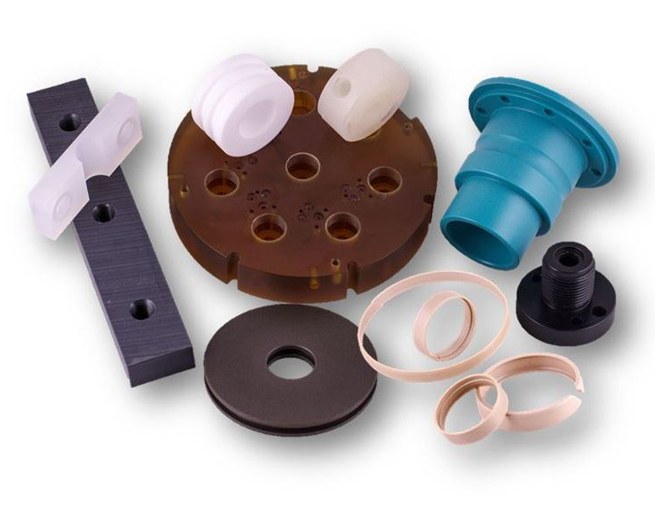
Machined PVC parts serve chemical, semiconductor, equipment and marine users who need acid and salt resistance at low cost.
-
 Chemical ManifoldsManifolds, valve blocks, dosing-pump heads and tank fittings for chemical processing and water treatment below 60 °C.
-
 Wet-Bench FixturesSemiconductor wet-bench fixtures, plating racks and chemical delivery components that resist acids, bases and salts.
-
 Electrical InsulatorsInsulator blocks, bus bar supports and terminal barriers in electrical-grade PVC, inherently rated UL 94 V-0.
-
 Assembly FixturesGuards, cabinet panels, machine covers and low-cost assembly fixtures for industrial equipment and automation.
PVC vs CPVC, Polypropylene, PTFE and 316
Below 60 °C rigid PVC is the economical choice; step to CPVC for hot service, to PTFE or 316 stainless only where PVC's limits are exceeded.
| Criteria | This GradeRigid PVC | CPVC | Polypropylene | PTFE | 316 |
|---|---|---|---|---|---|
| Service temp | 60 °C | 95 °C | 90 °C | 260 °C | Higher |
| Stock cost | Lowest | +30–50% | – | 10x | Higher |
| Chlorides | Untouched | Better hot | – | Inert | Can pit |
| Precision | Yes | Yes | Harder | Creeps | Best |
| HCl release | Yes | Yes | No | – | No |
| Solvent bond | Yes | – | – | – | – |
Finishing Options for Machined PVC Parts
CNC machining + finish options suited to PVC; vapor polishing adds little, anodizing and plating do not apply.
-
As-machined AvailableRa 0.8–1.6 µm and deburred at every channel intersection: the standard finish for PVC fluid-handling parts and sealing faces.
-
Bead blasting AvailableCNC machining + bead blasting gives a matte finish on PVC guards and cosmetic panels without changing critical dimensions.
-
Painting AvailablePVC accepts vinyl and acrylic paints without primer, useful for color coding on machined fixtures and assemblies.
-
Laser marking AvailableLaser marking and engraving of port labels and flow directions on machined PVC manifolds and fixtures.
Request a Quote for Machined PVC Parts
Send PDF, STEP or IGES files with process fluid, temperature and pressure; an engineer confirms the grade and quotes within 6 hours. No MOQ.
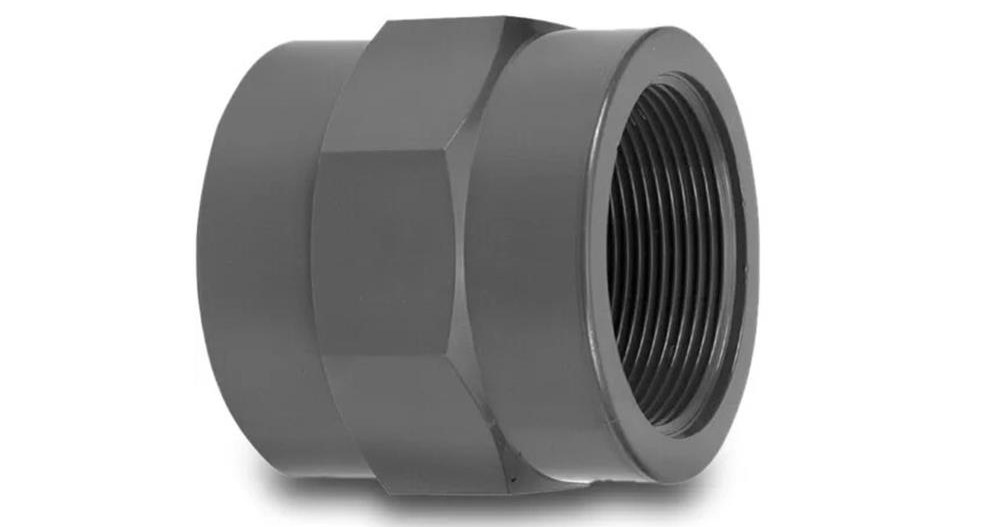
PVC Fabrication and Machining at DEK
DEK pairs PVC CNC machining with solvent bonding, hot-gas welding and pressure testing, so multi-piece fluid assemblies ship from one certified supplier.
DEK has machined plastics beside metals since 2002, under ISO 9001:2015, ISO 13485 and AS9100D certification through TÜV. An engineer reviews every drawing, checking channel intersections, wall thickness and port threads before the first cut.
Inspection covers IQC, IPQC, FAI and OQC, with pressure testing when specified. PVC manifolds usually mount to stainless valves and fittings, machined in the same order. See all plastic CNC machining services.
Beyond milling and turning, we deep- and cross-drill manifold channels with gun-drill techniques so intersecting bores stay leak-tight, and cut NPT and BSP ports with a 45° lead-in chamfer.
- Solvent cement bonding of multi-piece manifolds
- Hot-gas welding of tank fittings
- Sheet-based PVC fabrication of guards, trays and cabinets
-
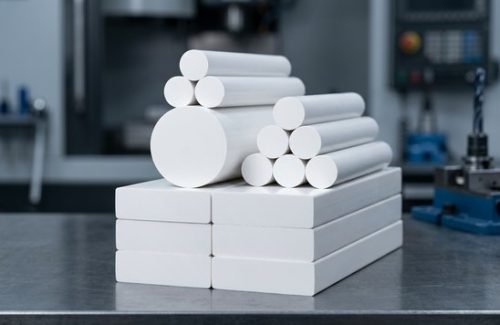 Raw Stock
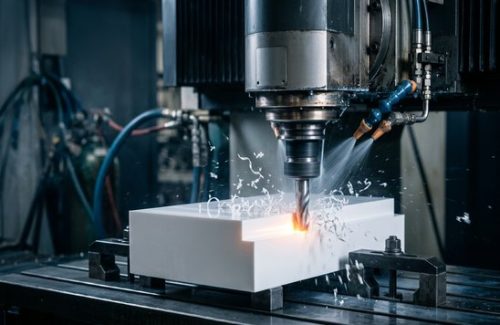 CNC Machined
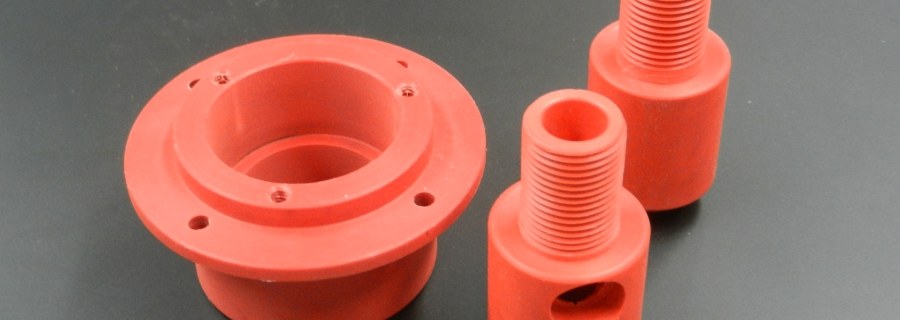 Finished Parts
-
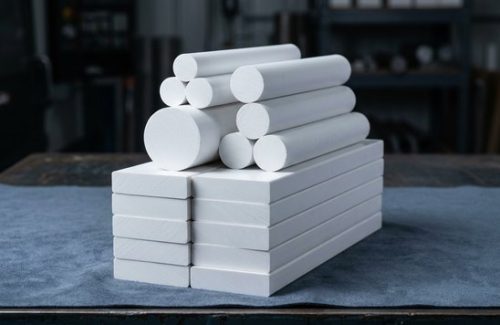 Raw Stock
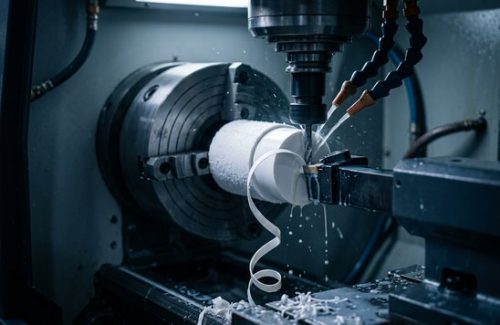 CNC Machined
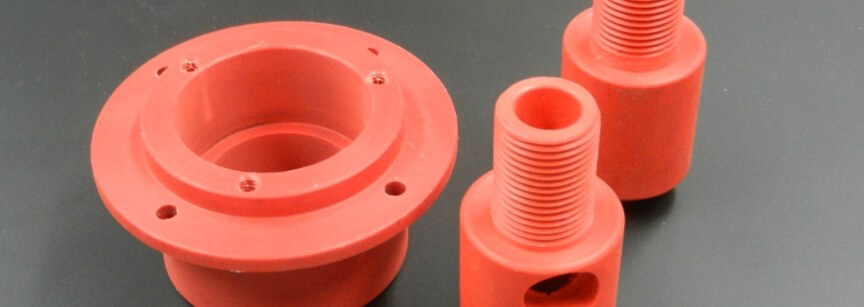 Finished Parts
PVC Machining FAQ
Common questions about rigid PVC and CPVC machining from engineering teams.
Other Materials
-
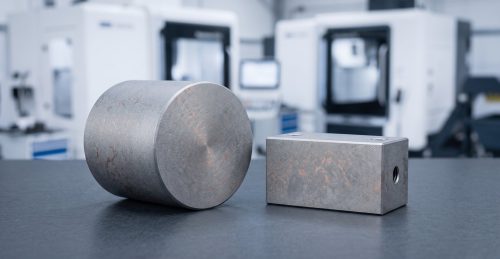 W-Cu SeriesTungsten-Copper (W-Cu) alloys have a balance of high thermal conductivity, wear resistance, and electrical conductivity.Learn More
-
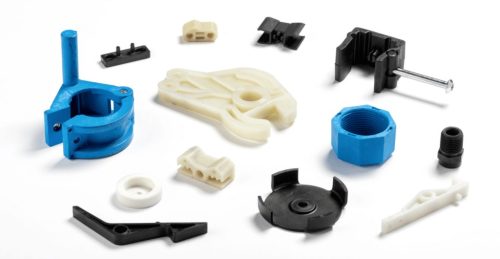 UHMW-PEUltra High Molecular Weight Polyethylene (UHMW-PE) is a type of polyethylene with a very high molecular weightLearn More
-
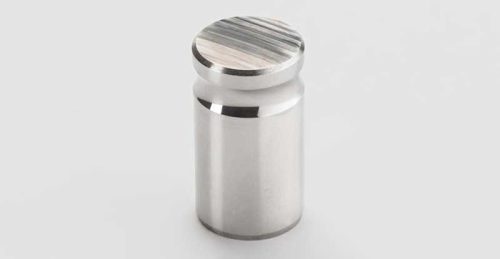 Tungsten Steel YL10.22 Tungsten Carbide is created through powder metallurgy, using WC (tungsten carbide) and Co (cobalt). This material has excellent shock and bending resistance.Learn More

Ready to Scale Your Project?
Get started with a stable process and controlled quality. Let's discuss your project.