









CNC Machining Cost: A Complete Pricing Guide (2026)

WRITTEN BY
Dany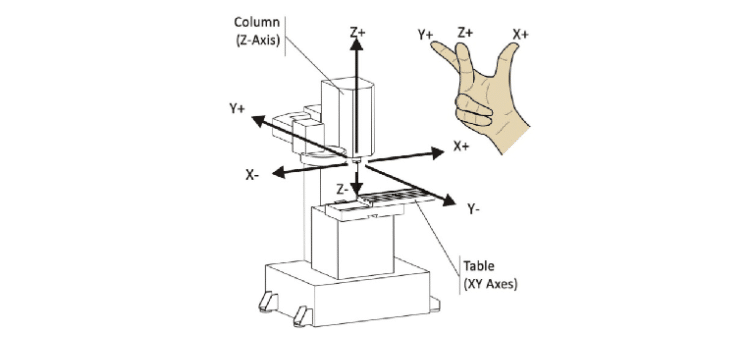
CNC machining cost is the output of seven variables working together: material, part complexity, order volume, tolerance, finish, setup time, and the machine or process used to cut the part. Shop rates, per-part costs, and each of those seven variables combine to set the final price on any quote. This is the cost of having a shop machine a part for you as a service, not the cost of buying a CNC machine outright, which runs $80,000 to $500,000+ for a production-capable mill or lathe and is a separate budgeting question entirely.
CNC Machining Cost at a Glance
Here's what CNC machining actually costs in the current market, based on publicly reported shop rates and per-part pricing across the industry.
| Cost Metric | Typical Market Range |
|---|---|
| Shop rate (per hour) | $50 – $150+ |
| Setup / programming fee | $50 – $1,000+ |
| Prototype cost (per part) | $50 – $500+ |
| Production cost (per part, at volume) | $5 – $100+ |
These are industry-wide ranges, not a quoted DEK rate; actual pricing always depends on your specific drawing, material, and quantity.
7 Factors That Determine CNC Machining Cost
Every CNC quote, regardless of shop or region, comes down to some combination of these seven variables.
1. Material Type
Raw material cost per kilogram varies enormously across metals and plastics, and machinability (how fast a material cuts and how quickly it wears tooling) widens that gap further. Aluminum CNC machining sits at the low end because 6061 and 6063 stock is cheap and cuts fast. Stainless steel and titanium cost more per kilogram and cut more slowly, stacking machine time on top of material cost. Brass and PEEK fall in between, with brass priced closer to aluminum and PEEK priced well above most commodity plastics.
2. Part Complexity & Number of Axes
A part finished in a single 3-axis setup is almost always cheaper than one needing repositioning or a multi-axis machine to reach every feature in one pass. A basic 3-axis job runs on the simplest, lowest hourly-rate equipment; adding a rotary axis for features on multiple faces raises the rate slightly. 5-axis CNC machining commands the highest hourly rate of the group but can lower total cost on complex geometry by eliminating manual repositioning and secondary setups.
3. Order Volume / Batch Size
Setup and programming cost is fixed per job, not per part, so it gets divided across however many parts ship. Low-volume CNC machining absorbs that setup cost across just a handful of parts, keeping per-unit price high. Production runs of hundreds or thousands spread the same fixed cost across far more units, driving per-part price down sharply.
4. Tolerance & Precision Requirements
Tighter tolerances slow feed rates, add inspection time, and sometimes require a secondary operation, all of which raise cost. Standard CNC machining tolerance runs ±0.005 in (±0.13 mm) unless a drawing calls out something tighter, and a shop hits that by default at no extra charge. Calling out a precision tolerance band of ±0.025 mm on a feature adds machining time for slower passes and more frequent in-process checks. Tolerances tighter than that typically require grinding as a secondary operation, which holds down to ±0.005 mm. Applying tight tolerances only to features that are actually fit-critical (shaft-bore fits, coaxial bores, mating surfaces) keeps the rest of the part at standard tolerance and controls cost.
5. Surface Finish & Post-Processing
Anodizing, plating, and powder coating each add a separate processing step, handling time, and often a minimum lot charge, so the real cost of a finish is the extra logistics of moving parts to a finishing line and back, not just the process itself. Anodizing typically carries a minimum lot charge in the $75–$150 range regardless of part count, so a batch of 50 absorbs that flat fee far more efficiently than a batch of 5. Surface finishing options range from a simple bead blast to hard-coat anodizing, and each carries a different added cost on top of the bare machined part.
6. Setup & Programming Time
Every new job requires programming the toolpaths, staging the correct tooling, and proving out the first part, work that's identical whether the order is for one part or a hundred. One-off prototypes absorb the full setup cost; repeat orders on the same design often skip most of it because the program and fixtures already exist. Re-ordering an unchanged part is almost always cheaper per unit than a first-time run for exactly this reason.
7. Machine/Process Type (Milling vs. Turning vs. Swiss vs. EDM)
Milling suits prismatic parts with pockets and flat features and typically runs the most economical rate per hour for boxy geometry. Turning and Swiss turning cut round, shaft-like parts far more efficiently than milling, often at a lower per-part cost for cylindrical geometry. Wire and sinker EDM cut geometry no rotating tool can reach (hardened materials, sharp internal corners) at a slower material-removal rate that raises the per-hour rate above milling or turning; EDM machining services covers where that trade-off pays off.
CNC Machining Cost Per Hour: What's Actually Included
Shop rates typically fall between $50 and $150+ per hour, and that range exists for real reasons; it's not arbitrary markup. The rate covers machine depreciation (a production 5-axis mill costs far more than an entry-level 3-axis mill and needs to earn that back), labor for the machinist and programmer, tooling wear (cutting tools dull faster in harder materials and get replaced regularly), and shop overhead like maintenance, coolant, and facility costs. A simple 3-axis job on aluminum sits at the lower end of that range; a 5-axis job on stainless or titanium, requiring specialized tooling and a more expensive machine, sits at the top.
There's no universal formula that converts "hours" into "your price" without knowing the actual part; cycle time depends on geometry, and two parts that look similar on paper can take very different amounts of machine time. The reliable way to get a real number is to send a drawing or CAD file to a shop through CNC machining services and ask for a quote rather than back-calculating it from an hourly rate alone.
Prototype Cost vs. Production Cost
Per-part cost drops sharply as order quantity increases, because setup cost is fixed per job: a prototype run of one to a few parts pays that fee once, split across almost nothing. A production run of hundreds or thousands spreads that same fee thin enough that it barely shows up in the unit price. Market data puts prototype parts in the $50–$500+ range and production parts at $5–$100+ per unit, with the gap explained almost entirely by volume, not by any change in the part itself.
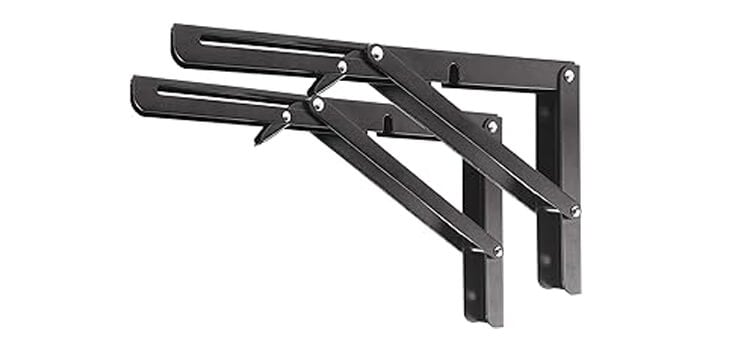
Take a simple aluminum bracket that needs 45 minutes of machine time and a $150 setup/programming charge. At a shop rate of $75/hour, one unit costs the full $150 setup plus about $56 in machine time, roughly $206 for a single prototype. Order 100 of the same bracket and that same $150 setup charge splits to $1.50 per part, while the $56 in machine time per part stays the same since each unit still takes 45 minutes to cut, landing near $57–58 per unit, a drop of more than 70% purely from spreading the fixed setup cost across more parts.
A turned aluminum shaft with a 20-minute cycle time follows the same math from a different starting point: at the same $75/hour shop rate, a single prototype unit often lands near $75–$95 once setup is included, while the same part in a 500-piece production run typically prices closer to $18–$25 each once that setup cost is spread thin.
Quantity, material, and finish interact most tightly at low volumes: how much rapid prototyping costs breaks down how a single prototype's price splits across setup, material, and finish before volume dilutes any of it. DEK runs with no minimum order quantity and a 3-day prototype lead time, so testing a single part before committing to a production batch doesn't require hitting a volume threshold first.
Milling vs. Turning vs. 5-Axis Cost Differences
Milling, turning, and 5-axis machining price out differently because each solves a different geometry problem.
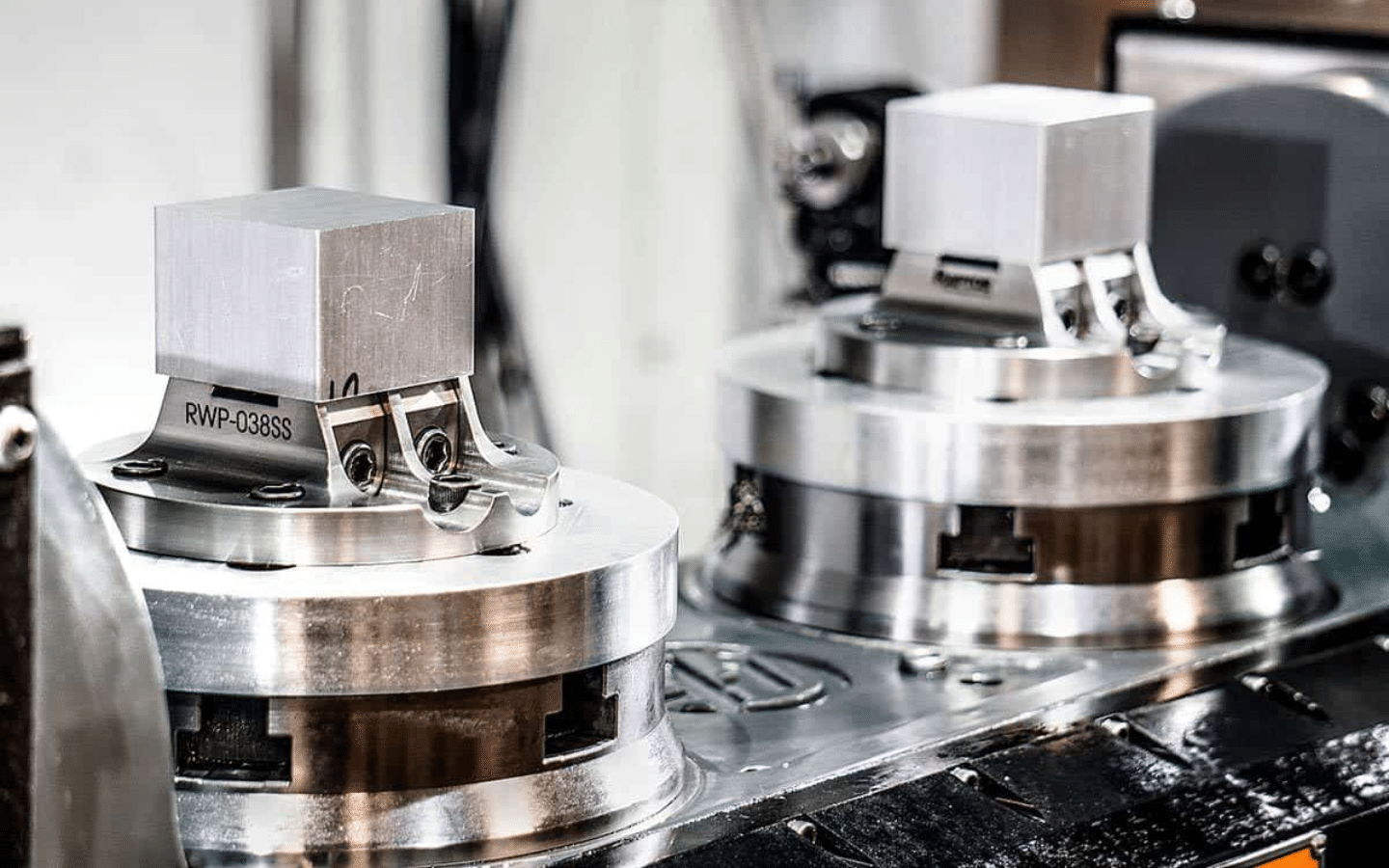
Milling cost scales with the number of setups and tool changes a part's pockets, bores, and faces require; CNC milling cost details that material-by-material math further.
Turning cost is driven primarily by bar stock utilization and spindle time rather than setup complexity, since rotating the workpiece against a fixed tool suits round, shaft-like geometry efficiently; CNC turning cost breaks down that pricing model in full.
5-axis machining cost carries the highest hourly rate of the three but often the lowest total cost on complex, multi-faced parts, because simultaneous movement across five axes eliminates the repositioning that would otherwise multiply setup charges; how to calculate 5-axis CNC machining prices quantifies that trade-off.
| Process | Main Cost Driver |
|---|---|
| Milling (3/4/5-axis) | Setup complexity + machining time per feature |
| Turning / Swiss turning | Bar stock utilization, spindle time, part length |
| 5-axis simultaneous machining | Programming complexity, machine hourly rate |
Shaft-like turned parts, multi-sided milled brackets, and geometries that only make sense on a 5-axis machine each carry additional cost mechanics (bar stock waste for turning, tool-change count for milling, programming time for 5-axis) that shift the total further from a generic estimate. Small-batch Swiss-turned parts follow a different cost logic entirely: bar length utilization and tool changeover frequency drive Swiss machining cost more than setup fees alone.
Metal CNC Machining Cost by Material
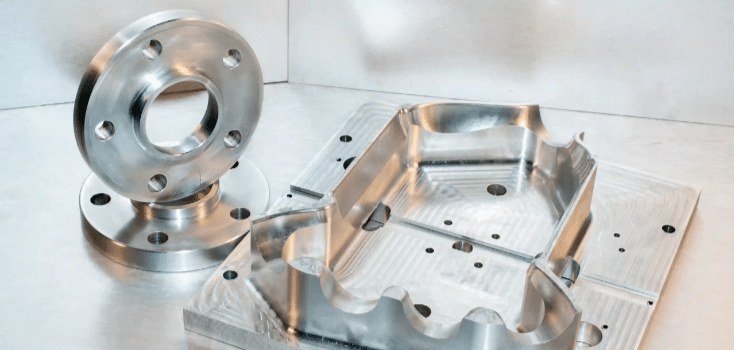
Material choice sets the cost baseline before complexity, tolerance, or volume enter the picture.
| Material | Relative Cost vs. Aluminum | Why |
|---|---|---|
| Aluminum (6061, 6063, 5052) | 1x (baseline) | High machinability, widely stocked, fast cutting speeds |
| Brass / Bronze | 1.2 – 2x | Moderate raw material cost, still fast to machine |
| Stainless Steel (304, 316, 17-4PH) | 1.5 – 3x | Slower cutting speeds, faster tool wear than aluminum |
| Titanium (Ti-6Al-4V) | 3 – 8x | Low machinability, specialized tooling, slow feed rates |
| Engineering plastics (PEEK, PTFE, Nylon) | 0.5 – 3x | Wide range: commodity plastics are cheap, PEEK and PTFE cost more per kilogram than aluminum |
Steel and stainless steel raw stock often costs less per kilogram than aluminum billet (carbon steel bar can run under $1 per kilogram against $3–$8 for aluminum alloys) but slower cutting speeds and faster tool wear on stainless push the finished per-part machining cost to roughly 1.5–3x aluminum's, even though the raw material itself is cheaper.
Titanium's premium is the widest gap on this table: the cost of titanium comes from a combination of alloy grade availability, rapid tool wear at recommended cutting speeds, and cycle times several times longer than aluminum for the same geometry.
How to Reduce CNC Machining Costs
Four levers move the needle more than anything else on a quote:
- Simplify geometry. Fewer setups, no unnecessarily deep cavities, and standard hole sizes cut machining time directly.
- Loosen tolerances where they don't matter. Apply tight tolerances only to fit-critical features (shaft-bore fits, coaxial bores) and leave the rest at standard tolerance.
- Batch your order. One order of 100 parts is cheaper per unit than five orders of 20, because setup cost is paid once instead of five times.
- Choose an easier-to-machine material when the application allows it: aluminum over stainless, standard alloys over exotic ones.
Wall thickness, thread depth, and clamping setup add further savings beyond these four, covered in 10 proven tips for reducing CNC machined parts cost.
Should You Use a CNC Machining Cost Calculator?
Online CNC cost calculators are useful for a fast, rough number on simple parts: standard aluminum, basic 3-axis geometry, moderate tolerances. They estimate material volume and a generic cycle time reasonably well for that kind of part.
Where they break down is anywhere the geometry or material gets specific: tight tolerances that require slower feeds, 5-axis toolpaths a generic algorithm can't model accurately, exotic materials like titanium or Inconel with non-standard machining parameters, or parts needing secondary operations like anodizing or grinding. A calculator has no way to know the actual drawing, so it can only approximate.
For anything beyond a simple bracket or bushing, an actual quote based on a CAD file or drawing beats any calculator estimate. Sending a drawing directly to a shop via contact gets a number tied to the real part instead of a generic estimate.
Get an Accurate CNC Machining Quote
A shop needs five pieces of information to quote a part accurately: a CAD file or drawing (STEP files work well), the material, the tolerance requirements on critical features, the quantity needed, and any specified surface finish. Leaving any of these out forces the shop to guess, which either inflates the quote to cover risk or produces a number that changes once the real spec comes in.
DEK works across 50+ metals and engineering plastics (including aluminum, stainless steel, titanium, brass, copper, Inconel, Kovar, PEEK, and PTFE) machined under ISO 9001, ISO 13485:2016, and AS9100D quality systems, with no minimum order quantity and prototype turnaround as fast as 3 days. Contact us with a drawing and quantity to get a project-specific number rather than an industry average.
FAQ
How do you estimate CNC machining cost?
Add up material cost, the setup/programming fee, machining time multiplied by the shop's hourly rate, and any finishing or inspection charges. Rough industry ranges ($50–$150/hr, $50–$1,000+ setup) work for a ballpark; an accurate number requires a CAD file or drawing sent to a shop for a real quote.
Why is CNC machining so expensive?
Cost reflects real inputs: precision machine tools that cost tens of thousands of dollars, skilled programming and setup labor, tooling that wears out and needs replacing, and material that's often more expensive than raw stock for casting or stamping. Tight tolerances and complex geometry add machine time on top of all of that.
What is the cost of CNC machining per hour?
Shop rates generally run $50 to $150 or more per hour, depending on the machine type and precision required. A basic 3-axis job on aluminum sits near the low end; a 5-axis job on a harder material like stainless or titanium sits near the top of that range.
Is there a reliable CNC machining cost calculator?
Calculators give a fast, rough estimate for simple parts in standard materials with basic tolerances. They're unreliable for complex 5-axis geometry, tight tolerances, or exotic metals, since those need an actual quote against a drawing rather than a generic algorithm.
How does CNC machining cost vary by metal?
Aluminum is the cheapest common option and the pricing baseline. Steel and stainless steel run roughly 1.5x to 3x aluminum's cost because they cut more slowly and wear tools faster. Titanium is the most expensive at 3x to 8x aluminum's cost. Final per-part price still depends heavily on complexity, tolerance, and order quantity.
WRITTEN BY
Dany supports major international clients, ensuring smooth communication, drawing interpretation, and project coordination. She is familiar with small-batch machining workflows and cross-team collaboration. In her spare time, she enjoys food, travel, and discovering new places.
Related Posts
-
 Rapid Prototyping: What It Is, Examples, and What It Costs
-
 Riveting vs Welding: Choose the Right Methods for Sheet Metal Parts
-
 How To Spray Paint Aluminum: A Complete Guide
-
 What is Deep Hole Drilling: Process, Tools, and Tips
-
 How to Design Motor Housing for Efficient Heat Dissipation
-
 Metal Burrs: Formation, Types & Tips
-
 Waterproof Enclosure Design : Everything You Need to Know
-
 How to Optimize Impeller Design for Maximum Performance
-
 Heat Sink Types: Which One to Choose?

Ready to Scale Your Project?
Get started with a stable process and controlled quality. Let's discuss your project.








