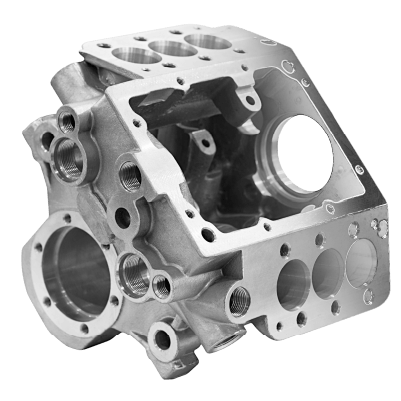









CNC Milling Cost: What You’ll Actually Pay (2026 Pricing Breakdown)

WRITTEN BY
Dany
CNC milling cost typically runs $20 to $250+ per hour of machine time, depending on whether the job needs a 3-axis, 4-axis, or 5-axis mill, and $50 to $2,000+ per part for prototypes once material, setup, and finishing are added in. Production runs bring the per-part price down sharply as setup costs get spread across more units. The exact number for your part depends on material, tolerance, and geometry.
Key Takeaways
- 3-axis milling: $35–$120/hr; 4-axis: $50–$150/hr; 5-axis: $75–$250+/hr.
- Setup and CAM programming fees range from $50 for a simple part to $500–$1,000+ for a complex, multi-sided one.
- A single milled prototype typically costs $50–$2,000+, driven by size, material, and feature count.
- Production volumes (500+ units) drop per-part cost to roughly $5–$100+, since setup is amortized across the batch.
- Material, tolerance, setup complexity, and tool wear (not just "machine time") decide the final invoice.
What Drives CNC Milling Cost?
Every milling quote adds up the same way: material + setup/programming + machine time + tooling wear + finishing. How much each line item costs depends entirely on what's being milled.
Material
Aluminum's low cutting forces and fast chip evacuation keep CNC milling aluminum (particularly 6061 and 5052) among the cheapest options per hour of machine time. Stainless and alloy steels cut slower and need more conservative feeds, pushing machine time up. Titanium and nickel alloys like Inconel are the most expensive to mill: low thermal conductivity concentrates heat at the cutting edge, forcing slower spindle speeds and frequent tool changes. Engineering plastics (PEEK, PTFE, Delrin) sit closer to aluminum on cost but can need specialized fixturing to avoid deflection.
Part complexity & tolerances
Deep pockets, thin walls, and tight internal radii all slow down milling because they force smaller tools and lower feed rates. Tolerance stacks the cost further: most job shops hold ±0.005 in (±0.127 mm) as a standard tolerance without added cost, based on typical shop capability without specialized tooling. Holding ±0.025 mm (roughly ±0.001 in) or tighter requires slower feeds, extra passes, and CMM inspection, worth reserving for mating surfaces and fit-critical features, not an entire part.
Setup & programming (CAM time)
Before a single chip is cut, someone has to program toolpaths, select cutters, and set up fixturing. For a one-off part, this setup cost is paid in full by that single unit. For a repeat order, the same setup is reused, so cost per part drops with every additional piece run from it: the single biggest reason prototypes cost more per part than production runs.
Machine time & tool wear on mills
Milling wears tools differently than turning does. A lathe cycles a small number of indexable inserts through defined wear points; a milling job may run through several end mills, ball mills, and drills in one setup, each wearing at its own rate. A single 1/4-inch carbide end mill runs $15–$40 depending on coating and flute count. In aluminum, that tool can cut for 4–8 hours before surface finish degrades; in titanium or Inconel, the same tool may need replacing after just 20–45 minutes. A complex part needing six or seven tool changes to rough, finish, and drill can add several dollars of consumable cost per part before labor or machine time are counted, and that cost gets folded into the hourly rate rather than itemized separately on most shop quotes.
How Much Does CNC Machining Cost Per Hour? (Milling Rates by Machine Type)
Machine class is the fastest way to estimate a ballpark before specs are finalized. More axes mean fewer manual repositions and tighter tolerances, but the hourly rate climbs accordingly.
| Machine Type | Typical Rate ($/hr) | Best For |
|---|---|---|
| 3-axis mill | $35 – $120 | Flat features, pockets, simple brackets |
| 4-axis mill | $50 – $150 | Parts needing rotation on one axis without re-fixturing |
| Micro-milling | $20 – $50+ | Sub-10 mm precision components |
| 5-axis mill | $75 – $250+ | Complex aerospace/medical geometry, compound angles |
Micro-milling rates run below even 3-axis rates despite the tight tolerances involved, because the machines themselves are smaller, lower-power, and cheaper to operate; the hourly rate tracks machine class and overhead, not the difficulty of holding a tight tolerance on a small part.
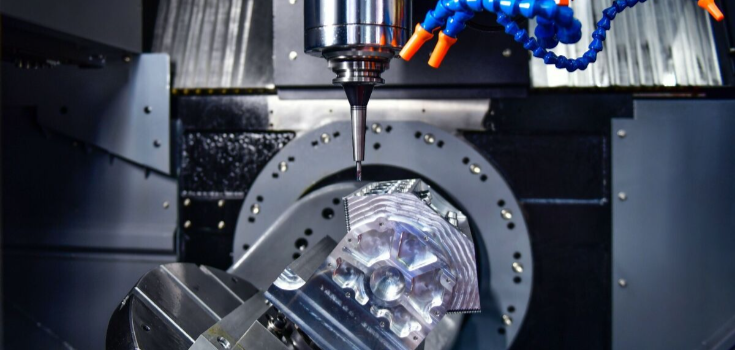
Feature access, not budget alone, should decide between 3-axis, 4-axis, and 5-axis milling; a part needing several manual repositions on a 3-axis machine can end up costing more in setup time than running it once on a 5-axis machine at a higher hourly rate. A 5-axis milling machine holds a part in one orientation through several compound-angle cuts, which often erases the cost of its higher hourly rate by removing extra setups entirely.
How Much Does It Cost to Get Something CNC Milled? (Per-Part Pricing)
Per-part cost depends heavily on order quantity, since setup is a fixed cost divided across the run:
- Single prototype, simple part (bracket, plate): roughly $50–$300.
- Single prototype, complex part (multi-feature housing, tight tolerances): $300–$2,000+.
- Small batch (10–50 units): per-part cost typically drops to $30–$300 each as setup amortizes.
- Production run (500+ units): per-part cost can fall to $5–$100+, depending on material and cycle time.
Worked Example: Aluminum Bracket, Qty 1 vs. Qty 50
A simple 6061 aluminum mounting bracket, milled on a 3-axis machine, breaks down roughly like this:
Qty 1 (prototype):
- Material (6061 bar stock): $10
- Setup & programming: $75
- Machine time (0.75 hr × $60/hr): $45
- Total: ~$130
Qty 50:
- Material: $10/unit × 50 = $500
- Setup & programming (one-time, amortized): $75 ÷ 50 = $1.50/unit
- Machine time (0.5 hr/unit once programmed, × $60/hr): $30/unit × 50 = $1,500
- Total: $2,075 → ~$41.50/unit
The per-unit price drops by roughly two-thirds between a single prototype and a 50-piece batch, almost entirely because the fixed setup cost is divided across more parts and cycle time per unit shortens once the program is proven.
How Much Do CNC Milling Services Cost? (What's Included in a Shop Quote)
A machine-shop quote for CNC milling bundles more than raw spindle time. A typical shop quote includes:
- Material sourcing: raw stock purchase, certification, and any specified alloy or grade.
- Finishing: anodizing, plating, or powder coating if the part needs corrosion resistance or a cosmetic surface.
- Inspection: CMM dimensional checks and first article inspection (FAI) for critical features.
- Packaging and shipping: protective packaging for precision parts and freight to the destination.
This is where a contract-shop quote differs from a DIY hobby-mill estimate: a hobbyist prices machine time and material only, while a contract shop bundles quality documentation and logistics into one number that reflects the full cost of a finished, inspected part.
CNC Milling vs. CNC Turning: Which Costs Less?
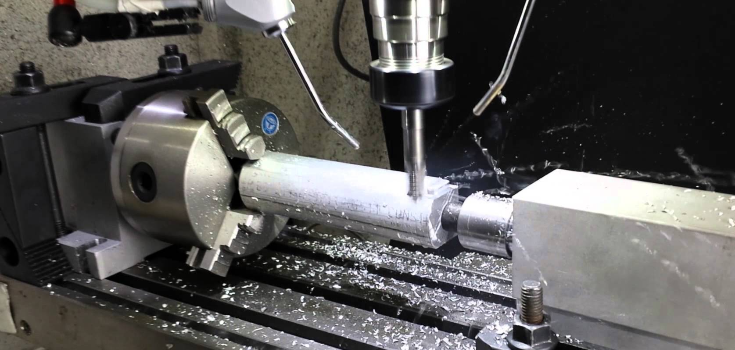
Round, symmetrical parts typically cost less to produce as turned parts than as milled parts, because a lathe removes material continuously with fewer tool changes. Geometry, not price, should make the call between CNC milling vs. CNC turning for parts that could reasonably be made either way. That's also why CNC turning cost runs lower than milling cost for equivalent part complexity. Micro-precision cylindrical parts machined on Swiss-type lathes have their own Swiss Machining Cost structure, built around rapid tooling changeovers rather than axis count.
How to Reduce CNC Milling Costs
- Loosen tolerances where they don't affect function. Reserve ±0.025 mm or tighter for mating surfaces only.
- Avoid deep pockets and tiny internal radii. Both force smaller tools and slower feeds.
- Batch your order. Setup cost is fixed; spreading it across more units lowers the per-part price.
- Pick standard stock sizes. Custom billet sizes add material cost and lead time.
- Choose an easier-to-machine alloy when strength allows it. Aluminum cuts faster and wears tools more slowly than steel or titanium, often at a fraction of the per-hour cost.
- Minimize finishing steps. Every coating or polish adds a process step and handling time.
Get an Accurate CNC Milling Quote
These ranges are a starting point; actual cost depends on the drawing: material, tolerance callouts, feature count, and volume. DEK machines across 50+ metals and engineering plastics, holds tolerances as tight as ±0.005 mm on general work and ±0.01 mm profile control on 5-axis geometry, and takes on projects with no minimum order quantity; prototype lead times run as fast as 3 days. Our CNC milling services turn a drawing into a firm number based on actual tolerances, material, and volume, not an industry average.
Milling suits parts with flat faces, pockets, or multi-plane features that a lathe can't reach in one setup; CNC milling remains the right call whenever those features drive the design, even at a cost premium over turning or 3D printing. Early-stage designs that haven't settled on a manufacturing method yet can weigh milling against rapid prototyping costs, since 3D printing and other prototyping routes often cost less for low-stress, non-metal parts.
FAQs
Why is CNC so expensive?
CNC machining costs reflect skilled programming, precision machine time, and cutting tools that wear out and need regular replacement. Unlike molding, there's no shared tooling cost to spread across thousands of units; each part pays its share of setup, which is why low-volume CNC work costs more per piece than mass-produced alternatives.
Is owning a CNC machine profitable?
It can be, but profitability depends on utilization. A mill that sits idle between jobs still costs money in maintenance, tooling, and floor space. Shops that stay profitable typically keep machines running consistently across multiple client jobs rather than relying on one-off orders.
What is the average cost per hour for CNC milling services?
Rates generally run $35–$150/hr for 3- and 4-axis work and $75–$250+/hr for 5-axis machining, though actual shop rates vary by region, equipment, and the precision required for your specific part.
Is there a CNC milling cost calculator?
Online calculators can give a rough estimate from material and rough dimensions, but they can't account for tolerance callouts, undercuts, or finishing requirements that materially change the price. A quoting process that reviews your actual drawing (checking tolerances, material certs, and finish specs before pricing) produces a far more accurate number than a generic calculator.
Does wood cost less to CNC mill than metal?
Generally yes: wood is softer and cuts faster than most metals, so machine time per part is lower. However, wood milling is a different discipline with its own tooling and dust-handling requirements; shops that specialize in metals and engineering plastics, including DEK, don't typically offer it as part of the same service.
WRITTEN BY
Dany supports major international clients, ensuring smooth communication, drawing interpretation, and project coordination. She is familiar with small-batch machining workflows and cross-team collaboration. In her spare time, she enjoys food, travel, and discovering new places.
Related Posts
-
 Electric Discharge Machining (EDM): How It Works, Types, Materials, Tolerances and Costs
-
 How to Optimize Camshaft Design for Improved Engine Performance
-
 Common CNC Machining Defects and How to Fix Them
-
 Rapid Prototyping: What It Is, Examples, and What It Costs
-
 Sheet Metal Part Drawings: Design and Fabrication Guidelines
-
 Types of CNC Coolants: Which One to Choose?
-
 CNC Milling Copper : An Informative Guide
-
 Making Sheet Metal Brackets: Ultimate Guide
-
 CNC Machining Cast Iron : All You Need to Know

Ready to Scale Your Project?
Get started with a stable process and controlled quality. Let's discuss your project.