









On Demand Manufacturing Explained: The Complete Guide
On demand manufacturing explained: what it means, the 4 types of manufacturing, and real examples. Find the right CNC partner and get a fast quote.
Operations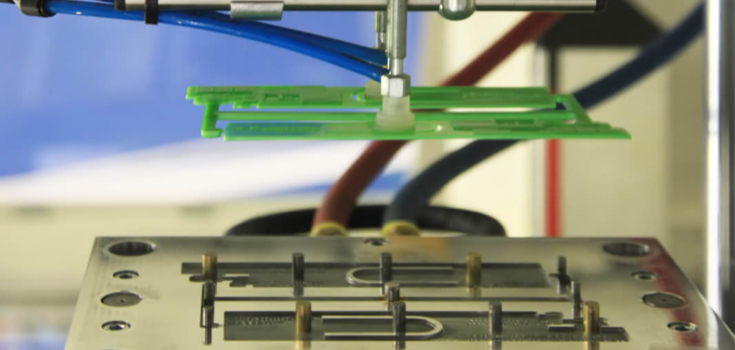
-
 Austin PengManaging Director
-
October 14, 2026

-
9 min read

On-demand manufacturing is a production model where parts are made only after a customer places an order, instead of being built in advance and stored as inventory. The model exists because forecasting demand carries real risk (overproduce and capital sits idle in unsold stock, underproduce and orders go unfulfilled) so production is tied directly to confirmed orders rather than a sales projection.
What Is On-Demand Manufacturing?
On-demand manufacturing is a production model in which goods are made only in response to a confirmed order, rather than produced in bulk based on a sales forecast. The part doesn't exist until someone requests it; there's no finished-goods warehouse sitting between the factory and the customer.
This is the opposite of build-to-stock manufacturing, where a company forecasts demand, produces a batch of identical items, and holds them in inventory until they sell. On-demand manufacturing shifts that risk: instead of guessing how many units to make and hoping they sell, a manufacturer produces exactly what's been ordered, when it's been ordered.
How On-Demand Manufacturing Works
The workflow is fairly consistent across industries: a buyer uploads a digital design file, receives a price and lead-time quote, confirms the order, and production begins. Depending on the part, that production step might involve CNC machining, 3D printing, injection molding, or sheet metal fabrication, each suited to different volumes, materials, and geometries. Once parts pass inspection, they ship directly to the buyer with no intermediate stocking step.
CNC machining fulfills most on-demand metal and plastic orders because it cuts a finished part directly from a digital file without requiring a mold or die first. Typical CNC lead times run 3 to 10 business days for simple-to-moderate complexity parts, depending on material, quantity, and finishing steps required. On-demand CNC production covers work from a single prototype through production-volume orders, quoted per project rather than against a minimum order size.
On-Demand Manufacturing vs. Traditional Manufacturing
The two models trade off differently on lead time, inventory, cost, and flexibility. On-demand production removes the wait for tooling and the risk of unsold stock; traditional, build-to-stock production wins on per-unit cost once volumes climb into the thousands.
| Factor | On-Demand Manufacturing | Traditional (Build-to-Stock) Manufacturing |
|---|---|---|
| Lead time | Starts once the order is confirmed; no tooling to build first | Fast if stock exists; new designs need tooling and setup lead time |
| Inventory & waste | No finished-goods stock; material is cut only for confirmed orders | Requires warehousing; risk of dead stock and overproduction waste |
| Cost per unit at volume | Higher: no economy of scale from long, uninterrupted runs | Lower once tooling cost is spread across a large batch |
| Flexibility | Easy to change designs between orders; no tooling to scrap | Design changes are costly once molds, dies, or fixtures exist |
The crossover point between the two models comes down to volume. On-demand CNC machining stays cost-effective for prototype runs and orders in the tens to low hundreds of units, where tooling would add more cost than it saves. Injection molding and other tooled processes typically become cheaper somewhere between a few hundred and a few thousand units, once the mold cost is spread thin enough across the run. Below that threshold, cutting the part directly from stock removes the tooling step altogether, which is why a no-minimum-order-quantity policy matters for buyers whose volumes sit in that early range.
What Are the Four Types of Manufacturing?
Manufacturing processes are generally grouped into four categories:
- Repetitive manufacturing: dedicated production lines run the same product continuously, with output controlled by a fixed line speed rather than individual orders.
- Discrete manufacturing: distinct, countable units are assembled from individual components, and configurations can change from one run to the next.
- Job shop manufacturing: production moves through different machines or workstations in a sequence set by the specific part being made, not a fixed line. This is where most CNC contract machining happens.
- Process manufacturing (batch or continuous): materials are combined by formula or recipe rather than assembled from discrete parts, as in chemicals, food, or pharmaceuticals.
On-demand CNC work typically falls under job-shop manufacturing: every order can call for a different part, material, and machine setup, which is why a shop's ability to requote and reconfigure quickly matters more than raw production speed.
What Is a CNC Manufacturing Company?
A CNC manufacturing company uses computer-controlled subtractive processes (milling, turning, drilling, EDM) to cut finished parts directly from blocks or bars of metal or plastic, guided by a digital file rather than a human operator moving the cutting tool by hand. No mold or die is required before the first part can be cut, which is exactly why CNC machining is the default choice for on-demand production of metal and plastic components.
Tolerances in general CNC machining typically reach ±0.005 mm, tightening to ±0.01 mm profile control on 5-axis work for complex geometry, and down to ±0.003 mm on sub-10 mm micro-precision components. Machined Parts Manufacturer: Materials covers the axis configurations, material options, and tolerance ranges behind those numbers.
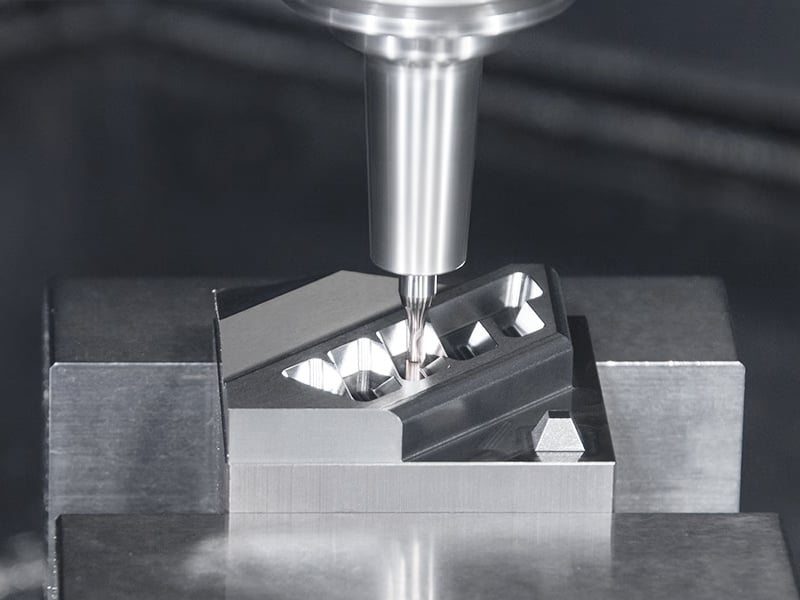
If you're weighing whether CNC machining fits a specific part, contact DEK's team with your drawing or 3D file for a quote scoped to your geometry and material.
Custom Manufacturing Examples
Can you give me an example of custom manufacturing? Here are five, each tied to an industry where on-demand production makes more sense than tooling for mass production:
- Aerospace: a low-volume structural bracket for cabin interiors or ground-support equipment, machined to order because a given aerospace program may need dozens rather than thousands of that part.
- Medical devices: a device housing machined from a biocompatible plastic or stainless steel, produced in small batches to match a specific product revision or regulatory submission.
- Robotics: a short run of prototype brackets, gearbox housings, or sensor mounts machined to validate a new robot design before committing to production tooling.
- Automotive: a custom fixture or jig used on an assembly line, machined once, or in very small numbers, to a shop's own specification rather than ordered from a catalog.
- Semiconductor equipment: a precision component for wafer-handling or process tooling, machined to tight tolerances in small quantities as equipment designs are updated.
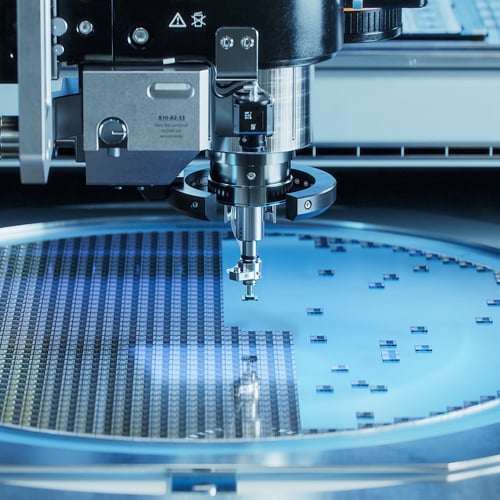
Each example shares the same trait: order size doesn't justify building a mold or dedicated tooling, so CNC machining produces the part directly from a digital file. Complex geometries (deep pockets, thin walls, tight internal tolerances) need specific design and toolpath adjustments to hold spec. 7 Tips for CNC Machining Complex Parts walks through those adjustments for multi-featured parts.
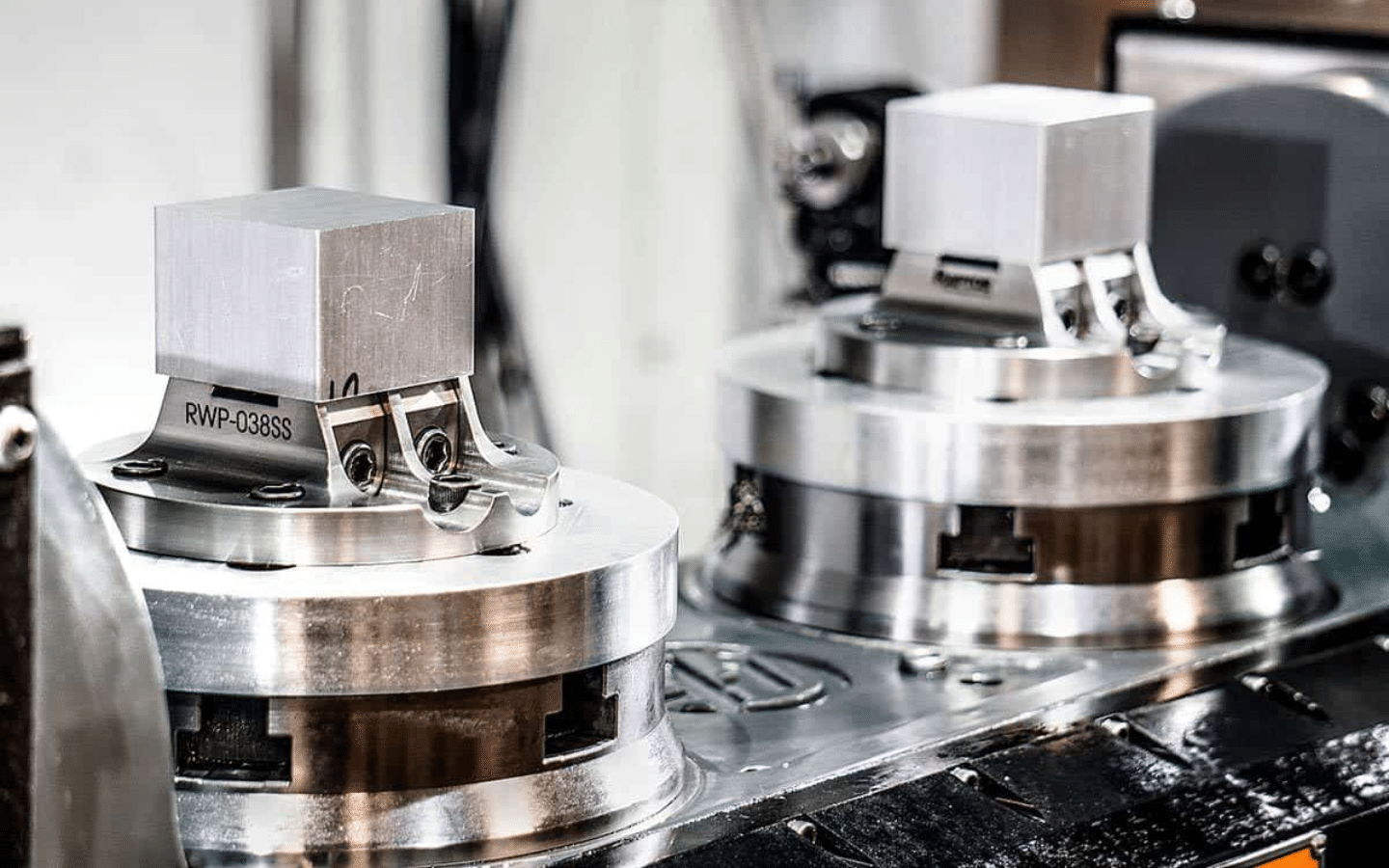
Benefits and Drawbacks of On-Demand Manufacturing
Benefits:
- Speed: parts move from design file to finished product without waiting for tooling to be built, shortening the gap between a design decision and a physical part in hand.
- Lower inventory risk: nothing is produced before it's ordered, so there's no unsold stock sitting in a warehouse.
- Flexibility: designs can change between orders without scrapping tooling, which suits products still going through revisions.
Drawbacks:
- Higher per-unit cost at scale: without the economies of a dedicated production line, on-demand unit costs stay higher as order quantities climb into the thousands.
- Supplier vetting complexity: on demand manufacturing companies vary widely in equipment, quality systems, and materials range, so buyers need to check certifications and capabilities before committing a design to a new supplier.
Finding the Right On-Demand Manufacturing Partner
When evaluating a partner for on-demand work, check:
- Certifications relevant to the industry: ISO 9001 for general quality management, ISO 13485 for medical devices, AS9100D for aerospace.
- Materials range: a shop limited to two or three alloys will send you elsewhere the moment a project calls for titanium, Inconel, or an engineering plastic like PEEK.
- MOQ policy: a no-minimum-order-quantity policy matters for prototype runs and low-volume production, where a minimum order would force you to pay for parts you don't need.
- Lead times: ask specifically what lead time applies to your order size; a fast prototype turnaround doesn't guarantee the same pace once an order moves into production quantities.
DEK works across these checkpoints as a precision CNC machining partner holding ISO 9001, ISO 13485:2016, and AS9100D certifications, machining more than 50 metals and engineering plastics with no minimum order quantity. For buyers ready to move from concept to a quoted part, custom manufacturing walks through how that process runs from file upload to shipment. Prototype orders typically carry different per-part pricing than production runs; the rapid prototyping cost breakdown outlines what drives that price before you request a quote.
FAQ
What type of manufacturing is in demand?
On-demand and additive methods are seeing the most growth because they remove tooling costs and support low-volume, customized production. CNC machining specifically is favored for metal and plastic parts because it produces functional components directly from a digital file, without waiting on a mold or die.
What is an on-demand company?
An on-demand company manufactures products only after receiving a confirmed customer order, rather than stocking finished inventory in advance. Some operate their own machines and equipment directly; others coordinate a network of manufacturing partners and route each order to whichever facility fits the part.
What does "on-demand" mean?
"On-demand" means production is triggered by an actual customer order rather than a sales forecast. Nothing is built, stocked, or shipped until a specific request exists: the opposite of manufacturing goods in bulk and hoping they sell later.
What are the five types of manufacturing?
Most frameworks describe four types: repetitive, discrete, job shop, and process (batch or continuous) manufacturing. Some add a fifth, additive manufacturing (3D printing), since it builds parts layer by layer rather than assembling, forming, or subtracting material the way the other four do.
What are on-demand manufacturing examples?
Common examples include a low-volume aerospace bracket, a medical device housing, a robotics prototype run, an automotive assembly fixture, and a semiconductor equipment component, each produced in small quantities directly from a digital file rather than mass-produced from a mold.
What is the difference between on-demand manufacturing and 3D printing?
3D printing is one manufacturing process, not a business model. On-demand manufacturing describes ordering only what's needed when it's needed; that order might be fulfilled by 3D printing, CNC machining, injection molding, or sheet metal fabrication, depending on the part's material, volume, and tolerance requirements.
Have a print or 3D file ready for a specific part? Contact DEK for a project-specific quote.
WRITTEN BY
Austin oversees DEK’s overall direction and manages coordination across all departments, including sales, engineering, production, operations, and quality. He is familiar with market development, business planning, financial planning, and internal incentive systems that support team growth. In his free time, he enjoys football, traveling, and exploring new technology.
Related Insights
-
 Semiconductor Machining: All You Need to KnowSemiconductor machining helps to design semiconductors with high precision. Learn more about its process, pros, and cons in this informative blog.Austin Peng
 5 min Read
-
 Engineering Requirements Document: Useful Tips for WritingTo execute a successful engineering project, creating an engineering requirements document is necessary. Get useful tips to guide you on how to write an ERD.Austin Peng
12 min Read
-
 Main Materials Used in Robotics Industry: Useful GuideThe robotics industry is leading as the most prominent one these days because of the advancement it offers. Discover the main materials used in robotics.Robert
 4 min Read
-
 Custom Watch Parts: Materials, Process, and FinishingWatches may be small, but they’re made up of many tiny parts that must fit and work perfectly. If even one part is not made right, the whole watch might notAustin Peng
7 min Read
-
 CNC Robotics for Producing Robots: Useful GuideDiscover how CNC robotics improves and helps to boost CNC machining process. A CNC robot is a very advanced invention that is designed for high-speed machining.Austin Peng
7 min Read
-
 3D Printed Automotive Parts : Comprehensive Guide3D printed automotive parts offer many benefits. Learn about 3D printing for the automotive industry. Explore how it works, materials used, and applications.Austin Peng
7 min Read
-
 Car Chassis: Functions, Types and ComponentsVehicles have various components that play an integral part in their performance. A car chassis is an ignition component that is very important for a car.Austin Peng
8 min Read
-
 8 Main Metals Used In Medical EquipmentFor the manufacturing of medical equipment, numerous different materials are used. Metals are widely used to prepare surgical aid and tools with a wideRobert
6 min Read
-
 How to CNC Machine a Cylinder Head for High Performance EnginesLet's learn the intricate process of CNC machining cylinder heads to achieve optimal engine performance. By leveraging state-of-the-art technology and precision techniques, you, too, can unlock your engine's full potential.Austin Peng
11 min Read

Ready to Scale Your Project?
Get started with a stable process and controlled quality. Let's discuss your project.








