









Laser Marking Services for CNC Machined Parts
DEK's laser marking services put serials, logos and UDI codes on parts we machine in-house, in the same order. Annealed marks add no depth, so ±0.005 mm parts ship unchanged.
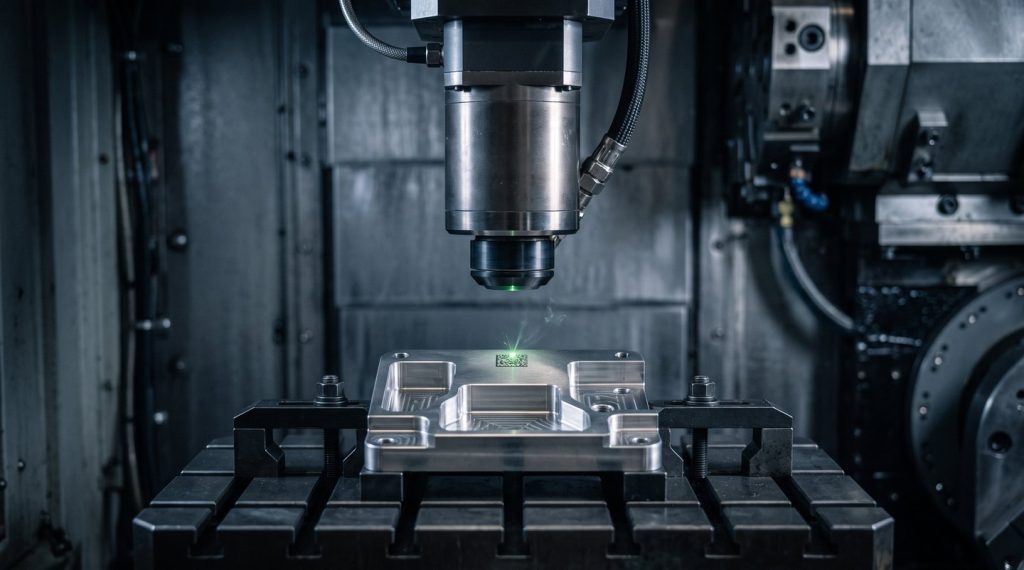
- 0 µm Annealed Mark Depth
- 10–100 µm Engraving Depth
- 0.15 mm DataMatrix Cell


How Our Laser Marking Services Work
A fiber laser writes a permanent mark on the finished part. Marking is the last step of the same CNC machining order, sequenced with our other finishes.
What Laser Marking Delivers & Where to Be Mindful
Each mark type behaves differently in service, so knowing its strengths and limits helps you name the right one on the drawing.
-

Key Benefits
- No depth, no burr: annealing removes no material, so a part held to ±0.005 mm ships unchanged
- Permanent and fast: marking adds a few hours to a job, with no minimum order quantity
- Survives later steps: annealed marks survive handling, cleaning, autoclave cycles and passivation
- Highest contrast on anodize: ablation gives a crisp white mark on black or colored anodized aluminum
- Full traceability content: serials, QR and DataMatrix codes, logos from vector files and dial scales
-

Limitations & Alternatives
- Annealing has limits: annealed marks do not survive grinding or heavy bead blasting; engrave 20–50 µm instead
- Bare aluminum is low contrast: 6061 or 7075 marks light gray, so etching or engraving is used
- Heat lowers local resistance: on stainless the heat mark needs passivation to restore it
- Hard coatings need a break: DLC is marked only where the drawing allows a coating break
- Some materials mark poorly: PTFE and clear acrylic give weak marks; brass and copper cannot be annealed
- Deep or raised text: beyond about 0.2 mm, cut it in the program with text milling
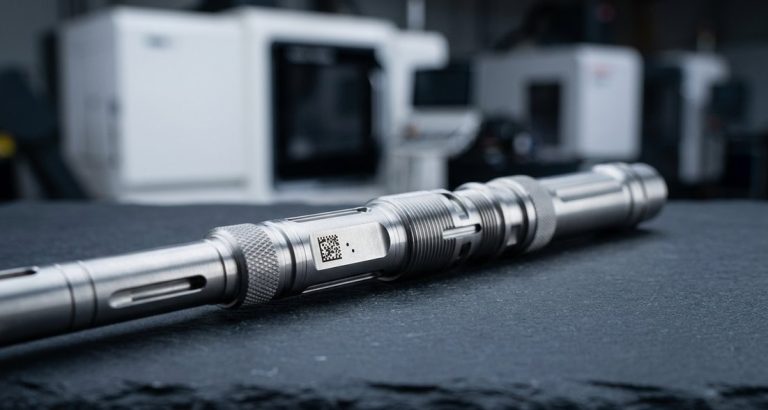
Laser Engraving Metal Parts & Mark Results
Fiber laser marking gives readable, permanent marks whose depth and contrast match how the part is finished and used.
-

Fiber Laser Marking
Power, speed and focus produce annealed, engraved, ablated or etched marks from the same fiber laser, each named on the drawing.
-

Coating Survival
Engraved marks at 20–50 µm survive bead blasting and thin coatings; at 80–100 µm they survive plating and powder coating.
-

Contrast Over Depth
A black annealed code on satin 316L reads more reliably than a deep engraving on polished steel.
-

Small Code Sizes
Minimum readable sizes on metal: 0.3 mm text height and 0.15 mm DataMatrix cells, a 12 × 12 code at about 2 mm square.
-

Scanner Grade
Specify a minimum grade such as ISO 29158 grade B for scanned codes, and DEK verifies the codes against it.
-

Clean Surfaces
Annealing forms an oxide layer below melting with 0 µm removed, suited to food-contact parts that must stay smooth.
Mark Types: Annealing, Engraving, Ablation
| Mark type | What happens | Depth | Contrast | Best for |
|---|---|---|---|---|
| Annealing (heat mark) | Surface is heated below melting; an oxide layer forms | 0 µm, no material removed | Black on stainless and titanium; gray on tool steel | Medical UDI, food-contact parts, smooth corrosion-resistant surfaces |
| Engraving | Material vaporized in passes | 10–100 µm, deeper on request | Dark recess, readable by touch | Parts blasted, painted or plated after marking; harsh-wear ID |
| Ablation (layer removal) | A surface layer is removed to reveal the base | Layer thickness only (5–25 µm) | White or bright mark on black anodize, paint or black oxide | High-contrast marks on anodized aluminum and coated parts |
| Etching (light melt) | Surface melted and re-solidified | 1–10 µm | Light gray or frosted | Logos and text on bare aluminum, brass, plastics |
Materials and How They Mark
Laser marking CNC parts works on stainless steel, titanium, aluminum, carbon, alloy and tool steels, and engineering plastics.
Carbon and tool steel anneal gray-black; brass and copper need higher power and are engraved or etched. Plastics mark by foaming or color change; PTFE and clear acrylic mark poorly.
-
316L StainlessAnnealing gives a deep black, corrosion-safe mark; passivated afterward when the drawing calls for it.Recommended
-
Ti-6Al-4VAnnealing gives dark gray to black; common on orthopedic and dental instruments.Recommended
-
6061 AluminumBare 6061 marks light gray with low contrast; anodized, it ablates to a crisp white mark.Anodize first
-
PEEKNatural PEEK marks dark gray by color change and is used for instrument handles.Good
Typical Laser Marking Uses
Part marking services for traceability are now the norm in medical and aerospace supply chains, alongside serials, codes and scales on everyday parts.
-
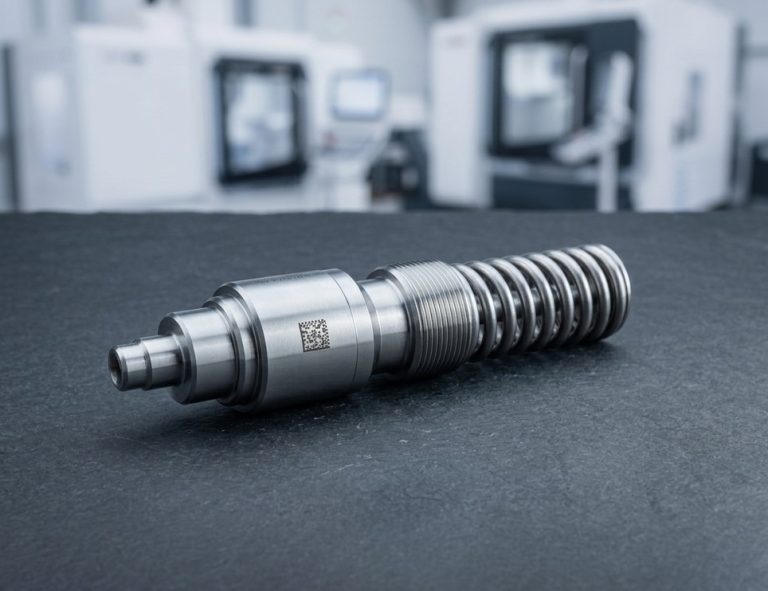 Medical UDI CodesGS1 or HIBCC DataMatrix codes annealed on 316L, 17-4 PH, titanium and PEEK instruments made under ISO 13485.Request a Quote
-
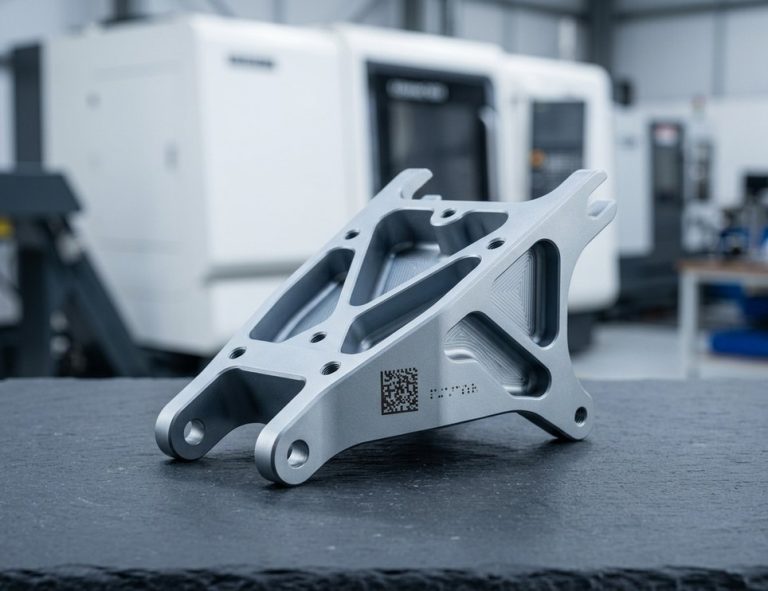 Aerospace & DefensePart number, lot, cage code and date to MIL-STD-130 style requirements on brackets, fittings and housings under AS9100D.Request a Quote
-
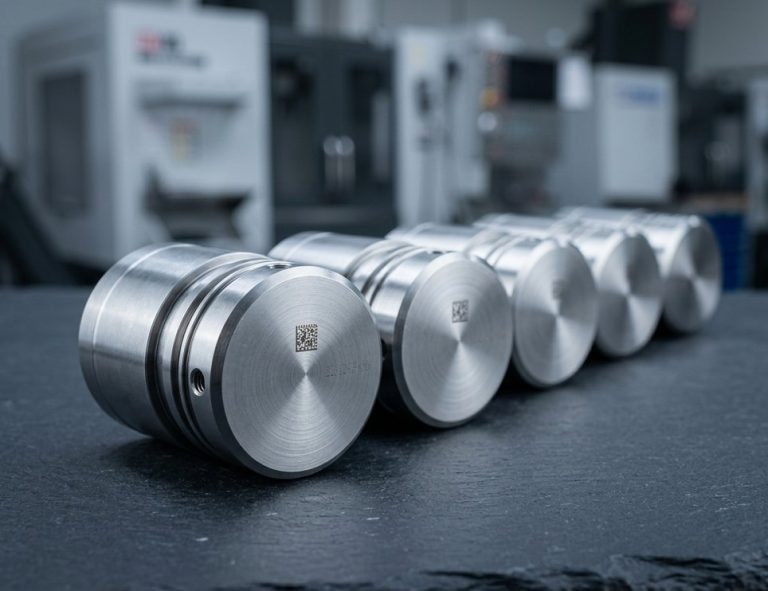 Serials and QR CodesSequential serials from your list or our lot system, plus QR and DataMatrix codes and logos from vector files.Request a Quote
-
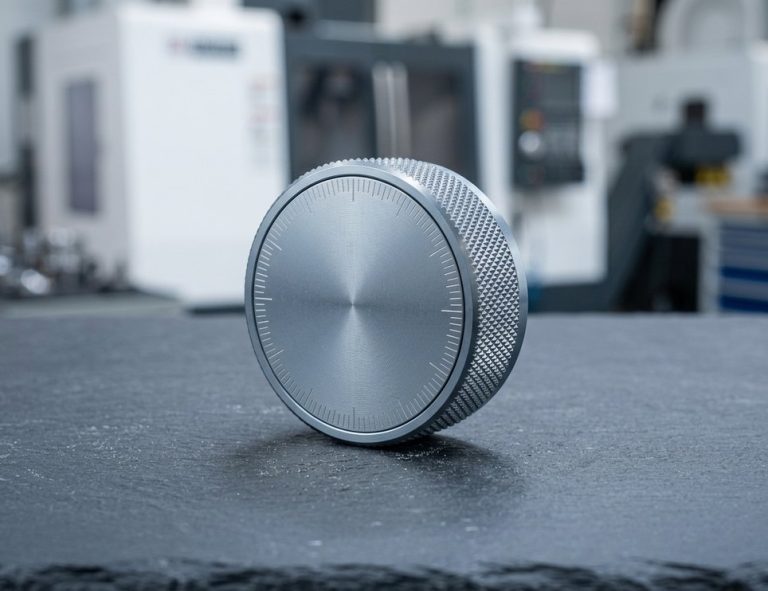 Scales on KnobsLaser-marked graduations on knobs and dials, readable without adding depth to the machined surface.Request a Quote
How to Specify Laser Marking
Name the mark zone, content, type, standard and sequence on the drawing so the mark survives every later step and reads reliably.
-
Location and Size
Show a boxed zone with a leader, or a datum-referenced position, plus the text height.
-
Content and Code Type
Give the exact string or a variable such as "SN: XXXXXX" with the list at order; state DataMatrix or QR and GS1 or HIBCC structure.
-
UDI Laser Marking Callout
Write "UDI per 21 CFR 801, verify to ISO 29158 grade B" or "Mark per MIL-STD-130", plus mark type and reading direction.
-
Sequence With Anodizing
Ablate after anodizing for white-on-black, or engrave before so the recess takes dye and reads dark.
-
Black Oxide and Coatings
Ablate after black oxide for contrast; state "Mark after anodize" or "Mark before passivation".
Laser Marking Specifications
- Annealing depth 0 µm, no material removed
- Engraving depth 10–100 µm, deeper on request
- Ablation depth Layer only (5–25 µm)
- Etching depth 1–10 µm
- Min. text height 0.3 mm
- Min. DataMatrix cell 0.15 mm
- Code types DataMatrix, QR (GS1, HIBCC)
- Code grading ISO/IEC 29158 (AIM DPM)
- Standards 21 CFR 801, MIL-STD-130
- Tolerance kept ±0.005 mm (annealing)
- Certifications ISO 9001:2015, ISO 13485, AS9100D
- MOQ None
Frequently Asked Questions
Answers on mark types, UDI codes, anodized parts and tolerances.

Ready to Scale Your Project?
Get started with a stable process and controlled quality. Let's discuss your project.








