
What is Casting: Materials, Advantages, Applications
Casting is a dependable method when complex parts need to be in a specific shape without extensive machining. Knowledge about the process helps in choosing what is the suitable method for certain parts.
Noting the important considerations that influence how it is used in real-world functions can also determine performance.
What is Casting?
It produces parts by shaping molten material in a mold to solidify and form into a specific shape. This approach is applicable to parts with intricate designs and sections that would be hard to achieve with machining alone.
Factors like material, cooling process, and mold should be considered in the early stages of planning because these factors affect structural integrity, surface finish, and the part’s precision.
Why is it Used in Manufacturing?
Components with hollow structures can be achieved without the use of heavy machining. It works on mass production of precise and identical components using materials like metals, alloys, and plastics, with an impressive turnaround time.
How Does the Casting Process Work?
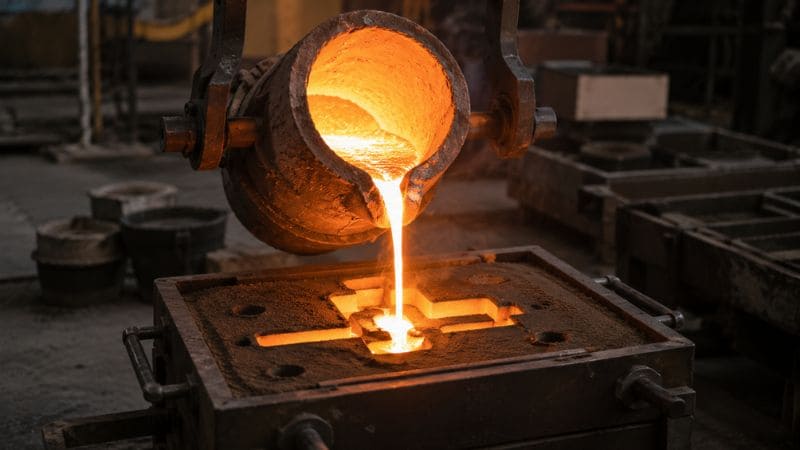
Pattern Design
Before the process starts, the pattern that represents the final form is prepared. This pattern includes allowances for finishing and in any case of shrinkage. The pattern determines how the mold will replicate the intended shape.
Mold Preparation
When the pattern is set, using applicable materials, the mold is formed. This stage of the process will define the shape and, most importantly, the features where the materials will flow later in the process.
Melting the Material
Under controlled conditions, the material is heated beyond its melting point. The consistency of temperature is a factor because it affects the flow and the quality of the final cast.
Pouring the Molten Material
Instead of simply filling the mold, the material is introduced in a controlled manner. This is to avoid air entrapment and turbulence, which is why proper pouring must be practiced to ensure that all the details are evenly filled.
Solidification
The material turns into its solid state gradually. The strength and possibility of any defect, like shrinkage cavities, depend on cooling rates because they can influence the internal structure.
Mold Removal and Finishing
Once the material has reached its solidified state, it will be taken out of the mold to reveal the raw casting. This will then be followed by additional steps necessary to meet the surface demands.
Common Materials Used In Casting
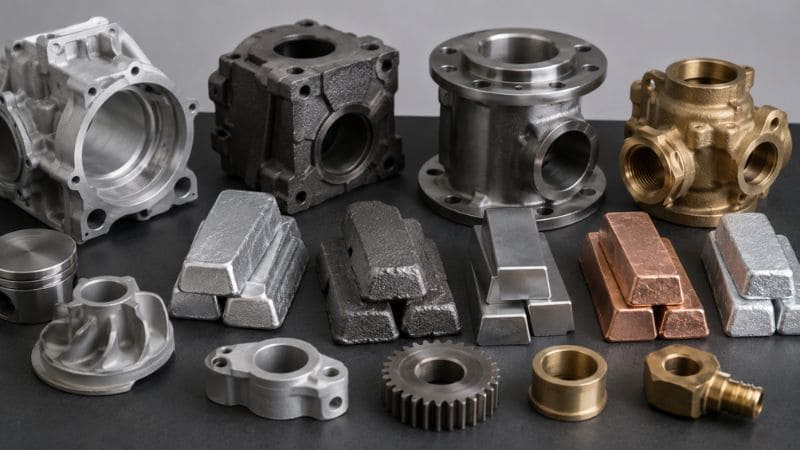
Aluminum Alloys
These materials flow well during the process and are best for components that require corrosion resistance, like automotive parts and housings.
Cast Iron
For wear and vibration-exposed parts, cast iron is selected due to its damping characteristics and hardness. This material is used for parts where rigidity and durability are more important than weight.
Steel
When parts need to be durable and impact-resistant, steel is the practical choice. They handle heavy loads that are needed for industrial equipment and structural components.
Copper Alloys (Bronze and Brass)
Parts that are exposed in environments where corrosion resistance and conductivity matter, copper-based alloys are used. They are also used in marine hardware, bearings, and fittings.
Zinc Alloys
For detailed parts that require precision, zinc alloys are often the trusted material because of their efficiency at a lower melting point. The efficiency maintains a good surface finish and repeatability.
Other Materials (Magnesium, Nickel Alloys, Non-Metals)
These specialized materials are used for certain applications with a special focus on some characteristics. Some plastics and ceramics are for chemical resistance or electrical requirements, nickel alloys are needed for high-temperature parts, and magnesium alloys are used when weight reduction is a concern.
Types of Casting Process
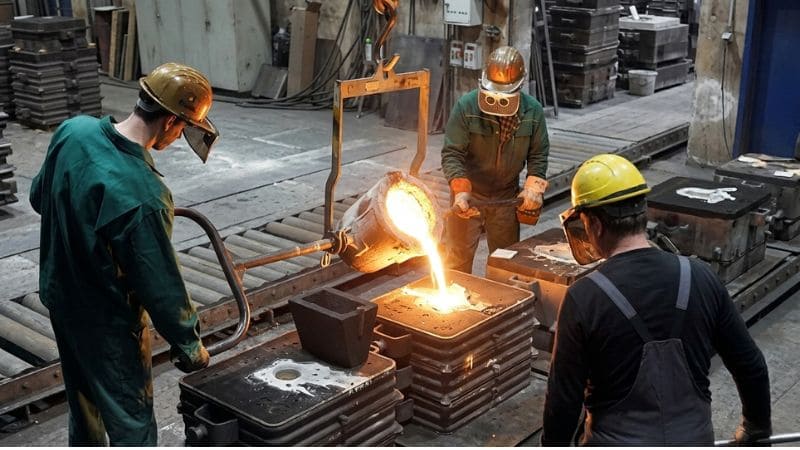
Sand Casting
This uses expandable sand molds that are suitable for small and large parts, which is why it is preferred when shape and size flexibility are required. It is also cost-effective because the tooling cost is relatively low.
Die Casting
It is best for tight dimensional control and high-volume production. Material is injected into a metal mold under pressure, which allows faster cycles and consistent finishes.
Investment Casting
Can deal with complex geometries and fine details that require better precision. It enables intricate shapes with minimal post-processing by relying on a wax pattern that is replaced by molten material.
Permanent Mold Casting
Unlike other methods, which can be more expensive, this one uses reusable molds, and that makes it more cost-efficient than the other types. It is recommended when uniform results are needed across repeated runs while keeping up with the mechanical properties.
Centrifugal Casting
This type uses rotational force to evenly distribute material into the mold instead of relying solely on gravity. It is effective for cylindrical parts that need internal consistency and density.
Continuous Casting
It is efficient for large-scale production of slabs, billets, and bars because the materials solidify while being continuously drawn from the mold.
Advantages Of Casting
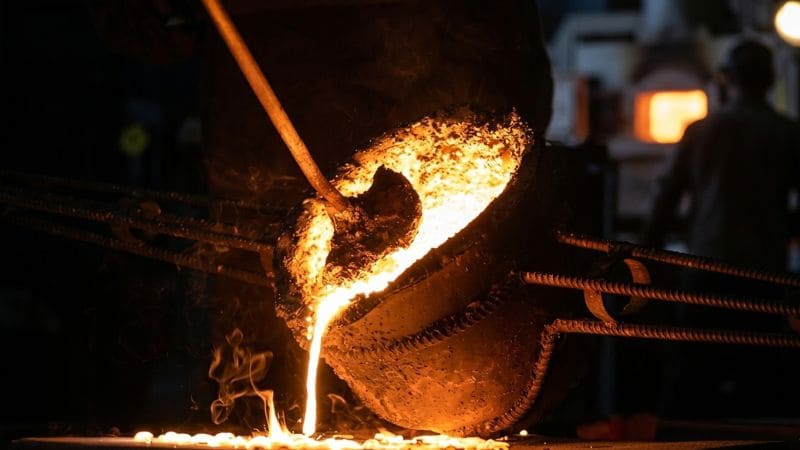
Ability To Create Complex Shapes
Based on our experience, it works well when parts involve difficult-to-machine shapes and internal channels. When these features are formed during solidification, we reduce the need for further processing
Wide Range Of Material Options
Depending on what the application needs, we work with different metals and alloys, and this helps us match material properties without being limited to a specific material type.
Cost-Effective For Large Production
Whenever we handle large runs, it keeps us in manageable costs. Once the setup is ready, repeated part productions become more convenient and efficient than any other method.
Suitable For Large And Heavy Parts
When we know that some components would be impractical to machine because of their size. It is easier to build larger builds and shape them into their molten state.
Minimal Material Waste
If we compare it to the subtractive processes we have used, this method gave us less scrap. It is because when parts are shaped close to their final form, only minimal finishing is needed.
Flexible Design Possibilities
For some parts we've handled, it is easier to manage design adjustments at the mold stage. Features can be modified without us completely reworking our setup.
Limitations Of Casting
Possible Defects
From what we've experienced, we still encounter issues like shrinkage or porosity, no matter how we machine in controlled conditions. These results are based on material flow and cooling, and this only means that process control is important in this method if we want consistency.
Surface Finish Limitations
There are cases that surface quality straight from the mold does not meet the final demand. In that case, we account for additional finishing to refine surfaces as expected.
Dimensional Accuracy Challenges
Processes that have higher shrinkage rates are hard to meet in terms of tight tolerance requirements. We consider this factor in the early stages of design and planning to avoid issues in the final part.
Tooling Cost For Certain Methods
While most methods are economical, some need high upfront costs. It happens when specialized tools and permanent molds are involved; in this case, we consider volume to justify the investment cost.
Common Applications Of Casting
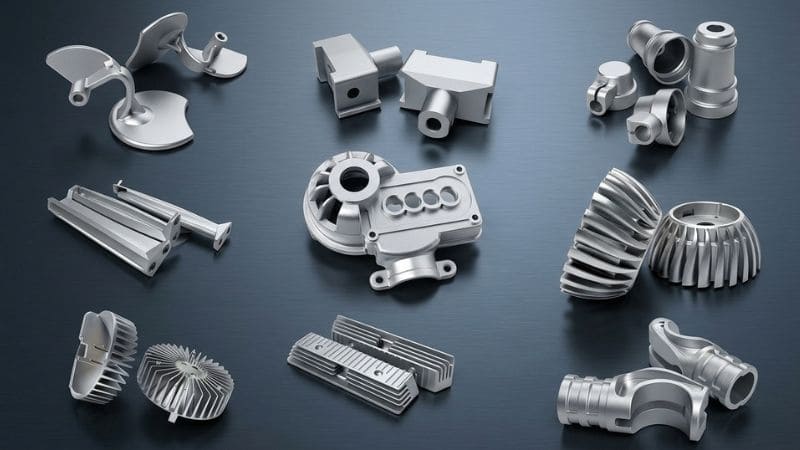
Automotive
Casting form enclosed passages needed for engine blocks and transmission, while it provides durability and consistency in material distribution for brake components.
Aerospace
Precise methods are required for turbine blades. Structural components, on the other hand, depend on reliability and controlled material properties.
Industrial Machinery
Heavy-duty machinery needs castings’ ability to withstand long-term use. Gear housings, pump housings, and machine bases benefit from it because they are exposed to operational stress, vibration, and heavy loads.
Construction Equipment
It gives structural components, pipes, and fittings the strength and ability to handle heavy loads while keeping up with external forces.
Consumer Products
The everyday items we use also use it to meet demands in appearance and function. Decorative metal parts achieve detail-specific forms and finishes, while cookware achieves even heat distribution.
Casting vs Other Machining Processes
Casting vs CNC Machining
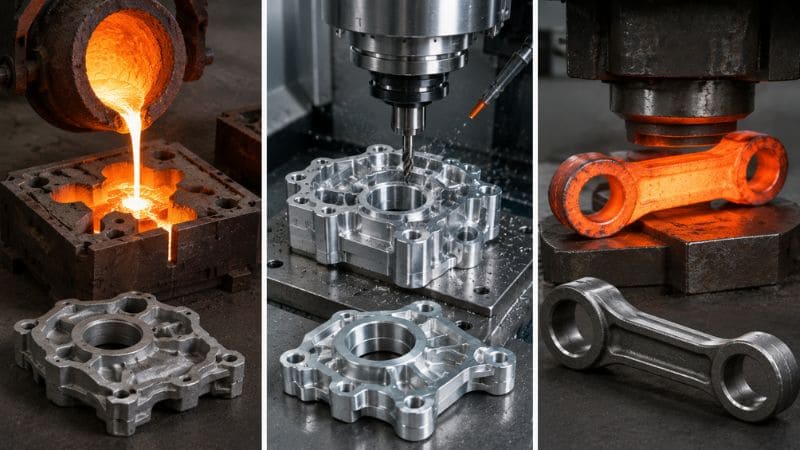
CNC machining removes material from a block to end with a required geometry, while casting forms parts by using a mold to shape them. Machining is ideal when fine surfaces and tight tolerances must be strictly achieved. Casting is more practical when dealing with components with complex contours and internal cavities.
Casting vs Forging
The difference between forging and casting is based on how the material is shaped. Forging deforms a solid metal under pressure, while casting solidifies a liquid material in a mold. Due to their grain structure, the strength of forged parts is typically higher, whereas casting offers more flexibility in terms of forming intricate shapes.
Casting vs Injection Molding
Although both injection molding and casting use molds, they are different in process conditions and material type. Injection molding is for polymers injected under controlled pressure, and casting is common for metals in high-temperature uses. The choice will be based on the parts' material characteristic requirements, whether it is metals or plastics.
Conclusion
Casting is a proven practical option for producing parts with scalable production needs, strict material requirements, and complex forms. The flexibility it offers ease commercial and industrial applications, no matter how strict the design and function it needs to meet.
For reliable solutions, DEK offers expertise from material selection to production. Contact us to explore options that fit even the most complex requirements.
