
Torsional Rigidity: Definition, Formulas, and Applications
Torsional rigidity explains a structure's ability to withstand twisting force. Components like bridges, skyscrapers, and gears are designed to resist force or load to function effectively. Without this, there could be some adverse side effects.
In this guide, we explain what you need to know about torsional rigidity, including its applications and so on.
What is Torsional Rigidity?
Torsional rigidity is the ability of a material or structure to resist twisting when a torque or torsional force is applied. It measures a component's ability to withstand deformation when a twisting force acts upon it.
Torsional rigidity is important in structural engineering because it explains how well an object, a part, or a material can accommodate a certain amount of load without losing its strength, shape, or damage.
Key Properties and Formulas
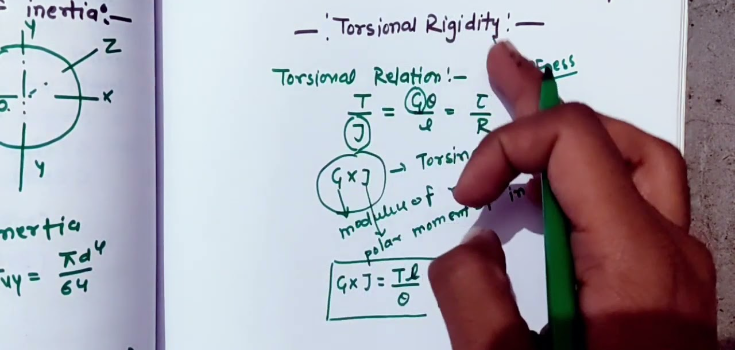
Torsional rigidity is represented as GJ, with G indicating the shear modulus, while the J is the polar moment of inertia.
You can also derive the value of torsional rigidity from the applied force and angle of twist. The unit of measurement of torsional rigidity is Nm².
Torsional rigidity equation: GJ = TL/θ or θ = TL/JG
Where,
J = Polar Moment of Inertia
G= Shear Modulus
T =Applied Torque
L = Length of the Object
θ =Angle of Twist
Shear Modulus
Shear modulus is the ability of a component to withstand shear stress or deformation. It is seen as the ratio of stress to strain. If a material has a higher stress-to-strain ratio value, then it's more likely to have a higher torsional rigidity.
Polar Moment of Inertia
The polar moment of inertia measures the ability of an object to withstand twisting around its rotational axis. Factors like the shape, composition, mass, and size influence the value of this property.
For example, it's easier to twist rubber than metal because rubber has a lower mass and composition. Therefore, we can say that the higher the polar moment of inertia of a material, the better its torsional rigidity.
Material Properties Affecting Torsional Rigidity
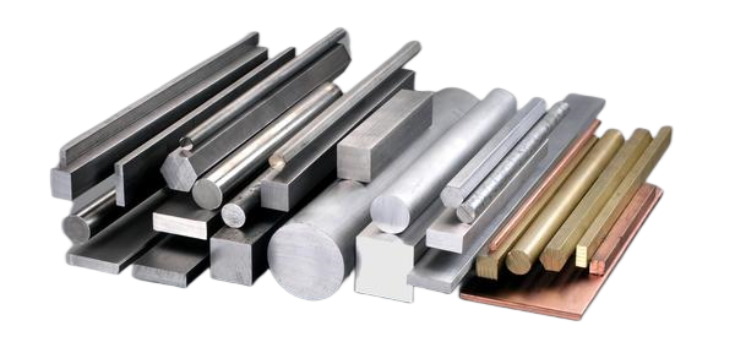
The shear modulus of a material affects its ability to withstand twisting force. Steel with a higher shear modulus has a better level of torsional stiffness than polymers or aluminum with a lower shear modulus value.
Another material property affecting torsional rigidity is whether the material is isotropic or anisotropic.
While isotropic materials maintain the same level of torsional stiffness regardless of the direction of the torque, anisotropic materials’ rigidity level might change if torsional force is applied from a different position.
| Filler Content(wt%) | Matrix Crystallinity(%) | G*(MPa) | σy(MPa) ±0.5 MPa |
εr(%) ±(80%) |
|
| PE | 0 | 52 | 2.8 | 16 | 1100 |
| PE-Calcite | 9.6 | 48 | 3.2 | 16 | 720 |
| PE-Calcite-SA | 7.7 | 48 | 3.1 | 15 | 720 |
| PE-Aragonite | 10.3 | 51 | 3.45 | 15 | 910 |
| PE-Aragonite-SA | 9.3 | 53 | 2.6 | 16 | 930 |
| PE-C.Fornicata | 8.6 | 49 | 2.8 | 16 | 670 |
| PE-C.Fornicata-SA | 9.5 | 49 | 3 | 15 | 740 |
| PE-C.Gigas | 6.5 | 52 | 2.8 | 16 | 730 |
| PE-C.Gigas-SA | 9.3 | 50 | 3.2 | 15 | 830 |
| PE-P.Maximus | 10.8 | 47 | 3 | 16 | 680 |
| PE-P.Maximus-SA | 9.7 | 50 | 3.2 | 16 | 760 |
Comparison Table of Yield Strength, Ultimate Tensile Strength, and Young’s Modulus for Different Materials
| Material | Yield Strength (MPa) |
UTS(MPa) | Young’s Modulus(GPa) |
| Aluminum | 35 | 90 | 69 |
| Copper | 69 | 200 | 117 |
| Brass | 75 | 300 | 120 |
| Iron | 130 | 262 | 170 |
| Nickel | 138 | 480 | 210 |
| Steel | 180 | 380 | 200 |
| Titanium | 450 | 520 | 110 |
| Molybdenum | 565 | 655 | 330 |
| Zirconium Alloy(Typical Cladding) | 380 | 510 | 99 |
| 08Kh18N10T stainless steel | 216 | 530 | 196 |
| Alloy 304L stainless steel | 241 | 586 | 193 |
| SA-508 Gr.3 Cl.2(low-alloy ferritic steel) | 500 | 700 | 210 |
| 15Kh2NMFA(low-alloy ferritic steel) | 490 | 610 | 220 |
Torsional Rigidity in Different Geometrical Shapes
The geometrical shape of an object or material also contributes to its torsional stiffness.
Circular Cross-Sections
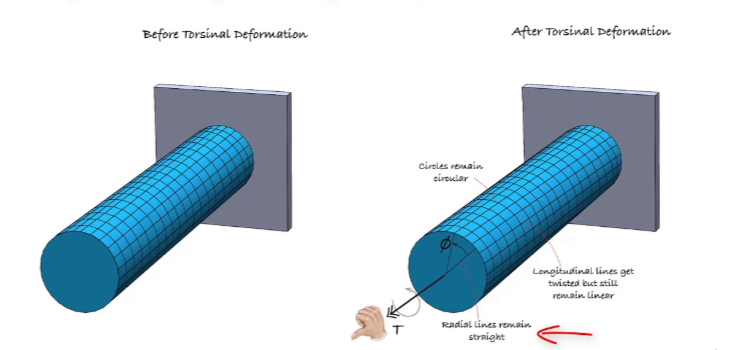
Circular metal material will resist torque at a high level because the material is distributed evenly from its centre or axis of rotation, making it stiffer to twist.
Rectangular Cross-Sections
Rectangular cross sections resist twisting, but not as much as circular cross sections. This is because materials are not evenly distributed, and the sides do not contribute much to support rigidity.
Hollow and Complex Cross-Sections
Hollow sections like tubes and pipes also withstand twisting force at high levels because the exterior part of the material works to resist the force while also maintaining little weight. Commonly used in scaffolding, beams, and drive shafts.
Torsional Rigidity in Different Materials
Generally, metals with high shear modulus resist torque better than most polymers or composites, making them suitable for applications requiring high torsional stiffness.
Polymers, on the other hand, have a low shear modulus and torsional rigidity. However, they are also found useful in some operations, like flexible coupling, where some level of flexibility or deformation is needed.
Comparison Table of Metals, Polymers, and Composites
| Material Type | Example Material | Shear Modulus (G) in GPa | Polar Moment of Inertia (J)( ×10−6m4 | Torsional Rigidity (GJ) In Nm2 | Relative Density (kg/m³) | Common Applications |
| Metal | Steel (AISI 1045) | 80 | 5 | 400 | 7050 | Drive shaft beams in bridges, gears, and machine shafts. |
| Metal | Aluminum (6061-T6) | 26 | 4 | 104 | 2700 | Aircraft structures, bicycle frames, automotive wheels, and arms. |
| Polymer | Polyethylene (HDPE) | 0.8 | 3 | 2.4 | 950 | Pipes, flexible couplings, tanks, plastic bins. |
| Polymer | Polycarbonate (PC) | 2.3 | 3.5 | 8.05 | 1200 | Safety gears and helmets, gadget casing, automotive glazing |
| Composite | CFRP | 100 | 6 | 600 | 1600 | Aerospace components, high-performance cars and sports equipment |
| Composite | CFRP | 25 | 4.5 | 112.5 | 1850 | Marine components, automotive panels |
How to Improve the Torsional Rigidity of a Material
You can improve the torsional rigidity of a material by doing the following:
Selecting Suitable Material
The higher the shear modulus of a material, the better its torsional rigidity. Steel, for instance, has a shear modulus of 80GPa, making it suitable for operations requiring high torsional stiffness.
Polymers, however, have a low shear modulus of about 0.5 to 3 GPa and can, therefore, not be applied in instances where torsional stiffness is required.
Increasing the Size of the Object
Since highly dense substances withstand more torque than low-density ones, you can improve the torsional rigidity of the object by increasing its size. This way, the object becomes denser, rendering its ability to resist twisting forces.
Improving Production Process
Anisotropic materials are known to have different levels of torsional rigidity based on the direction of the twisting force. By maintaining material uniformity during production and using isotropic materials, you can improve the level of torsional rigidity.
Applications of Torsional Rigidity in Structural Engineering

Below are some of the applications of torsional rigidity in structural engineering:
Skyscrapers and Bridges
With the application of torsional rigidity, engineers can design bridges and skyscrapers that can withstand high levels of force and loads.
They can determine and construct structures that can withstand natural forces like earthquakes. To prevent situations like bridge or building collapse, they ensure that every structural material created aligns with the level of rigidity required.
Beams and Columns
Beams and columns also need to be created to withstand any twisting force or loads. They are, therefore, designed to support structural components, including roofing, ceilings, flyovers, etc, to prevent twisting from loads, wind, or earthquakes.
Torsional Rigidity in Mechanical Engineering
In mechanical engineering, torsional rigidity is vital as it explains why several machine parts, including shafts and gears, maintain some level of stiffness when being subjected to a twisting force.
For example, a shaft only bends to a small extent under torque so that the tool can function accurately. With this, adverse mechanical conditions are avoided, but performance is improved.
Also, the operation of gears depends greatly on torsional rigidity since it helps eradicate spillage while ensuring that power is accurately transmitted between them.
Similarly, in the automobile and aerospace industry, torsional stiffness helps ensure safety and improve the performance of car and airplane parts.
Conclusion
To ensure adequate functionality, efficiency, and performance of components or systems, you must ensure that the material measures the accurate level of torsional rigidity.
DEK caters to all of your material needs, ensuring that they meet the level of torsional rigidity required for your project. Whether you need guidance for your metal material selection or you wish to purchase some, we are always open to discussing it with you. Do not hesitate to reach out now.
