
My conversations with many shop owners over the years have made me understand why most machine shops struggle after 10 years. These are shops that had flourished in previous years but are unable to hold onto their success as time passes.
What most of these machine shops fail to understand is that their manner of operations has a significant influence on their success.
I’ve seen these shops struggle with quality control, documentation, talent, leadership, communication, and many other areas.
And instead of strategizing on these processes, they begin to accumulate machines. Machines, however, don’t solve problems; systems and people do.
The few machine shops that maintain consistent growth even after 10 years are those with standard systems and processes. They value balanced structure and invest in it.
They aren’t afraid to outsource and collaborate with external partners. This helps them enhance workflow and generate more revenue. In this blog, I will explain this critical trend; why most machine shops struggle after 10 years.
Growth Exposes Structural Weaknesses
I’ve seen many machine shops struggle after 10 years because they fail to update the new habits that have worked in the past.
As growth occurs, established standards and structures are necessary, and most shops lack these. From constant firefighting to ineffective leadership, problems arise from every angle.
Early-stage habits no longer scale
At the early stage, there are just a few experts and employees. Quoting is completed early, and decisions are made as soon as possible. Problems are solved without formal meetings.
There aren’t really established structures for workflows, and this approach works perfectly for most machine shops. However, when growth occurs, this model no longer works.
Structures and systems are needed, but most shops lack them. This disrupts workflow, leads to more errors and mistakes, and impacts delivery and revenue.
Reactive workflows lead to constant firefighting
When laid-down structures aren’t available or weak, workflow becomes reactive. Machines experience downtime because the setup isn't done correctly, and errors occur because communication is not effective.
Inspection processes cannot detect defects until production is complete. I’ve seen many machine shops that stay busy all day, while productivity isn't improving. More busy days with less output. More than 90% of shops like this struggle with reactive workflows after 10 years of success.
Leadership gets stuck managing operations instead of strategy
As operational activities become disrupted, leadership becomes overwhelmed with balancing the workflow instead of improving systems and strategies. The CEO and other leadership members become the problem solvers.
Questions and queries build up from every angle. The leaders become more occupied with resolving setup issues, customer complaints, conflict management, and so on.
The central leadership roles, from capacity planning to pricing systems and process improvement, now receive little attention.
The Talent Plateau
Talent constraint is one of the significant issues that most struggling machine shops deal with, from being overly dependent on a few aging experts to ineffective documentation processes that affect onboarding. While talent sourcing is an issue, in-house systems pose even more problems.
Difficulty replacing or upgrading key machinists
I’ve seen many machine shops across the globe that rely heavily on a few expert machinists. These machinists usually understand every critical aspect of the business from machine setup to materials, and hints that keep work moving.
They are like the backbone of the business. However, as machine shops expand, there's a need for more experts and even knowledge upgrades, which these shops often lack. Upgrading is costly, and finding a new expert machinist is difficult.
This makes most machine shops continue to rely on the available ones. And as Tony Gunn says, “when a shop relies on experience instead of process, it scales people before it scales systems, and that always breaks first”. When this expert becomes ill, retires, or is unavailable, workflow is disrupted.
Lack of documented processes slows onboarding
Inadequate process documentation results in slow and inefficient onboarding. As new employees are added, they find it difficult to adjust to the company’s system because information that could help isn't documented.
The machine setup follows a varied pattern; the training of employees depends on the available experts.
Major companies’ activities lie in the heads of a few machinists and engineers they’ve had. In the absence of these experts, onboarding becomes more challenging.
Engineering support often falls behind customer expectations
Over time, customer expectations begin to expand. They demand feedback on designs and manufacturability, want a stable and consistent quality, and an optimized production cycle.
Many machine shops fail to meet this demand due to a lack of sufficient engineering support. The programming process becomes overwhelming. Decisions are inaccurately made. This affects the engineering workflow and inhibits customer demand satisfaction.
The Capacity Trap
From experience, I’ve seen many machine shops struggle to grow and invest in new, advanced machines and tools. While this is often a good move, these machines don’t actually solve their problems.
Other areas of the business require more attention from quality control, to programming, and setup processes.
And it all still boils down to systems and structures rather than new machines. “Adding machines without strengthening engineering and quality is not growth, it’s a risk accumulation” – Allan Mullaly.
More machines don’t automatically mean more output

When most machine shops begin to struggle after 10 years, they often consider investing in more sophisticated machines. But machines won’t deliver output and revenue on their own.
I've seen many shops add more CNC lathes, mills, and machines, but their processes and systems aren’t yet balanced. Machine shops become filled up when there aren’t many jobs to be done. Capital gets tied up when the workflow isn’t moving.
Bottlenecks shift to programming, setup, and QC
As these machine shops continue to invest in machines and tools, other essential aspects of the business are often overlooked, which usually leads to bottlenecks.
There aren’t proper systems or investment in inspection and quality control, programming, and setup. While the shops are filled with machines, major areas begin to suffer.
This disrupts workflow and hinders delivery. Turnaround times are missed, and customers start lodging complaints. Without proper systems, new machines generate more issues than they generate revenue.
Inconsistent utilization creates financial pressure
Investing in machines is expensive. Inconsistent utilization of these machines even brings more financial risk.
While some machines are used daily, others are left idle for weeks and months. Inability to identify primary needs when it comes to tools and machines puts more financial pressure on many machine shops. And this ultimately affects revenue generation.
Customer Mix Becomes a Hidden Risk
Satisfying customers' needs and paying rapt attention to their jobs and queries is a big deal for every shop. But in some cases, customers require more. More needs that drain most machine shops and affect long-term success.
Over-reliance on one or two major accounts
Working with a customer who has large, consistent orders is usually a significant achievement for many machine shops.
This helps them generate more revenue and output. However, over time, most shops become overly dependent on these customers to the extent that it hinders leveraging.
There is an unintentional decline in sourcing new customers. With this, pricing becomes more static, and schedules are narrowed down to a few customers' projects. This ultimately inhibits long-term growth.
Commodity-type work erodes margins over time
Commodity-type work keeps shops busy, but with lower revenue. These types of jobs often involve high volume but rarely generate substantial revenue. Competition among many shops for such jobs further inhibits profit margins.
Customers continue to compare prices from shop to shop in an effort to work with the ones offering the lowest prices. Year after year, the same profit margin is generated with slight improvement.
High-maintenance customers drain leadership attention
Many customers also require quick and consistent attention. While it is good to some extent, demanding attention over every little issue disrupts the workflow.
This set of customers wants consistent communication, frequently changes plans, and brings queries and questions every now and then. This inhibits workflow. Time that’s supposed to be spent on system building is occupied with customer management.
Process Maturity Becomes a Deciding Factor
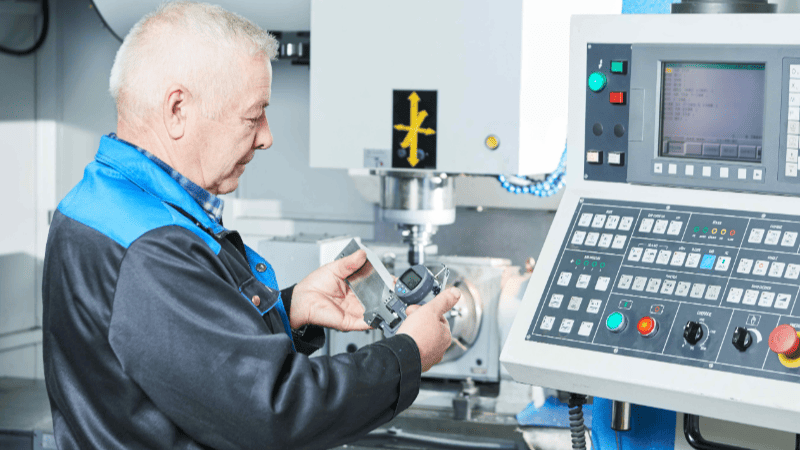
As many machine shops grow, they fail to improve their structures and processes. Inspection, quality control, documentation, and communication don’t follow any standard or rule. This leads to a disrupted workflow, which in turn affects output, quality, and profit.
Shops without standardized workflows hit quality issues
I’ve seen many machine shops with highly advanced tools and machines still struggle with quality issues. Standardized workflow helps improve the system. And lack of this brings more variation that affects quality.
When there are no established standards for quality control, traceability, setup, machining, and finishing processes, etc, inconsistency in quality is likely to occur, even if the quality demand is met. With more guesses and assumptions, there come more errors.
Communication loops break under higher volume
Many machine shops that had succeeded in the earlier years began to struggle after 10 years due to many communication gaps. When there are few experts and employees, information can be passed informally and still be effective.
However, when growth occurs and the population expands, informal communication becomes insufficient, and most shops fail to recognize this.
Guesses and assumptions rally around while important information is lost. This results in additional issues, errors, delays, and poor revenue.
Lack of clear accountability creates rework and blame-shifting
Accountability keeps everyone disciplined in their role, and most machine shops lack this. There is no clear ownership of roles.
From leadership to machining, engineering, and quality control, every activity is done as a whole without a straightforward assignment. The real problem arises when errors and mistakes occur.
Everyone begins to shift blame from department to department, and the issue continues to linger. Rather than solving the problem, everyone tries to defend themselves.
How Successful Machine Shops Break the 10-Year Ceiling
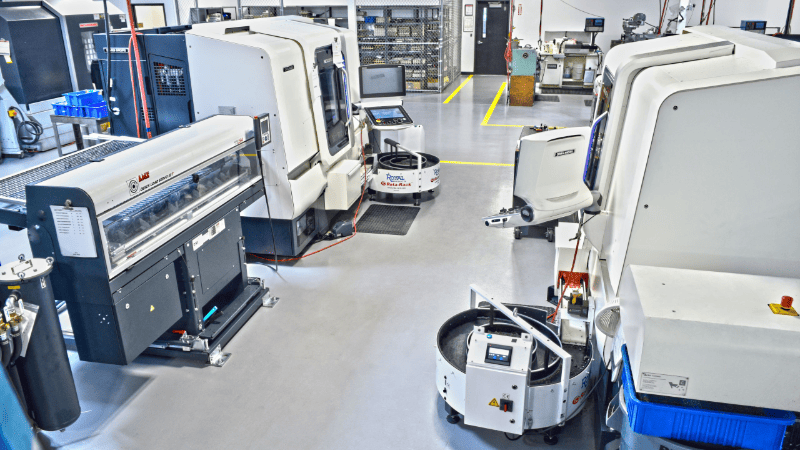
Despite all the struggles, some machine shops still get it right even after 10 years. These are shops that value process control, effective documentation, and adequate engineering.
They focus on the system and aren’t afraid to outsource jobs. They view partnership and collaboration as a strength, not a weakness.
Focus on process, engineering depth, and documentation
While many machine shops struggle after 10 years, a few shops have learnt to break this pattern. These shops understand the importance of structured process, accurate engineering, and consistent documentation.
And rather than continually investing in machines, they pay close attention to adequate documentation and traceability, as well as quality control and inspection, which helps them maintain a balanced workflow.
Build a leadership layer instead of one-person control
These machine shops also understand the logic of leadership layers. Every department has a leader who manages the affairs of its operation. This is usually the best compared to a one-man leader.
This way, many shops can facilitate effective team management. Every department holds on to its responsibility and takes ownership of any mistakes made, which makes resolution faster and systems more effective.
Use selective outsourcing or partners like DEK to stabilize variability
Many top machine shops share a common trait. They accept multiple jobs but don’t have to handle all of them in-house, and this is what keeps their system running smoothly.
These shops don’t even have all the sophisticated machines needed, but they generate a substantial amount of revenue year after year.
These shops are consistently partnering with DEK to maintain a balanced workflow while improving profit margins. They secure more jobs, outsource, and increase their profits; it's that simple.
Summary
When machine shops complain about their struggle after 10 years of succeeding, there’s a pattern I’ve always observed from our conversations.
These machine shops have the required capacity that helped them build their business in the first couple of years. However, as time passes, after 10 years or more, the struggle begins.
Most of these shops fail to understand that consistent success requires effective systems and processes. Activities that were previously carried out informally now require planning and a standardized structure, which most shops lack.
From a lack of documentation, ineffective communication, to poor quality control and traceability, these shops continue to suffer from poor management, leadership, and process control, which affect their growth.
A few machine shops that are able to conquer this pattern are those that value efficient, well-laid-out systems.
They make plans, communicate effectively, invest in quality control, traceability, and documentation, and they aren’t afraid to outsource.
They understand the logic behind partnerships and, as they grow, they consistently collaborate with reliable partners.
From one single project to multiple ones that generate outstanding results. And this is how they continue to expand year after year.
