
Vertical vs Horizontal Milling Machines: What Are Their Differences
The choice between vertical vs horizontal milling machines is an important engineering decision that would predict the trajectory of a project. Although both share the same principle, they are classified according to the spindle alignment.
Analyzing the differences helps us choose the setup that is aligned with the geometric complexities of a design. The first step is choosing the right orientation to maintain structural integrity without compromising the production pace.
What are Vertical Milling Machines?
These machines are high-precision tools characterized by their upright position, which makes a straight up and down motion. The material is fixed to a work table that moves along horizontal axes. This enables the tool to work on flat surfaces, drill holes, and carve shapes with high visibility. This orientation works efficiently because gravity keeps the material in place. This is beneficial for parts that are single-sided.
Advantages of Vertical Milling Machines
- Based on our experience, these machines are more affordable compared to the other type, so this means lower initial investment.
- The orientation gives a better and clearer line of sight. And that simplifies the setup and monitoring.
- These types of machines allow a more convenient and streamlined production layout because they generally occupy less floor space.
Disadvantages of Vertical Milling Machines
- Waste buildup is greatly affected by gravity as it accumulates in the cutting zone.
- In large and heavy-duty setups, the machines may lack the capability to keep up with high-volume waste removal.
- The restriction to machine single sides and the constant need to manually flip to the next side may affect accuracy in complex geometries.
Types of CNC Vertical Milling Machines
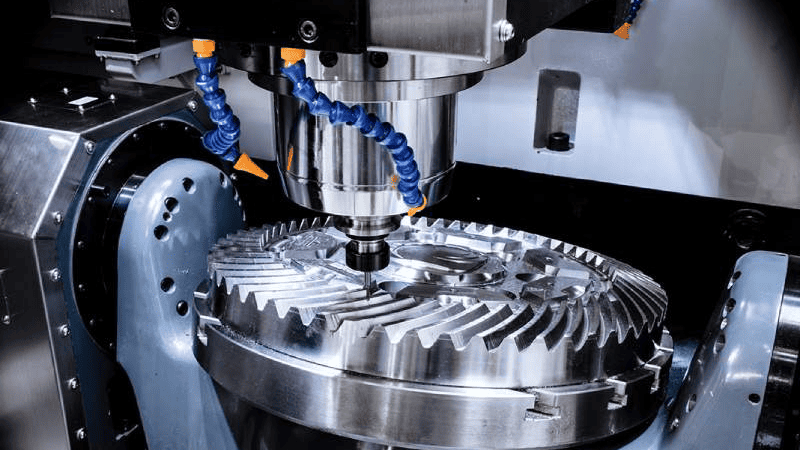
Turret Milling Machines
For small and detailed parts, we use turret mills. This machine, the spindle stays fixed as the table moves the workpiece into the tool. It also has an adjustable head that gives flexibility for various angles and lighter works
Bed Milling Machines
This is built for large-scale and heavy work. In this machine, the table is fixed in a strong base that only moves side to side. While the spindle moves to other angles. The design of this machine gives the needed stability to machine massive components.
What are Horizontal Milling Machines?
This machine has a power-driven tool where the cutting spindle is placed parallel to the floor. The tool rotates sideways. The ideal setup is to feed the workpiece against a horizontal cutter for heavier and deeper cuts. A specifically designed orientation so the waste chips fall off naturally from the part to ensure the cutting path is clear of chips during massive operations.
Advantages of Horizontal Milling Machines
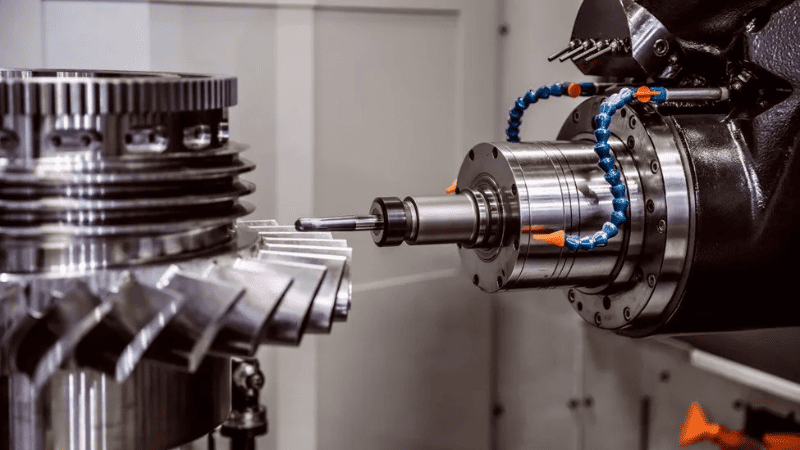
- Clogs are prevented, and the surface stays protected because gravity pulls the metal waste away from the tool.
- The machine’s ability to remove large amounts of metal way faster than other models speeds up production.
- It saves a significant amount of time because the machine can generally work on four sides of a part in a single setup by using a rotating table.
Disadvantages of Horizontal Milling Machines
- Requires bigger initial capital because the machines are generally more expensive to buy and maintain than other types.
- It becomes harder for operators to work and see the cutting clearly because the spindleis horizontal and often enclosed.
- The large machines require heavy-duty foundations to handle weight and power, and a lot of floor space.
Main Differences: Vertical vs Horizontal Milling Machines
Spindle Orientation
The difference between the two is mainly the spindle’s position. The spindle is upright and moving along the Z-axis, pointed down at the part directly for vertical milling. While in horizontal milling, the spindle is mounted parallel to the ground and moves in a sideways position. This position helps the machine use gravity to clear metal waste, unlike vertical machines that usually require the help of coolant or blowers to clear the cutting area.
Tool Geometry
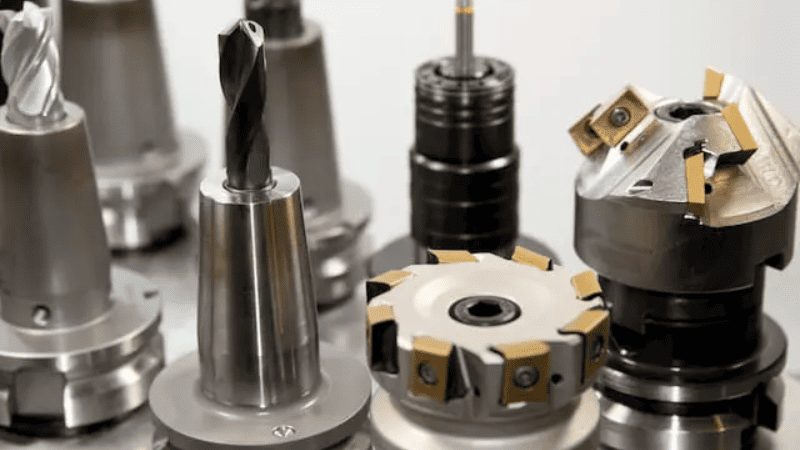
There are also differences in the tool variations in each machine. They vary in shape and application. For vertical mills, there are typically long, thin tools like end mills that are used for drilling and other detailed work. For horizontal mills, on the other hand, use cutters that are shorter and thicker, that looks resembles circular saws. The way the horizontal tools are mounted, the tools are less likely to vibrate, bend under high pressure, and are more rigid.
Cutting Specifications
Vertical machines are used for detailed cutting, which makes them suitable for intricate shapes and fine surfaces where precision happens on a single face. As for horizontal machines, they are designed for heavy cutting tasks, and they can remove large amounts of metal quickly.
Machine Cost
In terms of affordability, vertical milling machines are more affordable. It makes the standard for many production setups. Horizontal machines are generally more expensive. They are often twice or three times more expensive than a vertical unit. The cost difference is often due to tier larer size, integrated pallet systems that are ideal for high-volume production and their complex internal mechanics.
Key Considerations When Choosing Between Vertical vs Horizontal Milling Machines
Cutting Accuracy
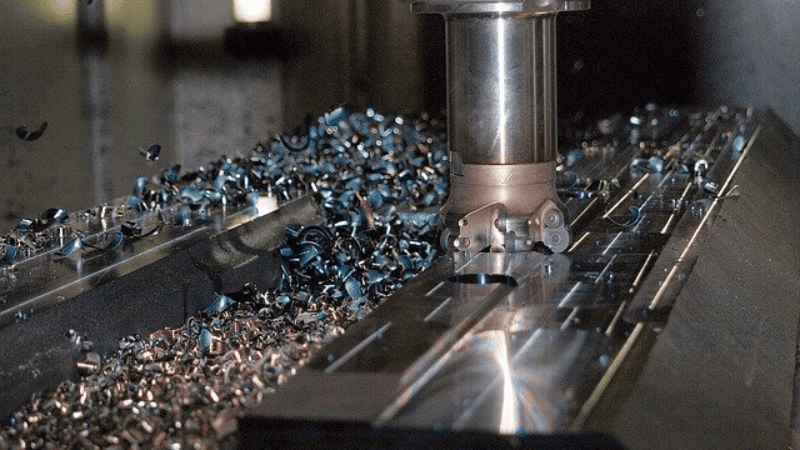
In terms of fine detail comparison between a horizontal vs vertical milling machine, it is usually in favor of the vertical setup applicable for lighter parts. Vertical machines excel at high-precision, delicate surface work because the spindle is closer to the workpiece, and the operators have a direct line of sight. However, if the work is intended for heavy and large parts, the horizontal machine's rigid approach prevents tool wear and guarantees better accuracy, good for long production runs.
Material Removal Rate
The vertical vs horizontal milling machines debate could be settled easily if speed is the top priority. This is the part where horizontal machines are more dependable because they are designed for high MRR (material removal rates). These machines’ ability to use sturdier but shorter tools make tem take deeper cuts and run in higher speed. This makes them ahead in efficiency and speed.
Number of Sides for Machining
Looking at how many sides of a part need work is one of the most practical ways to differentiate vertical vs horizontal milling machines’ capabilities. Vertical mills only handle one side at a time, which means an operator needs to manually flip parts for further work. So in the horizontal vs vertical milling comparison, the horizontal machine is at an upperhand because it features an integrated fourth-axis table that allows it to reach multiple sides in one setup. This increases accuracy and speeds up production.
Customization
Every workplace has different needs, and the vertical vs horizontal milling machines’ parameters may offer levels of flexibility according to what a project needs. Vertical mills offer easy customization for one-off prototype parts for fixtures and jigs. As for horizontal machines that are more complex, they offer a more advanced customization through auto-pallet changers.
Specialized Industries and Applications: Vertical vs Horizontal Milling Machines
Aerospace
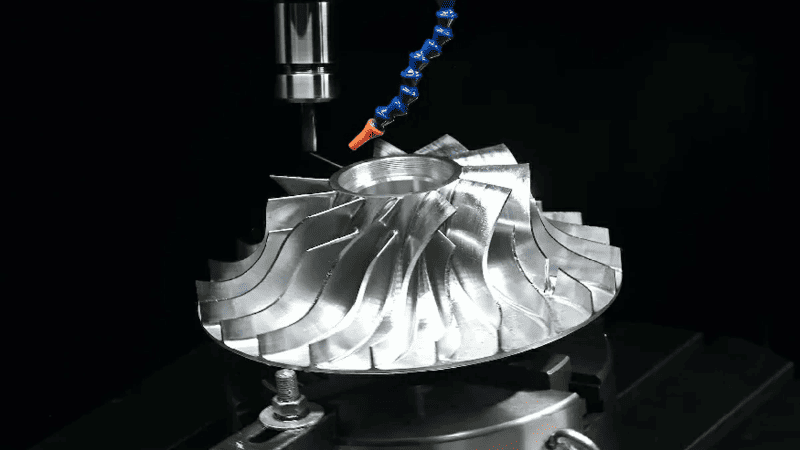
This industry often prioritizes structural components made from titanium or high-grade aluminum in large-scale production. Between the debate over vertical vs horizontal milling machines, horizontal is often the choice. They are essential for components like bulkheads and long wing spars.
Medical Industry
Medical device manufacturing focuses on tiny and intricate parts like joint replacements, bone screws, and surgical instruments. Vertical mill is the choice here because of its ability to do fine-detail work in high precision that is needed for implants.
Energy Sector
The energy sector often needs parts that are bulky and made of extremely tough materials. In terms of the horizontal vs vertical milling machine debate, this industry prefers the horizontal mills. These machines have rigid spindles and higher horsepower used to bore out large blocks.
Vertical and Horizontal Milling Services with DEK
We specialize in vertical and horizontal milling for a variety of industrial applications. Our facility uses advanced technology to guarantee every component meets tight tolerances. Not sure what process to use? Let our team of experts walk you through the distinction between the two processes. Get a quote from us today.
Conclusion
The decision on what process to choose relies on who gives the most advantage. While vertical mills are ahead in detailed work, horizontal machines take the lead in waste removal and speed. Understanding the differences and capabilities helps you choose the right process applicable to your part complexities and volume requirements.
