Surface Finish Symbols: All You Need to Know
When you look at a technical drawing, you might see marks or numbers near a surface. These are called surface finish symbols. If you’re manufacturing or checking parts, it’s important to understand what these symbols mean.
In this blog, you’ll see what each symbol stands for and why surface finish is important in your work.
What is Surface Finish?
Surface finish means how smooth or rough a surface is. Some people also call it surface texture. You’ll often see it on technical drawings, especially when parts need to fit together, move smoothly, or create a tight seal.
What are Surface Finish Symbols?
Surface finish symbols are small pictures or marks you see on technical drawings. They show how smooth or rough a surface should be. You’ll usually find them next to the part of the surface they describe.
These symbols follow rules made by groups like ISO and ANSI. This helps everyone understand the drawings in the same way, no matter where they work.
3 Elements That Make Up Surface Finish
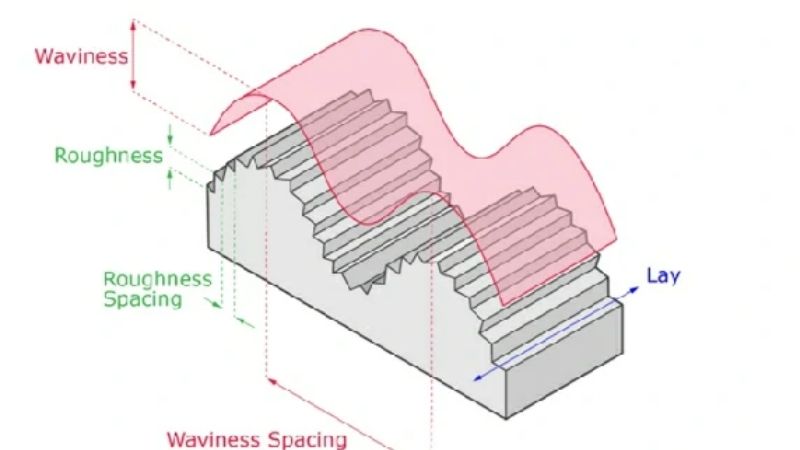
Surface finish has three main parts, and here’s what you need to know:
Roughness
Roughness means the tiny bumps and dips you see on a surface. These are small, detailed changes that usually happen during machining or over time from things like wear or rust.
You measure roughness with values like:
Ra: the average height of bumps and dips
Rz: the difference between the highest peak and the lowest valley
Rt: the total height from top to bottom
Waviness
Waviness is about the bigger waves or curves on the surface. These are wider and more spread out than roughness. They can happen from tool vibrations, machine movement, or material changes.
You measure waviness with:
Wt: the total height of the waves
Wc: how far apart the waves are
While roughness affects small details, waviness changes the overall look and feel of a surface.
Lay
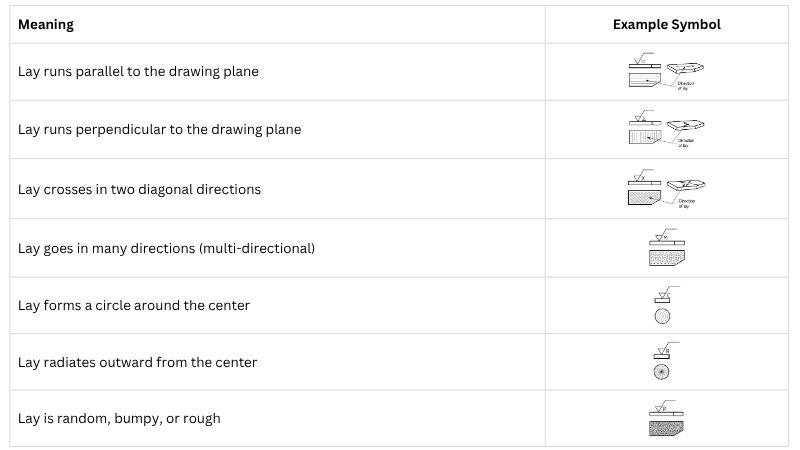
Lay is the direction of the surface pattern. It shows how the tool moved when cutting or machining the part. The lines or marks left behind follow a certain direction, and that’s what we call the “lay.”
Lay affects things like friction, how the part wears down, and even how paint sticks to it. On drawings, you’ll see lay shown as arrows or lines pointing in the direction of the pattern, like across, around, or in all directions.
Common Surface Finish Symbols and Their Meaning
Here are some common engineering surface finish symbols and what they mean. These symbols help you understand how a surface should be made or treated.

Other Types of Surface Finish Symbols
Here are other types of surface finish symbols and values you should know:
| Roughness Grade | Ra (μm) | Ra (μin) | Finish Marks |
| N12 | 50 | 2000 | ∇ |
| N11 | 25 | 1000 | ∇ |
| N10 | 12.5 | 500 | ∇ |
| N9 | 6.3 | 250 | ∇ ∇ |
| N8 | 3.2 | 125 | ∇ ∇ |
| N7 | 1.6 | 63 | ∇ ∇ |
| N6 | 0.8 | 32 | ∇ ∇ ∇ |
| N5 | 0.4 | 16 | ∇ ∇ ∇ |
| N4 | 0.2 | 8 | ∇ ∇ ∇ |
| N3 | 0.1 | 4 | ∇ ∇ ∇ ∇ |
| N2 | 0.05 | 2 | ∇ ∇ ∇ ∇ |
| N1 | 0.025 | 1 | ∇ ∇ ∇ ∇ |
Here is a simple explanation of surface finish height values using two common measurements: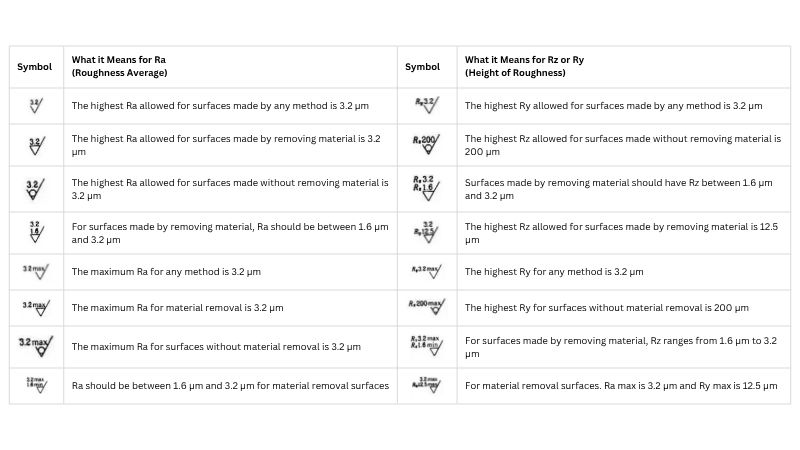
Note: If only a small number (less than 16%) of measured surface values can be higher or lower than the limit, this limit should be shown on the drawing.
Common Surface Roughness Parameters
These values help you check how smooth or rough a machined surface is. Each one measures a different part of the surface’s texture to make sure the part works well and looks good.
| Parameter | Unit | Typical Range | When You Use It |
| Ra | μin/um | 8–500 μin
(0.2–12.5 μm) |
For general machining and medium accuracy |
| Rz | μm | 2–100 μm | For fine finishing and precise surfaces |
| Ry | μm | 10–300 μm | For important parts like sealing surfaces |
| Rt | μm | 5–300 μm | For surfaces that need to handle rough use |
| Rmax | μm | 10–500 μm | Measures the highest peak to the lowest valley, important for tight tolerances |
Surface Finish Callout
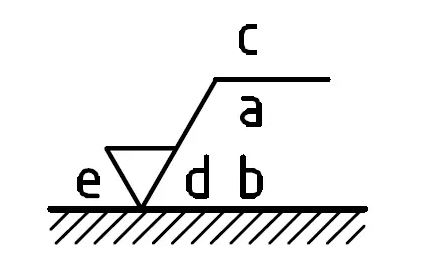
| Symbol | Description |
| a | One surface texture requirement |
| a & b | Two or more surface texture requirements |
| c | Manufacturing method |
| d | Surface lay and direction |
| e | Machining allowance |
Surface Lay Symbols
These symbols help you see the direction of surface texture on technical drawings:
Why is Surface Finish Important?
Here are some reasons why you should care about surface finish:
- Helps parts work better
- Meets how parts need to fit or move
- Matches the materials used
- Makes parts look good
- Can save you money
- Keeps the quality the same every time
- Makes parts easier to make
- Keeps surfaces clean
- Protects against rust and corrosion
- Helps with electrical flow
- Affects how parts handle heat
- Safe for use in the body (if needed)
- Follows rules and standards
- Keeps people safe
- Reduces harm to the environment
How to Measure Surface Roughness?

Surface roughness is measured using special values called roughness parameters. Let’s talk about the most common parameter, which is Ra. This is the average height of all the little peaks and valleys on the surface. You measure how far each point is from the center line and then take the average of those values.
Here’s how you calculate roughness:
Collect Data: First, you use a tool called a profilometer. It moves across the surface and records its shape.
Filter the Data: Next, you remove bigger curves or waves that don’t count as roughness. This helps you focus just on the tiny rough parts.
Calculate Ra: Then, you find the average of all the distances from the center line to the surface. This gives you the Ra value.
Standards and Specifications
There are international rules that help you measure and check surface finish, and some important ones are:
ISO 25178: This covers how to measure and check surface texture, including roughness and patterns.
ANSI/ASME B46.1: This gives rules for measuring surface roughness, waviness, and lay direction.
ASTM E1444: This is for finding surface cracks and flaws using magnetic particles. It’s not directly about surface finish, but it helps check surface quality.
Conclusion
Now you know the basics of surface finish symbols and why they are important. When you understand these symbols, you can make sure parts are made right and work well. Paying attention to surface finish helps you save time, money, and keeps the quality consistent.
If you want help with surface finishing that meets the right standards, DEK is here for you. Reach out to us anytime to learn how we can support your project and make sure you parts look and work their best.