
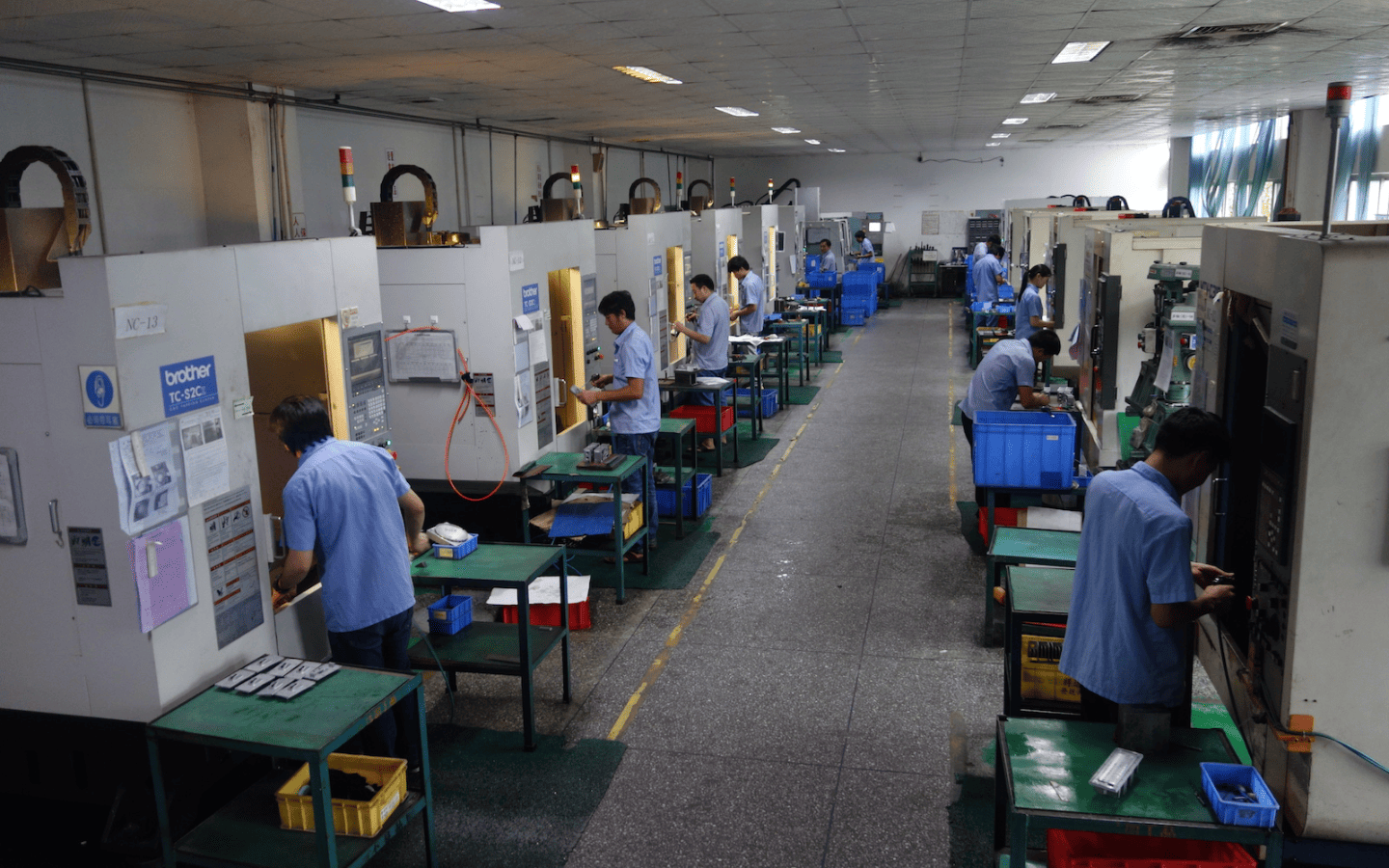
My interaction with many manufacturing leaders over the years has made me understand the challenges many shops face at the 30 to 70-employee phase.
While many of these companies at their early stage perform well even with unstructured processes, undocumented workflows, poor leadership, etc., they find it difficult to maintain good performance as the shop grows.
All of these previous habits are no longer efficient, which makes many shops still struggle.
A large shop with 30 to 70 employees requires strict SOPs, documented workflow and leadership, structured communication, clear ownership, and reliable partnership, etc., which many shops aren’t prepared for.
The result, therefore, is constant firefighting, more scrap work and errors, an ineffective decision-making process, and lots more.
While many shops still struggle with the 30 to 70 employee phase, many successful shops understand what it takes, which helps them scale effectively. In this blog, we explore the crucial topic of why most companies fail between 30 and 70 employees.
The Breaking Point Where Early Habits Stop Working
In the early years of starting a shop, founders and employees utilize unstructured informal systems that actually work, but with larger teams of 30, these habits become insufficient, requiring a need for improvement, which many shops aren’t ready for.
Founder-driven decision-making no longer scales
I’ve seen many machining shops thrive even when the founders are the core decision makers. These are shops with just a few employees. As time passes by, when these shops accumulate 30 employees or more, this strategy is no longer efficient.
From inspection, quoting, to machining and analyzing customers' requirements, etc., many of these founders are still actively involved, creating a major slowdown in the decision-making process.
Informal communication collapses as headcount grows
Moreso, informal communication at this stage becomes insufficient. With a smaller team, efficient communication can occur with just physical conversation.
With more employees, information passed informally is lost, and this creates a need for more structured, digital, written, and well-documented information. Without this, everyone becomes lost, and misunderstanding sets in.
“Everyone helps with everything”, suddenly becomes chaos

In a small shop setting, everyone helps with everything from production to inspection and customer service, and this works fine. With 30 or 70 population counts, this strategy lacks accountability as more projects require attention.
Every role now requires a specialist, and without this, holding people responsible for an error, mistake, or great job becomes almost impossible.
The Leadership Gap That Most Companies Don’t See Coming
As many shops begin to increase in size, many fail to inculcate leadership training into their system. Without this, managing large factories with a larger population becomes difficult, and this inhibits growth.
Supervisors promoted for skill, not leadership ability
Many companies have gradually buried the leadership ability of talents unintentionally. Skills are more appreciated than leadership capability, and as such, a machinist is more likely to be promoted to a supervisor role due to his technical ability.
But in most cases, skills don’t equate to leadership ability. Many supervisors thus struggle with managing people, training others, resolving conflicts, and so on, which are necessary in working with a large group of employees.
No clear process owners for engineering, QC, or production
As the population increases, there is a need for a clear process of ownership. From identifying inspection and quality decision talents to recognizing individuals for programming and machining, every process must be fully assigned to people.
This promotes accountability, helps the team eliminate errors and mistakes, and improves problem-solving efficiency.
Middle management becomes the silent bottleneck
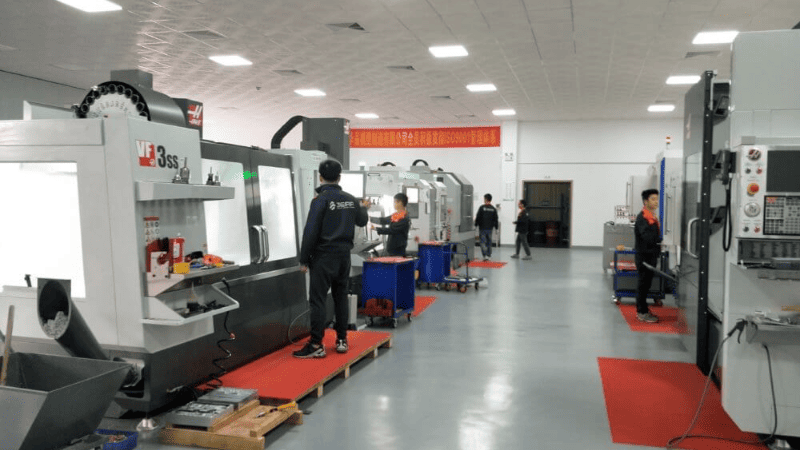
Middle managers in most shops link the leaders to the team. However, these managers are usually not trained and prepared for the structured system required as the company grows.
From decision-making to coordinating teams, managing the shop becomes difficult.
Process Failure at Mid-Scale
When a shop grows, there must be proper documented processes rather than relying on tribal knowledge that breeds quality issues, constant firefighting, variation, and inconsistencies, and so on.
And as W.Edwards Deming noted, “if you can’t describe what you are doing as a process, you don’t know what you’re doing”.
Work depends on tribal knowledge held by a few veterans
I've seen many shops today with more than 30 employees still relying on tribal knowledge. These shops have a set of experts who have worked for many years and understand every major operation within the shop.
While these work well in small teams, larger teams cannot function efficiently with this. Standard Operating Procedures, documented processes, and training, etc. are needed to keep mid-sized shops running every time.
Quality issues multiply when multiple shifts or teams exist
With multiple shifts, there are bound to be more variations and inconsistencies. Different employees from several shifts might interpret accurate finishing or tolerance range differently.
Without standardized quality control, clear processes and protocols, inconsistencies increase, which leads to more rework and scrap rates.
Lack of documentation and review causes repeated mistakes

Without a proper documentation and review process, shops are likely to make the same mistake repeatedly.
With accurate documentation, everyone understands how processes work, new talent can easily blend and learn, errors made initially are documented, thereby preventing more occurrences, and lots more.
In fact, documentation serves as the memory of the factory, and without this, growth cannot happen.
Firefighting replaces improvement as the default culture
And with more errors and mistakes, inadequate documentation, firefighting becomes a major daily task, leaving no space for meaningful improvement.
Time that’s supposed to be spent on major factory processes, training, and learning is being wasted on firefighting. And as time goes on, production inefficiencies set in when everyone is burned out.
The Cultural Split Between Early Employees and New Employees
While old employees most of the time find it difficult to adapt to structured and standardized systems, new employees value it for easy onboarding and adaptation to the company. Without proper inculcation, there are bound to be more internal issues within the company.
Early team resists structure and feels “the company has changed”
In most shops, early team members who have been in the shop for years often find the modern structured workflow unnecessary. They are most times comfortable with how processes work and aren’t ready to adapt to new systems.
As such, leaders must help them understand why a new structured system is important to their growth and that of the company as a whole.
New staff can’t function without clarity and standards

New employees, on the other hand, need a clear, structured system, guidance, training,
SOPs, documented procedures, and so on can make their onboarding and adjustment to the company easy. Without these, new staff find it difficult to adapt to their new roles and perform well.
Misalignment creates tension, turnover, and inconsistency
When new employees seek standardized processes and old employees aren’t ready to adapt to structured systems, misalignment occurs.
Values, priorities, and methods become divided into two, and this creates more tension, internal conflict, quality issues, and inconsistencies, etc. This ultimately affects company productivity, growth, and reputation.
The Financial Pressure That Hits After 30–70 Employees
With more employees comes more financial pressure as there comes a need to invest in payroll, utilities, rent, training, middle management, and so on. All of which might not generate immediate revenue.
Costs rise faster than revenue during transition
As shops expand and new employees are recruited, cost increases. From HR to accountants, more non-operational roles are included. While these job roles don’t directly contribute to the company’s return, they incur more costs.
Even operational employees like machinists and programmers who are newly added must be trained. All of these attract more cost, but revenue might not be generated on time.
Cash flow becomes unpredictable due to increased overhead

With a larger employee size comes more payroll, rent, and utility costs. A little delay from a major customer could significantly affect payroll and operational tasks.
As such, companies need to invest more in financial bookkeeping, budgeting, and forecasting to eliminate inefficiencies and cash flow disruption.
Investment in systems, training, and middle management is unavoidable
Moreso, there comes a need to invest in systems, training, and middle management as employees grow to 30 and above.
From leadership training, adequate tooling management, structured workflow, and so on, these systems must be put in place to enhance growth, production efficiency, and scalability.
Many companies buy machines instead of fixing the real problems
As shops continue to encounter fewer returns, they invest in more advanced machines like 5-axis CNC machining, hoping it'll generate more income.
However, without solving issues with an unclear system, poor workflow, and inefficient leadership, growing the shop as employee size increases becomes difficult.
What I’ve Observed Working With Growing Manufacturing Teams
Collaborating with many manufacturing teams has made me understand that growth and scaling occur with a structured system and processes, visibility and accountability, good leadership, and so on.
Companies that fail rely on heroism instead of systems
From experience interacting with many shops, I’ve seen many still rely on a few heroes for major operations. While this works with small shops, it fails as the company expands.
The few heroes are overworked and burned out, which usually leads to production efficiencies. Companies that succeed set systems that help distribute knowledge.
They have a documented workflow that allows even new talents perform at their best. And as Shigeo Shingo said, “Standardization is the foundation for continuous improvement”.
Companies that succeed build processes, visibility, and accountability
Most companies that succeed build a standardized workflow, encourage accountability, and carry out performance tracking.
Everyone understands their responsibility and is held accountable for it. This makes problem-solving easy with less firefighting. Moreover, everyone performs at their best, making scalability and growth possible.
DEK’s own growth required shifting from “hard work” to “structured work”
Over the years at DEK, we’ve learnt that, although hard work pays, structured systems pay more. And as such, we’ve invested more funds, time, and effort in building a stable workflow.
From quoting to machining, programming, quality control, etc., every process has standardized structures. And this has helped us scale, grow, and build a larger employee size over the years.
The transition only succeeds when leadership upgrades, not just headcount
Scaling effectively isn’t only about adding new employees. Without good leadership, the system will continue to suffer, and growth might not happen as expected.
As such, a leader within a shop must invest in personal development, training others, encouraging accountability, and so on. Without this, even with large capacity and sophisticated tools, scaling might not be feasible.
What Companies Must Build Before Scaling Beyond 70 People
As employees start to grow to 30 and above, companies must build a clear ownership for engineering, QC, production, etc., maintain documented workflow, train their leaders, and collaborate with external partners.
Clear ownership for engineering, production, QC, and planning
When a shop starts growing its employees, every critical role must have dedicated ownership. Engineering, production, quality control, etc., must have a leader who ensures every necessary KPIs are met, and the team is held accountable.
With clear ownership and accountability, there’ll be fewer mistakes, faster decision-making, and expertise building.
Documented workflows that reduce variation and ambiguity
With standardized procedures and documented workflows, consistency is ensured while variation is reduced as much as possible.
This allows teams to follow a strict standard process that generates the same quality and precision every time. Moreover, this reduces reliance on tribal knowledge while encouraging effective training for new employees.
Leaders trained to manage—not just do
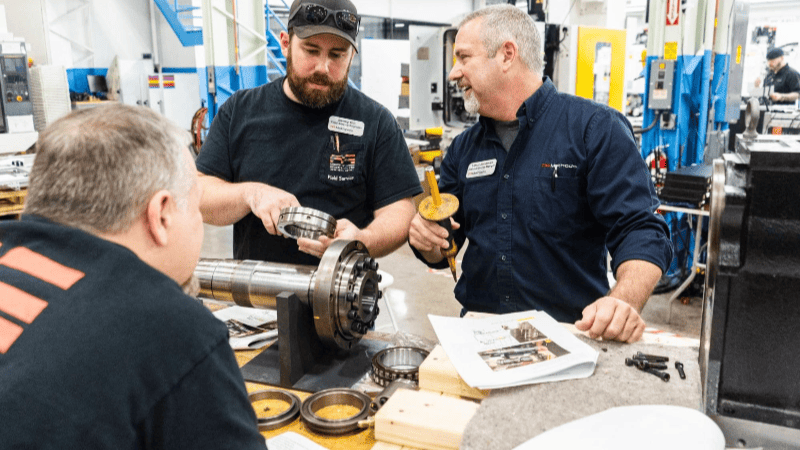
And when shops appoint leaders, they must provide them with adequate management training so they can succeed in the role.
From time management to conflict resolution, communication and delegation training, etc., these leaders must learn how to deal with people and the best strategies to make decisions. With proper training comes fewer hurdles for the top management.
A hybrid model using trusted partners to avoid overload while internal systems mature
Many successful shops today have learnt to collaborate with external partners as they grow. They take in more projects and outsource specialized processes. This helps them eliminate work overload, allowing internal systems mature.
These shops most times don’t have to invest in all machines and tools; however, they still generate a lot of output and scale effectively by simply leveraging external partners.
My Perspective
As a CEO with many years of manufacturing experience, I can say the 30 to 70 employee stage is a critical one that dictates whether most shops continue to succeed or experience setbacks.
I’ve seen many shops today still operate in an informal setting with unstructured processes and communication, undocumented workflow, lack of role ownership, etc., even when they have up to 30 employees.
As such, these shops struggle to keep up with the new demand but suffer from constant firefighting.
Successful shops are able to manage these phases through clear role ownership, structured processes and documented workflow, leadership training, effective collaboration with external partners, and so on.
These shops understand that building systems and structures is crucial to managing a company with a large employee size, and this has helped them scale effectively compared to most struggling shops at this stage.
