
Melting Point of Magnesium: Informative Guide
When you work with metals, it’s important to know how they react to heat. The melting point of magnesium is lower than that of many other metals. This makes it easy to shape, but also means you need to handle it with care.
In this guide, you’ll learn the melting point of magnesium, what affects it, and where it’s used.
What is Magnesium?
Magnesium is a chemical element with the symbol Mg and atomic number 12. It’s the eighth most common element in the Earth’s crust. You’ll mostly find it in minerals like magnesite and dolomite. It’s also found in seawater.
To get magnesium, people use methods like electrolysis or precipitation. In factories, magnesium is usually made by taking magnesium chloride from seawater or salty water (brine) and separating it using electricity.
Magnesium is very light. Its weight is about two-thirds that of aluminum, which makes it one of the lightest metals on the periodic table. Here are some properties of magnesium:
Boiling point: 1090°C (1994°F)
Density: 1.74 grams per cubic centimeter
Electronegativity: 1.00 (on the Pauling scale)
Melting Point of Magnesium
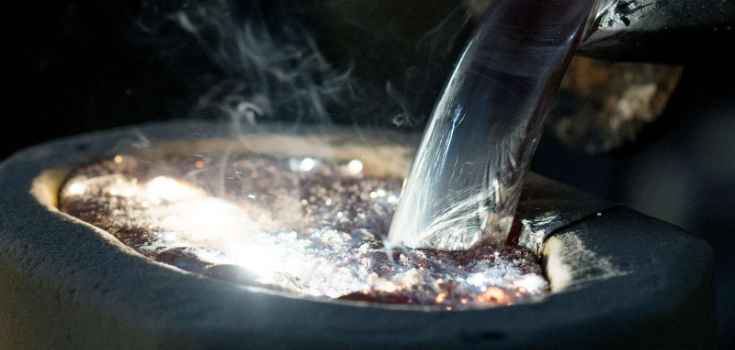
Magnesium melts at 650°C (1,202°F). That’s a low melting point compared to other metals like iron, which melts at 1,538°C (2,800°F), and even aluminum, which melts at 660°C (1,220°F).
Because it melts at a lower temperature, it’s easier for you to use magnesium in processes like die-casting and metal injection molding. This is helpful when you need to make parts with detailed shapes and designs.
Benefits of Magnesium
Aside from using magnesium when weight matters, as it’s one of the lightest metals, here are the other benefits of magnesium:
- Even though it’s light, it’s still strong enough when mixed with other metals.
- It’s easy to cut, shape, and drill, which saves you time and effort.
- It melts at a lower temperature, so it’s great for making complex shapes.
- It spreads heat well, helping prevent overheating in things like electronics.
- You can recycle it without losing its quality.
- When you mix it with aluminum or steel, it makes them stronger or lighter.
Factors Affecting the Melting Point of Magnesium

When you mix magnesium with other elements like iron or silicon, they can lower the melting point. If you add other metals to pure magnesium, you create alloys, and these have different melting points.
For example, if you add aluminum to magnesium, the melting point goes up. But if you add zinc, the melting point goes down a little.
Magnesium Alloys Melting Point Ranges
Here’s a simple table showing the melting point ranges of magnesium alloys:
| Alloy Type | Melting Point Range (°C) | Melting Point Range (°F) |
| Magnesium-Aluminum (Mg-Al) | 900°C – 1040°C | 1652°F – 1904°F |
| Magnesium-Zinc (Mg-Zn) | 590°C – 630°C | 1094°F – 1166°F |
| Magnesium-Manganese (Mg-Mn) | 620°C – 650°C | 1148°F – 1202°F |
Applications of Magnesium Melting Point in Industries
Here’s how you might see magnesium used in different industries:
Aerospace Industry

It’s used in aircraft frames and panels to improve fuel efficiency and performance. Magnesium alloys are also used in engine parts, which helps make engines more efficient and functional.
Automotive Industry
In cars, magnesium helps reduce weight, which improves performance. It’s used in engine blocks and cylinder heads to make the vehicle lighter, which improves fuel economy and reduces emissions. Magnesium is also used in transmission housings and wheels, helping with handling and acceleration.
Electronics
It’s used in the casings of laptops and smartphones to make them durable but portable. Magnesium alloys are also used in camera bodies to make them strong without adding extra weight.
Medical Devices
Magnesium is safe for your body, so it’s used in medical devices. It’s used in biodegradable implants and prosthetics because it can dissolve in your body without causing harm. Magnesium alloys are also used in orthopedic devices to make them lighter and more comfortable.
Comparison with Other Metals
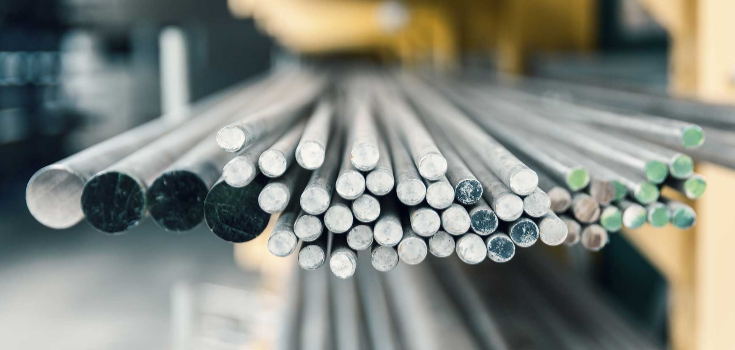
Magnesium has a lower melting point than many structural metals but a higher melting point than some other lightweight metals like zinc. The table below shows a comparison of the melting points of magnesium and other metals.
| Metal | Melting Point (°C) | Melting Point (°F) |
| Magnesium | 650°C | 1,202°F |
| Aluminum | 660°C | 1,220°F |
| Zinc | 419.5°C | 787.1°F |
| Iron | 1,538°C | 2,800°F |
| Steel | 1,370-1,540°C | 2,500-2,800°F |
| Copper | 1,984°C | 3,623°F |
| Titanium | 1,725°C | 3,135°F |
| Chromium | 1,907°C | 3,465°F |
| Nickel | 1,455°C | 2,651°F |
| Tungsten | 3,422°C | 6,192°F |
| Silver | 961.8°C | 1,763°F |
| Lead | 327.5°C | 621.5°F |
| Tin | 231.9°C | 449.4°F |
| Cobalt | 1,495°C | 2,723°F |
| Platinum | 1,768°C | 3,214°F |
| Cadmium | 321°C | 610°F |
| Antimony | 631.5°C | 1,168°F |
| Scandium | 1,541°C | 2,806°F |
| Lithium | 180.5°C | 356.9°F |
| Silicon | 1,410°C | 2,570°F |
| Phosphorus | 44.1°C | 111.4°F |
| Oxygen | -218.79°C | -361.82°F |
| Nitrogen | -210°C | -346°F |
| Sodium | 97.8°C | 208°F |
| Fluorine | -219.67°C | -363.41°F |
| Argon | -189.35°C | -308.83°F |
| Selenium | 221°C | 430°F |
| Manganese | 1,246°C | 2,275°F |
| Sulfur | 115°C | 239°F |
| Barium | 727°C | 1,341°F |
| Zirconium | 1,855°C | 3,371°F |
Recent Development in Magnesium Melting Point

There have been some recent improvements in the melting point of magnesium. For example, adding magnesium to zinc can make zinc perform better.
These developments have also made it easier to process magnesium alloys, which are important for many uses.
Here’s a summary of the key findings:
| Aspect | Key Finding | Description |
| Ignition Point | Increased by 200-300°C | The National Institute of Advanced Industrial Science and Technology improved this with special processing techniques. |
| Properties at Melting Point | Density of pure solid Mg: 1.74 g/cm³ (at 20°C) | Density of molten Mg: 1.59 g/cm³ (at melting point) |
| SLM Process Challenges | Burning during SLM due to low melting point (923 K) | Alloying with other elements helps reduce burning |
| Process Parameter Optimization | Molten pool size and laser power | Higher laser power increases the pool size. Finding the right balance of power and speed helps reduce defects like porosity and “balling” in SLM. |
Conclusion
Magnesium has a melting point of 650°C (1202°F), which is relatively low compared to many other metals. This affects how it’s processed, alloyed, and used in different applications. Its low melting point makes casting easier and helps keep it lightweight, but it also means you need to handle it carefully to avoid safety risks.
At DEK, we offer CNC machining and die-casting services for different industries. We’re committed to delivering reliable and excellent results. For a free quote, contact us now.
FAQs
Does magnesium have a low melting point?
Yes, magnesium has a low melting point. It is due to its atomic structure and the forces between its atoms. Its hexagonal close-packed (HCP) structure is less tightly packed, so the bonds between atoms are weaker and easier to break. Additionally, magnesium’s low atomic mass means the forces between its atoms are weaker, requiring less energy to melt.
Is magnesium rust proof?
Magnesium doesn’t rust like iron; instead, it corrodes quickly when exposed to air and moisture. To protect it, magnesium is often used as a sacrificial anode in cathodic protection systems, such as in pipelines and water heaters.
What is the boiling point of magnesium?
Magnesium boils at 1,090°C (1,994°F), which is the temperature at which it changes from a liquid to a gas. This high boiling point makes it suitable for high-temperature applications.
Why melting point of magnesium is lower than calcium?
Magnesium has a lower melting point (650°C) compared to calcium (842°C) because its smaller atomic size leads to weaker metallic bonds. This weaker bonding requires less energy to break, resulting in a lower melting point.
