
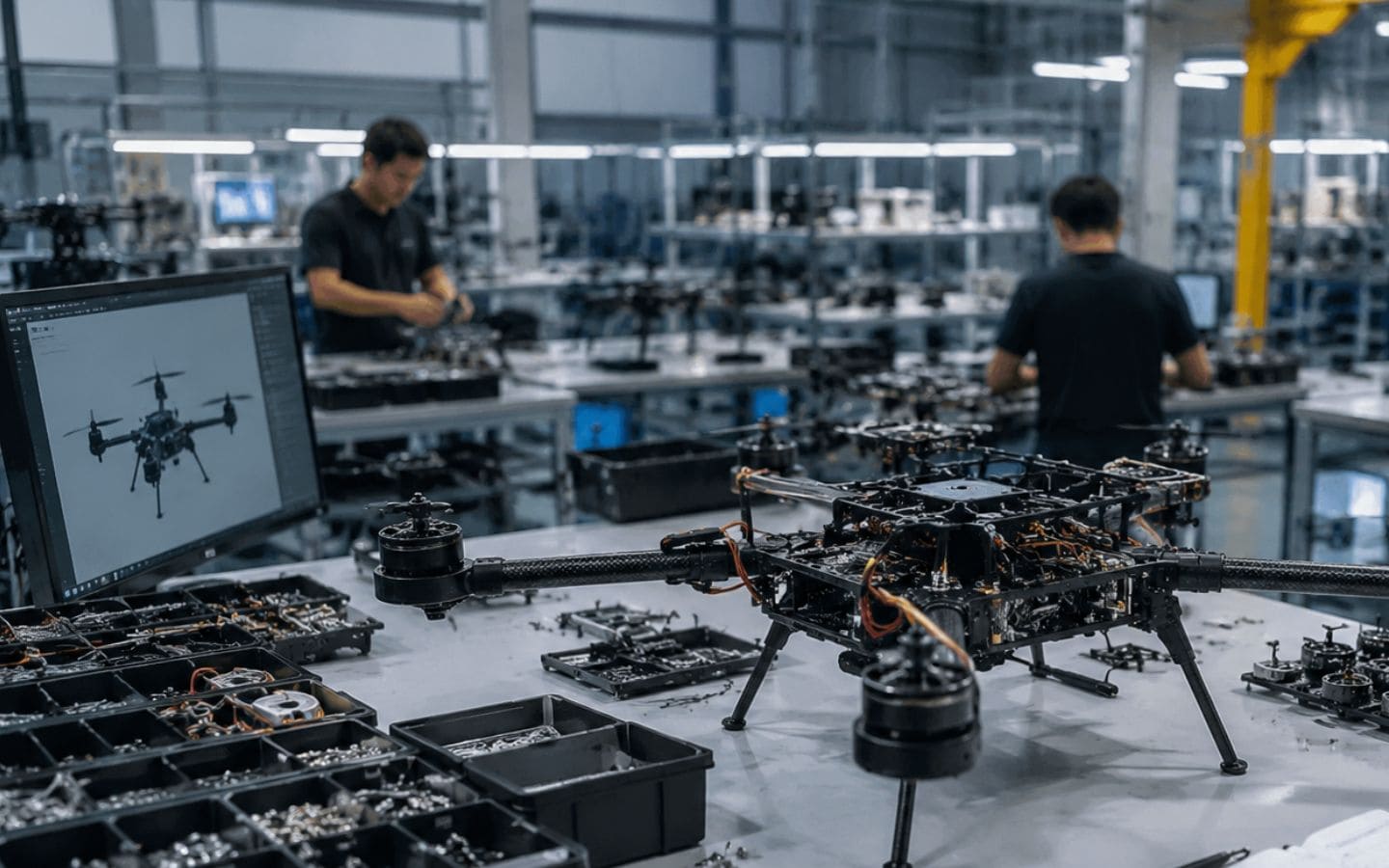
For several years now, I have been watching the development of the drone market as it moves from a specialized technology industry to a logistics, agriculture, infrastructure monitoring, defense, and emergency response industry. There are some incredible achievements, but there is also something that I find quite recognizable about this process. Too often, the drone companies create great models but struggle when it comes to manufacturing a lot of them all at once.
Creating a working drone is already a great accomplishment. But producing drones in such a way that they all will fly in the same manner is something totally different and requires certain skills. In my experience, I have found that the shift from prototype to production is a stage that helps strengthen the core operations of many promising UAV companies. This stage also exposes the most serious problems that these companies were previously unaware of.
Companies that plan production early and invest the effort to develop the product to anticipate demand have a significant edge. While the companies that wait to create their items until demand increases face more obstacles and stress.
With drone scaling failures I’ve seen, there are rarely design problems. Instead, issues almost always stem from a lack of revision control from CAD to the suppliers.
Why Drone Hardware Becomes Difficult to Scale
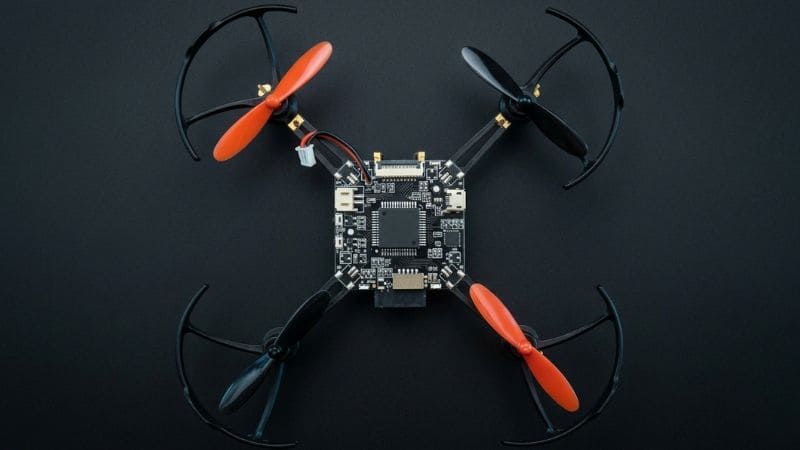
Manufacturing drone hardware becomes difficult since every design decision will impact performance. The engineers always aim for more light components, better endurance, increased load capabilities, and improved aerodynamics, which results in lower tolerances in production.
The thin-walled component, such as a motor mount, an arm, or structural housing, that performs well in simulations and tests becomes harder to produce because of the precision required for machining, fixturing, and inspection processes. It is possible for the material to deform when being machined, and the slightest dimensional tolerance might affect the assembly of the component or induce vibrations in flight. When a motor mount hits a 0.2mm tolerance, it is almost never a machining issue. It is most often a failure of documentation discipline.
Unlike many other industrial products, the drones function as an integrated system, so mechanical precision, electronic calibration, and performance of the software are interconnected. Even a slight dimensional tolerance on drawings might have an impact on the operation of sensors, the balance of propulsion, or the camera in flight.
Also, engineering speed is an issue. Drone manufacturers develop and release many iterations of their designs in quick cycles. If engineering revisions are not properly controlled and coordinated between the engineering and manufacturing groups, then the suppliers will likely build components based on old drawings, causing unnecessary delays and rework.
It’s not enough to just manufacture faster. The complexity of manufacturing requires you to maintain the engineering intent.
The Hidden Challenges Behind Scaling UAV Production
One common misconception is that scaling involves ordering more raw materials and using more machines to produce and ship more goods. In reality, it's much more complicated.
"Quality is never an accident. It is always the result of intelligent effort," wrote John Ruskin. His words are getting truer as the production process is scaling up. Consistent quality is achieved through careful engineering and planning, not by inspecting the final product.
At the higher volume, tolerance management is becoming crucial. Each piece passes inspection, but the sum of their variations may influence the assembling process and create issues with the structure and reliability of the final product. Tolerance stack-up should be managed with care using GD&T, proper inspections, and precise manufacturing process.
This phase also brings some changes to the documentation. Engineering drawings, inspection plans, and revision management are now needed. Traceability, material certifications, and quality records are necessary to guarantee the consistency of each production batch, no matter its place and time.
One aspect that is often neglected is process capability. Making one piece correctly will demonstrate the machining capabilities. But making many pieces with minimal variation will demonstrate process capability. The reason for this is that you have to set up consistently, you have to have verified fixtures, controlled tooling, and people who know why the piece is being made.
During the initial stages of product development, these systems often receive significantly less immediate attention. However, these systems become critical as production scales.
What I’ve Seen From UAV Teams Entering Growth Phase
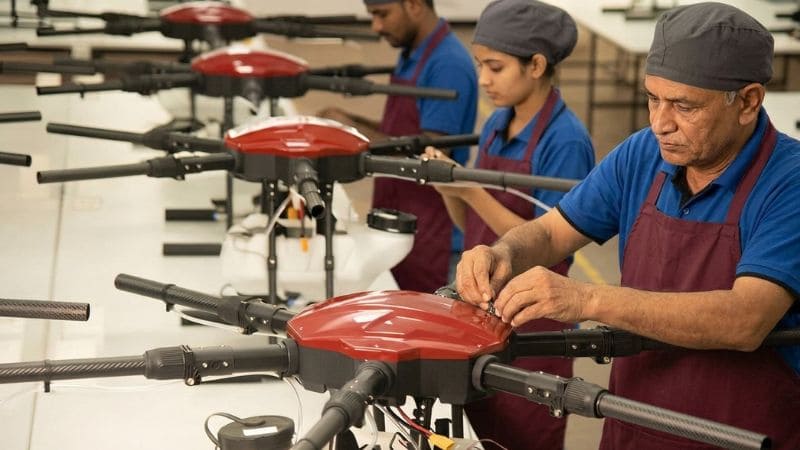
I've been with teams whose initial prototypes demonstrated extraordinary flight characteristics, but whose initial productions have provided significantly different performances.
The design itself was not flawed. The problem lay in the consistency and not the innovation.
I've witnessed occasions wherein variation in dimensions among the structural components has caused software engineers to adjust for hardware differences via tweaking the flight controller's software. While this is often effective at correcting other issues, it should not be relied upon to correct a mechanical inconsistency.
Then there's the problem of customer demonstrations and field trials. Delays in manufacturing due to missing machined parts, unreliable supplier delivery times, or failed inspections may cause critical deadlines to be missed by weeks, if not months. This can have implications for startups that are running on investment timeframes. For certain levels of investment-based startups, delays will impact more than just production settings.
The European drone company I have consulted has gone through numerous iterations of design due to the varying interpretations of drawings among multiple suppliers. Also, an agricultural drone project team found out that products assembled from separate batches needed different calibration techniques because the difference in component parts exceeded their estimates. Both of them were deficient in engineers.
Moreover, I have observed that many drone founders look to professional manufacturing firms only when their current suppliers fail to meet increased demand. By that time, schedules are already behind, customer needs have already changed, and development progress is already compromised.
Building the Right Manufacturing Foundation
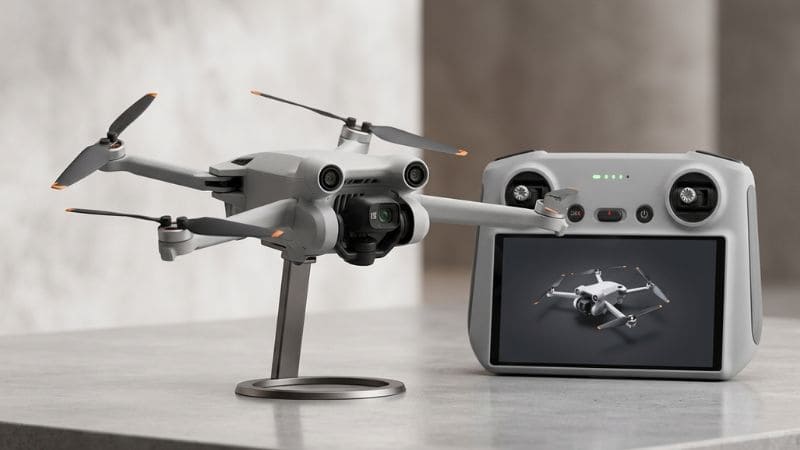
Preparation for manufacturing begins far before the first significant order arrives. The most reliable production processes emerge via discipline, documentation, and methodical engineering methods.
In one of his famous quotations, Taiichi Ohno, one of the pioneers of the Toyota Production System, reportedly said, "Without standards, there can be no improvement." This principle is still relevant in UAV production today.
Creating standards around crucial dimensions and employing GD&T when the functional performance of components is dependent on accuracy ensures that all suppliers understand what is important. Everyone engaged understands the engineering objective without having to rely on interpretation.
It is equally important to build repeatable fixture strategies. Reliable workholding, consistent machining setup, and proven cutting processes allow for the production of identical parts regardless of who runs the machines or when they are created.
Furthermore, I would suggest that my teams adopt a formal process of first-article inspection before ramping up production volumes, since this can save the organization from many quality problems down the road.
In addition, another lesson that I have learned is the importance of dual-sourcing. Relying only on one machining supplier entails too much risk for the organization. It is better to qualify another supplier early so that there is flexibility and still no compromise on consistency, as customer demand varies.
How to Strengthen the Supply Chain for Volume
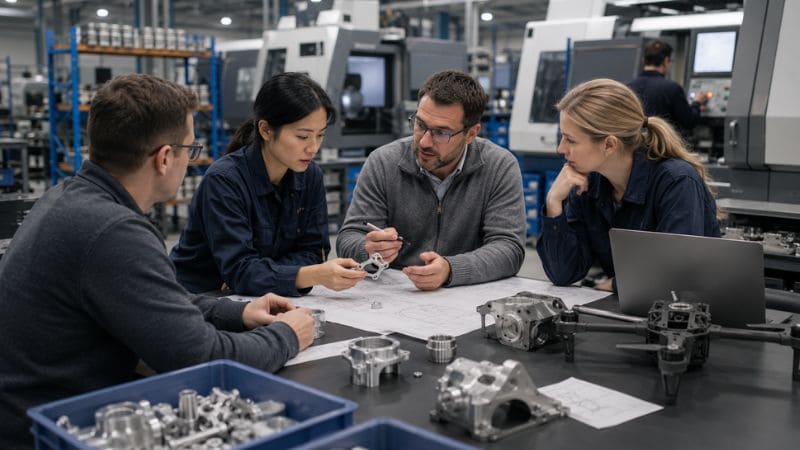
With increasing volume, supplier relationships will take on new importance as strategic considerations, not just transactions.
For drone companies, collaborating with partners who are knowledgeable about light-weight designs, thin walls, and multi-axis machining is a good choice. Having experience in these areas can lead to reduced development times since manufacturing feedback is provided early in the process.
In addition, communication plays an important role. Engineers need to communicate with machinists about tolerances, datum structures, inspection priorities, and manufacturability on a regular basis. There are many improvements that can be made through conversation that will not show up in the CAD files.
It is also critical to plan out capacity requirements. Product releases, sales agreements, and seasonal demand do not usually occur in a predictable pattern. Being able to have access to external manufacturing capacity allows flexibility to work during peak times without investing more in internal capacity.
Supplier audits are another way to create a strong relationship between engineering and the supply chain. Looking at inspection practices, equipment maintenance, calibration procedures, and process controls can highlight areas that could be improved before quality or delivery falls below expectations.
In the end, competitive pricing isn’t the only thing that goes into a resilient supply chain. Rather, it involves transparency, technical collaboration, and the same expectations across the chain.
Preparing the Organization for Scale
The readiness to manufacture is not only about having adequate equipment and suppliers, but also about how people interact.
As an organization grows, specialization in engineering roles increases. Product performance is managed by design engineers, manufacturing engineers manage the manufacturing process, and validation specialists make sure that the product works reliably under operational conditions. Specialization makes everyone involved use their skills and remain aligned within the product life cycle.
Cross-functional collaboration becomes even more important. Manufacturing constraints must shape the decisions made at the design phase, and engineering changes should be known in advance of production start. If all departments act separately, even small changes could result in unnecessary lags inside the organization.
Planning becomes more coordinated as well. Hardware development, testing, supplier readiness, and manufacturing plans should complement each other and not struggle for resources. Such companies can be faster when reacting to demand growth from
My Perspective
I have come to realize that manufacturing maturity is not measured by the quantity of machinery used on the shop floor nor the size of the production orders placed. This is demonstrated by how effectively a firm can maintain the same high quality amid changing schedules, design requirements, and rising customer demands.
Drones will become more advanced with time, incorporating improved materials, greater autonomy, and tougher uses. But no matter how advanced the craft itself becomes, the basics of manufacturing will stay the same: proper discipline, trusted partners, and good communication.
Scaling up will be about not only building more drones but also developing an organization capable of consistently converting innovations into reliable products. This is the backbone that customers remember long after the first flight success.
From my perspective, the primary participants in the unmanned aerial vehicle business over the next decade are unlikely to be the fastest and most autonomous aircraft manufacturers. The primary participants will be businesses that can maintain the same precision over thousands of such planes as they did with the first one.
