
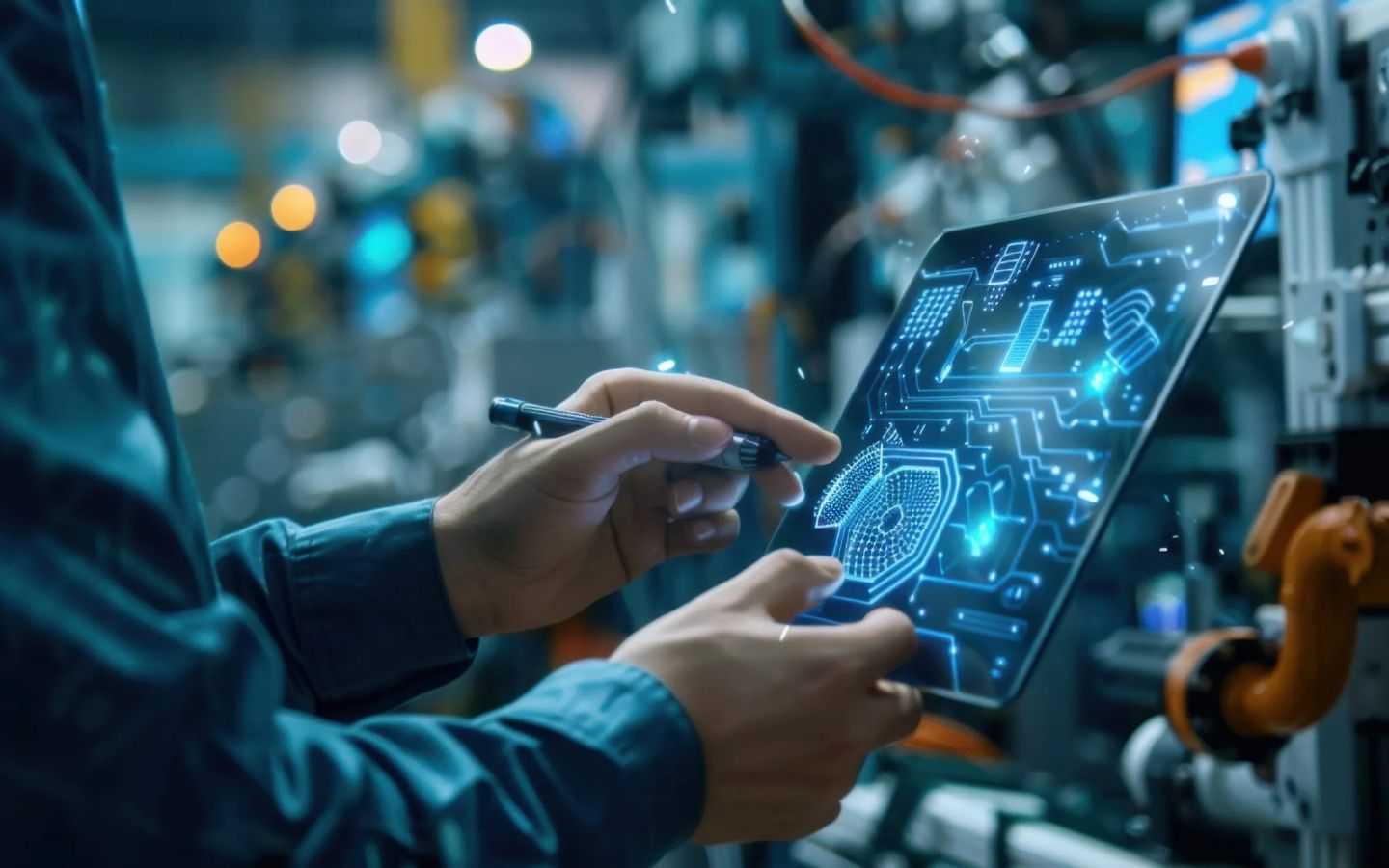
Over the past few years, I’ve noticed AI quietly changing the manufacturing industry. In the previous years, customers were concerned about quality, faster, and more durable machines.
Today, they expect more. They want machines and equipment that can be integrated into AI systems. One that can support data gathering, processing, and AI decision-making and performance.
From healthcare, agriculture, drones, to automotive, logistics, and lots more, sophisticated, AI- driven hardware is required.
But the cogent question remains: are manufacturers ready to meet these needs? In this blog, we'll explore the AI-driven industries manufacturers should watch closely.
Why AI Will Trigger a Global Hardware Replacement Cycle
Gone are the days when machines were designed to follow instructions. AI will change how machines work. Hardware will be made to support AI use, from information gathering, processing, storage, and decision making.
From fixed logic to adaptive systems
Most industrial hardware and machines are built to follow simple instructions. And that works perfectly. With this new AI system, AI learns from data and makes decisions based on analyzed information.
This pushes the need for more sophisticated hardware with more processing power, memory access, etc.
Legacy equipment can’t support real-time AI
AI works with accessible data to make decisions. Legacy equipment can’t support this because it can only gather and store little information.
To meet up to, equipment must be designed to enhance AI performance. As such, they must support real-time data gathering, processing, and transfer.
Hardware life cycles will shorten
In the past years, hardware was designed to last for decades since they work routinely based on instructions.
Today, AI improves every time with more functions, and this warrants the need for upgraded machines. As such, hardware is prone to shorter life cycles because even if they still run well, they might be outdated.
AI demands new sensing and data paths
While AI makes decision-making easier, it relies on relevant data to do that. And the more useful, accurate, and accessible the data is, the better. As such, hardware must be designed with the right sensor to aid data paths.
Manufacturers must understand where AI reshapes equipment
I’ve seen many factories today believe AI is the sole concern of the customers. But in the actual sense, machines and equipment must be manufactured to support AI use.
They must understand how to inculcate AI into hardware design, and it’s by doing so that AI performance can improve.
Healthcare & Medical Diagnostics

AI is rapidly improving how the medical diagnostics system works, from AI imaging interpretation to automated lab analysis to smarter workflows and connections.
AI imaging interpretation
AI systems are now being used to enhance imaging interpretation, like X-rays, CT scans, and ultrasounds.
As such, imaging devices must be designed to produce accurate and clear images, eliminate vibration and noise, and maintain proper alignment. Any deviation from this affects image quality, which inhibits AI interpretation.
Automated lab analysis
Many diagnostic centres now use AI-enhanced systems to automate blood, urine, and tissue analysis. Machines are now being used to run tests while the AI system analyses.
As such, hardware must be manufactured to ensure effective fluid handling, tight tolerance parts, and be repeatable for accurate medical diagnostics.
Smarter diagnostic workflows
AI-enhanced medical systems now improve workflow. Hardware must be designed to aid this. Diagnostic devices should be easily connected to medical records and other equipment. And as such, they should come with a reliable data transfer, power supply, and mechanical layout.
Continuous patient data insights
Beyond diagnosis, devices are now used to gather valuable data about patients to detect any fluctuation. As such, hardware must function accurately for longer periods, ensure sensor reliability without recalibration, and be comfortable and safe for patient use.
Hospital Equipment & Patient Monitoring

AI now enhances patient monitoring by analysing vital patient data and raising alarms when needed.
Predictive vital-sign monitoring
With an AI system, the medical team can monitor patterns and changes in patients' heart rate, oxygen, and sugar levels, etc which can cause real medical issues. To enhance this, devices must come with reliable sensors for monitoring accuracy.
Smarter alarm systems
AI monitoring systems eliminate false alarms. It analyses data to detect potential risk before raising alarms. Hardware as such must come with multi-sensor features and real-time processing units to eliminate redundancy.
Connected bedside devices
Bedside devices are now popularly used in medical settings. For best performance, equipment must be designed for easy connections, service access, and maintenance.
AI-assisted clinical decisions
When doctors prioritize AI-inclined hardware, they expect it to maintain consistency and reliability every time. This helps them trust decisions made from the AI-enhanced system/machines. This puts more pressure on manufacturers as this need must be met.
Laboratory, Genomics & Life Science
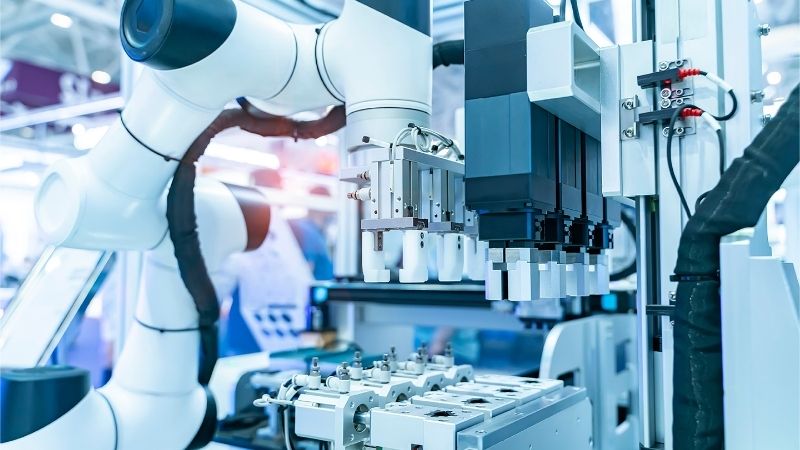
In the past, laboratories relied on professionals to carry out experiments and analyse results. Today, AI has changed how things work by helping to automate laboratory processes, and as such, the machines and tools produced must support this new system.
AI pattern recognition
In genomics and life science, AI is now being used to analyse biological data, DNA sequences, and chemical reactions. To fully optimize AI use here, equipment must generate reliable and consistent data. Sensors and mechanical parts must generate repeatable output over time.
Autonomous lab workflows
Many laboratory facilities today handle testing and experiments with less or no human input. AI moves the system from sample collection to running the test and result analysis. This dictates the need for equipment and hardware that must operate reliably.
Self-calibrating instruments
With AI-assisted systems, some lab equipment is now capable of self-calibrating. However, this is only possible if the hardware is stable. Sensors, mechanical parts, and reference units must be consistent.
As such, manufacturers must take care of material selection, tolerance level, and optimize hardware design to enhance self-calibration.
Cloud-linked scientific equipment
Several scientific pieces of equipment now transfer data directly to a cloud system, so AI can analyse and share results with researchers across the globe.
With that, these tools must be designed to support data transmission, come with stable connectors and an electronic unit, and prevent data loss.
Industrial Automation & Smart Factories

AI scheduling optimization
I’ve seen many modern factories use AI to optimize production scheduling. AI checks machine availability, project priority, material availability, etc., to do this.
Machines used must thus report accurate data to support scheduling. Sensors, control, and interfaces must enhance effective communication and reporting.
Vision-based inspection
Rather than rely on manual inspection, many factories utilizes AI powered machines and tools for this. As such, these machines must be designed with stable cameras and lighting and mechanical parts to enhance AI vision-based quality checks.
Predictive maintenance
By analysing data, AI predicts potential issues and gives signals. However, machines must enhance these AI functions.
Sensors must be located appropriately, and there must be accurate wiring and connector and mechanical parts. Overall, there must be a good machine design to support predictive maintenance.
AI-ready machine controls
In the past years, machine comes with PLCs that adhered to fixed instructions or programs to carry out operations. Today, AI-ready machines analyze data, communicate, and make better decisions for better production workflow.
Robotics & Autonomous Systems
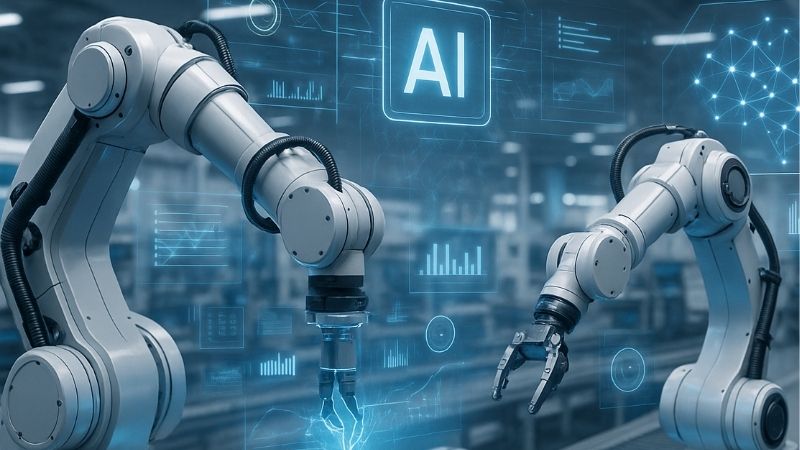
AI is rapidly changing how robot operates. They can now see what happens in their environment, move in a different direction, and make decisions as needed.
Better perception and SLAM
With AI assistance, robots can now see and understand their environment. Features like cameras, sensors, and mechanical designs make this possible. However, they must be accurately mounted and positioned to enhance robot accuracy.
Service and warehouse robots
Robots are now being used in warehouses, hospitals, and public environments. They move around to carry out their activities. This creates the need to design robots with lightweight and reliable features and parts.
Continuous software upgrades
Many AI-assisted robots today receive consistent software updates that improve robot functioning. These updates come with more data processing needs, and as such, hardware must be designed to support high digital loads.
Higher sensor and compute needs
AI robots utilize several sensors and processors, which makes them consume more power and generate heat and noise. As such, manufacturers must design robot hardware with adequate cooling systems and power supply units to enhance AI robot performance.
Drones & Aerial Intelligence
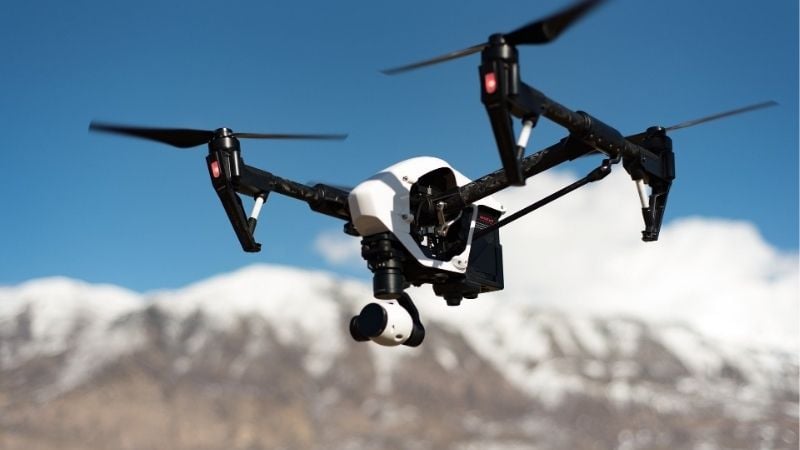
Modern AI drones can analyze their environment and make decisions. From inspection to mapping and security, they can now be utilized with less human input. And this has brought a significant change to how they’re built.
AI object detection
Drones used to be manually controlled with a remote. Today, many modern drones can detect objects, be used in terrain mapping, and perform defect identification through an AI drone system. And this questions the quality and accuracy of hardware used,from optics to mounts.
Automated mapping and inspection
AI automated mapping requires reliable data-capturing mechanisms, including stable positioning units and sensors, and a consistent power supply. Any little deviations bring about inaccuracy. As such, parts like airframes, sensors, and internal units must be designed to enhance repeatability.
Onboard processing upgrades
Many tasks are now carried out in the drone directly rather than being transferred to the cloud. This eliminates delay and enhances fast decision-making. However, this demands more power supply and increases heat generation. Hardware design must therefore consider these factors.
Autonomy-driven redesigns
As there is a rapid shift from manually controlled-drones, designs must take care of these aspects of autonomy. Sensors, communication, and computing systems must be prioritized while also considering the drone's internal layout and weight.
Automotive, ADAS & Autonomous Vehicles
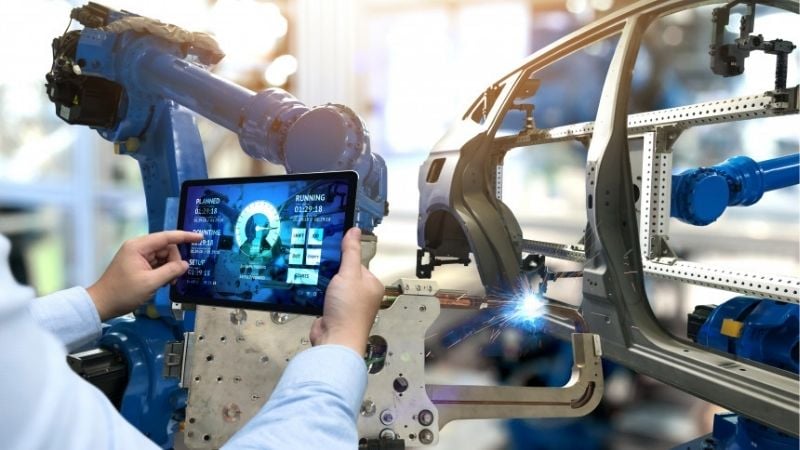
This is one industry rapidly experiencing AI transitions from sensor fusion architecture to AI-assisted driving to centralized compute module and OTA-driven hardware.
AI-assisted driving
AI-assisted driving processes data from cameras, radar, and lidar to make decisions. Sensors and mounting must be properly aligned and stable. As such, tolerances must be highly accurate, and assembly must be effective.
Sensor fusion architecture
Sensor fusion uses data from different paths to make decisions. This requires high-speed data processing and transfer systems. Wiring and connectors must be designed to meet this need.
Centralized compute modules
Rather than use small ECUs, many vehicles now require centralized compute modules, which generate more heat. This need sufficient cooling system and influences vehicle structural part design and assembly.
OTA-driven hardware evolution
Over-the-air OTA-driven evolution pushes manufacturers to design hardware that can support future software. I’ve seen many vehicles now come with unused compute headroom. This could increase cost and complexity, but it helps these vehicles stay relevant and updated over the years.
Logistics, Warehousing & Fulfillment

Logistics and warehouse operations aren’t left behind when it comes to AI change. From AI-optimized picking to autonomous forklifts and dynamic storage systems, there is a lot to expect.
AI-optimized picking
AI analyzes order and work patterns to direct picking. This requires consistent location data gathering, processing, and feedback, and as such, sensors, connectors, and other necessary features must be reliable to support this.
Autonomous forklifts and AMRs
Autonomous forklifts and AMRs require consistent sensor inputs, reliable and quality mechanical structures, and braking units to function safely and effectively.
Dynamic storage systems
AI now distributes storage locations based on needs. Racking units must support sensors, actuators, and connectivity.
Real-time inventory intelligence
Inventory inputs must be accurate every time. Equipment used must enhance scanning, tracking, and verification. Sensors and mounts must be reliable to enhance adequate decision-making. And as Peter Drucker noted, “you can’t manage what you don’t measure”.
Agriculture & AgTech

The agriculture and AgTech industry now relies on AI to guide and make important farm practices decisions like crop analysis, irrigation, etc.
AI crop analysis
AI can now analyze crop health and conditions through sensor data to enhance crop production. Agricultural tools must be designed to withstand harsh conditions while also ensuring data quality.
Autonomous farm equipment
There are now autonomous tractors and harvesters that use dedicated control systems to operate. Mechanical and power reliability and vibration control are important here, and as such, part designs must factor this in.
Smart irrigation systems
AI can now adjust irrigation depending on soil and weather conditions. Sensors and control valves thus need to be precise, consistent, and durable.
Drone-assisted field management
Many farmers use drones to control planting and harvesting decisions. And as such, hardware must supply reliable data across many seasons to guide decision-making.
Energy & Utilities

Energy and utilities are now inculcating AI in grid forecasting, asset condition monitoring, and lots more.
AI grid forecasting
Electricity demand fluctuates every day. AI analyzes power usage patterns and weather to see when people are less likely to require more power. For this to be effective, power devices must transfer reliable data for an accurate grid forecast.
Asset condition monitoring
With AI systems, power companies can now track the conditions of their transformer and power lines and look out for early warning signs that prevent hazards. This can only be effective if devices are equipped with sensors or data units. And as W. Edwards Deming noted, “without data, you’re just another person with an opinion”.
Smart distribution networks
With modern distribution networks, power issues are detected early before they become a real problem. Switches, controls, and other hardware must support fast response and communication.
Data-rich field devices
Electricity meters and field sensors now function beyond measuring power. They gather and transfer data, which AI utilizes in making decisions. To enhance AI performance, these devices must give accurate and reliable data.
Battery & Power Electronics
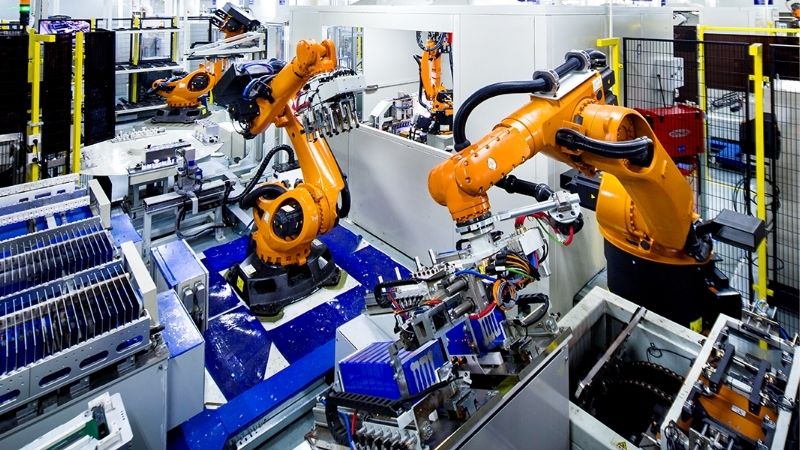
AI battery management
AI is capable of helping batteries improve performance and last longer by studying how they’re being used, charged, and looking out for overheating. For this to be effective, batteries need more and more reliable sensors.
Real-time safety control
AI also looks out for early warning signs during battery usage before they escalate. These also require reliable sensors and controllers, and fast-response hardware.
Adaptive thermal management
Batteries get overheated when used consistently. AI can now help control cooling systems so batteries can maintain a healthy temperature level. As such, battery hardware must be designed to support this function.
Intelligent power conversion
With AI, power electronics can now optimize how electricity is converted and delivered to save energy. This causes more stress on the component and even generates more heat. Hardware must be designed to overcome this without failure.
Construction, Mining & Heavy Equipment

From machine guidance to site mapping automation and hazard prevention, AI is transforming the construction and mining industry.
AI machine guidance
AI-operated machines rely on sensors and GPS guidance to enhance accuracy and efficiency. However, for this to be effective, sensor alignment must be ensured. Frames and mounts must be durable and reliable.
Site mapping automation
AI-inclined systems are used in site mapping to identify risk and record progress. This is possible through consistent data collection from machines operating in such areas. And as such, sensors and mechanical structures must be able to withstand weather conditions in the location.
Safety hazard detection
In a heavy equipment environment, AI can identify obstacles or conditions that can cause risks. This creates the need for reliable cameras, radar, and compute modules that can enhance AI performance.
Connected heavy machinery
Machineries in construction and mining are now integrated and networked together to enhance work efficiency. Hardware must thus be designed to support connectivity and data processing, and transfer.
Smart Buildings & Infrastructure
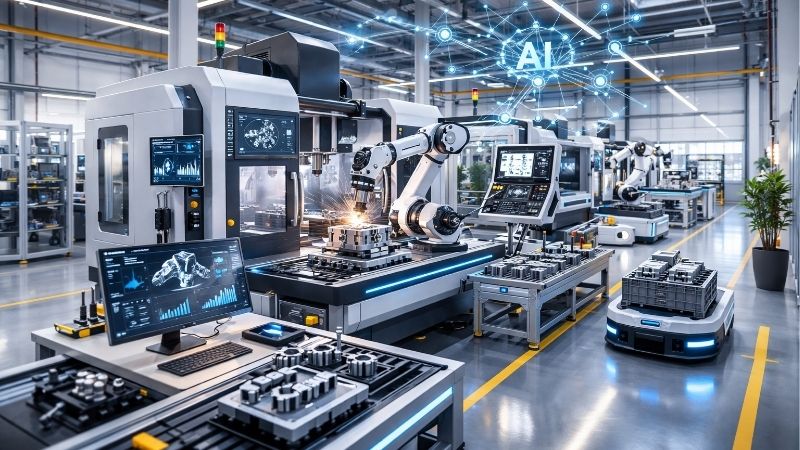
AI now enhances smart buildings and infrastructure by optimizing HVAC functions, preventing safety issues, and monitoring structural health.
AI-driven HVAC optimization
Compared to traditional HVAC systems that operate on fixed schedules, AI-driven HVAC can adjust airflow, heating, and ventilation based on the user preference, weather, and energy pricing. Reliable sensors, actuators, and controllers are required for this.
Predictive building safety
AI can now help detect safety issues in buildings. It can identify usual temperature change, vibration, or electrical failures. Sensors must, however, be reliable and mounted properly to gather data.
Structural health monitoring
AI-assisted structural monitoring helps track building conditions over time. It can detect stress patterns in structures to prevent future hazards. Hardware and sensors must thus be designed to support this.
Connected city systems
Smart city infrastructure integrates lighting, traffic, utilities, etc., into one system. With this, AI helps eliminate congestion and reduce energy use. For this to be effective, hardware must be built to support connection and withstand weather conditions over time.
Security, Defense & Public Safety

AI is changing how the security and defense industry operates by facilitating surveillance analytics, autonomous patrol systems, and real-time threat detection.
AI surveillance analytics
AI surveillance systems can now analyse video to identify suspicious behaviour rather than only recording. This, however, needs high quality camera and mounting and data processing hardware to support AI performance.
Autonomous patrol systems
An autonomous patrol system operates without human control but requires AI for easy navigation, decision-making, and safety. As such, hardware components must be reliable in terms of the power, mechanical unit, and sensors.
Real-time threat detection
AI security and defense systems can read and scan data to detect potential threats. This creates a need for reliable low-latency sensors and secured information-sharing mechanisms that will prevent data loss.
Mission-grade AI platforms
The defense industry operates under emergency, harsh, and unpredictable conditions. AI-driven systems and hardware must function effectively even in extreme heat, vibration, and shock.
Education, Research & Experimental Platforms

Education, research, and experimental platforms also benefit from the AI-enabled research tools, flexible hardware testbeds, etc
AI-enabled research tools
Researchers now use AI-enabled tools to analyse data and experiment result. These tools and equipment must give consistent and reliable data over time to aid AI performance.
Rapid prototyping robotics
Robots are utilized during research to observe and test new ideas. As such, robot parts must be flexible and modifiable from frames and wiring to controllers and sensors to allow for quick changes as more ideas evolve.
Flexible hardware testbeds
There are now hardware testbeds used to experiment with AI systems. These testbeds must be designed to support varying sensors, processors, and controllers and must have spare capacity and open interfaces.
Early-stage innovation hubs
Innovation hubs helps researcher, start-ups, etc., test new ideas and technology together. Equipment and hardware used here must be able to support quick experimentation and be flexible to allow changes.
What This Means for Manufacturing Leaders

As AI continues to transform many industries, manufacturers must create hardware designs that adapt to this new change.
Hardware refresh cycles ahead
In previous years, machines and equipment were designed to perform basic tasks and last for years. Today, there is a major shift as hardware is expected to collect and process data, leading to faster replacement cycles.
AI reshaping equipment expectations
Customer expectations are bound to change. Tolerance and speed will matter. But beyond that, customers’ specs will revolve around devices that support connectivity, upgrading, software compatibility, integration, etc.
Proactive OEMs gain an advantage
Proactive OEMs who anticipate AI-integrated systems will gain a competitive advantage over those who react to them. These are OEMs that include modular controls, sensor capacity, etc., to enhance AI performance.
Understanding customer AI roadmaps
Many customers are fully aware that AI is bringing change, but they haven’t fully figured out their AI plans. Manufacturers must thus ask relevant questions regarding automation and software upgrade plans, data usage, etc., to understand how to go about machine design that suits.
How to Choose AI-Driven Sectors to Focus On
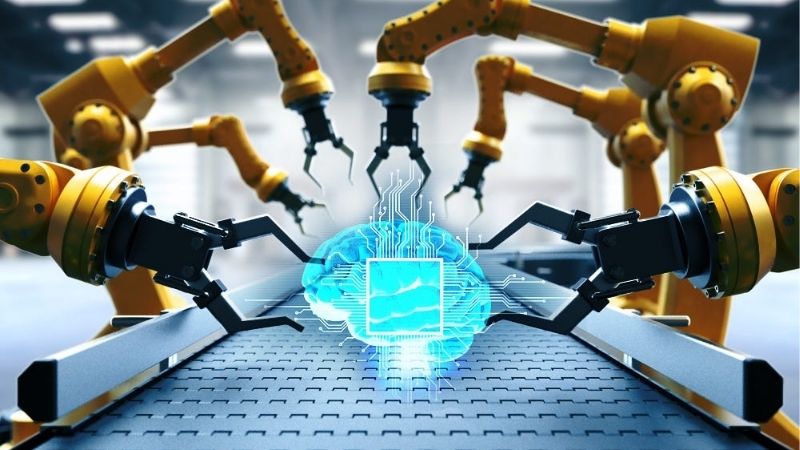
Many sectors are currently integrating AI systems, but manufacturers don’t need to focus on all industries. Consider your strength, AI adoption speed, long-term potential, etc., when choosing.
Match strengths to industries
Manufacturers need to match their strengths to specific industries. Precision, quality systems, technology adoption, assembly systems,and materials all have a say when selecting the AI-driven sector to focus on.
Evaluate AI adoption speed
While some industries are rapidly integrating AI systems, others are still in the planning or early adoption phase. Manufacturers should look out for industries where equipment requirement is improving in terms of sensor content, connectivity, and integration needs, etc.
Discuss customers’ AI plans
From experience, many customers might not necessarily mention AI, but they focus on automation, connectivity, and data. As such, you should ask questions regarding their AI plans so as to meet their requirements.
Pick sectors for long-term positioning
Also, focusing on a sector that has a long-term potential of inculcating AI deeply into their systems makes you more competitive. It helps you build capabilities and stay relevant in the ever-changing AI world.
My Perspective
Over the past few years, I've come to understand that AI is rapidly reshaping how many industries operate. Machines have been used to design and perform basic functions faster for a long time.
Today, the question remains whether hardware can adapt to and support AI use. Manufacturers who are ready to imbibe this into equipment designs stay relevant and competitive in the years to come, leaving those who react to AI behind.
