









304 Stainless Steel Machining Services
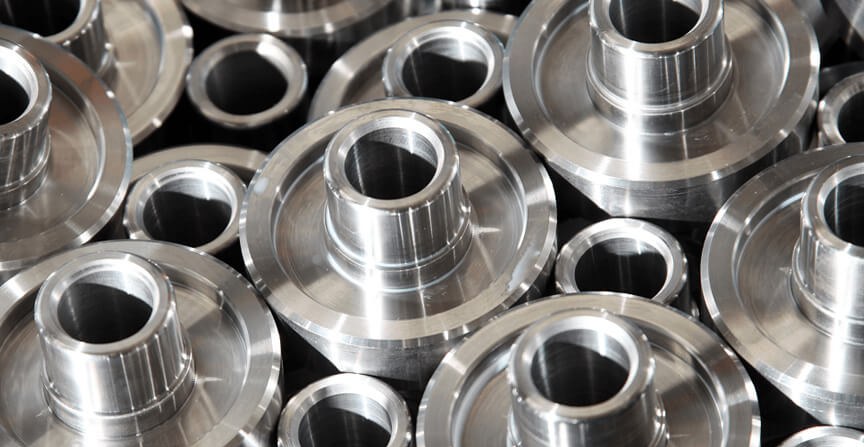
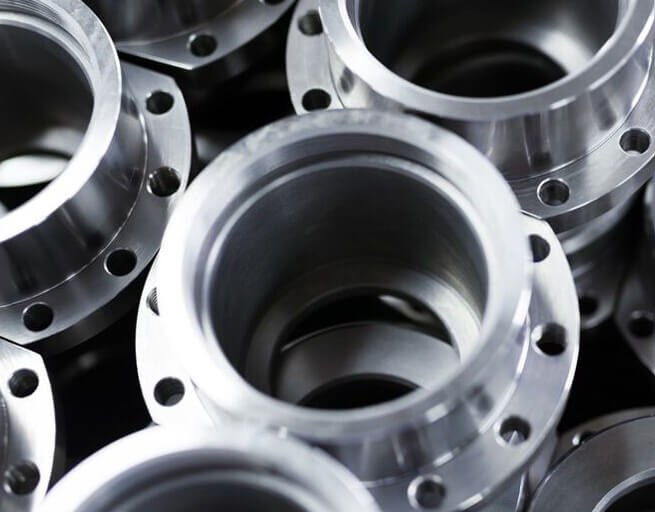
Also known as UNS S30400 · DIN/EN 1.4301 · 18/8304 stainless steel machining at DEK covers UNS S30400 / DIN 1.4301, the austenitic grade chosen for solid corrosion resistance and easy welding. We machine it on 3-, 4- and 5-axis equipment from single prototypes to production quantities, with no MOQ and prototype lead times as fast as 3 days.
-
520–600 MPaTensile Strength
-
210–250 MPaYield Strength
-
43–45%Elongation
-
191–205 GPaYoung's Modulus
304 Machining Capabilities and Tolerances
What DEK holds on 304 across 3-, 4- and 5-axis milling, CNC turning, Swiss-type turning, EDM and precision grinding.
-

General Tolerance
±0.025 mmtypical features
-

Critical Features
±0.005 mmfits, coaxiality
-

Micro Features
±0.003 mmfeatures under 10 mm
-

5-Axis Profile
±0.01 mmcomplex geometry
-

Milling Envelope
~1000 mmX/Y/Z travel
-

As-Machined Finish
Ra 0.8–1.6 µmtypical
-

Electropolished
Ra 0.2–0.4 µmroughly
-

Prototype Lead Time
3 daysas fast as, no MOQ
SS304 Properties and Designations
Mechanical, thermal and composition data for 304 stainless steel, with the designations your drawing may reference.
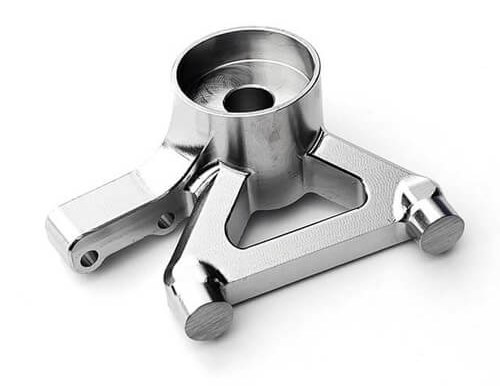

- Ultimate Tensile Strength 520–600 MPa
- Yield Strength 210–250 MPa
- Young's Modulus 191–205 GPa
- Elongation at Break 43–45%

- Max Service Temperature 750–925°C
- Thermal Conductivity 29.3–31.7 W/(m·°C)
- Electrical Resistivity 65–70 μΩ·cm
- Magnetism Non-magnetic (annealed)

- Chromium (Cr) 18.0–20.0%
- Nickel (Ni) 8.0–10.5%

- UNS designation S30400
- DIN/EN designation 1.4301
- Trade shorthand 18/8
- Corrosion Resistance Good
- Weldability Excellent
304 Machinability and Work Hardening
How 304 behaves under the cutter: why it work-hardens, how DEK controls it, and what drives cost on a 304 part.
304 carries a machinability rating of roughly 45% relative to AISI B1112 free-cutting steel (100%), so it cuts at less than half the speed of a free-machining steel. The limit is rapid work hardening, not a lack of strength.
Light feeds make the tool rub instead of cut. On our CNC milling and CNC turning lines, DEK uses sharp coated tooling, feeds that avoid dwelling and coolant at the cutting edge.
- Work-hardening tool wear: multi-pass features wear tools faster
- Deep pockets: restricted tool access and heat force slower speeds
- Tight ID fits: shaft-fit bores need slower finishing passes
- Finish choice: passivation and electropolishing add steps
-
Machinability Rating
~45%vs AISI B1112 at 100%
-
Work Hardening
RapidUnder cutting pressure
-
Chip Control
Long, stringyChips must break cleanly
-
As-Machined Finish
Ra 0.8–1.6 µmTypical surface
-
Weldability
ExcellentMixed machined and sheet parts
Typical 304 Stainless Steel Parts
304's balance of corrosion resistance, formability and cost puts it across many part families instead of one niche.
-
 Medical & Lab HousingsNon-reactive, easy-to-clean housings that hold up to repeated sterilization cycles without pitting.
-
 Robotics EnclosuresIndustrial and robotics enclosures with straightforward welding when a design mixes machined and sheet metal parts.
-
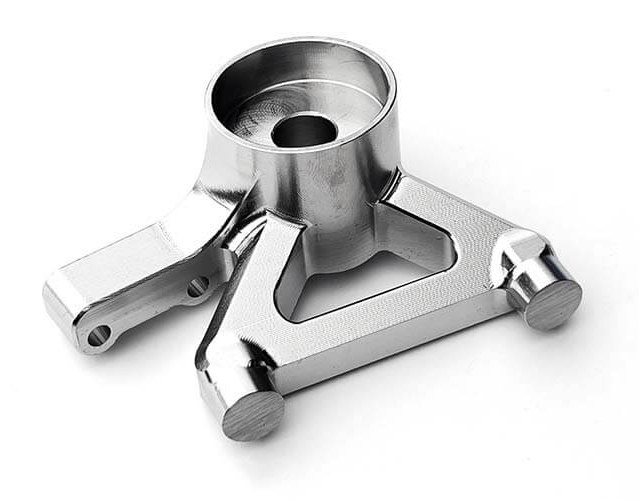
 Structural BracketsBrackets and covers needing solid mechanical strength, milled within an envelope of up to ~1000 mm.
-
 Slender Turned PartsSlender, high-precision turned features on smaller-diameter parts, produced on Swiss-type lathes.
304 vs 303, 316 and 304L Stainless Steel
Pick 304 for corrosion resistance and welding; 303 for heavily machined parts, 316 for chlorides or acids. See 303 vs 304 stainless steel.
CNC Machining + Finishes for 304
304 parts ship as-machined at Ra 0.8–1.6 µm, or CNC machined plus one of these finishes for corrosion or appearance.
-
Passivation AvailableRemoves free iron embedded during cutting and restores the chromium-oxide layer; standard for medical, food-contact or outdoor 304 parts.
-
Electropolishing AvailableGives a smoother, more corrosion-resistant surface, bringing as-machined Ra 0.8–1.6 µm down to roughly Ra 0.2–0.4 µm.
-
Bead blasting AvailableProduces a uniform, consistent matte texture on machined 304 surfaces, at around Ra 1.6–3.2 µm.
Get a Quote for Your 304 Stainless Steel Part
Upload your CAD file and drawing: DEK engineers confirm tolerances, finish and lead time. No MOQ to start, and prototype lead times as fast as 3 days.
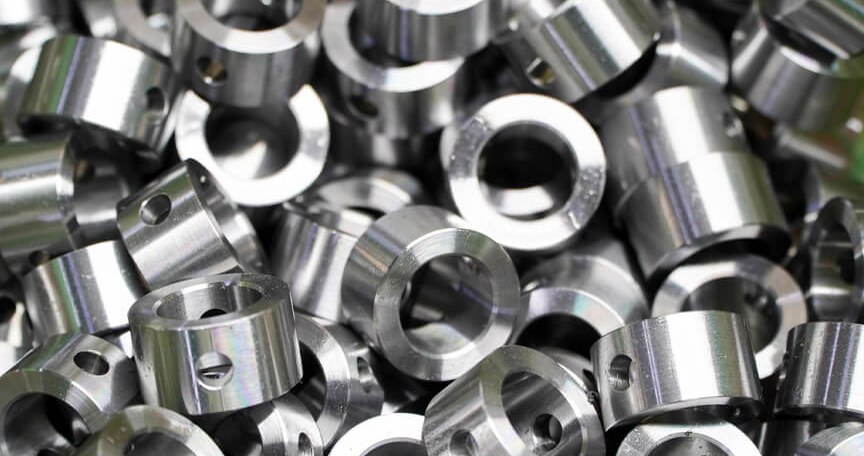
304 Stainless Steel Machining at DEK
Corrosion resistance is rarely the open question with 304. The real question is whether the shop controls work hardening well enough to hit tolerance without excessive scrap.
DEK holds ISO 9001, ISO 13485 and AS9100D certification, issued by TUV, company-wide. Every 304 job moves through documented quality stages, so work hardening is managed as a process variable, not an afterthought.
- IQC on incoming material, IPQC during machining
- First article inspection (FAI) and outgoing quality control (OQC)
- SPC on production runs, CAPA when a deviation is found
304 is the default when a part needs solid corrosion resistance, easy welding and predictable behavior on the mill or lathe without stepping up to a harder, pricier alloy.
For higher strength, 17-4 PH is the precipitation-hardening option; for a martensitic, free-machining, heat-treatable grade, look at Stainless Steel 416.
-
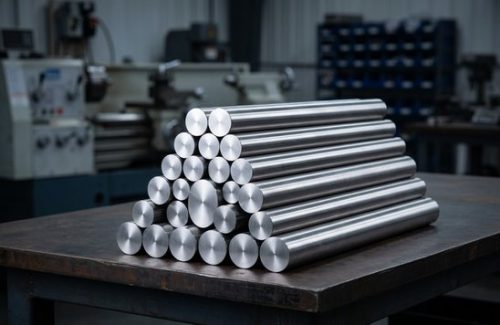 Raw Stock
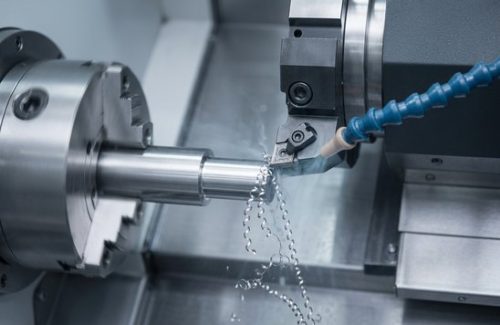 CNC Machined
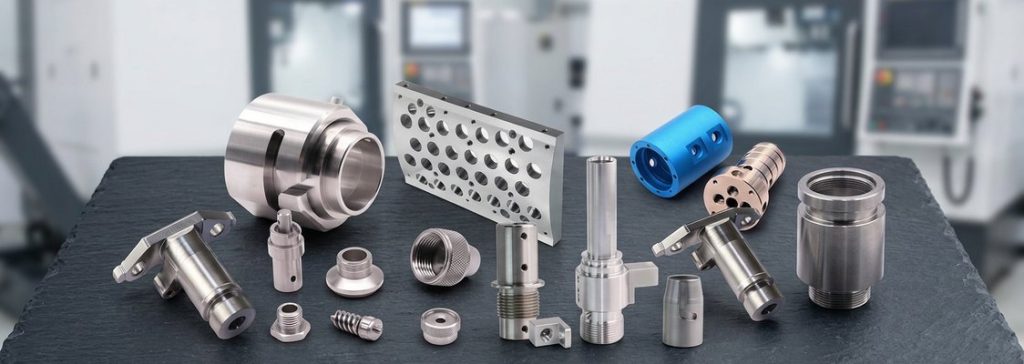 Finished Parts
-
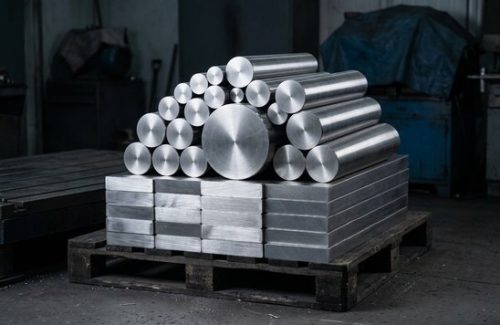 Raw Stock
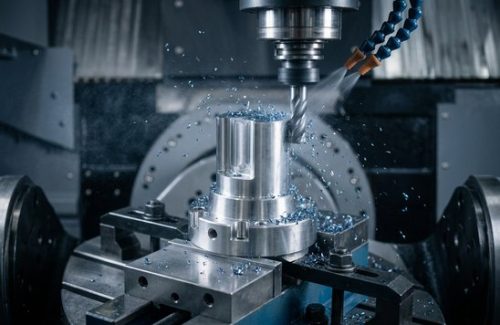 CNC Machined
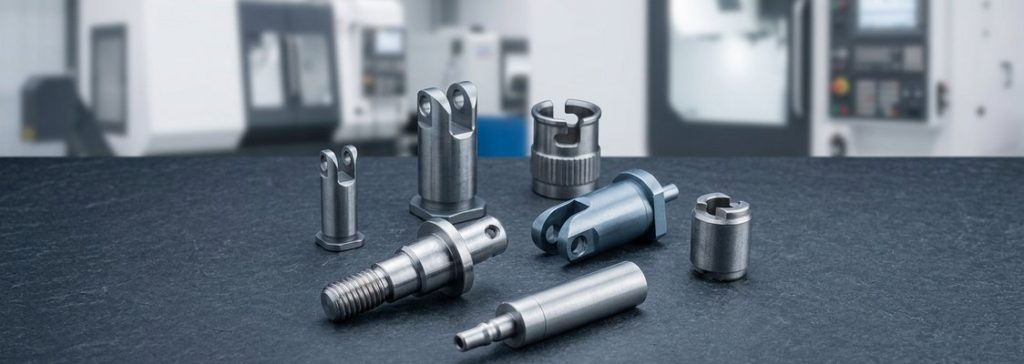 Finished Parts
304 Stainless Steel FAQ
Common questions from engineers specifying and sourcing 304 machined parts.
Other Materials
-
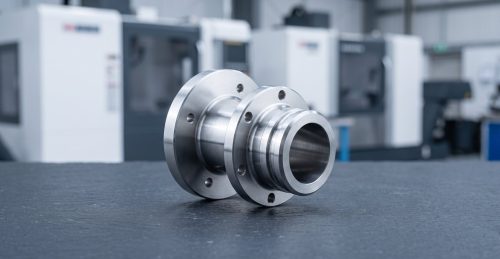 Stainless Steel Nitronic 60Nitronic 60 is a type of stainless steel strengthened with nitrogen throughout its structure, providing enhanced strength across the entire material.Learn More
-
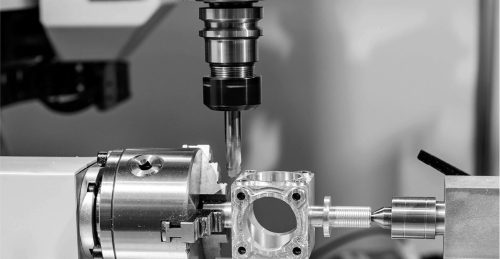 Stainless Steel A286Stainless Steel A286 is a high-strength precipitation-hardening alloy with excellent corrosion resistance, especially at elevated temperatures.Learn More
-
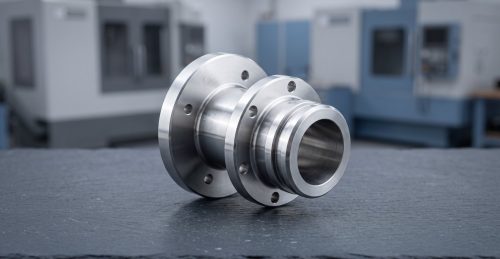 Stainless Steel 440CStainless Steel 440C is a high-carbon chromium steel. It has excellent hardness, wear resistance, and corrosion resistance.Learn More

Ready to Scale Your Project?
Get started with a stable process and controlled quality. Let's discuss your project.








