






17-4 PH Machining (H900, H1025, H1150)
Also known as UNS S17400 · EN 1.4542 · SUS63017-4 PH machining at DEK means cutting in soft Condition A, aging to the hardness your drawing calls for, then finishing only what aging shrinkage disturbs. We hold ±0.005 mm on request, with heat treatment and passivation on the parts we machine, no MOQ and prototypes in 3–5 days.
-
1,310 MPaTensile (H900)
-
1,170 MPaYield (H900)
-
40–47 HRCHardness (H900)
-
33–38 HRCCondition A
DEK's 17-4 PH CNC Machining Tolerances
Tolerances and finishes DEK holds on 17-4 PH, before and after aging, on mills, lathes, Swiss lathes, EDM and grinders.
-

Before aging
±0.025 mm±0.005 mm on request
-

After aging
±0.005 mmturned or milled
-

Ground after aging
±0.003 mmshafts, post-age
-

Bores and shaft fits
H7 / g6typical
-

Small Swiss features
±0.003 mmSwiss-turned
-

As-machined finish
Ra 0.8–1.6 µmmilled or turned
-

Ground finish
Ra 0.2–0.4 µmor electropolished
-

Milled part size
1000 mmup to about
17-4 PH Properties and Equivalent Designations
17-4 PH is a martensitic precipitation-hardening stainless steel: copper precipitates give up to 1,310 MPa, corrosion close to 304.
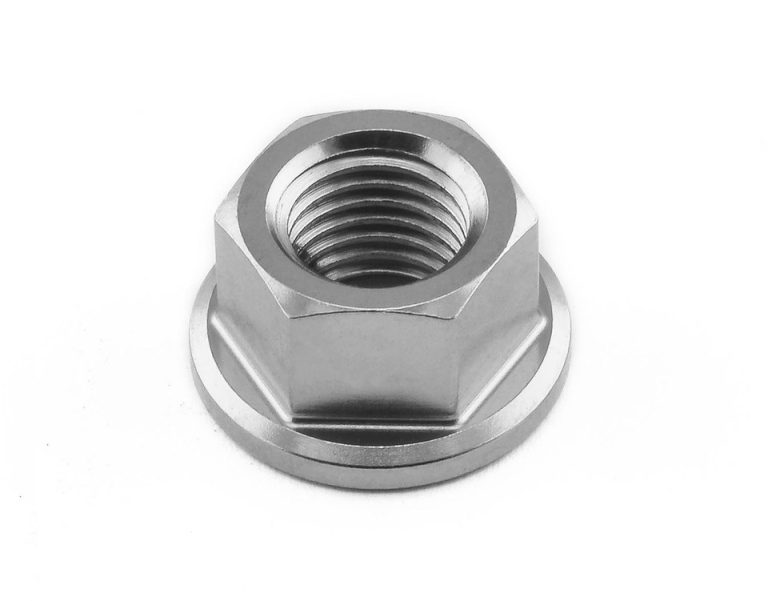
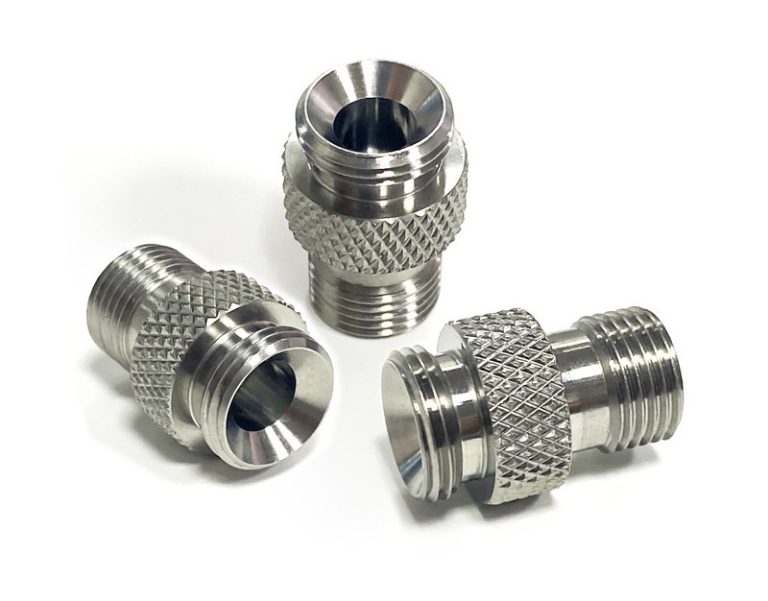
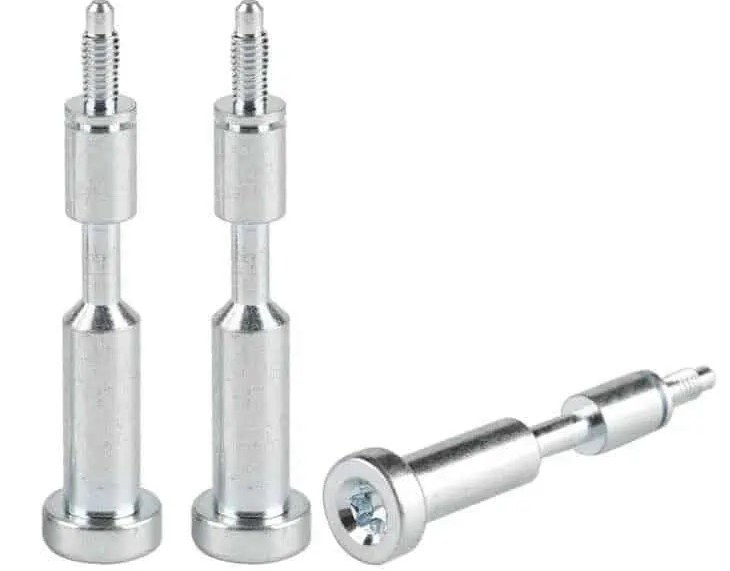
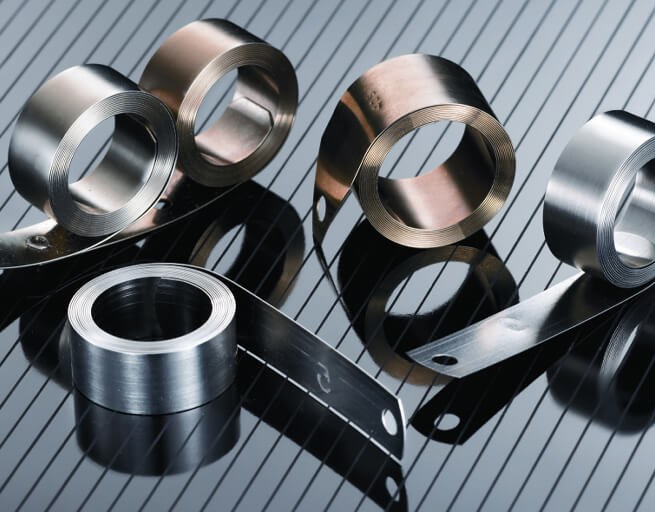

- Tensile, Condition A 1,030 MPa (typical)
- Tensile, H900 1,310 MPa (min)
- Tensile, H1025 1,070 MPa (min)
- Tensile, H1150 930 MPa (min)
- Yield, Condition A 760 MPa (typical)
- Yield, H900 1,170 MPa (min)
- Yield, H1025 1,000 MPa (min)
- Yield, H1150 725 MPa (min)

- Condition A 33–38 HRC (1,040 °C)
- H900 40–47 HRC (482 °C, 1 h)
- H1025 35–42 HRC (552 °C, 4 h)
- H1150 28–33 HRC (621 °C, 4 h)
- Shrinkage, H900 −0.04 to −0.06%
- Shrinkage, H1025 −0.05 to −0.08%
- Shrinkage, H1150 −0.08 to −0.10%

- Cr 15–17.5%
- Ni 3–5%
- Cu 3–5%
- Nb+Ta 0.15–0.45%
- C ≤0.07%

- Condition A Machining, not service
- H900 Peak-strength age
- H1025 Aerospace balance
- H1150 / H1150M Toughness, NACE MR0175
- EN name X5CrNiCuNb16-4
17-4 PH Stainless Steel Machining Route
How DEK sequences 17-4 PH: machine in Condition A, age harden, then finish only the critical features and passivate.
In Condition A at 33–38 HRC, 17-4 PH cuts with coated carbide at about 48% of the machinability of 1212, similar to 4140 at 30 HRC. We use positive-rake inserts, chip breakers and flood coolant; work hardening is mild compared with 304 or 316.
Aging shrinks the part 0.04–0.10%, uniformly and predictably. The age is an air-cool cycle with no quench, so warpage on a flat 150 mm part is typically under 0.03 mm.
- Fits tighter than ±0.02 mm are left 0.1–0.2 mm oversize or offset for shrinkage
- Parts go through heat treatment to H900, H1025 or H1150
- At H900, precision grinding to ±0.003 mm and wire EDM for profiles
- Passivation per ASTM A967, then CMM and hardness testing
-
Machinability, Cond. A
~48%1212 = 100%
-
Machinability, H1150
~40%1212 = 100%
-
Machinability, H1025
~35%1212 = 100%
-
Machinability, H900
~25–30%grinding preferred
-
Work Hardening
Mildcompared with 304 or 316
-
Aging Warpage
< 0.03 mmflat 150 mm part, typical
Typical Machined 17-4 PH Parts
17-4 PH parts DEK machines for aerospace, medical and oil and gas customers, in the condition each application needs.
-
 Aerospace ActuatorsActuator pistons, valve components and landing gear parts in H1025 and H1075, machined under AS9100D with full traceability.
-
 Structural FittingsAerospace and defense structural fittings in H1025, the common balance of strength and toughness, with full traceability.
-
 Surgical InstrumentsSurgical instruments, drill guides and cutting blocks in H900 for edge retention, machined under ISO 13485.
-
 Oil and Gas PartsPump shafts, valve stems and downhole tool bodies in H1150 or H1150M to meet NACE MR0175 hardness limits.
17-4 PH vs 15-5 PH, 316, and 304
Choose 17-4 PH for yield above 700 MPa with corrosion resistance; 15-5 PH for aerospace forgings and thick sections; 316 or 304 when strength is not the driver.
CNC Machining + Finish for 17-4 PH
Heat treatment and surface finishes DEK applies to the 17-4 PH parts it machines, before or after aging.
-
Heat treatment AvailableMachined parts aged to H900, H1025 or H1150 with a low-temperature air-cool cycle and no quench, so distortion stays minimal.
-
Passivation AvailableNitric or citric passivation per ASTM A967 removes embedded free iron and restores the chromium oxide layer after aging and grinding.
-
Electropolishing AvailableApplied to the 17-4 PH parts we machine, reaching Ra 0.2–0.4 µm, the same range as ground surfaces.
-
Bead blasting AvailableOffered on 17-4 PH parts machined at DEK, as part of the same order and lead time as machining and aging.
-
PVD coating AvailablePVD coating applied to the 17-4 PH parts we machine, coordinated with aging and post-age finishing.
-
Grinding AvailableSurface, cylindrical and centerless grinding after aging: ±0.003 mm on shafts, 0.005 mm flatness, Ra 0.2–0.4 µm.
Request a 17-4 PH Machining Quote
Send a STEP, IGES or PDF drawing with condition, tolerances and passivation spec. An engineer confirms pre- and post-age features and returns pricing within 6 hours.
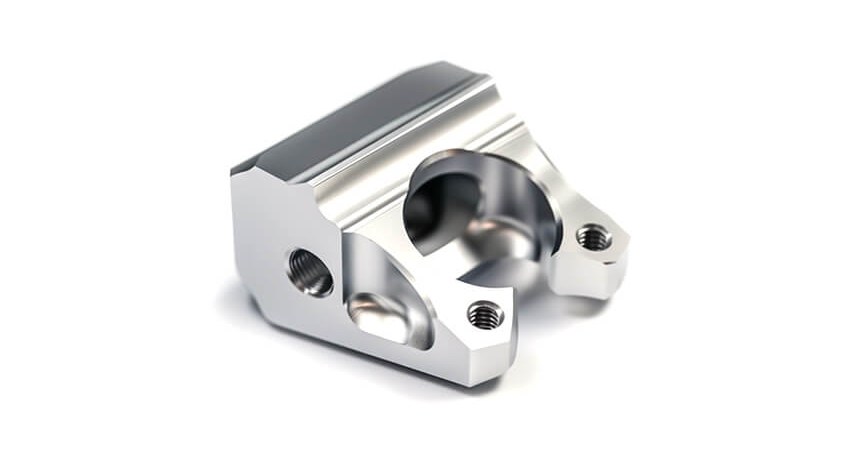
Precipitation Hardening Stainless Machining
DEK machines 17-4 PH on 3-, 4- and 5-axis mills, CNC and Swiss lathes, EDM and grinders, with aging and post-age finishing coordinated as one lead time.
DEK is AS9100D, ISO 13485 and ISO 9001:2015 certified by TÜV, with 20+ years of precipitation hardening stainless machining. Heat treatment, grinding, wire EDM and passivation are coordinated in-house, so aging and post-age finishing are one lead time.
- Spectrometer check on every incoming bar; hardness verification on every aged lot
- CMM inspection with IQC, IPQC, FAI and OQC
- Quotes within 6 hours that include shrinkage allowance; no MOQ; prototypes in 3–5 days plus aging
Choose 17-4 PH when you need yield strength above 700 MPa with corrosion resistance, or when the part must be machined to tight tolerance and then hardened with minimal distortion.
Do not choose it for service above 315 °C (overaging softens it), for chloride-rich environments where 316 or duplex 2205 is safer, or for welded assemblies that cannot be re-aged after welding.
-
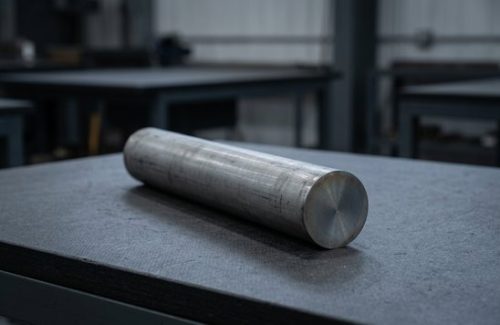 Raw Stock
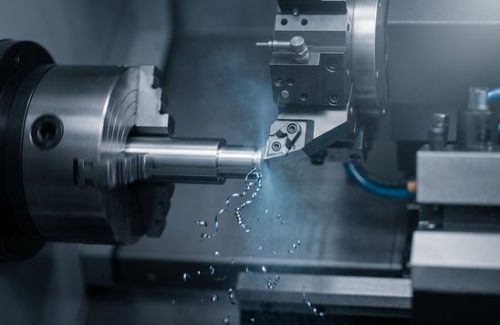 CNC Machined
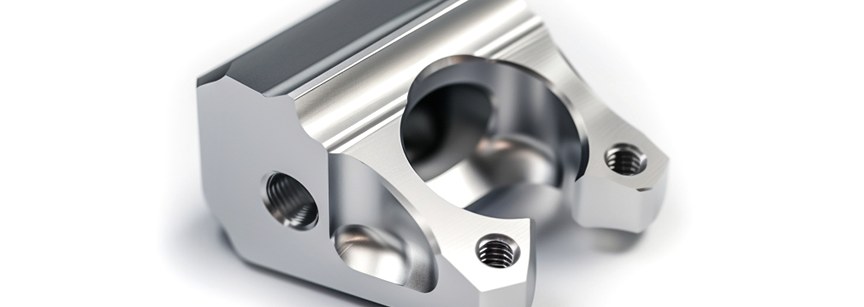 Finished Parts
-
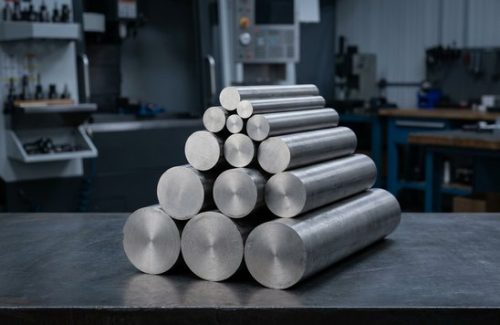 Raw Stock
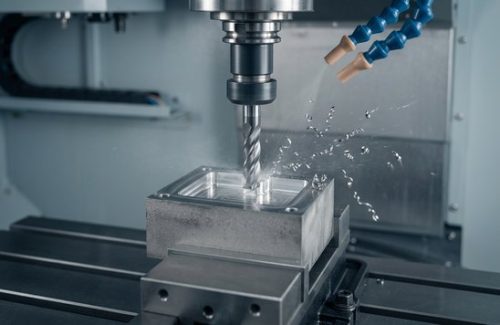 CNC Machined
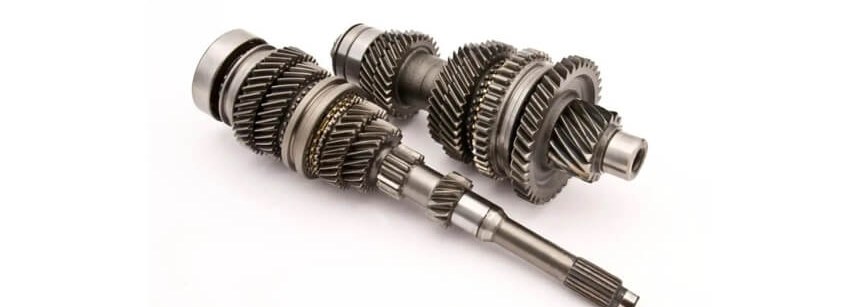 Finished Parts
17-4 PH Machining FAQ
Common questions on machining sequence, Condition A vs H900 and passivation.
Other Materials
-
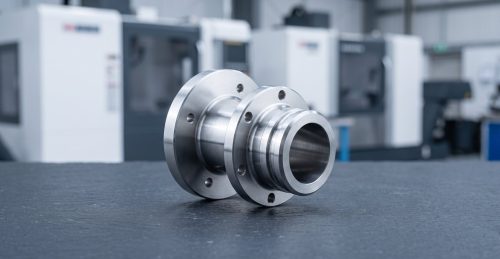 Stainless Steel Nitronic 60Nitronic 60 is a type of stainless steel strengthened with nitrogen throughout its structure, providing enhanced strength across the entire material.Learn More
-
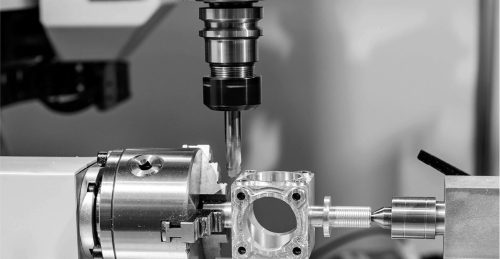 Stainless Steel A286Stainless Steel A286 is a high-strength precipitation-hardening alloy with excellent corrosion resistance, especially at elevated temperatures.Learn More
-
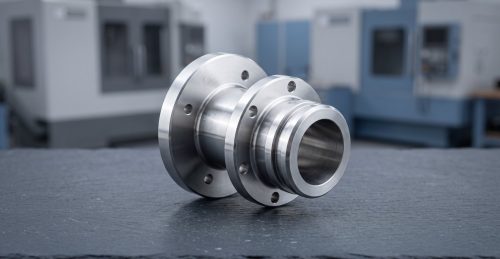 Stainless Steel 440CStainless Steel 440C is a high-carbon chromium steel. It has excellent hardness, wear resistance, and corrosion resistance.Learn More

Ready to Scale Your Project?
Get started with a stable process and controlled quality. Let's discuss your project.