








Copper Machining Services
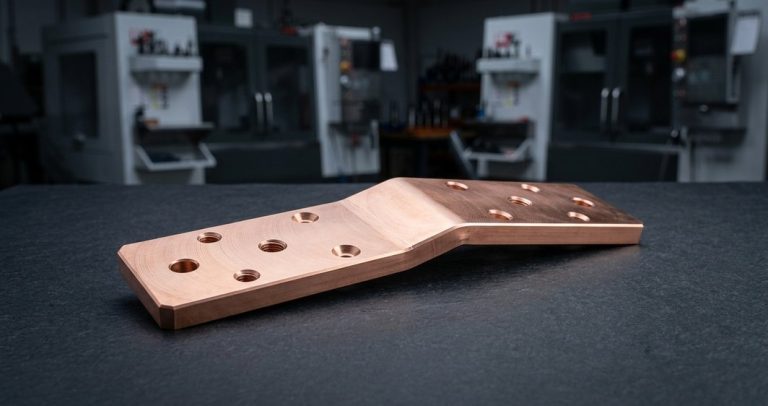
DEK's copper machining services cover CNC milling, turning and EDM for electrical and thermal parts, with tolerances to ±0.005 mm. Sharp tooling and tuned feeds stop smearing and burrs.
-
±0.005mm
Best-Case Tolerance
-
3 Days
Prototype Lead Time
-
98.6%+
On-Time Delivery

What Our Copper Machining Services Control
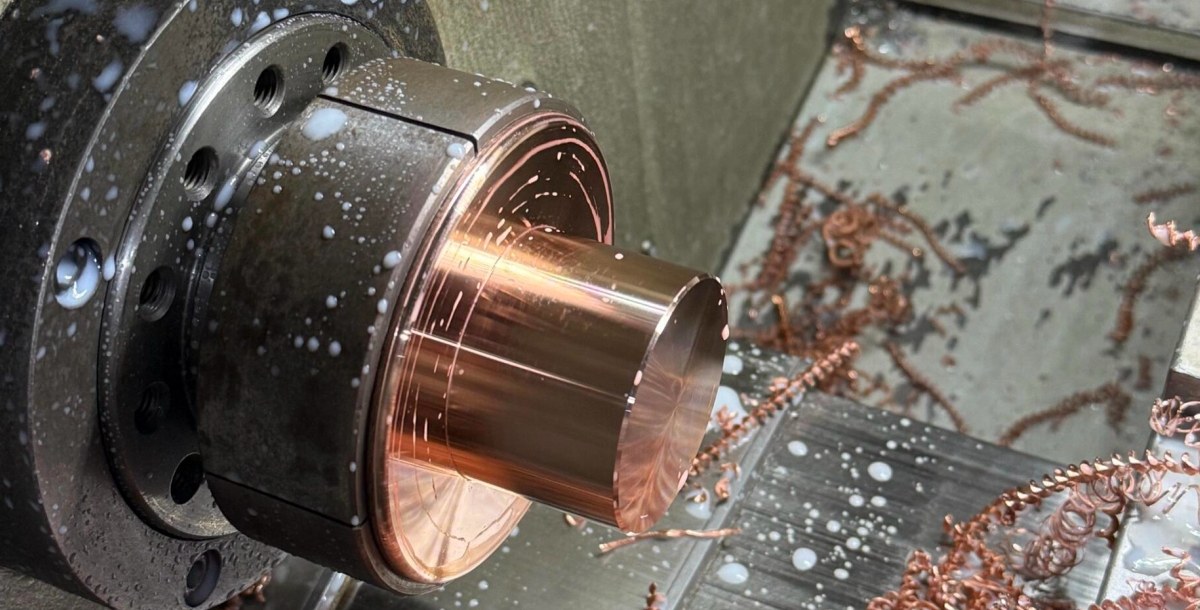
Copper’s softness makes it easy to shape and hard to machine well: without sharp tooling, tuned feeds and tight chip control, it smears, gums up cutters and throws burrs into features that must stay clean.
DEK builds that control into every job, from prototype through production, with no minimum order quantity. We machine copper with CNC milling, CNC turning and EDM for electrical and thermal parts.
-

ISO 9001, AS9100D and ISO 13485 certified
-

20+ years in precision machining
-

2,300+ global OEM clients served
-

Prototypes in as fast as 3 days, no MOQ
Copper Grades We Machine
Copper 101 and 110 are stocked grades; beryllium copper and tellurium copper (C145) are quoted per order, since sourcing stock adds lead time.
-

Copper 101
99.99% purityHighest electrical and thermal conductivity for waveguides, bus bars and RF parts. Rod, plate, sheet. See the C101 datasheet.
-

Copper 110
99.90% purityHigh conductivity at lower cost for connectors, terminals and electrical hardware. Rod, bar, sheet. See Copper C110.
-

Beryllium copper
Alloyed for hardnessBeryllium copper machining for springs, contacts and wear-resistant electrical parts; moderate conductivity traded for strength. Request-only.
-
±0.05 mm
Typical tolerance
-
±0.01 mm
Precision tolerance
-
~1000 mm
Max part size
Copper CNC Machining Capabilities
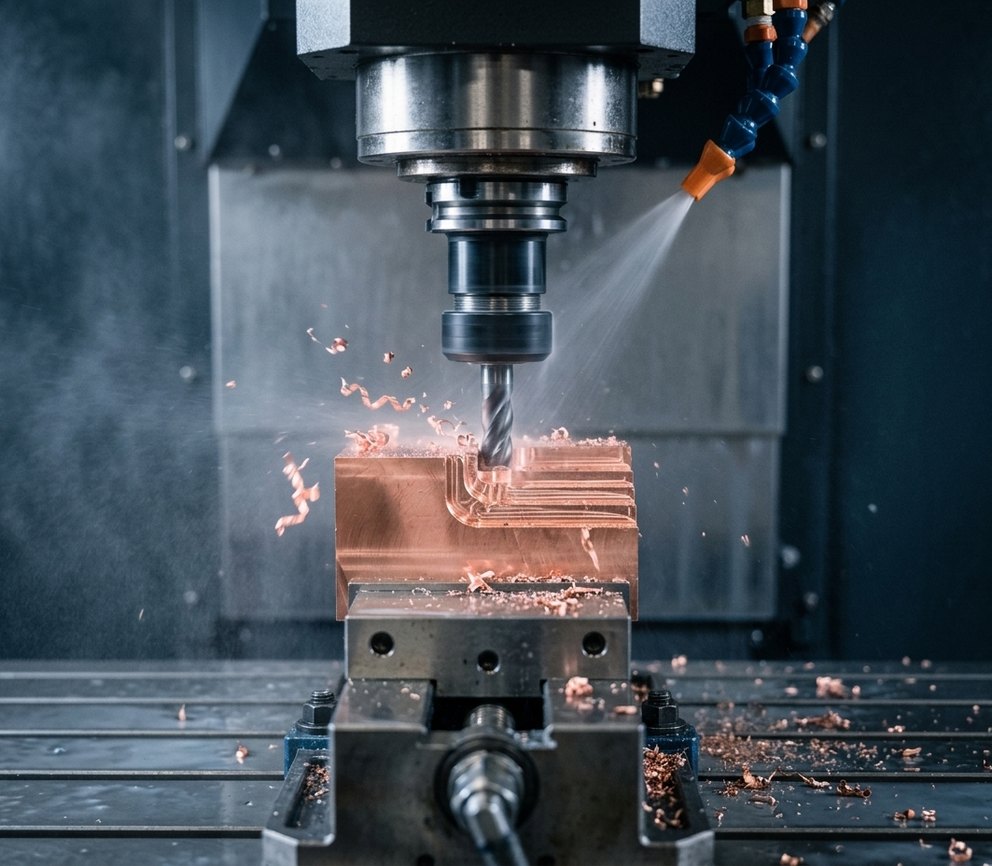
Copper CNC machining depends on process discipline more than raw horsepower: dedicated tooling, tuned feeds and steady chip evacuation.
-
1
Multi-Axis Milling
3-, 4- and 5-axis milling centers with multi-axis machining for complex copper geometry, holding ±0.01 mm on controlled features.
-
2
CNC & Swiss Turning
CNC and Swiss-type turning for connectors, terminals and fittings, with chip control that stops copper re-welding to the edge.
-
3
EDM Machining
EDM for fine copper features, reaching ±0.005 mm on select micro features without dragging burrs across finished surfaces.
-
4
CMM Inspection
In-house CMM inspection with full traceability through IQC, IPQC, FAI, OQC, SPC and CAPA under our quality system.
What Makes Machining Copper Different
Key factors our engineers control so soft, gummy copper holds tolerance and finish from prototype to production.
-
1
Sharp, Dedicated Tooling
Copper smears and gums up dull cutters. Sharp tooling reserved for copper keeps edges clean and stops material re-welding to the tool.
-
2
Speeds and Feeds for Copper
Lower cutting speeds with higher feed rates keep copper from dragging, the same control that holds tight tolerances on thin walls and small features.
-
3
Chip Evacuation
Steady chip evacuation stops chips dragging burrs across finished surfaces, critical on features that must stay clean.
-
4
Plating Lot Minimums
Plating runs against a shop minimum lot size, so a single prototype costs more per unit to plate than a production batch. Plan for it when scaling.
Copper Grades Machined at DEK
Datasheets for our stocked copper grades: Copper C101 (OFE, 99.99%) and Copper C110 (ETP, 99.90%), with composition and property data.
-
Copper C110, also known as electrolytic tough pitch (ETP) copper, is a commercially pure copper alloy with high thermal and electrical conductivity.Get Price
-
Copper C101, also known as oxygen-free electronic (OFE) copper, is a high-purity copper alloy with excellent electrical conductivity and thermal conductivity.Get Price
Applications for Copper Machined Parts
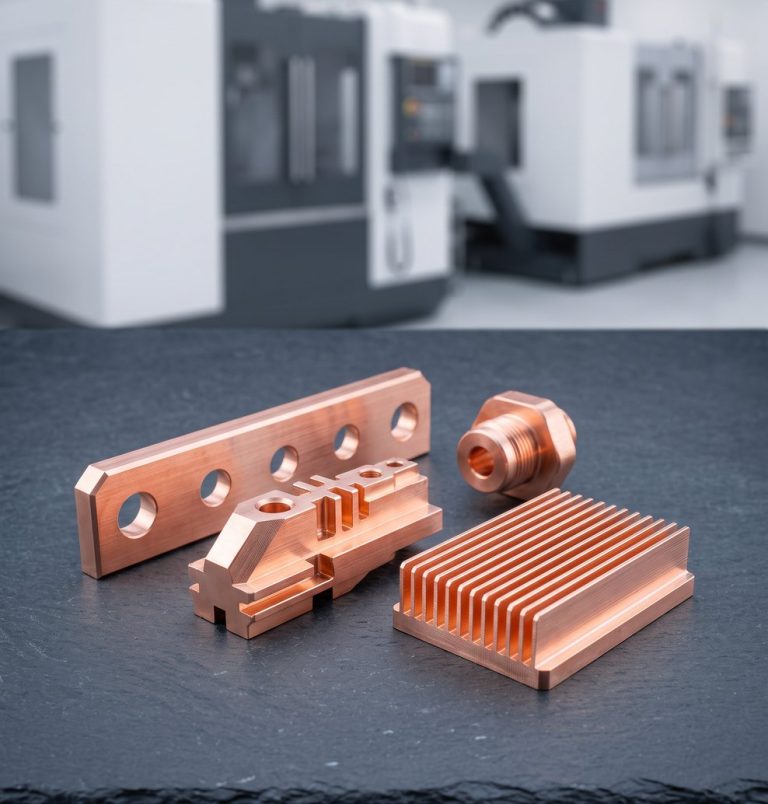
Connectors, bus bars, heat sinks and RF parts machined in copper for electronics, semiconductor, automation, energy and more.
-
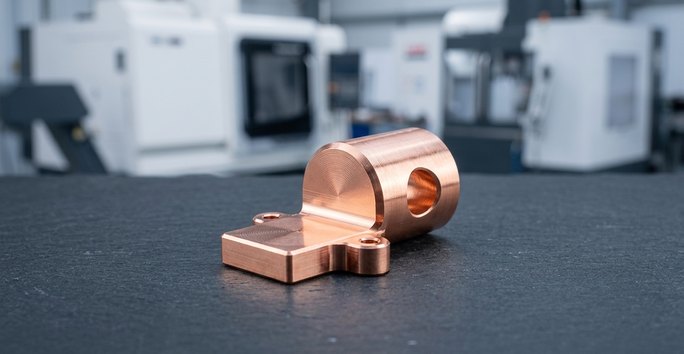 ElectronicsElectrical connectors, terminals and electronics housings that depend on copper's electrical conductivity.
-
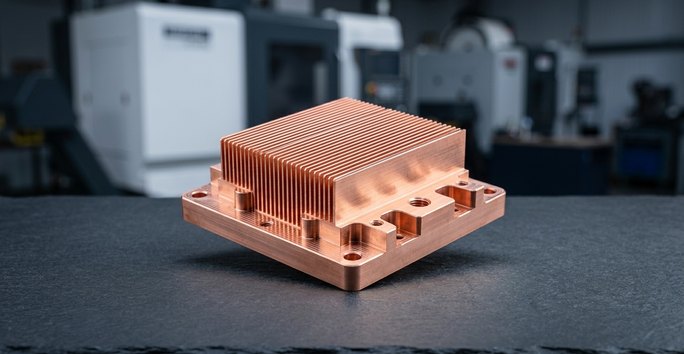 Semiconductor EquipmentHigh-conductivity copper components and thermal management parts for semiconductor equipment programs.
-
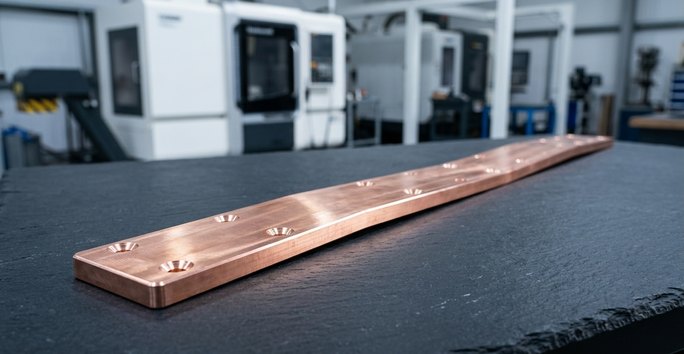 EnergyBus bars and larger structural copper components up to ~1000 mm for energy and power distribution.
-
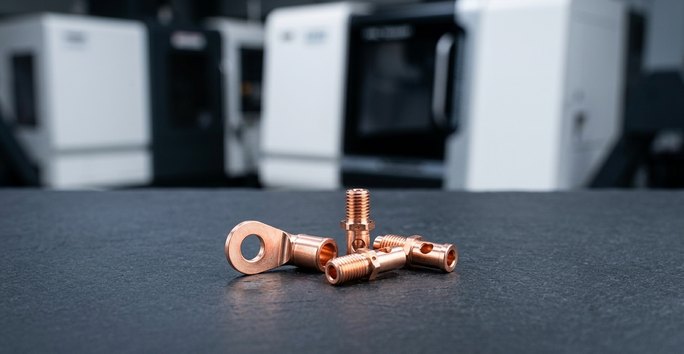 Industrial AutomationCopper terminals, connectors and electrical hardware for industrial automation equipment.
-
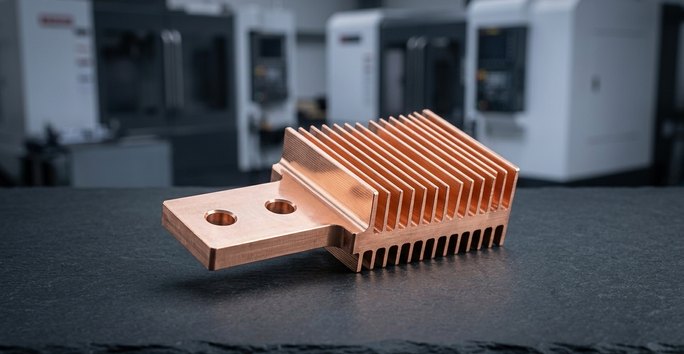 AutomotiveCopper bus bars, connectors and heat sinks machined for automotive electrical and thermal systems.
-
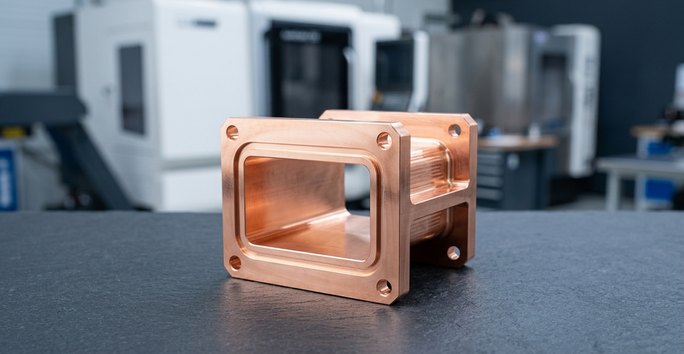 Aerospace (Non-Flight)RF and waveguide components for non-flight-critical aerospace programs, machined under AS9100D.
CNC Machining + Finishing for Copper Parts
Pair copper CNC machining with a finish for solderability, corrosion resistance or a clean surface before assembly.
Need a different finish? See all surface finish options
-
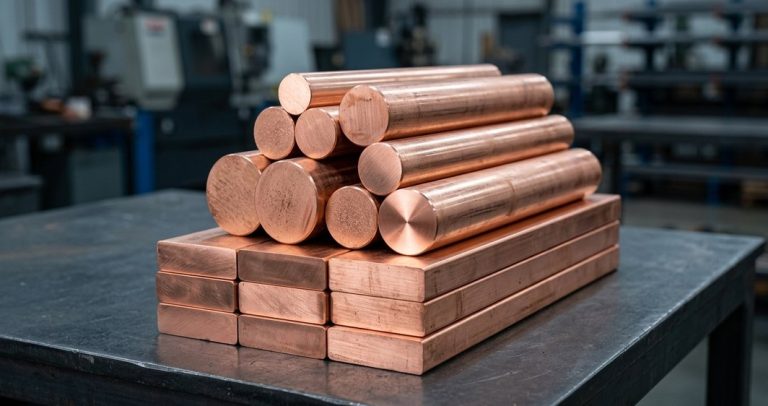 Tin or nickel platingMost PopularThe standard choice for solderable copper parts: protects from oxidation and corrosion while staying wettable for solder joints.Get a Quote
-
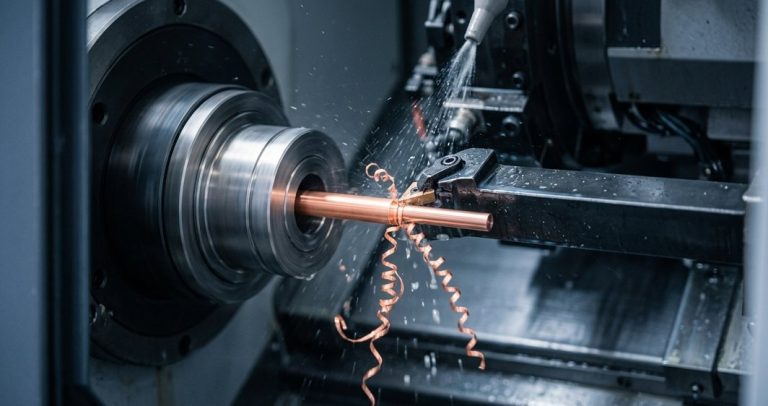 ElectropolishingMost PopularCreates a smooth, contamination-resistant surface on machined copper parts for clean applications.Get a Quote
-
 PassivationMost PopularStabilizes machined copper surfaces before assembly; plan for plating and finish lot minimums.Get a Quote
Copper FAQs
Common questions about machining copper parts, finishes and grade selection.
Other Materials
-
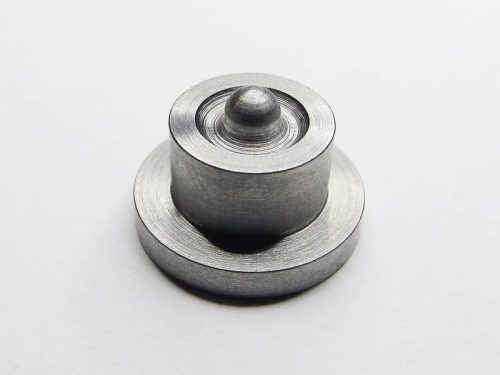 Alloy SteelAlloy steel grades 4140, 4340, 8620, 4130 and A514 for shafts, gears and structural parts that need more fatigue strength than plain carbon steel.Learn More
-
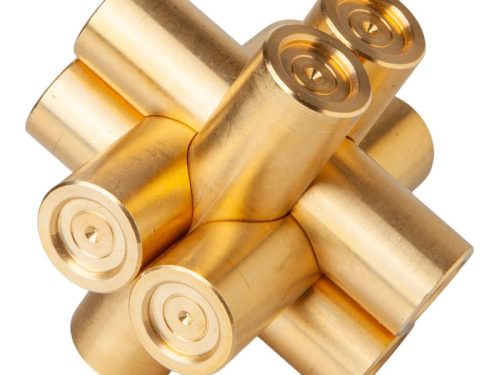 BrassC260, C360 free-cutting brass and Cz121 machined for fittings, valve parts, gears and connectors, from one prototype to production volumes.Learn More
-
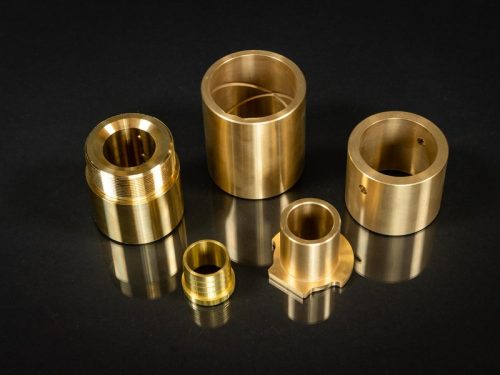 BronzePhosphor bronze C544, sintered C841, bearing bronze 932 and aluminum bronze 954 for bushings, sleeve bearings, gears, connectors and marine fittings.Learn More
-
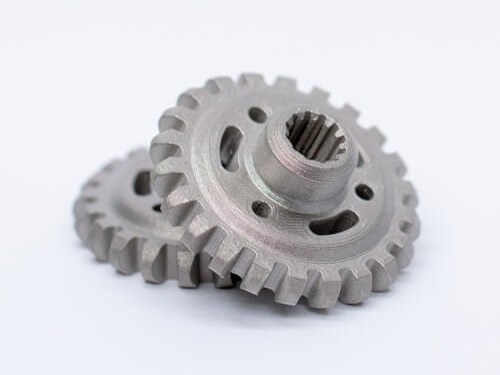 InconelNickel superalloys Inconel 600, 625 and 718, machined for aerospace, energy, medical and industrial parts exposed to heat and corrosive chemistry.Learn More
-
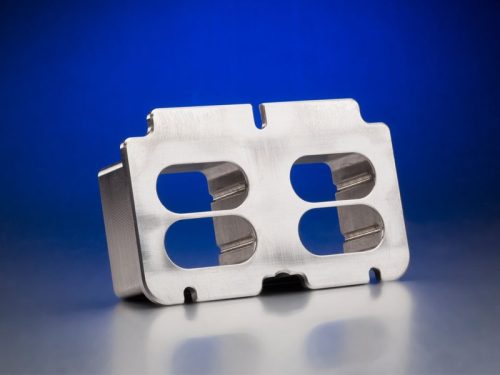 InvarInvar 36 and low-expansion Invar-family alloys, about 1.2 ppm/°C CTE, machined for optics mounts, semiconductor fixtures and measurement tooling.Learn More
-
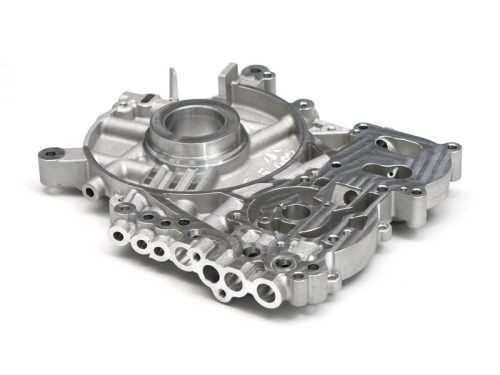 MagnesiumLightest structural metal in production use. AZ31B, AZ61B and AZ91D machined under fire-safe chip and coolant controls for weight-critical parts.Learn More
-
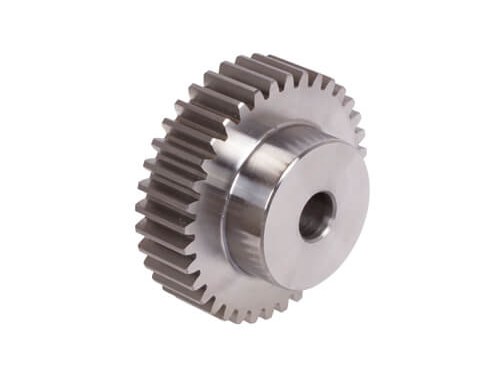 Mild SteelLow-carbon 1018, medium-carbon 1045 and free-machining 1215 and 12L14: cost-effective steel for shafts, brackets, pins, bushings and gears.Learn More
-
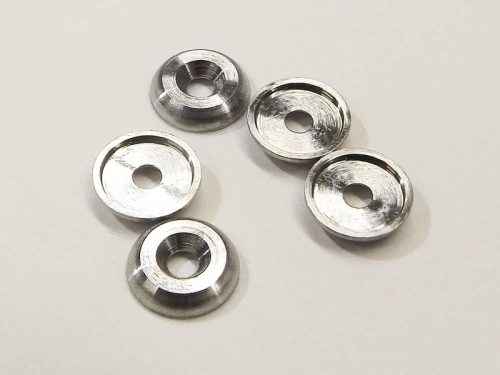 TitaniumGrade 1, Grade 2 and Grade 5 (Ti-6Al-4V) titanium, milled, turned and EDM-cut for aerospace, medical, robotics and semiconductor parts. No MOQ.Learn More
-
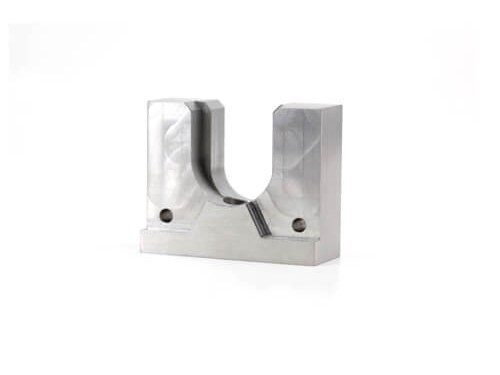 Tool SteelA2, D2, H13, O1, S7 and A3 machined into punches, dies, mold inserts and wear parts, annealed or hardened to 60+ HRC.Learn More
-
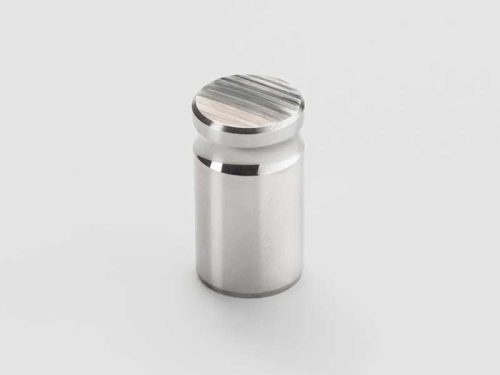 Tungsten SteelTungsten and tungsten carbide grades (YG6, YG8, YG10X, YG15, YL10.2) for wear parts, dies, punches and shielding, milled, turned, EDMed and ground.Learn More
-
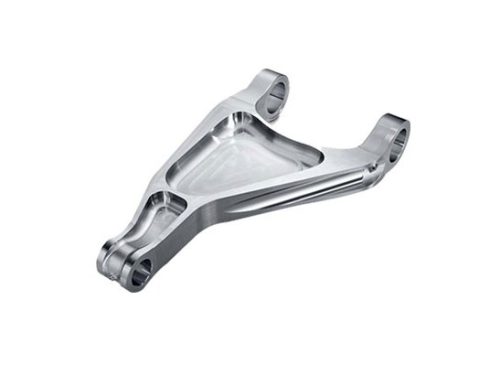 AluminumStocked 6061, 6063, 5083 and 5052 for brackets, housings, marine and fluid-handling parts, held to ±0.005 mm on fit-critical features with no MOQ.Learn More
-
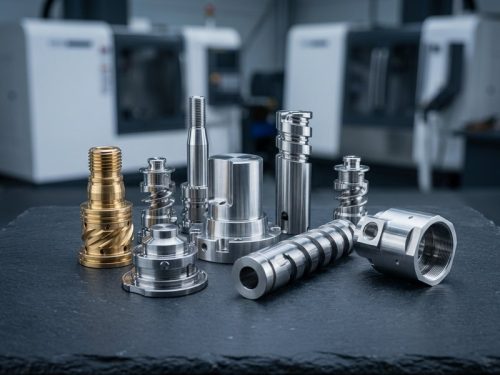 Stainless Steel303, 304, 316L, 17-4PH and 2205 duplex machined for medical, robotics, semiconductor and aerospace parts, from one prototype to production, ±0.005 mm.Learn More

Ready to Scale Your Project?
Get started with a stable process and controlled quality. Let's discuss your project.