






7075 Aluminum Machining
Also known as UNS A97075 · EN AW-7075 · DIN 3.43657075 aluminum machining is what you specify when a part must carry structural load at aluminum weight: 7075-T6 reaches 503 MPa yield at 2.81 g/cm³. DEK machines T6 and T651 plate and bar to ±0.005 mm on request, with hard anodizing, AS9100D and no MOQ.
-
572 MPaTensile Strength
-
503 MPaYield Strength
-
11%Elongation
-
150 HBHardness
-
2.81 g/cm³Density
DEK's 7075 Machining Capabilities and Tolerances
Tolerances, finishes and part sizes DEK holds on 7075-T6 and T651, milled, turned and inspected on CMM at 20 °C.
-

Milled & turned
±0.025 mmstandard
-

Tight tolerance
±0.005 mmon request
-

Bores and pin fits
H7±0.01 mm at 20–50 mm
-

Flatness, T651 plate
0.02 mmover 300 mm
-

Swiss-turned features
±0.003 mmsmall features
-

As-machined finish
Ra 0.8–1.6 µmRa 0.4 µm with passes
-

Milled part size
~1000 mm3- and 4-axis milling
-

Turned diameter
1–250 mmCNC and Swiss turning
7075 Aluminum Properties and Equivalent Designations
Property data for 7075-T6 / T651 and overaged T73: a zinc-magnesium-copper alloy with the highest strength of any common aluminum.

- Tensile strength 572 MPa (540 MPa min)
- Yield strength 503 MPa (470 MPa min)
- Elongation 11% (7% min)
- Hardness 150 HB
- Fatigue (5×10⁸ cycles) 159 MPa
- Machinability (1212=100%) ~70–80%
- Stress corrosion Fair

- Density 2.81 g/cm³
- Thermal conductivity 130 W/m·K (T6)
- Thermal conductivity T73 155 W/m·K

- Zn 5.1–6.1%
- Mg 2.1–2.9%
- Cu 1.2–2.0%
- Cr 0.18–0.28%
- Fe ≤0.5%
- Al Balance

- Tensile strength 505 MPa
- Yield strength 435 MPa
- Elongation 13%
- Hardness 135 HB
- Fatigue (5×10⁸ cycles) 150 MPa
- Stress corrosion Good
What 7075 Machining Demands
How 7075-T6 machining behaves on the shop floor: chip, finish, tool wear and residual stress in plate.
Aluminum 7075 CNC work is not difficult, but it is different from 6061. The material is harder (150 HB against 95 HB), which gives a crisper chip, better surface finish, less burr, and walls of 0.6–0.8 mm without chatter.
Spindle speeds run 600–1,200 m/min with flood coolant and polished carbide on our CNC milling and 5-axis machining centers.
- Tool wear is higher, so tools are changed by schedule.
- Residual stress in T6 plate is managed by roughing both sides, resting, then finishing.
- The alloy is notch-sensitive, so we deburr and radius edges on fatigue-loaded parts.
- Always specify T651 for plate: a one-sided pocket can bow a 300 mm T6 part by 0.2–0.5 mm.
-
Spindle Speed
600–1,200 m/minFlood coolant, polished carbide
-
Machinability
~70–80%1212 steel = 100%
-
Surface Finish
Ra 0.8–1.6 µmBetter than 6061, no smear
-
Thin Walls
0.6–0.8 mmWithout chatter
-
Tool Wear
HigherTools changed by schedule
Aerospace, Drone, and Robotics Applications
Where 7075 strength-to-weight earns its price: aerospace aluminum machining, drones, robotics and tooling.
-
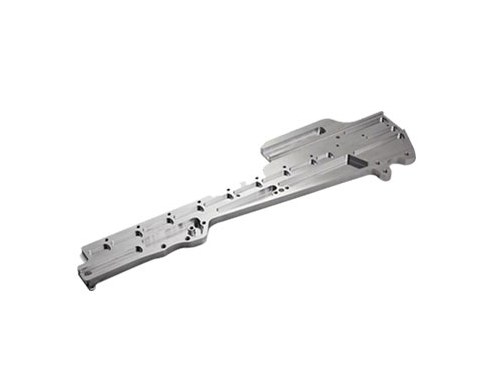
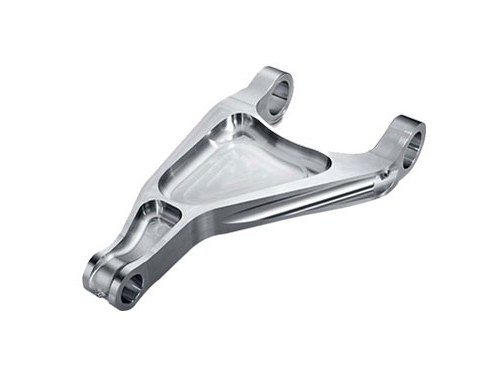
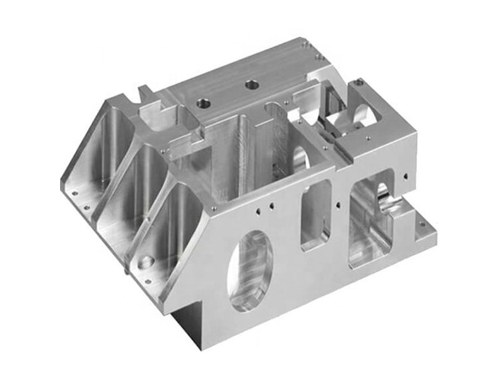
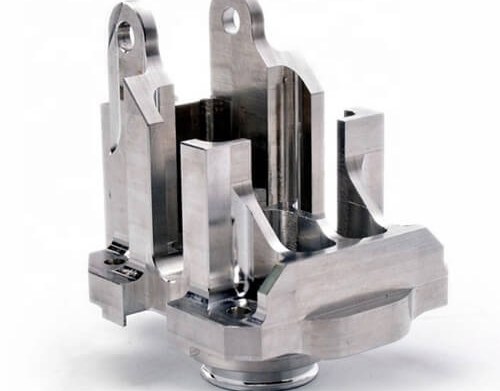
 Aerospace BracketsWing and fuselage brackets, actuator housings and hinge fittings, machined under the AS9100D system.
-
 Drone FramesMotor mounts, arm joints, gimbal frames and payload rails where strength-to-weight saves flight time.
-
 Robotics PartsArm links, end-effector plates and gripper fingers that run under cyclic load.
-
 Tooling and MotorsportComposite layup fixtures, press tooling plates, motorsport suspension and climbing hardware.
7075 vs 6061 Machining and Other Aluminum Grades
The 7075 vs 6061 machining choice is about the load, not the cut: 7075 wins on strength-limited, weight-critical parts; 6061 on cost, welding and anodize color.
| Criteria | This Grade7075-T6 | 6061-T6 | 2024-T3 | 7050-T7451 |
|---|---|---|---|---|
| Yield strength | 503 MPa | 1.8× lower | – | – |
| Hardness | 150 HB | 95 HB | – | – |
| Fatigue | Better than 6061 | Lower | Best | – |
| Weldability | Not weldable | Weldable | – | – |
| Corrosion resistance | Lower | Better | Worst | – |
| Stock cost | 1.5–2× 6061 | Lower | – | – |
| Thick plate (>75 mm) | Core under strength | – | – | Preferred |
Hard Anodizing and Finishes for 7075
Finishes applied to the 7075 parts we machine, sold as CNC machining + finish; 7075 is not fusion weldable.
-
Hard coat anodizing AvailableType III, 25–75 µm and 350–450 HV, for wear surfaces, slides and gear housings; darker and less uniform than 6061 because of copper.
-
Anodizing AvailableType II clear, black or color, 5–25 µm, for corrosion protection and appearance on machined 7075 parts.
-
Chem film / Alodine AvailableMIL-DTL-5541 Class 3 conversion coating for conductive, paintable aerospace surfaces on machined 7075.
Request a 7075 Aluminum Machining Quote
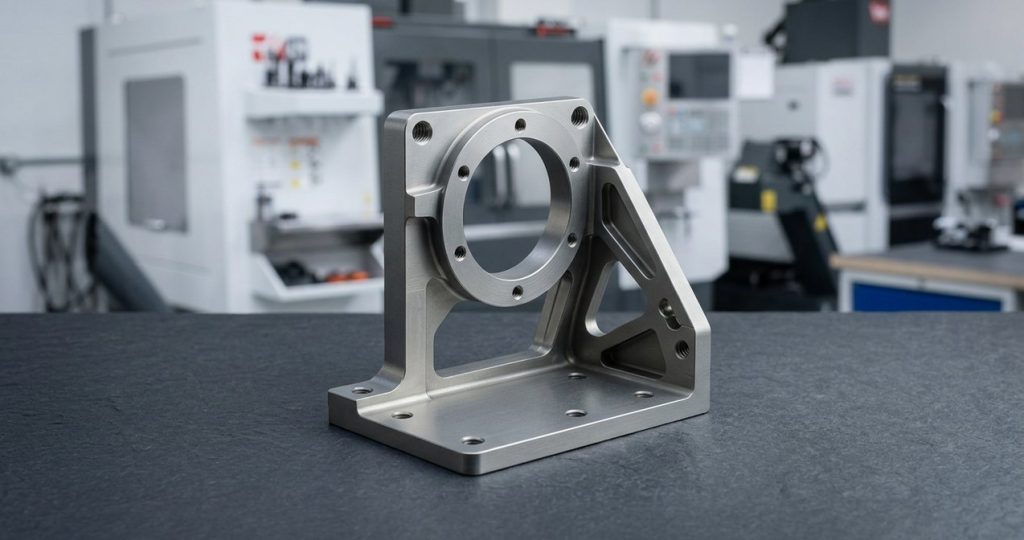
Send a STEP, IGES or PDF drawing with temper (T651 or T73), tolerances and finish; an engineer confirms stock, grain orientation and anodize allowances.
Why DEK for 7075 Aluminum Machining
Certified aerospace aluminum work, verified stock and engineer-reviewed quotes, plus the design rules that keep 7075 parts out of trouble: temper, welding and stress corrosion.
- AS9100D, ISO 9001:2015 and ISO 13485 certified by TÜV; 20+ years machining aerospace and industrial aluminum on 100+ CNC machines.
- Spectrometer check on every incoming lot; CMM inspection, FAI reports and material certificates on request.
- Engineer-reviewed quotes within 6 hours covering temper, stress relief and anodize allowances; no MOQ.
- Prototypes in 3–5 days, worldwide shipping in 3–7 days, through our CNC machining services workflow.
Welding. 7075 is not fusion weldable in practice: the zinc-copper chemistry hot-cracks and the heat-affected zone loses most of its T6 strength. Machine from solid or bolt; if a weldment is unavoidable, switch to 6061.
Stress corrosion. T6 can crack under sustained tensile stress across the grain. Orient the main load with the rolling direction and always apply a surface treatment; T73 trades about 12% strength for much better resistance in humid or marine service.
-
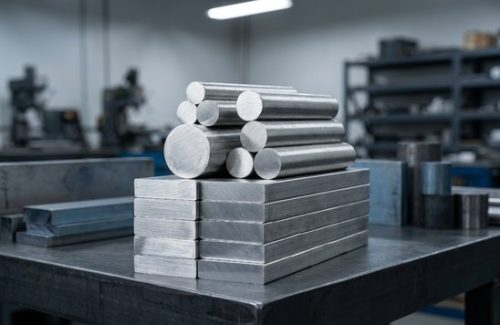 Raw Stock
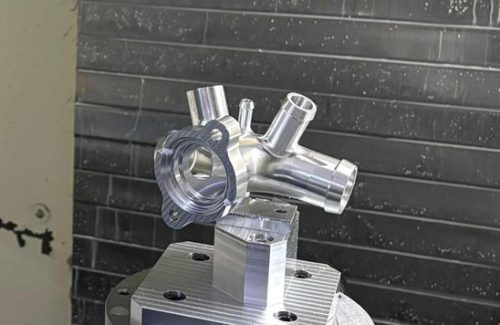 CNC Machined
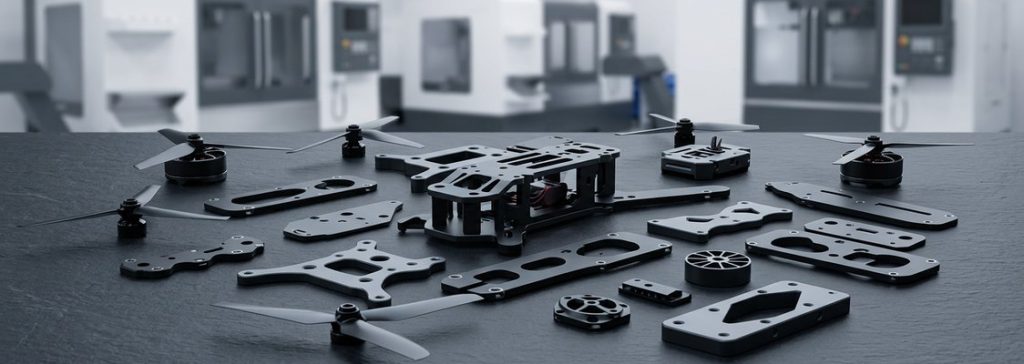 Finished Parts
-
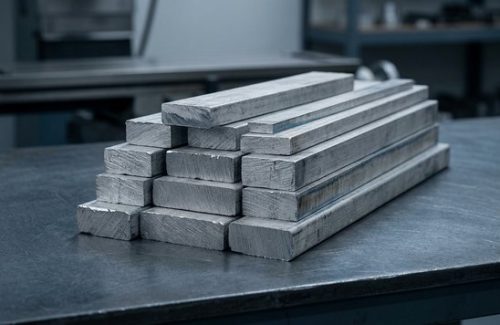 Raw Stock
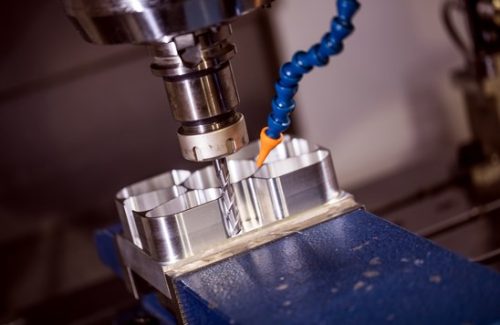 CNC Machined
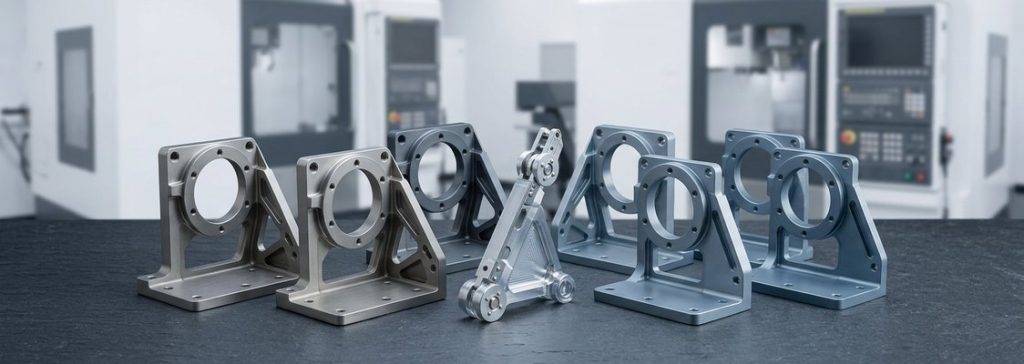 Finished Parts
Frequently Asked Questions
Common questions about machining, welding and anodizing 7075 aluminum parts.
Other Materials
-
 Aluminum MIC6MIC-6 is a cast aluminum plate made from a mix of metals. It offers high accuracy and easy machinability.Learn More
-
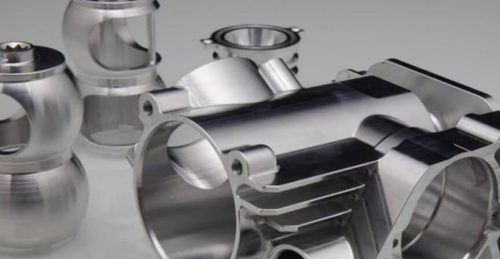 Aluminum 5052Aluminum 5052 is widely used in CNC machining because of its formability and corrosion resistance. It belongs to the 5xxx series of aluminum alloys and offers moderate strength.Learn More
-
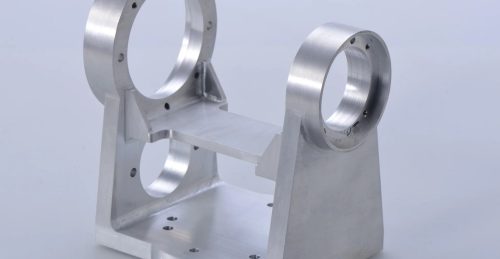 Aluminum 2014Aluminum 2014 is a strong alloy widely used in aerospace. It's easily machinable in specific conditions and often formed into bars and profiles through extrusion.Learn More

Ready to Scale Your Project?
Get started with a stable process and controlled quality. Let's discuss your project.