









Delrin Machining
DEK's Delrin machining service produces gears, bushings, valve bodies and food-contact parts in POM-H and POM-C, holding ±0.01 mm typical. Prototypes in 3–5 days, no MOQ from 1 to 10,000+ pieces.
-
±0.01 mm
Typical Tolerance
-
3–5 days
Prototype Lead Time
-
No MOQ
1 to 10,000+ Pieces

Why Delrin CNC Machining Is So Predictable
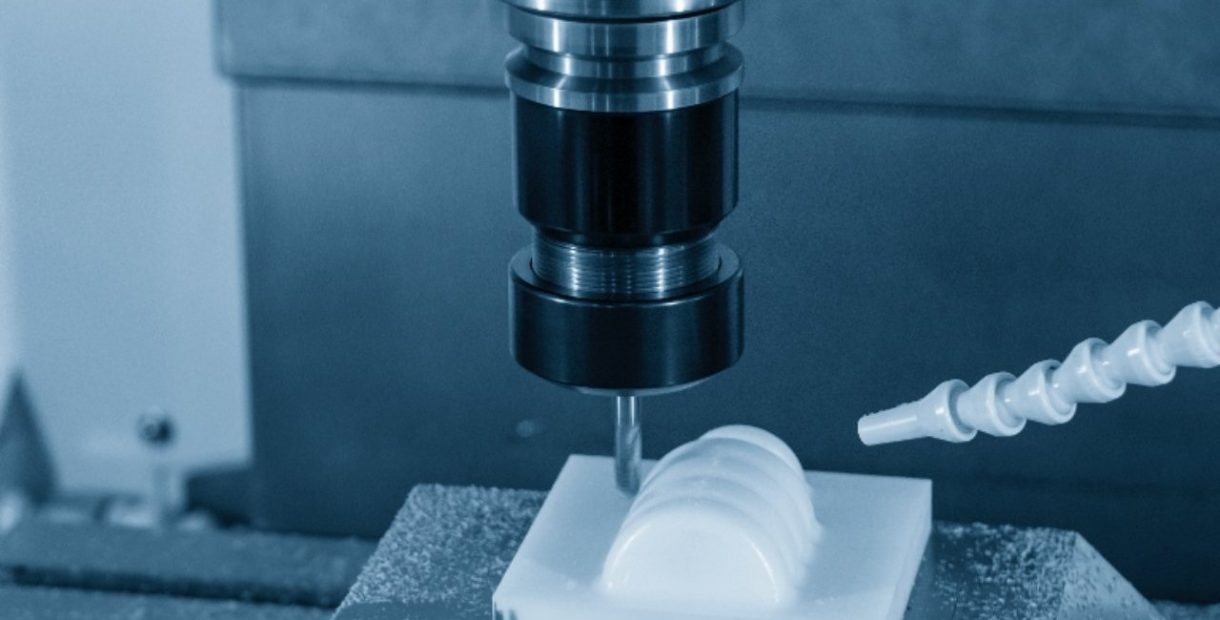
Acetal is the most predictable engineering plastic on a CNC machine: it chips cleanly, holds size, absorbs almost no water and needs no special coolant. It is the first material we suggest when a metal part can be replaced by plastic without losing precision.
Delrin runs on the same mills, lathes and Swiss machines as steel and aluminum work. It is one of the core polymers in our plastic CNC machining services; see the whole family under CNC machining plastics.
-

Machining acetal alongside metals since 2002
-

ISO 9001:2015, ISO 13485 and AS9100D
-

Engineer-reviewed quote within 6 hours
-

Mating metal parts machined, fit verified
Delrin Grades We Machine
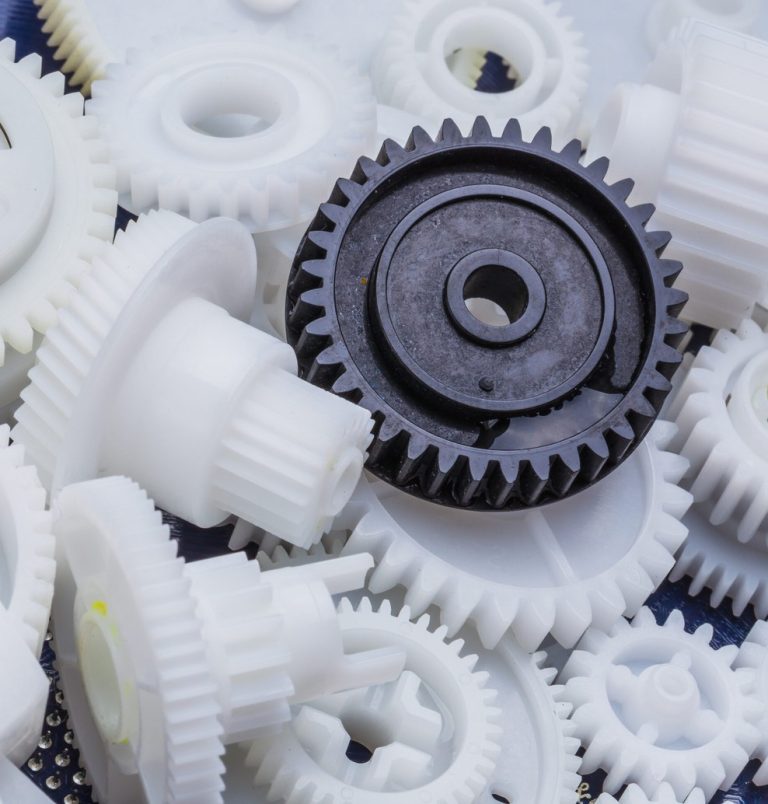
Homopolymer, copolymer and filled acetal grades, chosen by stiffness, section thickness, friction and food-contact requirements.
-

Delrin 150
70 MPa tensile strengthPOM-H, extruded, for gears, bushings and cams with the highest stiffness and fatigue strength. Delrin 150.
-

Acetal copolymer
100 °C continuous servicePOM-C for thick sections and hot-water or alkaline service; no centerline porosity, water absorption 0.20% / 0.8%.
-

Delrin 30% glass-filled
Double the stiffnessStructural parts needing double the stiffness and lower creep. Delrin 30% glass-filled.
-

Delrin AF (13% PTFE)
Lowest friction in familyBearings, slides and wear pads with the lowest friction of the acetals. Delrin AF.
-

Natural and blue POM-C
FDA / EU 10/2011 compliantFood processing and packaging machinery; detectable blue grade for contamination control, material certificates on request.
-

Delrin 150 (POM-H)
1.42 g/cm³ densityVersus 1.41 g/cm³ for POM-C; both share 110 × 10⁻⁶/K expansion and 0.20–0.25 dry friction on steel. POM-H runs to 85 °C, POM-C to 100 °C.
-
±0.005 mm
Short turned diameters
-
±0.01 mm
Features up to 100 mm
-
Ra 0.4 µm
As-turned surface finish
Delrin CNC Capabilities and Tolerances
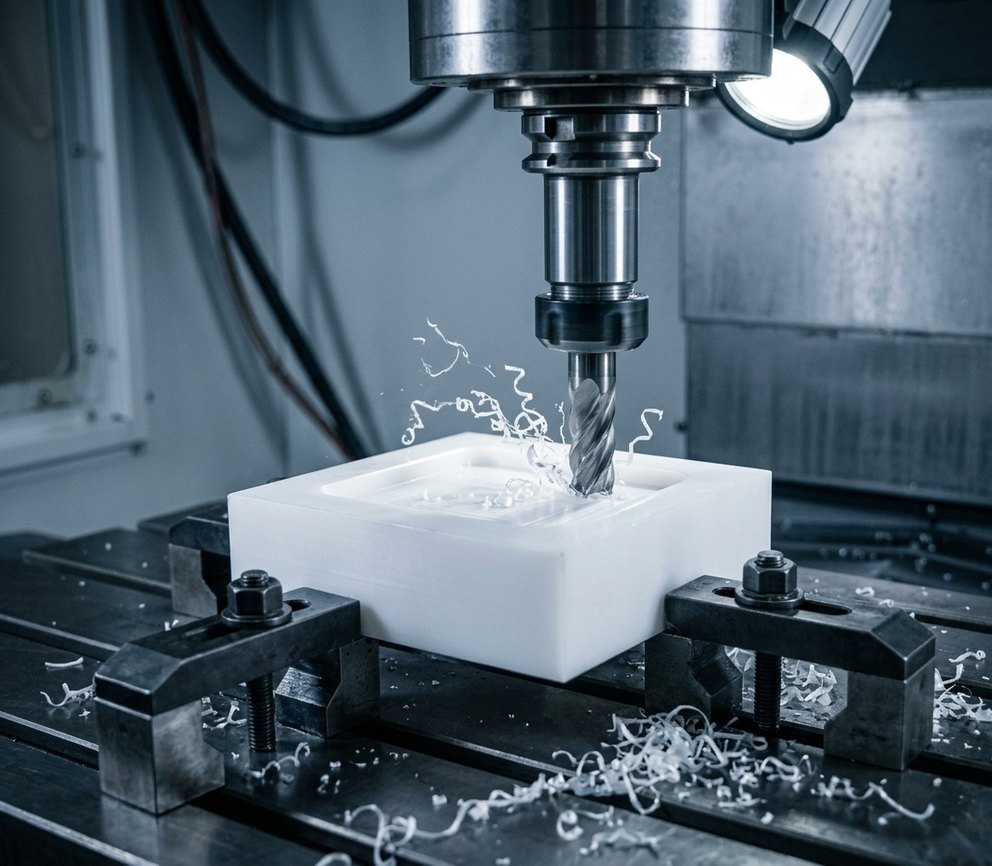
Whether the drawing says Delrin, POM machining or acetal machining, the process is the same, limited by thermal expansion rather than the cutter.
-
1
CNC Milling
3-, 4- and 5-axis CNC milling for manifolds, cam plates, housings and guide blocks, Ra 0.8–1.6 µm as milled.
-
2
CNC and Swiss Turning
CNC turning for bushings, rollers, pistons and valve stems; Swiss turning for pins and fittings under 20 mm diameter, Ra 0.4–0.8 µm.
-
3
Gear Cutting
Gear cutting by hobbing for spur, helical and worm gears in POM-H, the standard material for quiet, dry-running drives.
-
4
Drilling and Threading
Drilling, tapping, reaming and full-form threads that hold torque without inserts. Seal bores are reamed or bored, never drilled to size.
Design & Machining Tips for Delrin
Key factors our engineers check on acetal drawings before quoting, from residual stress to fits and wall thickness.
-
1
Annealing Before Finishing
We anneal blanks at 150 °C in an oil bath or oven before finish machining parts with asymmetric removal; otherwise pockets open up by 0.02–0.05 mm over a week.
-
2
Thermal Expansion
A 100 mm acetal part grows 0.11 mm per 10 °C. Inspect at 23 °C and design metal-to-acetal fits with clearance or a compliant feature.
-
3
Realistic Tolerances
±0.01 mm typical, ±0.005 mm on short turned diameters and reamed bores. Over-toleranced drawings add cost without improving the part.
-
4
Sharp Corners
Acetal is notch-sensitive under impact and fatigue: use internal radii of 0.5 mm or larger and 0.2 mm chamfers on gear tooth edges.
-
5
Thin Walls
0.8 mm minimum, 1.2 mm for walls over 30 mm long. Delrin deflects less than nylon, so thinner walls are achievable than in most plastics.
-
6
Threads and Press Fits
Cut threads to full form; limit press-fit interference to 0.5–1% of diameter because acetal creeps under sustained hoop stress.
Delrin Grades Available at DEK
Grade pages for Delrin 150, Delrin 30% glass-filled and Delrin AF (13% PTFE-filled), with properties and typical machined parts.
-
Delrin AF (13% PTFE Filled) is a type of plastic material that combines the properties of Acetal (polyoxymethylene) with the added benefit of polytetrafluoroethylene (PTFE) filler.Get Price
-
Delrin (30% Glass Filled) is a specific type of Delrin reinforced with 30% glass fiber filler. Delrin is also known as polyoxymethylene (POM), a high-performance engineering thermoplastic.Get Price
-
Delrin 150 is a specific grade of Delrin that offers enhanced mechanical properties compared to the standard grade.Get Price
When to Choose Delrin vs Nylon, PEEK or Brass
Delrin against its usual alternatives. Full comparison in our nylon vs Delrin guide.
Where Delrin Machined Parts Are Used
Machined acetal replaces metal in gear trains, medical devices and food machinery where low friction and dimensional stability matter.
-
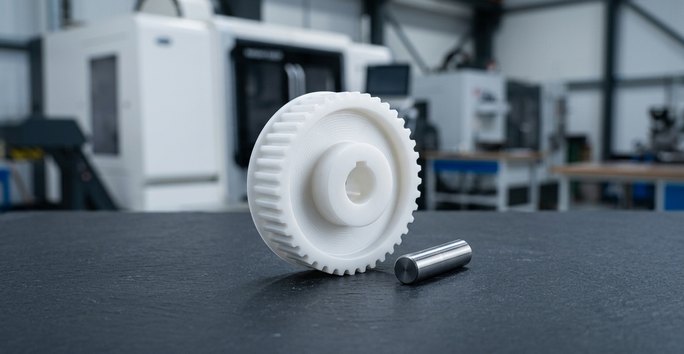 Automation & RoboticsGears, cam followers, gripper fingers, linear guides and timing pulleys running dry and quiet against steel.
-
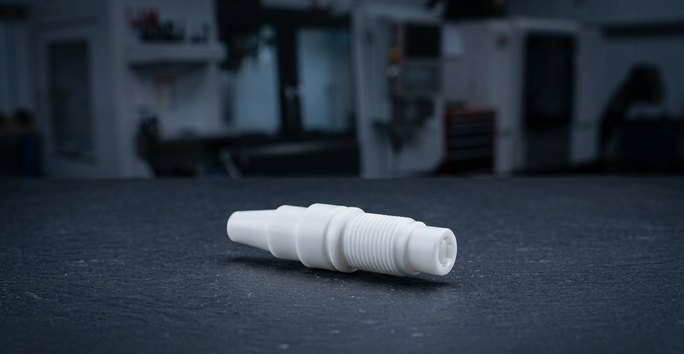 Medical DevicesInsulin pen components, valve seats and instrument handles machined under ISO 13485 controls.
-
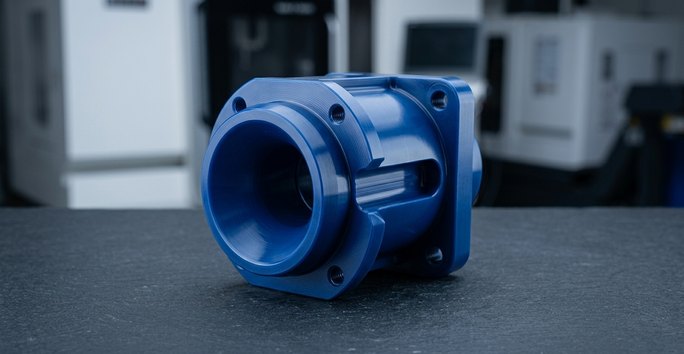 Food & PackagingStar wheels, conveyor guides and filling nozzles in FDA-compliant natural and detectable blue acetal grades.
Finishing Options for Delrin Parts
Delrin CNC parts ship as-machined or with a matte, marked or painted finish. Anodizing, plating and vapor polishing do not apply to acetal.
Need a finish not listed here? Ask our engineers for advice.
-
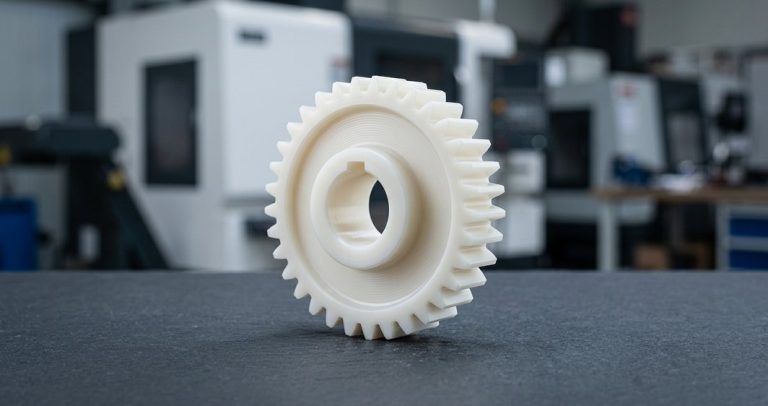 As-machinedStandardThe standard for acetal: turned surfaces reach Ra 0.4 µm with no post-processing, often enough for sealing faces.Get a Quote
-
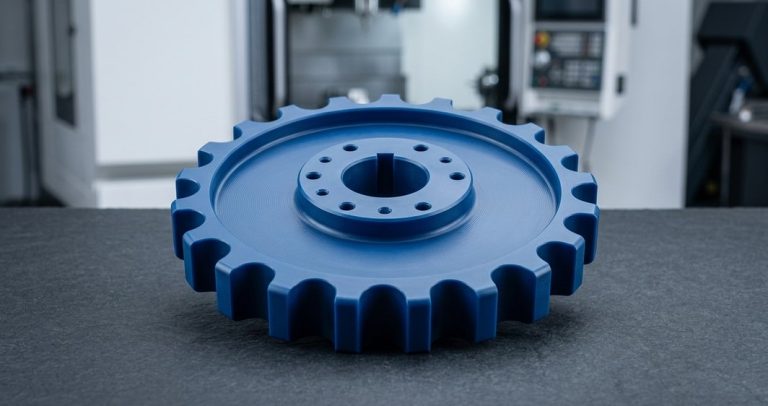 Bead blastingMost PopularCNC machining plus bead blasting gives a uniform matte for handled parts and hides tool marks on cosmetic faces.Get a Quote
-
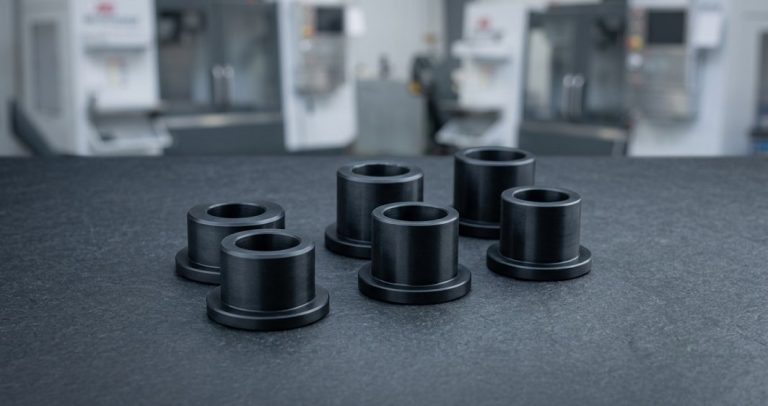 PaintingMost PopularRequires plasma or chemical etch; acetal's waxy surface rejects most paints, so specify only when necessary.Get a Quote
-
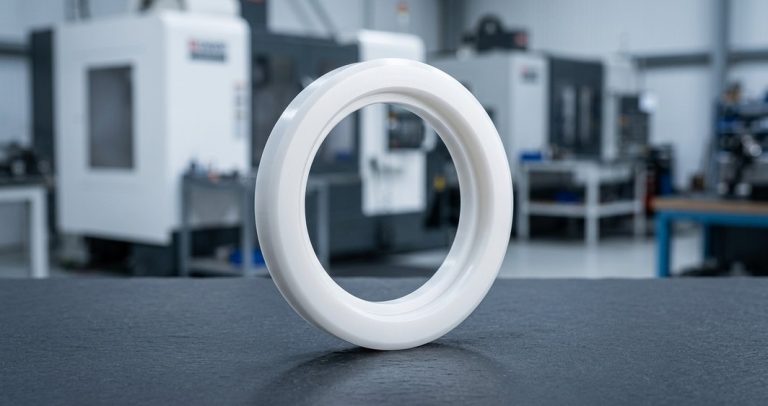 Laser markingMost PopularDark marks on natural and black acetal for part numbers and logos, applied after CNC machining.Get a Quote
-
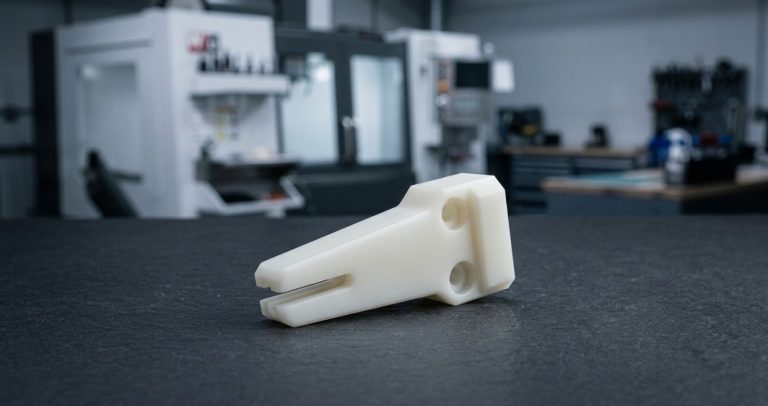 DeburringMost PopularMachined edges deburred and broken by hand or tumbling for clean, safe handling surfaces.Get a Quote
Delrin Machining FAQs
Answers to common questions on acetal grades, porosity and food-grade POM.
Other Materials
-
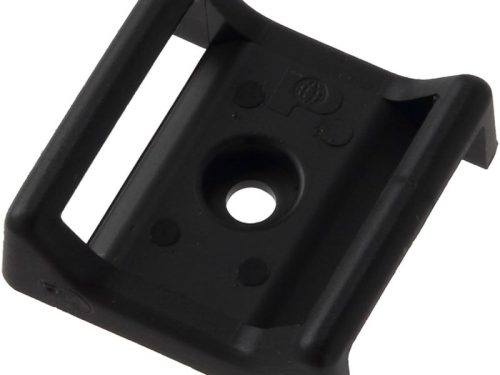 NylonTough, quiet, self-lubricating PA6, PA66, 30% glass-filled and MoS2 nylon for gears, bushings, wear pads, rollers and insulators.Learn More
-
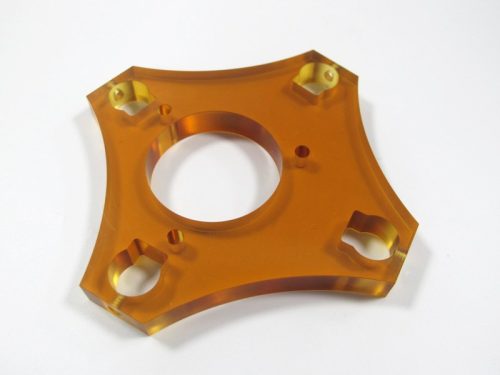 PEIUnfilled Ultem 1000 and 30% glass-filled Ultem 2300 PEI for test sockets, sterilization trays and aircraft brackets: 170 °C continuous, UL 94 V-0.Learn More
-
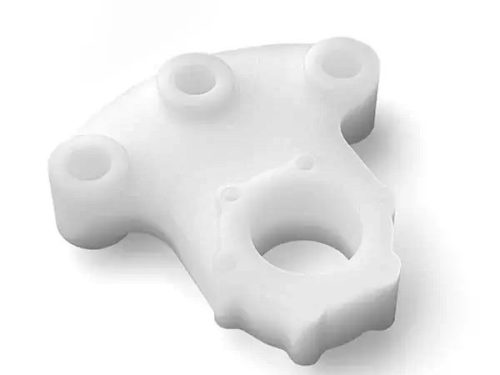 PolyethyleneUHMW-PE and HDPE: the lowest-friction, most abrasion-resistant commodity plastic, FDA compliant in natural grades, for wear strips and chain guides.Learn More

Ready to Scale Your Project?
Get started with a stable process and controlled quality. Let's discuss your project.








