








Nylon CNC Machining
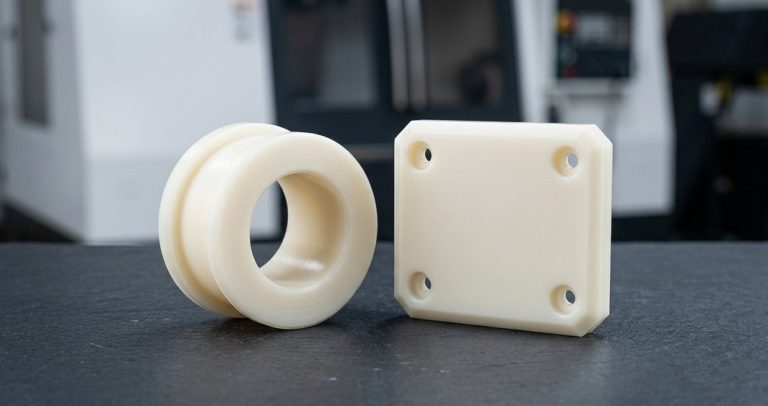
DEK's nylon CNC machining service turns cast PA6, PA66, 30% glass-filled and MoS2 nylon into gears, bushings and wear pads at ±0.01 mm on stabilized features. Stress relief and moisture control keep parts on size.
-
±0.01mm
Stabilized Features
-
3–5 days
Prototype Lead Time
-
No MOQ
Batches 1 to 10,000+

Why Nylon CNC Machining Needs Stable Stock
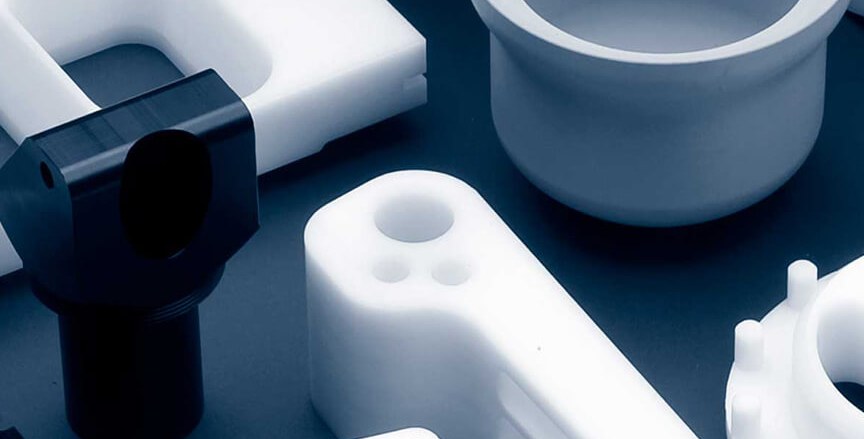
Nylon is tough, quiet and self-lubricating, but it absorbs water and moves after cutting, which is where most machined nylon parts fail inspection. We control that with dry-as-molded stock and stress relief between roughing and finishing.
Parts run on the same milling and turning centers as your metal components. Nylon sits alongside 15+ other polymers in our plastic CNC machining services.
-

Engineering plastics beside metals since 2002
-

ISO 9001:2015, ISO 13485 and AS9100D
-

Sealed storage to control moisture uptake
-

Engineer-reviewed quotes within 6 hours
Nylon Grades We Machine
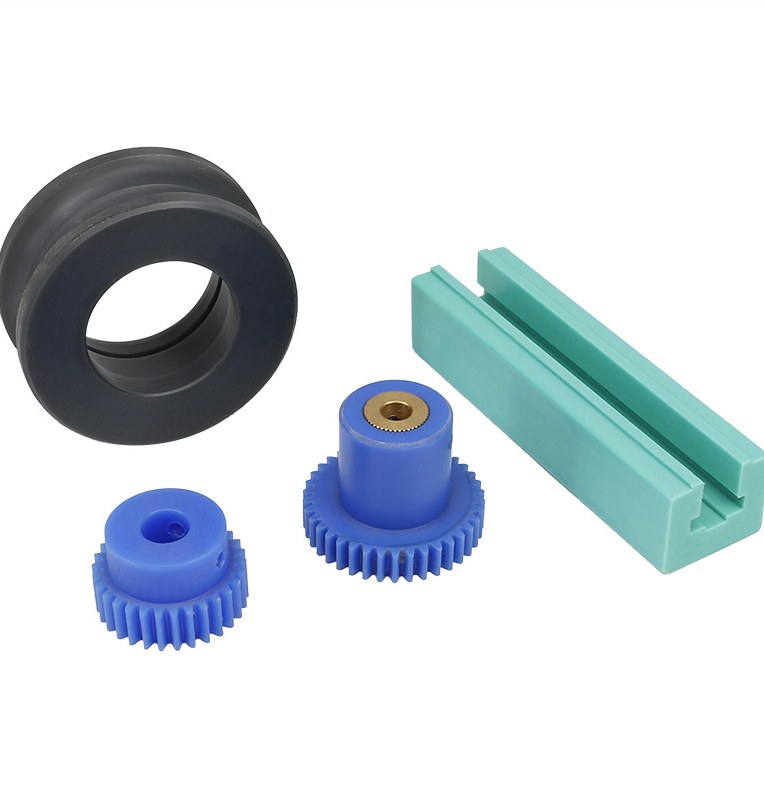
Cast, extruded, glass-filled and lubricated nylon grades, each chosen for stock form, stiffness and how much it moves with moisture.
-

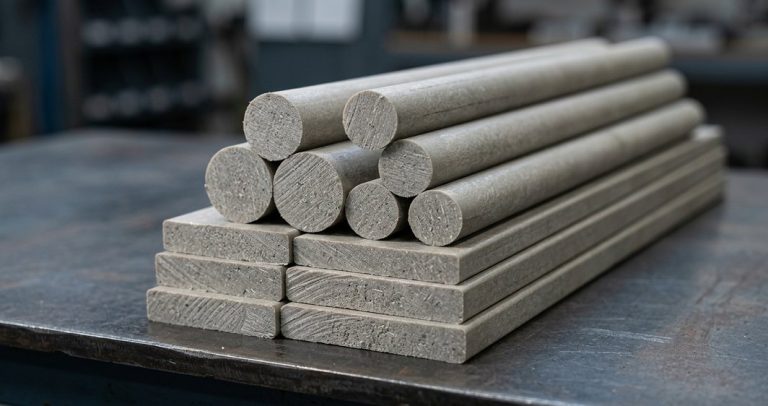
Nylon 6 (cast PA6)
80 MPa tensile (dry)Large blocks, sheaves, wear pads and gears, with lower stress than extruded stock. See Nylon 6.
-

Nylon 6/6 (PA66)
105 °C service temperatureHigher stiffness and hardness than PA6, with 85 MPa tensile strength (dry). The usual choice for bushings and rollers.
-

30% glass-filled
2× unfilled PA6 stiffnessPA6 base for structural brackets and housings that need more stiffness. See Nylon 6 30% glass-filled.
-

PA66 GF30
160 MPa tensile (dry)Highest strength and creep resistance of the family, 120 °C service. See Nylon 6/6 30% glass-filled.
-

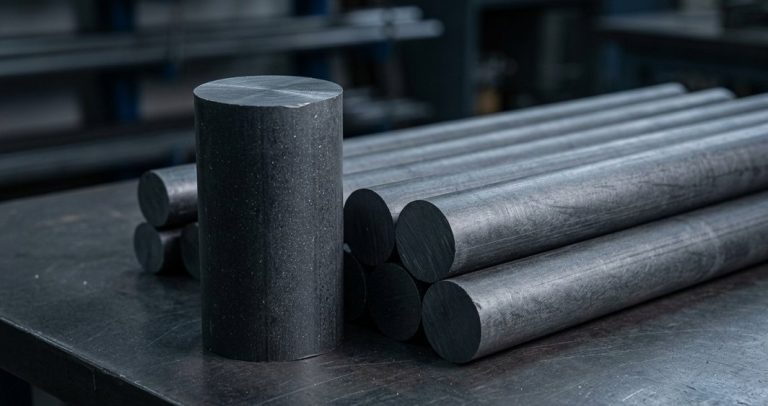
MoS2-filled nylon
PA6 + molybdenum disulfideBearings, guides and gears with lower friction and better wear than unfilled cast nylon.
-

Nylon 6 flame retardant
UL 94 V-0Electrical insulators and enclosures needing UL 94 V-0. See Nylon 6 FR.
-
±0.01mm
Unfilled, under 50 mm
-
±0.05mm
Long, thin or glass-filled
-
Ra 0.8–1.6
As-machined finish (µm)
-
23 °C
Inspected at 50% RH
PA6 Machining and PA66 Machining at DEK
PA6 and PA66 use the same tooling and speeds; stock form and moisture movement set the process, not cutting difficulty.
-
1
CNC Milling
3-, 4- and 5-axis CNC milling for wear pads, guide blocks, cam plates and housings, on the same centers that cut your metal components.
-
2
CNC & Swiss Turning
CNC turning for bushings, rollers, spacers and threaded fittings; Swiss turning for small-diameter pins and insulators.
-
3
Gear Cutting
Gear cutting by hobbing and shaping in PA66 and cast PA6 for quiet, low-load drives, meshing with steel pinions we machine in the same order.
-
4
Drilling & Tapping
Drilling, tapping and reaming with sharp high-helix tools to avoid the undersized, hairy holes nylon produces with dull drills.
Design & Machining Tips for Nylon
Key factors our engineers check so nylon parts hold size after machining, in service and at inspection.
-
1
Stress Relief
Extruded rod carries skin stress. We rough, anneal at 150 °C in oil or inert atmosphere, then finish; cast PA6 needs less because it is stress-free from the mold.
-
2
Moisture & Dimensional Stability
A 100 mm PA6 bore can grow 0.3–0.5 mm from dry to saturated. Specify the moisture state at inspection, or choose PA66 GF30 or Delrin for wet service.
-
3
Thermal Expansion
80–90 µm/m·K is four times steel. A nylon bushing pressed into a steel housing tightens on its shaft when hot; design the bore with 0.3–0.5% running clearance.
-
4
Sharp Corners
Nylon is notch-sensitive under impact. Use 0.5 mm minimum internal radii and 0.3 mm chamfers on edges that see repeated loading.
-
5
Thin Walls
1.0 mm minimum, 1.5 mm for glass-filled grades; unsupported walls under 1 mm deflect away from the cutter and come out tapered.
-
6
Threads in PA66
Tapped holes hold well in PA66; specify a coarse pitch and 2 mm minimum wall around the thread. Use inserts for high cycle counts.
When to Choose Nylon vs Delrin, UHMW or Bronze
How nylon compares with the materials engineers weigh it against. Full breakdown in our nylon vs Delrin guide.
Where Machined Nylon Parts Are Used
Quiet, self-lubricating nylon parts run dry in drives, conveyors and electrical assemblies across six industries.
-
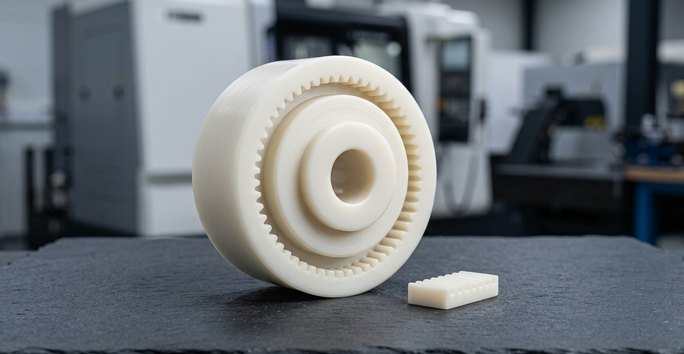 Automation & RoboticsGears, cam followers, gripper pads, cable-chain guides and bushings for quiet, low-maintenance motion.
-
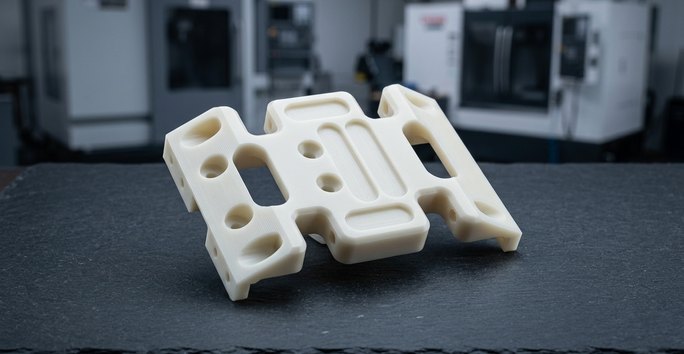 Industrial EquipmentSheaves, wear pads, sprockets, slide rails and hammer heads that replace metal where noise and weight matter.
-
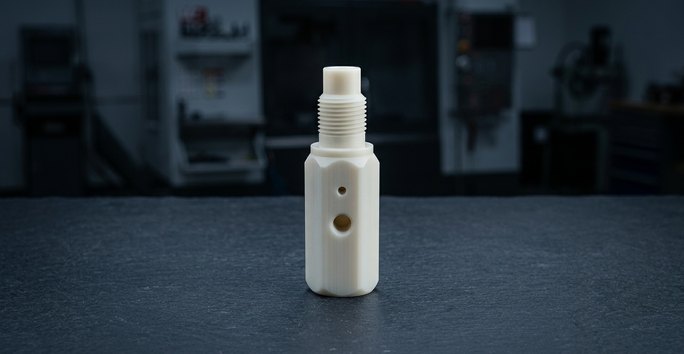 Electronics & TelecomInsulators, standoffs and connector bodies machined in flame retardant nylon grades.
-
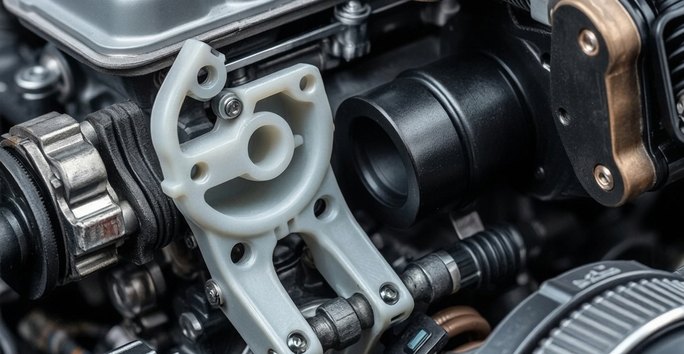 AutomotiveUnder-hood clips, fuel-line brackets and pump gears machined in PA66 GF30 for strength and creep resistance.
-
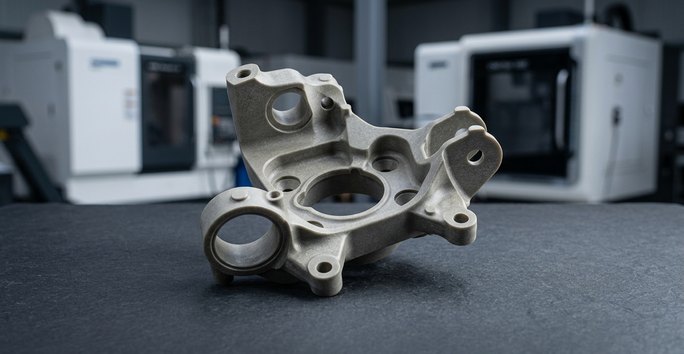 Agriculture & ConstructionRollers, guide blocks and pivot bushings running dry in dusty conditions where grease collects grit.
-
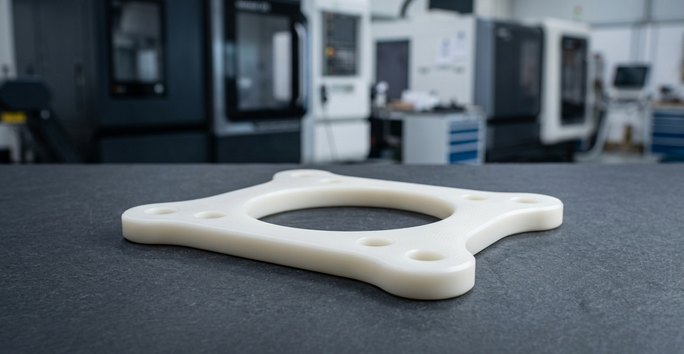 Food ProcessingFDA-compliant natural PA6 conveyor parts machined from cast stock for clean, quiet running lines.
Finishing Options for Machined Nylon Parts
CNC machining plus finish: nylon takes blasting, dye and marking; anodizing and plating are not applicable.
Not sure which finish fits? See all finish options
-
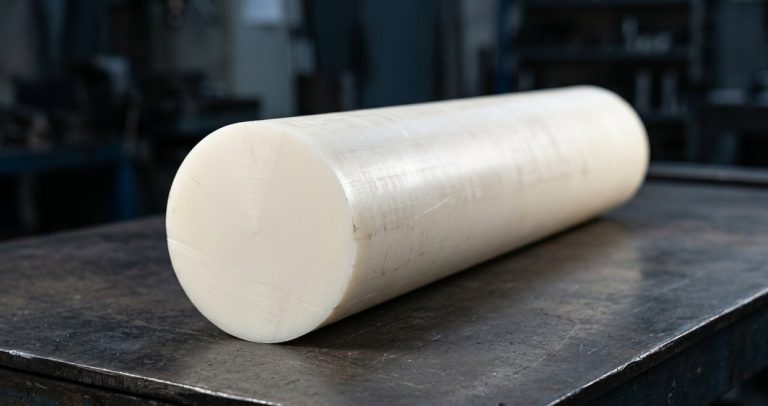 As-machinedMost CommonRa 0.8–1.6 µm, deburred. Most wear parts ship this way with no added finishing step.Get a Quote
-
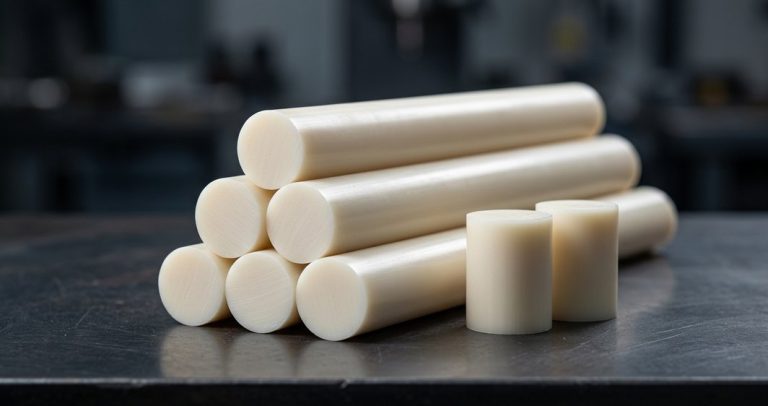 Bead blastingMost PopularCNC machining plus bead blasting gives a uniform matte for cosmetic covers and grip surfaces.Get a Quote
-
 PaintingMost PopularPossible after plasma or flame treatment on machined nylon; adhesion is weaker than on ABS.Get a Quote
-
 DyeingMost PopularBlack or colored dye penetrates machined nylon and does not chip, unlike a surface coating.Get a Quote
-
 Laser markingMost PopularCNC machining plus laser marking adds permanent part numbers and date codes to nylon parts.Get a Quote
Nylon Machining FAQ
Common questions engineers ask before ordering nylon gears, bushings and wear parts.
Other Materials
-
 DelrinAcetal homopolymer (Delrin 150) and copolymer for gears, bushings, valve bodies and food-contact parts: clean chips, low moisture, ±0.01 mm typical.Learn More
-
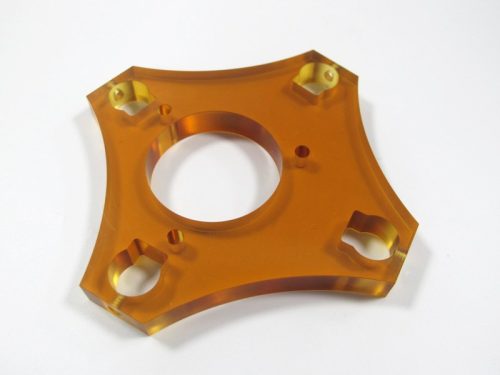 PEIUnfilled Ultem 1000 and 30% glass-filled Ultem 2300 PEI for test sockets, sterilization trays and aircraft brackets: 170 °C continuous, UL 94 V-0.Learn More
-
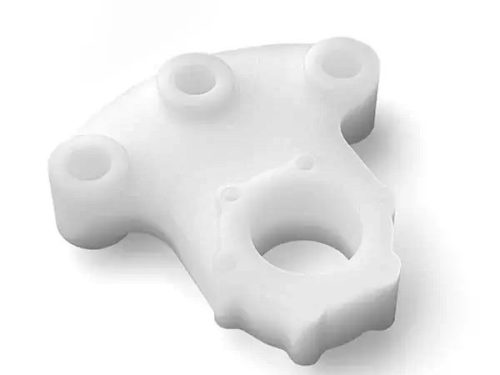 PolyethyleneUHMW-PE and HDPE: the lowest-friction, most abrasion-resistant commodity plastic, FDA compliant in natural grades, for wear strips and chain guides.Learn More

Ready to Scale Your Project?
Get started with a stable process and controlled quality. Let's discuss your project.