• English

  • French

  • German

  • Italian

  • Portuguese

  • Russian

  • Spanish

Nylon 6

Nylon 6 is a type of polymer classified as a semicrystalline polyamide commonly used in various industrial applications due to its excellent combination of properties.
Get a Quote
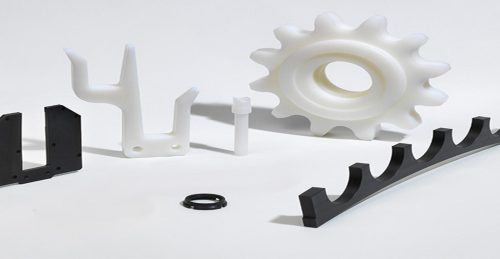
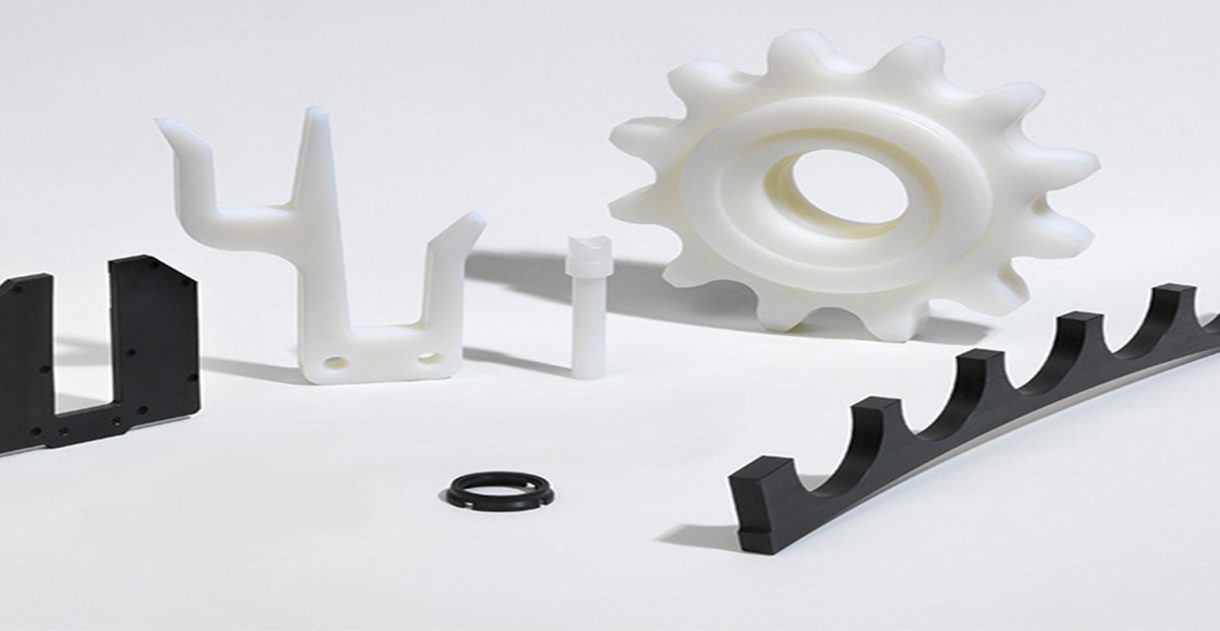
Nylon machined parts on white background
  • 64.7-79.1 MPa
    Ultimate Tensile Strength
  • 51.2-63.8 MPa
    Yield Strength
  • 1.58-1.97 GPa
    Young's Modulus
  • 200-300 %
    Elongation at Break

Properties Table of Nylon 6
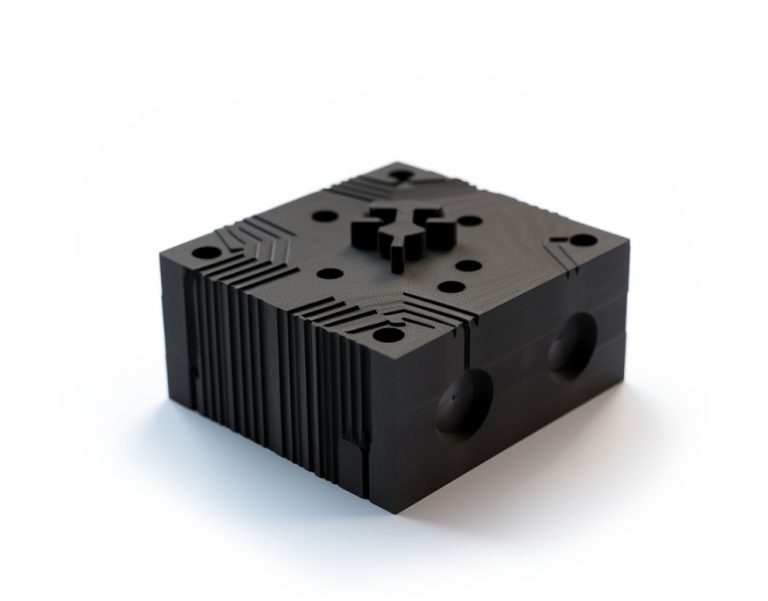
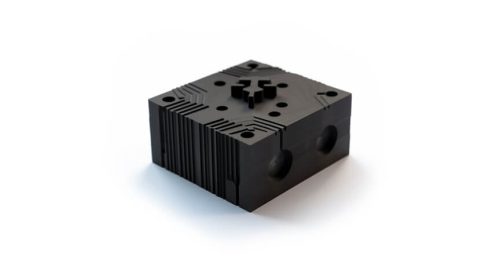
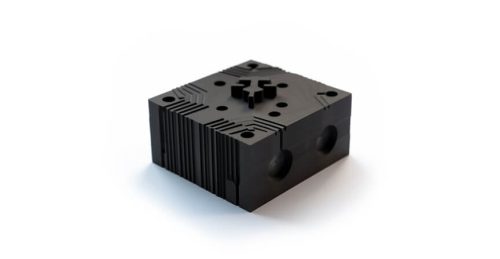
  • Black machined nylon block with fins and holes
Value
  • Ultimate Tensile Strength 64.7-79.1 MPa
  • Yield Strength 51.2-63.8 MPa
  • Young's Modulus 1.58-1.97 GPa
  • Elongation at Break 200-300%
  • Hardness 16.4-18.1 HV
  • Flexural Strength ~170 MPa
  • Impact Strength ~45 kJ/m²
  • Elasticity High
  • Modulus of Elasticity ~6 GPa
  • Creep Resistance Good
  • Wear Resistance Good
  • Machinability Moderate

Nylon 6 — Machining Notes

  • Nylon 6 in CNC Machining and Injection Molding

    Nylon 6 is a type of polymer classified as a semicrystalline polyamide commonly used in various industrial applications due to its excellent combination of properties.

    Nylon 6 is generally considered easily machinable and has good wear resistance. It has good dimensional stability and low internal stress. However, Nylon 6 can leave burrs after machining, so we do necessary deburring operations to achieve the desired final product. Additionally, Nylon 6 has some degree of moisture absorption, which can affect its dimensions. Depending on the application, it may be necessary to consider post-machining treatments or design considerations to account for potential changes in dimensions over time.

    Unlike most nylons, it is unique because it’s formed through ring-opening polymerization, not condensation polymerization. This sets it apart from other types of polymers. Nylon 6 can be chemically modified for improved toughness, flexibility, or flame resistance. It resists hydrolysis, maintains integrity in water, and withstands mild acids and bases, though corrosive solutions may cause degradation over time.

    Get A Quote
  • Basic Knowledge of Nylon 6

    Nylon 6, with the chemical formula (C6H11NO)n, was invented by German chemist Paul Schlack in 1939. There are eight types of nylons, distinguished by the number of carbon atoms in their monomers. Nylon 6 gets its name from having 6 carbon atoms in its structure. It stands out for its stability, resisting acids, alkalis, and solvents in harsh environments. While it can absorb moisture, it has lower water absorption than other nylon types. With a high melting point of 210-220°C, nylon 6 handles high temperatures well. It shows good thermal stability and generally resists chemical reactions, except with strong acids and bases. Though it has fair UV resistance, prolonged sunlight exposure may lead to degradation, which is preventable with additives. While inherently flammable, flame-retardant additives can enhance its fire resistance.

    • High strength and durability
    • Abrasion resistance
    • Chemical resistance
    • Low moisture absorption
    • Ease of processing
    • Good thermal properties
    • Lightweight
    • Electrical insulation
    • Wide range of applications
    • Recyclability
    • Textiles and apparel (hosiery, stockings, sportswear)
    • Automotive components (gears, bearings, bushings)
    • Engineering plastics (electronic components, gears, structural parts)
    • Packaging materials (films, sheets)
    • Consumer goods (toothbrush bristles, fishing lines, zippers, luggage)
    • Industrial applications (conveyor belts, hoses, gaskets)
    • Sports equipment (racket strings, fishing nets, outdoor gear)
    • Electrical and electronic components (cable sheathing, connectors)
    • Medical devices (certain components)
    • Filament for 3D printing
    Get A Quote

Other Materials