









UHMW Machining Services
DEK's UHMW machining turns UHMW-PE and HDPE sheet, rod and block into wear strips, chain guides and star wheels, holding ±0.01 mm on small features. Sharp tooling and low-force fixturing keep soft, springy PE flat after cutting.
-
±0.01 mm
Small Features
-
3–5 days
Prototype Lead Time
-
No MOQ
1 to 10,000+ Pieces
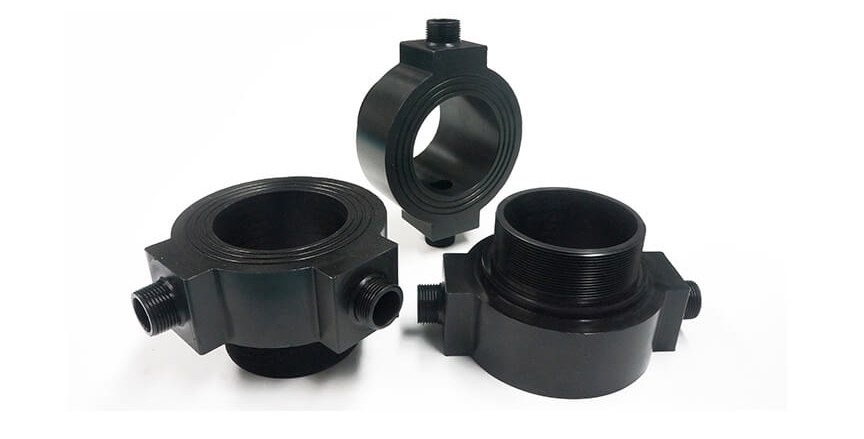

What Sets UHMW Machining and HDPE Machining Apart
Polyethylene is the lowest-friction, most abrasion-resistant commodity plastic, absorbs no water and is FDA compliant in natural grades. We machine UHMW-PE and HDPE as part of our plastic CNC machining services.
PE is also soft, springy and expands 150–200 µm/m·K, so it distorts under clamping and moves after cutting more than any other plastic we run. We cut it on the same 3-, 4- and 5-axis mills as stainless and aluminum, with a realistic ±0.05 mm on large parts.
-

Machining plastics beside metals since 2002
-

ISO 9001:2015, ISO 13485 and AS9100D
-

Engineer-reviewed quote within 6 hours
-

IQC, IPQC, FAI and OQC at 23 °C
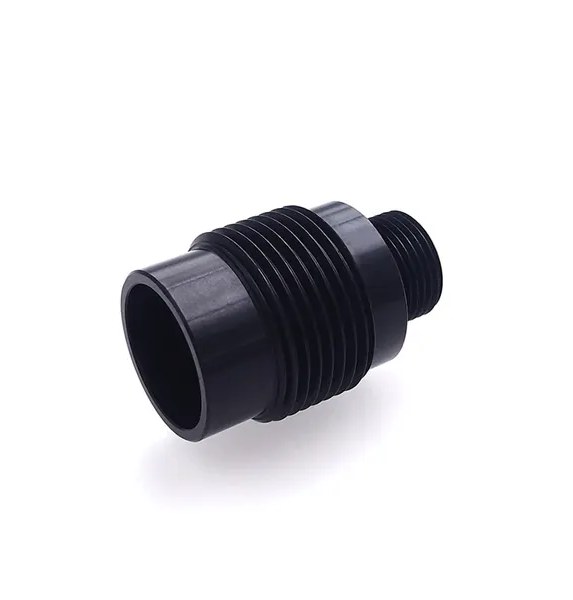
Polyethylene Grades We Machine
Four polyethylene grade families cover food-contact wear parts, low-cost liners, unlubricated slides and welded HDPE components.
-

UHMW-PE natural/virgin
FDA compliantFor FDA-compliant wear strips, chain guides, star wheels and food processing components. See UHMW-PE.
-

UHMW-PE reprocessed
Black or green, lower costFor non-food wear parts, liner plates, truck bed and hopper liners where virgin material is not required and cost matters.
-

UHMW oil-filled
30–50% lower frictionOil-filled and dry-lubricant UHMW grades for slides and guides running where lubrication is impossible.
-

HDPE natural / colored
0.95 g/cm³For cutting boards, tank fittings, gaskets, machined covers and marine components. See HDPE.
-

UHMW-PE
0.10–0.20 friction on steel40 MPa ultimate and 21 MPa yield tensile strength, 0.93 g/cm³, 80 °C max continuous service, water absorption below 0.01% in 24 h.
-

HDPE
25–30 MPa tensileFriction of 0.20–0.25 dry on steel, 80 °C max service; slightly stiffer and cleaner-cutting than UHMW, with the same 150–200 × 10⁻⁶/K expansion.
-
±0.05 mm
Realistic on large parts
-
500 mm
Max turning diameter
-
3 m
Long guide profiling
-
Ra 0.8–1.6
As-machined finish, µm
How DEK Approaches UHMW CNC Machining
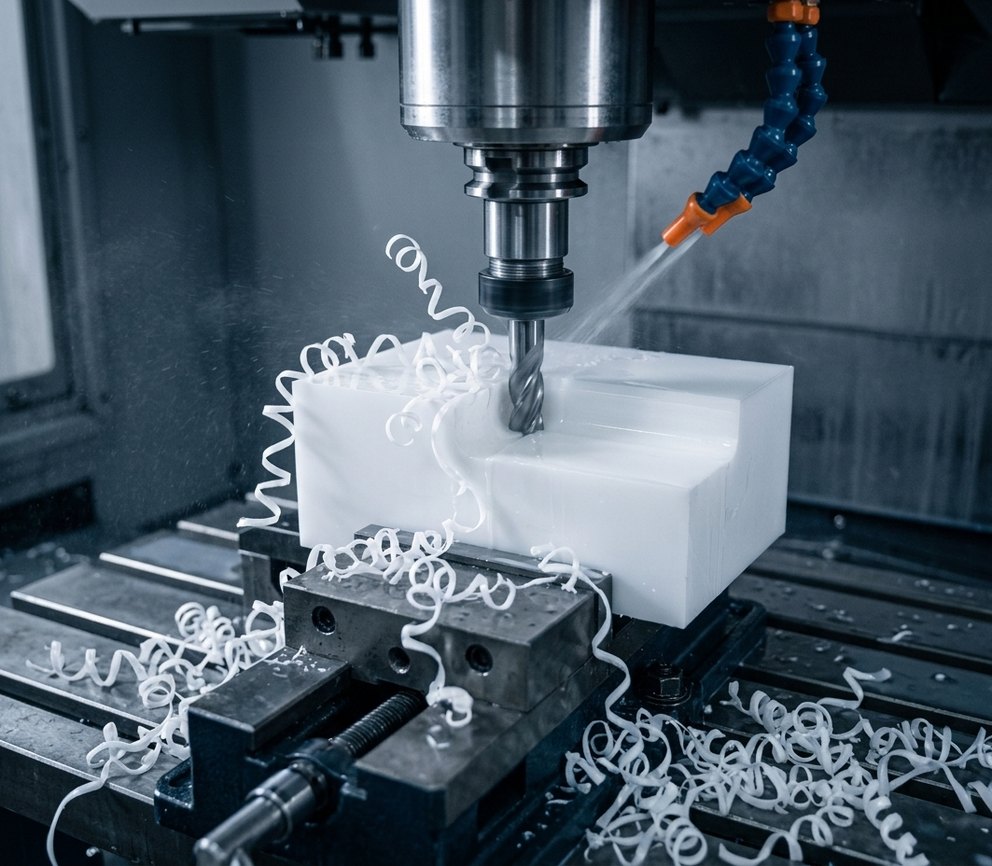
PE cuts easily but is hard to hold accurately, so every process is built around sharp tooling, low clamping force and measurement at 23 °C.
-
1
CNC Milling
3-, 4- and 5-axis CNC milling for wear strips, chain and belt guides, liner plates, star wheels and machine guards.
-
2
CNC Turning
CNC turning for rollers, sheaves, bushings and sprockets up to 500 mm diameter, holding ±0.01 mm on short turned diameters.
-
3
Long Guide Profiling
Guides up to 3 m are profiled with sectional fixturing so the strip lies flat; long parts rest between roughing and finishing. See large part machining.
-
4
Drilling and Tapping
Drilling, counterboring and tapping with sharp high-helix drills; countersunk pockets are standard on wear strips.
Design & Machining Tips for Polyethylene
What our engineers check on every PE drawing before quoting, so tolerances stay achievable on soft, high-expansion parts.
-
1
Expansion and Clamping
PE expands eight times more than steel: specify 23 °C and slotted mounting holes on a 2 m guide. We use vacuum fixtures or soft jaws and measure after unclamping.
-
2
Sharp Tooling
Dull edges push and tear UHMW, leaving fuzz and dimensional drift. We use polished high-rake carbide, high spindle speeds and air blast.
-
3
Skin Stress in Thick Plate
Extruded and compression-molded plate bows when one face is machined. We rough both sides, rest the blank, then finish; annealing at 80 °C helps parts over 50 mm thick.
-
4
Tolerances by Part Size
±0.01 mm on small supported features, ±0.05 mm on large parts, ±0.1 mm on parts over 1 m. Tolerance the running surface and mounting holes, not free edges.
-
5
Thin Walls
Keep walls at 1.5 mm minimum on UHMW and 1.0 mm on HDPE; thinner walls deflect from the cutter and come out tapered.
-
6
Threads and Fasteners
Tapped PE threads strip easily: specify countersunk through-bolts with washers or press-in metal inserts, with 0.3 mm clearance for expansion.
When to Choose UHMW vs HDPE, Nylon or Delrin
How UHMW-PE compares with HDPE and other bearing plastics. Where load and heat exceed PE, 304 stainless carries a replaceable UHMW wear strip.
| Criteria | This MaterialUHMW-PE | HDPE | Nylon | Delrin |
|---|---|---|---|---|
| Choose it for | Wear strips | Tanks, fittings | Loaded gears | Precision parts |
| Abrasion | 10x HDPE | Lower | – | Lower |
| Friction | 0.10–0.20 | 0.20–0.25 | Higher | – |
| Water uptake | < 0.01% | < 0.01% | Absorbs | – |
| Max temp | 80 °C | 80 °C | 100 °C | – |
| Stiffness | Soft, springy | Stiffer | – | Far stiffer |
| Cost | Low | Cheaper | – | Higher |
Where Machined Polyethylene Parts Are Used
Low friction, abrasion resistance and zero water absorption put PE wherever parts slide, wear or stay wet.
-
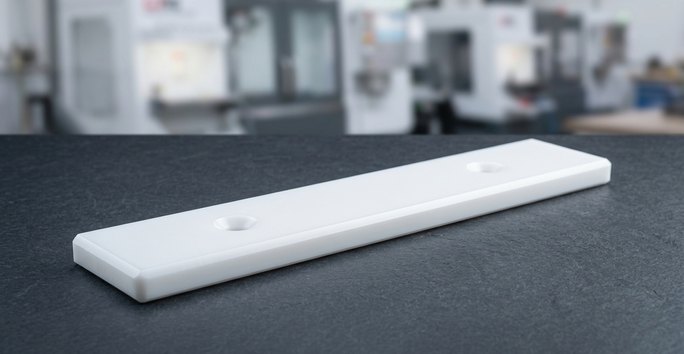 Food Processing & PackagingConveyor wear strips, chain guides, star wheels, timing screws and cutting boards machined in FDA-compliant UHMW.
-
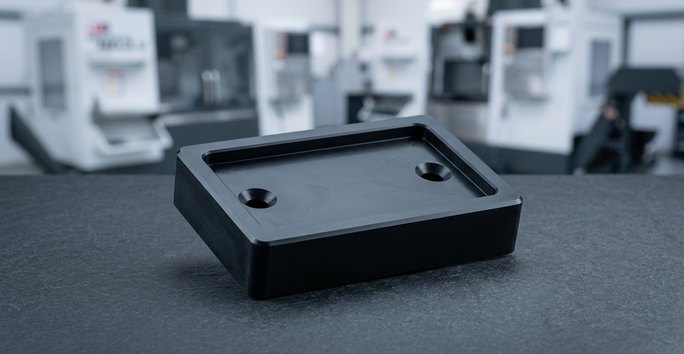 Industrial, Farm & MiningSlide pads, belt guides, sprockets, chute and hopper liners and bumper blocks for industrial equipment, agriculture and mining.
-
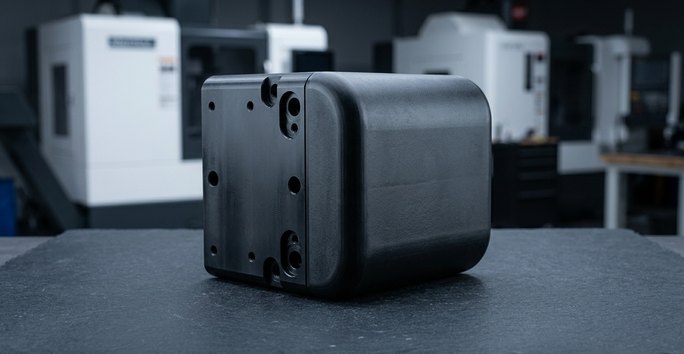 Marine & ConstructionDock fenders, rub rails, pump wear rings, HDPE tank fittings and outrigger pads for marine, water treatment and construction.
Finishing Options for Machined Polyethylene
CNC machining + finish for PE parts. Vapor polishing, anodizing and plating do not apply to polyethylene.
Need a colored part instead of paint? Ask our engineers.
-
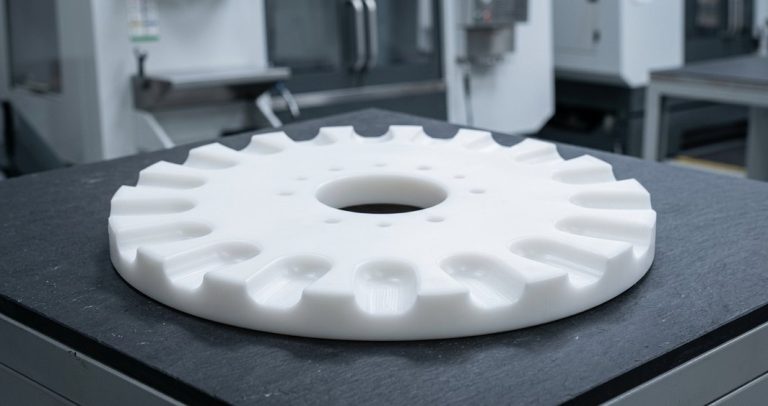 As-machinedStandardRa 0.8–1.6 µm with a sealed, waxy surface that resists bacterial growth; the standard for wear and food-contact parts.Get a Quote
-
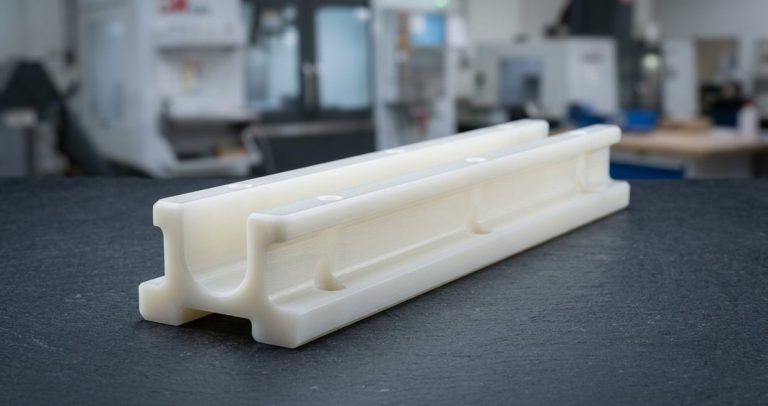 Bead blastingMost PopularCNC machining + bead blasting for a matte texture on guards and handled components.Get a Quote
-
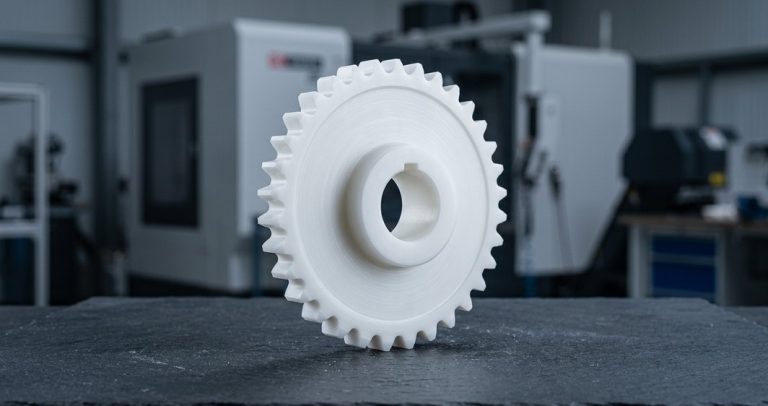 Laser markingMost PopularCNC machining + laser marking and engraving for part numbers; contrast is best on black stock.Get a Quote
-
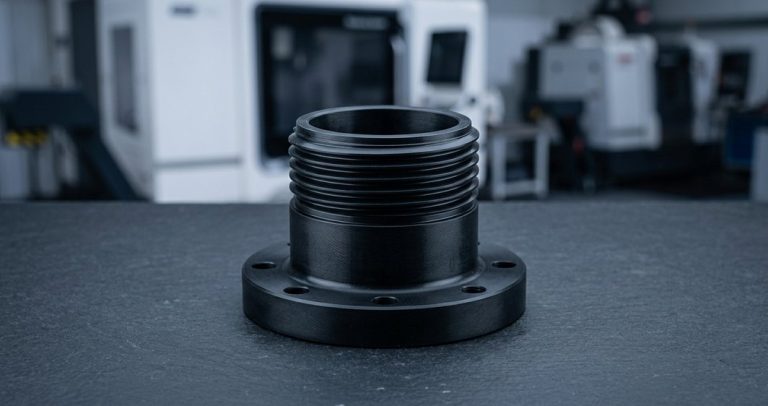 Hot-gas weldingMost PopularMachined HDPE components hot-gas welded into assemblies, tanks and hoppers after CNC machining.Get a Quote
UHMW Machining FAQ
Common questions from engineers specifying UHMW and HDPE parts.
Other Materials
-
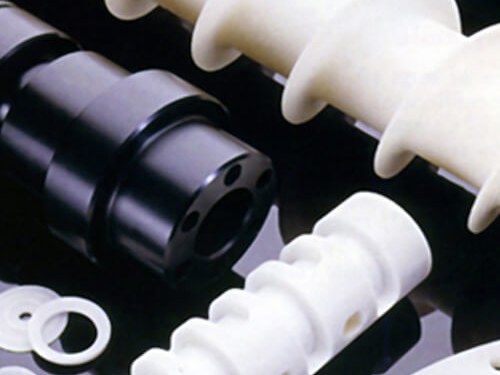 DelrinAcetal homopolymer (Delrin 150) and copolymer for gears, bushings, valve bodies and food-contact parts: clean chips, low moisture, ±0.01 mm typical.Learn More
-
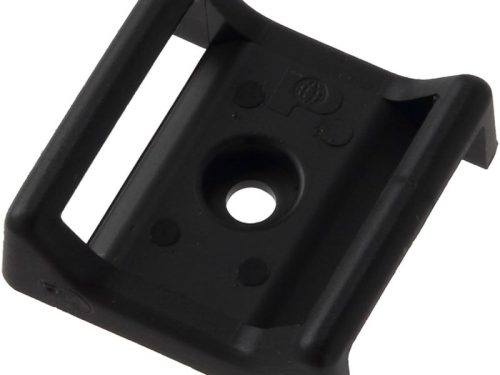 NylonTough, quiet, self-lubricating PA6, PA66, 30% glass-filled and MoS2 nylon for gears, bushings, wear pads, rollers and insulators.Learn More
-
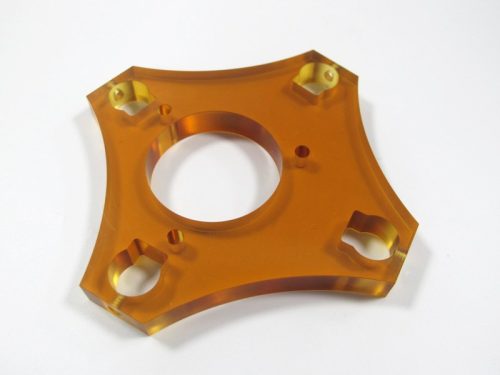 PEIUnfilled Ultem 1000 and 30% glass-filled Ultem 2300 PEI for test sockets, sterilization trays and aircraft brackets: 170 °C continuous, UL 94 V-0.Learn More

Ready to Scale Your Project?
Get started with a stable process and controlled quality. Let's discuss your project.








