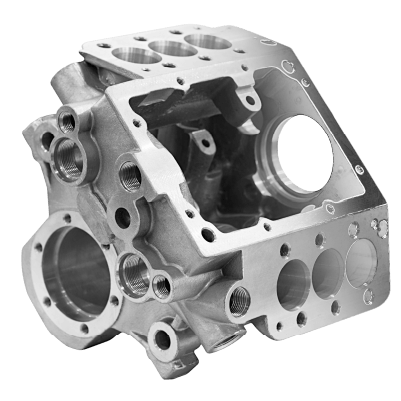









Ultem Machining Services
DEK's Ultem machining service turns Ultem 1000 and 30% glass-filled Ultem 2300 into test sockets, sterilization trays and aircraft brackets, holding ±0.01 mm with prototypes in 3–5 days. Every part is annealed to prevent cracking and runs beside your metal parts.
-
±0.01 mm
Typical Tolerance
-
170 °C
Continuous Service
-
3–5 days
Prototype Lead Time
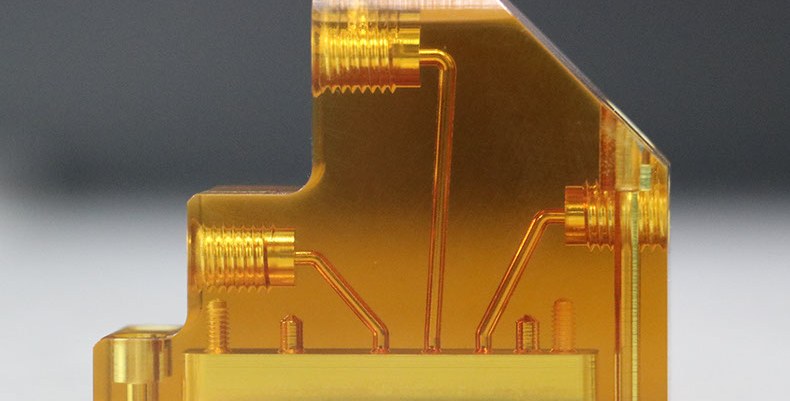

What Makes Ultem Ideal for High-Heat Parts?
Ultem is polyetherimide (PEI), an amber, amorphous high-performance plastic that keeps 105 MPa tensile strength at room temperature, works continuously at 170 °C and passes UL 94 V-0 without additives. Its thermal expansion is the lowest of the unfilled engineering plastics.
It is also notch-sensitive and holds residual stress from extrusion, so PEI machining needs annealing and a disciplined process. We run it on the same 3-, 4- and 5-axis mills as metal parts, as part of our plastic CNC machining services.
-

ISO 9001:2015, ISO 13485 and AS9100D
-

Engineer-reviewed quotes within 6 hours
-

IQC, IPQC, FAI and OQC on CMM
-

Batches from 1 to 10,000+ pieces
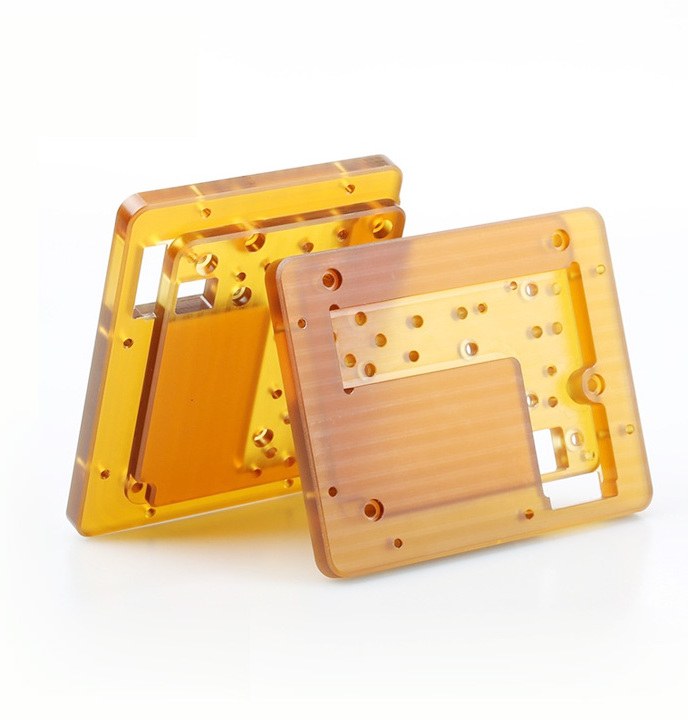
Ultem Grades We Machine
Three PEI families cover most Ultem drawings: unfilled for versatility, glass-filled for stiffness, healthcare grades for sterilization.
-

Ultem 1000
105 MPa tensile, 170 °CUnfilled grade for insulators, medical trays and amber sight glasses; Ultem 1000 machining runs on standard carbide.
-

Ultem 2300
30% glass-filled, 160 MPaFor test sockets and aerospace brackets needing stiffness and creep resistance; Ultem 2300 machining needs diamond tooling.
-

Ultem 1010 / HU1000
ISO 10993 biocompatibleHealthcare grades for parts that see repeated steam sterilization; they cost more as stock than standard Ultem 1000.
-
±0.005 mm
Socket cavities and bores
-
±0.02 mm
Long glass-filled sections
-
Ra 0.8–1.6
As-machined finish (µm)
-
56 µm/m·K
Ultem 1000 expansion
Ultem CNC Machining Capabilities
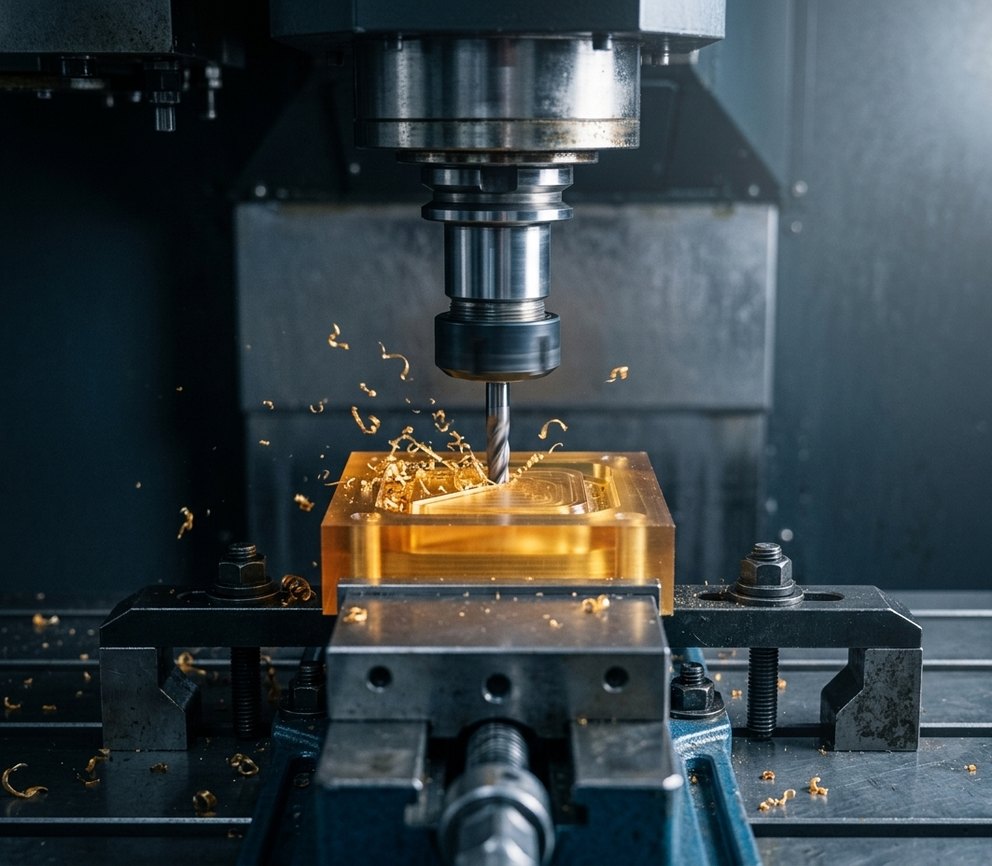
We machine PEI on the same 3-, 4- and 5-axis mills as metal, with sharp carbide or diamond tooling and annealing between roughing and finishing.
-
1
CNC Milling
3-, 4- and 5-axis CNC milling for test sockets, manifolds, brackets, sterilization trays and insulator plates, with fixturing for thin-walled trays.
-
2
CNC & Swiss Turning
CNC turning for bushings, bobbins, connector bodies and sight glasses; Swiss turning for pins and probes under 20 mm.
-
3
Micro Milling
Micro milling of pogo-pin arrays and socket cavities at 0.3–0.6 mm pitch, holding ±0.005 mm positional accuracy.
-
4
Drilling & Tapping
Drilling, reaming and tapping with sharp carbide; PEI threads rarely need inserts. Ultrasonic cleaning follows for semiconductor and medical parts.
Design & Machining Tips for Ultem
What our engineers check on every Ultem drawing to prevent cracking, tool wear and tolerance drift in service.
-
1
Anneal Before Finishing
Extruded PEI rod and plate carry high residual stress. We anneal at 150–160 °C for one hour per 3 mm thickness, rough, anneal again, then finish, so parts do not crack at holes weeks later.
-
2
Tool Wear on Glass-Filled Grades
Ultem 2300 abrades carbide roughly five times faster than unfilled stock. We run PCD or diamond-coated end mills, replace tools on schedule and re-measure critical bores mid-batch.
-
3
Thermal Expansion
56 µm/m·K is about 2.5 times aluminum: a 100 mm Ultem socket base grows 0.06 mm more than its aluminum frame over 10 °C. Tolerance hot-test pin fields at operating temperature.
-
4
Sharp Corners & Notches
Notch sensitivity is PEI’s main weakness. Specify internal radii of at least 0.5 mm, 0.3 mm chamfers on edges, and never a sharp thread run-out under load.
-
5
Minimum Wall Thickness
Keep walls at 1.0 mm minimum for unfilled Ultem and 1.5 mm for glass-filled; thinner walls in Ultem 2300 chip at the fiber ends.
-
6
Coolant & Cleaning
Avoid chlorinated solvents and strong alkalis during machining and cleaning; water-based coolant is safe. On drawings, call out only the datums and fits that matter.
Ultem 1000 and Ultem 2300 Grade Pages
Grade sheets for unfilled Ultem 1000 and 30% glass-filled Ultem 2300, side by side: 105 MPa vs 160 MPa tensile, 1.27 vs 1.51 g/cm³ density.
-
PEI Ultem 2300 is a high-performance thermoplastic material reinforced with 30% glass fibers, enhancing strength and stiffness.Get Price
-
PEI Ultem 1000 is a high-performance thermoplastic material with excellent strength, high heat resistance, and chemical resistance. It belongs to the family of polyetherimide (PEI) polymers.Get Price
When to Choose Ultem vs PEEK, PPSU or Polycarbonate
Ultem sits between polycarbonate and PEEK on heat and cost; where weight or insulation matter it also replaces stainless steel at a sixth of the density.
| Criteria | This MaterialUltem | PEEK | PPSU | Polycarbonate |
|---|---|---|---|---|
| Choose it for | Sockets, trays | Chemicals | Surgical handles | Tough, clear |
| Max temp | 170 °C | 250 °C | – | 120 °C |
| Cost | Baseline | About twice | Higher | A fifth |
| Stiffness | Stiffer | Lower | Lower | – |
| Impact | Lower | – | Far better | Tougher |
| Steam cycles | Hundreds | – | More | – |
| Flame rating | UL 94 V-0 | – | – | – |
Where Ultem Parts Are Used
Ultem parts go where heat, flame rating and sterilization rule out cheaper plastics, and usually bolt to machined metal made in the same order.
-
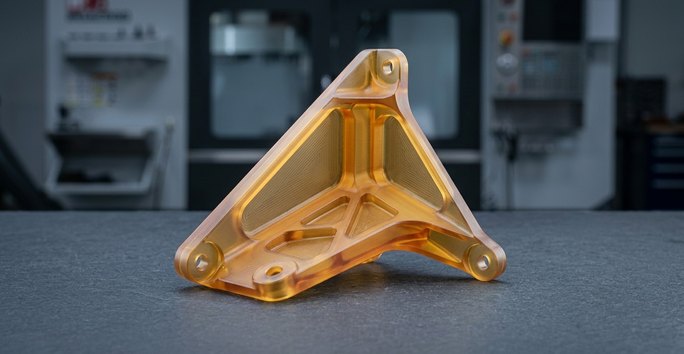 AerospaceCabin interior brackets, ducting flanges, connector housings and lighting components meeting FAR 25.853 flame and smoke requirements.
-
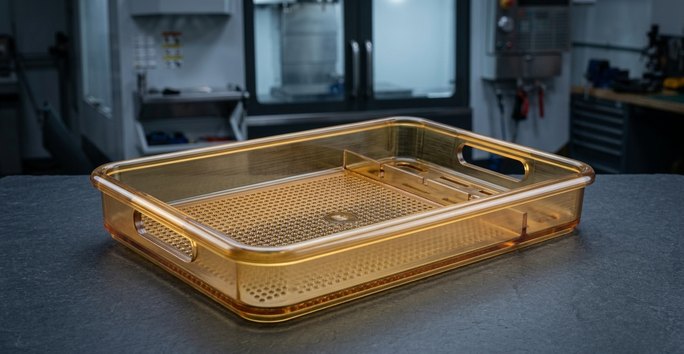 MedicalSterilization trays, instrument handles, imaging device components and reusable housings that see repeated autoclaving.
-
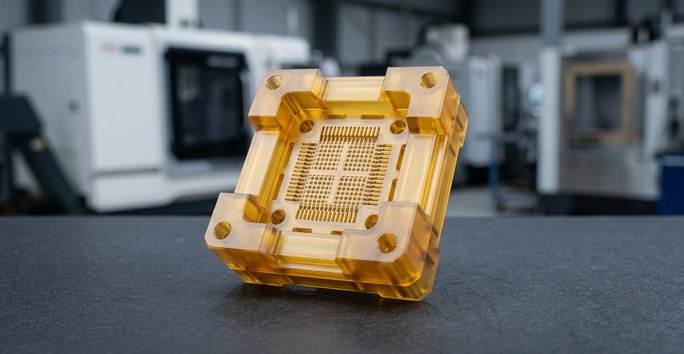 Semiconductor & ElectronicsBurn-in and final test sockets, handler nests and insulators for hot testing to 150 °C, often micro-milled at 0.3–0.6 mm pitch.
Finishing Options for Ultem Parts
Every finish is applied after CNC machining. Anodizing and plating do not apply to PEI, so options focus on texture, clarity and marking.
Need a finish not listed? Ask our engineers for a review
-
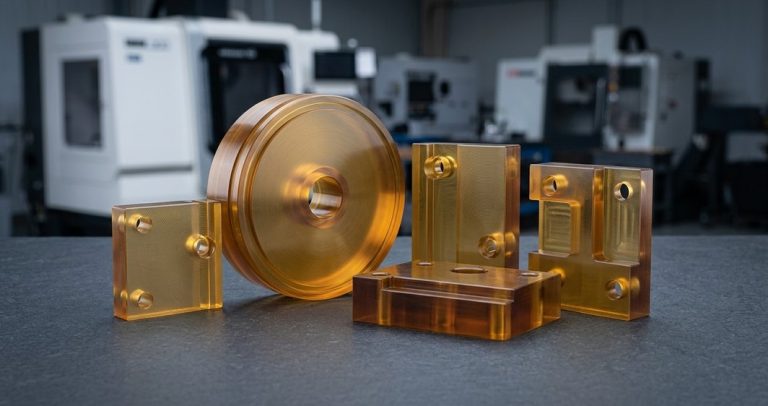 As-machinedStandardRa 0.8–1.6 µm straight off the CNC machine; the standard finish for test sockets and fixtures.Get a Quote
-
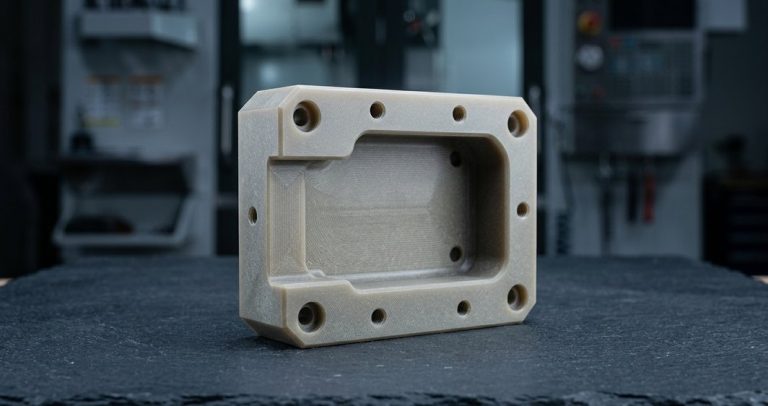 Bead blastingMost PopularCNC machining plus bead blasting gives a uniform matte on cosmetic aerospace and medical surfaces.Get a Quote
-
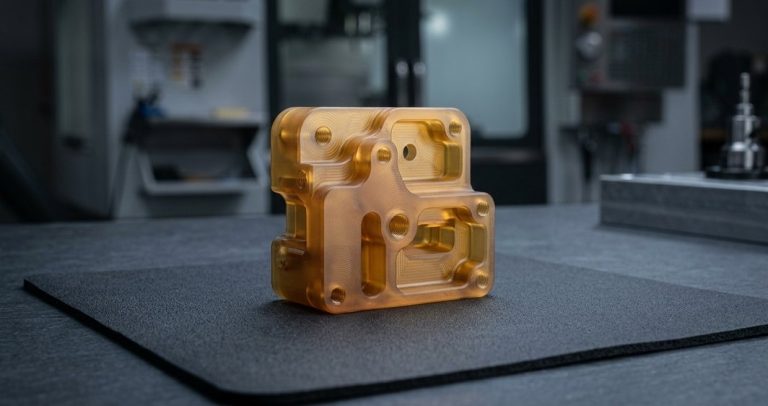 PaintingMost PopularAerospace-grade coatings adhere well to PEI after a light abrasion; FST-compliant paints available.Get a Quote
-
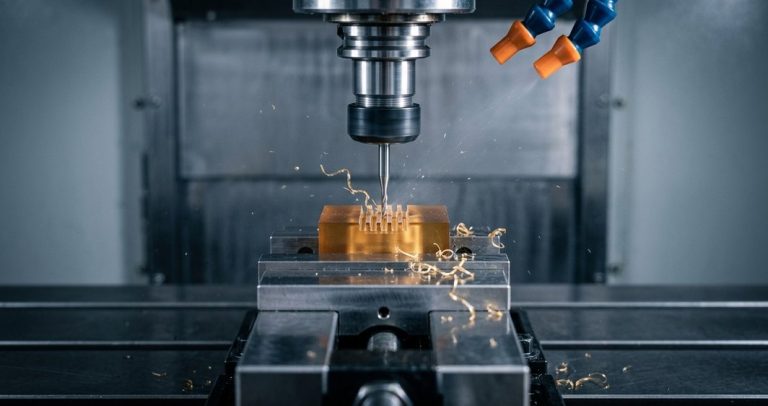 Vapor polishingMost PopularClarifies machined surfaces on transparent amber Ultem 1000 sight glasses and covers.Get a Quote
-
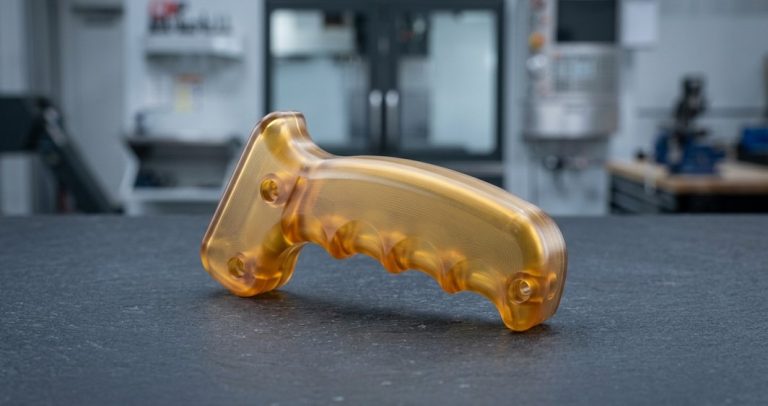 Laser markingMost PopularAdds part numbers and UDI codes directly to machined Ultem 1000 and Ultem 2300 parts.Get a Quote
Ultem Machining FAQ
Answers on machinability, grades, sterilization and tolerances for PEI parts.
Other Materials
-
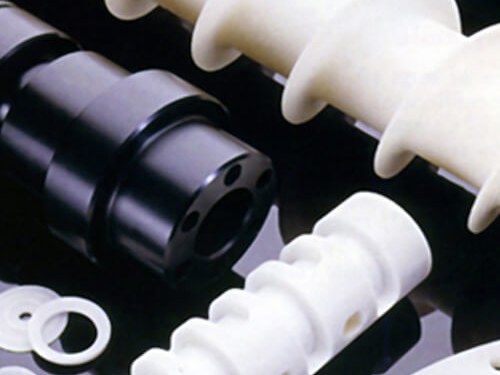 DelrinAcetal homopolymer (Delrin 150) and copolymer for gears, bushings, valve bodies and food-contact parts: clean chips, low moisture, ±0.01 mm typical.Learn More
-
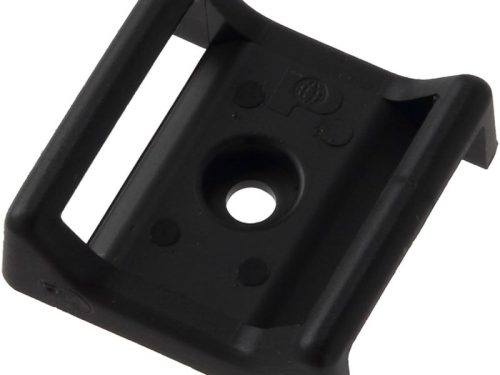 NylonTough, quiet, self-lubricating PA6, PA66, 30% glass-filled and MoS2 nylon for gears, bushings, wear pads, rollers and insulators.Learn More
-
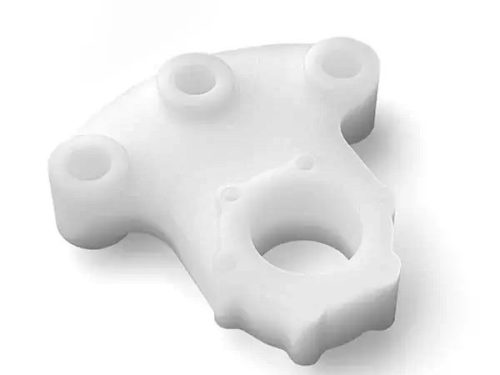 PolyethyleneUHMW-PE and HDPE: the lowest-friction, most abrasion-resistant commodity plastic, FDA compliant in natural grades, for wear strips and chain guides.Learn More

Ready to Scale Your Project?
Get started with a stable process and controlled quality. Let's discuss your project.