









Grade 5 Titanium Machining (Ti-6Al-4V)
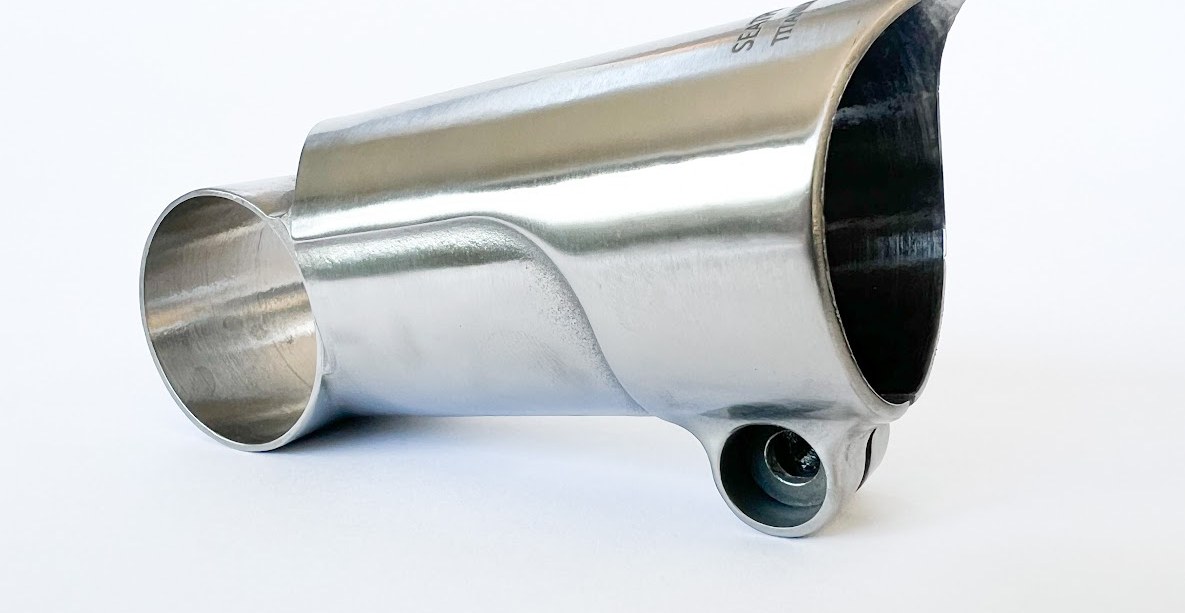
Also known as Ti-6Al-4V · UNS R56400 · EN 3.7164Grade 5 titanium machining turns Ti-6Al-4V (UNS R56400) and its ELI variant into aerospace fittings, implant components and racing parts. DEK holds ±0.005 mm on request under AS9100D and ISO 13485, with no MOQ and prototypes in 3–5 days.
-
895 MPa minTensile Strength
-
828 MPa minYield Strength
-
10–14%Elongation
-
33–36 HRCHardness
-
4.43 g/cm³Density
DEK's Grade 5 Capabilities and Tolerances
Tolerances, finishes and lead times DEK holds on Ti-6Al-4V CNC machining, from 5-axis milling to Swiss turning and wire EDM.
-

Milled/Turned Features
±0.025 mmstandard
-

Tight Tolerance
±0.005 mmon request
-

Swiss-Turned Features
±0.003 mmsmall features
-

5-Axis Profile Control
±0.01 mmcontoured parts
-

Bores and Shaft Fits
H7 / g6typical fits
-

Surface Finish
Ra 0.8–1.6 µmas-machined
-

Ground or Polished
Ra 0.2–0.4 µmafter grinding
-

Prototype Lead Time
3–5 daysno MOQ
Ti-6Al-4V Properties and Equivalent Designations
Property data for Grade 5 (Ti-6Al-4V) in the annealed condition, with Grade 23 (Ti-6Al-4V ELI) values for implant work.
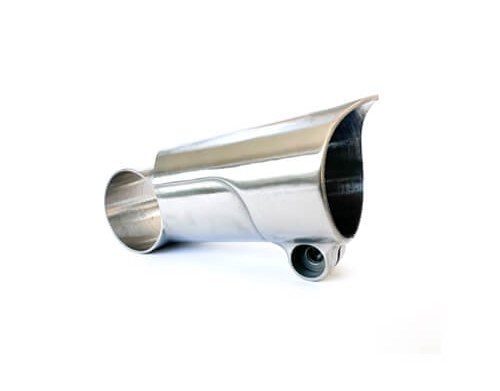

- Tensile Strength 895–1,000 MPa (895 min)
- Yield Strength 828–930 MPa (828 min)
- Elongation 10–14%
- Hardness 33–36 HRC
- Hardness (Brinell) approx. 334 HB
- Machinability (1212=100%) ~20–25%

- Density 4.43 g/cm³
- Modulus 114 GPa
- Thermal Conductivity 6.7 W/m·K
- Max Service Temperature 350–400 °C

- Aluminum (Al) 5.5–6.75%
- Vanadium (V) 3.5–4.5%
- Iron (Fe) ≤0.30%
- Oxygen (O) ≤0.20%
- Titanium (Ti) balance

- Designations UNS R56401
- Standards ASTM F136 / AMS 4930
- Oxygen / Iron ≤0.13% O, ≤0.25% Fe
- Tensile Strength 860 MPa min
- Yield Strength 795 MPa min
- Elongation 10–15%
- Hardness 32–35 HRC
Why Ti 6Al 4V Machining Is Hard
How Grade 5 behaves at the spindle: heat at the edge, reactive chips and springback, and the setups DEK uses to control them.
At 6.7 W/m·K, titanium conducts heat about one-seventh as well as steel, so cutting heat concentrates at the tool edge, where temperatures pass 1,000 °C and carbide softens. Hot titanium also reacts with tool materials, welding the chip to the edge.
With a modulus of 114 GPa, it deflects about twice as much as steel and springs back behind the tool. Rigid setups on 5-axis machines are not optional.
- 40–80 m/min for carbide roughing, high-pressure through-tool coolant
- Sharp fine-grain carbide replaced on a fixed wear schedule; a tool never dwells
- Short overhang, full-contact fixturing, climb milling, constant engagement
- Thin walls cut in alternating passes, leaving 0.2–0.3 mm for a finishing cut
-
Cutting Speed
40–80 m/minCarbide roughing
-
Machinability
~20–25%vs 1212 steel = 100%
-
Thermal Conductivity
6.7 W/m·KHeat stays at tool edge
-
Edge Temperature
over 1,000 °CCarbide softens
-
Finishing Stock
0.2–0.3 mmThin walls, both sides
-
Cycle Time and Tooling
3–5×vs a mild steel part
Typical Machined Grade 5 Titanium Parts
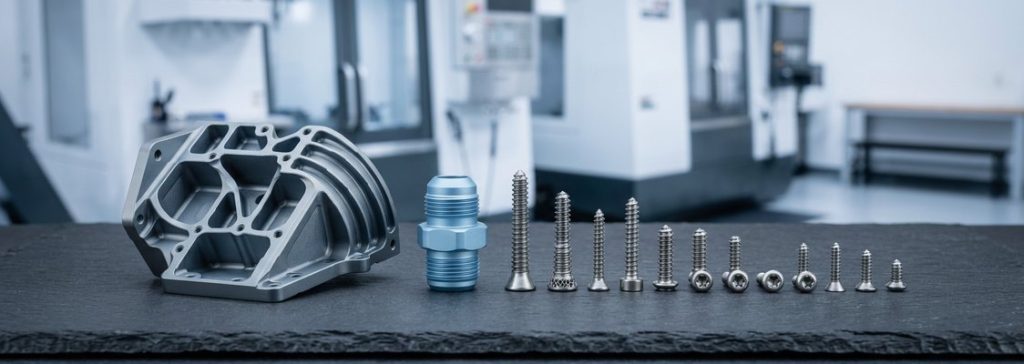
Ti-6Al-4V parts DEK machines for aerospace, medical and motorsport work, where load or heat rule out aluminum.
-
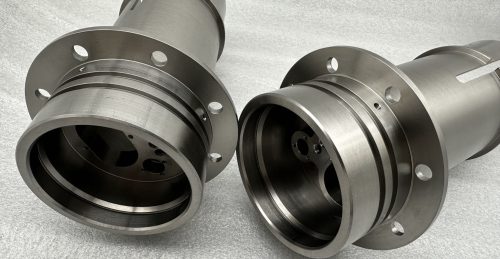
 Aerospace FittingsEngine mounts, landing gear fittings and airframe brackets that run hotter or carry more load than aluminum allows.
-
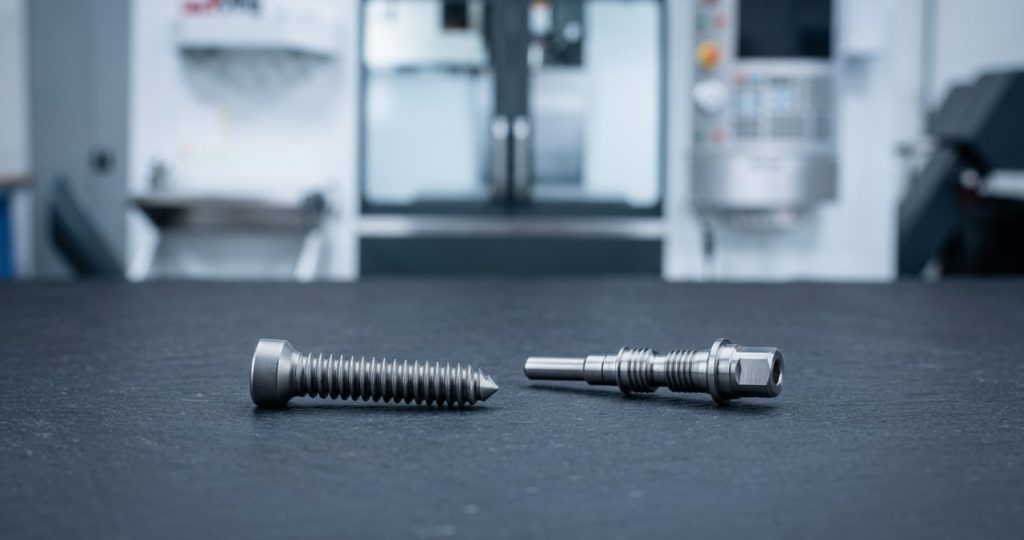
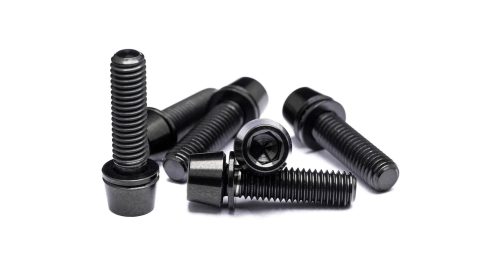
 Actuators and FastenersActuator components and fasteners machined under AS9100D with full traceability, FAI reports and CMM data.
-
 Orthopedic ImplantsGrade 5 ELI orthopedic implants and spinal cages under ISO 13485, with lot traceability from bar certificate to part.
-
 Bone Screws, AbutmentsBone screws, dental abutments and pins down to 1 mm on CNC and Swiss lathes, in Grade 5 ELI for implants.
-
 Surgical InstrumentsGrade 5 ELI surgical instruments, identified by color titanium anodizing and finished to ISO 13485 requirements.
-
 Motorsport PartsRacing parts in Ti-6Al-4V, an alpha-beta alloy chosen for strength at 4.43 g/cm³ density.
-
 Drone and RoboticsDrone and robotics parts are regular Grade 5 work, machined on 3-, 4- and 5-axis mills with no MOQ.
-
 Marine ComponentsMarine parts in Grade 5 where structural or fatigue load rules out commercially pure titanium.
When to Choose Grade 5 vs Grade 2 Titanium
Grade 5 vs grade 2 titanium is strength against formability and cost: choose Grade 5 whenever the part carries structural or fatigue load, and ELI for implants and cryogenic service.
| Criteria | This GradeGrade 5 | Grade 23 ELI | Grade 2 | Grade 1 |
|---|---|---|---|---|
| Type | Alpha-beta | ELI alloy | Pure Ti | Pure Ti |
| Tensile strength | 895 MPa min | 860 MPa min | 345 MPa | Softer |
| Yield strength | 828 MPa min | 795 MPa min | – | – |
| Machinability | ~20–25% | ~20–25% | ~25–30% | – |
| Formability | Lower | Better | Easier | Maximum |
| Typical use | Structural | Implants | Chemical | Forming |
Heat Treatment and Surface Finishing
On Grade 5, finishes serve identification and fatigue rather than corrosion; all are applied to parts DEK machines.
-
Color titanium anodizing AvailableCNC machining plus color anodizing at 10–100 V, no dye, to identify implants and instruments by size or type.
-
Type II anodizing AvailableCNC machining plus Type II anodizing on Ti-6Al-4V to improve galling resistance on sliding and threaded parts.
-
Polishing AvailableCNC machining plus polishing to Ra 0.2 µm, used on articulating implant surfaces in Grade 5 ELI.
-
Nitric acid passivation AvailableCNC machining plus nitric acid passivation per ASTM F86, applied to medical parts after final machining.
-
Solution treating AvailableSolution treating and aging (900–955 °C, quench, 480–595 °C age) raises strength to about 1,100 MPa on sections under 25 mm.
Request a Grade 5 Titanium Machining Quote
Send a STEP, IGES or PDF drawing with grade (5 or 23 ELI), condition, tolerances and finish. An engineer reviews thin walls and threads and prices within 6 hours.
Ti-6Al-4V CNC Machining at DEK
Grade 5 is an alpha-beta alloy: aluminum stabilizes alpha for strength and creep resistance, vanadium stabilizes beta for workability. It makes up roughly half of all titanium used worldwide.
- AS9100D, ISO 13485 and ISO 9001:2015 certified by TÜV; Grade 5 is weekly production work, not an occasional job
- Spectrometer verification of every Grade 5 and ELI lot; CMM inspection with IQC, IPQC, FAI and OQC stages
- Engineer-reviewed quotes within 6 hours that price real titanium cycle time and tooling
- No MOQ; prototypes in 3–5 days, worldwide shipping in 3–7 days
Titanium runs through the same CNC machining services workflow as every DEK order.
Most Grade 5 parts are machined mill-annealed. Heat treatment is done before finish machining because the alpha-case that forms in air is brittle and must be removed.
- Wire EDM for thin slots and profiles that would deflect under a cutter, recast layer removed where fatigue matters
- Thread milling (preferred over tapping above M6), deep-hole drilling, cylindrical and surface grinding
- 3- and 4-axis milling for plates and housings up to about 1000 mm
-
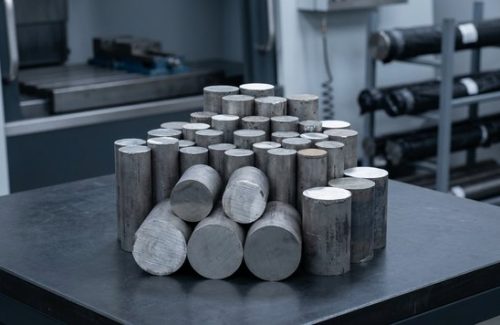 Raw Stock
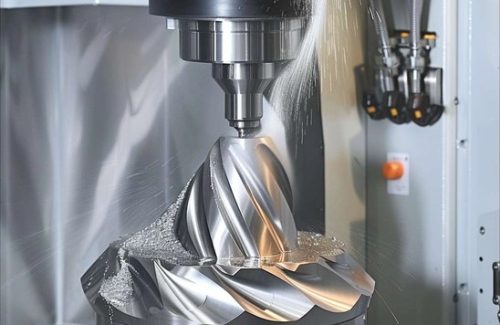 CNC Machined
 Finished Parts
-
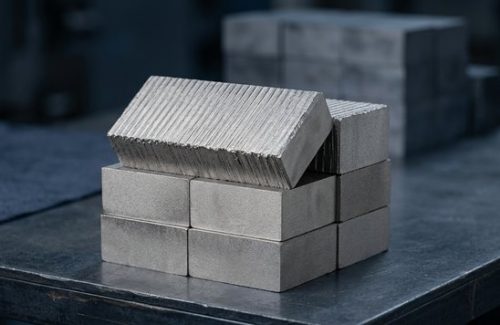 Raw Stock
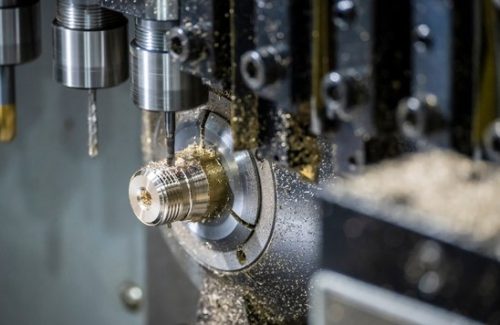 CNC Machined
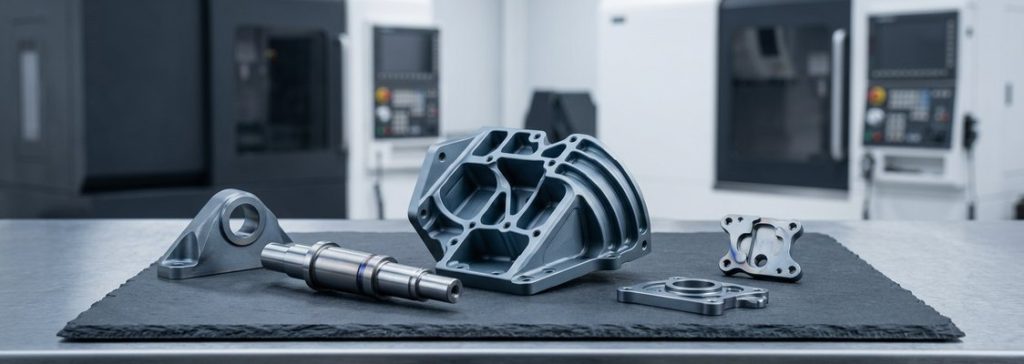 Finished Parts
Frequently Asked Questions
Common questions on Grade 5 and Grade 23 titanium from engineering and buying teams.
Other Materials

Ready to Scale Your Project?
Get started with a stable process and controlled quality. Let's discuss your project.








