
Traceability in Manufacturing: What It Is and Why It Matters
Traceability in manufacturing is important due to rising quality expectations, strict regulatory demands, and global supply chain complexity. Traceability allows manufacturers to track every material, component, and process step with precision. This increases reliability and operational visibility across all production stages.
Understanding the importance of traceability can minimize risk, streamline defect-finding processes, and assure companies of consistent product quality. It improves confidence, executes safety standards, and supports an easy rotation from manufacturing processes to sourcing and delivery.
What is Traceability in Manufacturing?
Traceability in manufacturing includes the ability to identify and capture information. Also, materials, components, and finished goods can be tracked in their passage through the life cycle of production. This covers process data, operator actions, machine parameters, and material traceability in manufacturing systems.
This practice ensures that manufacturers can identify with precision the origin of any batch, part, or operation. Strong product traceability in manufacturing prevents defects, controls variations, and permits conformity across diverse industrial domains. It also allows companies to verify quality and respond quickly to any production irregularities.
Why is Traceability Important in Manufacturing?
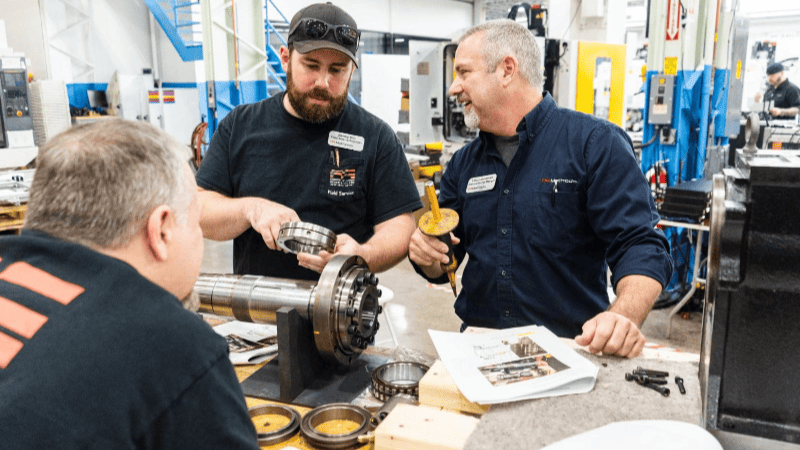
Traceability is important in avoiding quality failures, encouraging accountability, and promoting operational transparency. It is possible to identify the problem at hand within seconds and avoid general recalls. Trusted traceability of manufacturers assures that their production remains controlled and predictable.
Traceability is also about helping the industry, meeting customer expectations, and observing safety regulations. Clear digital records minimize human error for manufacturers, accelerate audits, and guarantee compliance with traceability requirements in manufacturing processes. This leads to a uniform ability to perform and a sustainable business.
Benefits of Traceability in Manufacturing

Improved Quality Control
Traceability guarantees that each raw material and procedure is recorded and verified. This prevents confusion and reduces the risk of producing defective batches. Early detection of variations often results in accurate corrective actions. Strong material traceability in manufacturing brings consistent product outcomes and a reduced number of rework cycles.
Faster Root-Cause Analysis
Traceability allows a group to follow specific faults to their source and backtrack through specific machines, operators. This minimizes downtime and prevents disruption on a much larger scale. The investigation of root causes of issues becomes much more accurate and contributes to continuous improvement across the entire line.
Improved Regulatory Compliance
Almost all industries want proper tracking of the product and full documentation of the whole production. It serves the need for audits, certifications, and compliance checks. It will ensure that the product meets safety, quality, and reporting standards. After that, it reduces the risks of liability while building more trust with customers.
Better Supply Chain Management Visibility
Traceability provides an accurate view of the whole movement of goods. Manufacturers can monitor supplier quality in real time to quickly identify bottlenecks and improve coordination and purchasing decisions. It also minimizes the risks of fake or rejected materials entering production.
Improved Operational Efficiency
Easy for companies to optimize their workflows, where all the material and production information is passed. They will be able to self-operate their reporting, remove manual errors, and improve accuracy in scheduling. Thus, scaling up productivity as well as saving resources. Finally, digital traceability systems often improve forecasts and modify budgets for future and long-term efficiencies.
The 3 Types of Traceability

Internal Traceability
Internal traceability refers to monitoring materials, components, and processes within a single facility. For each step in manufacturing, there are workstations, operators, and machines that have assigned work. This traceability enables complete visibility of internal operations and allows rapid isolation of defects. Moreover, it will allow increased internal tracking, improve process consistency, and help drive continuous improvement.
Forward Traceability
Forward Traceability keeps the product for the period. It is manufactured to the time as it reaches the final customer through the distribution channel. Such a type of traceability links together batch numbers, shipment data, and delivery data. The company can verify the credibility of the product and react quickly to field issues. It also confirms reliable and controlled movement across the supply chain.
Backward Traceability
Backward traceability allows a manufacturer to identify a finished product to its raw materials and earlier production stages. It fully identifies supplier quality, raw material sources, and early processing steps. This is important for carrying out accurate investigations to ensure that all components measure against laid-down standards. It is a must in cases of industries bound by strict safety regulations.
Compliance Considerations by Industry
Traceability becomes needed in regulated manufacturing. It is a natural element of the standard and its different criteria of regulation. Much of that level depends on the risk of the product, the expectation of safety, and regulatory awareness surrounding it.
Pharmaceutical, aerospace, automotive, and medical devices produce stringent requirements on the traceability of materials used in manufacturing. Those requirements are batch records, serialization, audit trails, and document control. The table below gives a good view of what traceability looks like across sectors.
| L'industrie | Regulatory Body | Traceability Focus | Key Requirements |
| Pharmaceuticals | FDA (21 CFR Part 11), EMA | Batch traceability, audit trails, digital signatures | Secure electronic records, operator actions time-stamped, complete tracking down to lot-level, and readiness to recall. |
| Dispositifs médicaux | FDA (21 CFR Part 820), ISO 13485 | Device history records, component-level tracking | Documentation of materials, processes, inspections and rework must take place under strict document control and maintain validated systems. |
| Aerospace & Defense | AS9100, FAA, DoD DFARS | Part-level serialization, supplier traceability | Requires fully cradle-to-grave documents, serial numbers, records on approved sources, and audit-ready |
| Automobile | IATF 16949, OEM Standards | VIN-linked traceability, defect containment | Components tracing to the supplier operator production date with rapid root-cause analysis and containment workflows. |
True compliance means complete digital traceability. Paper logs and spreadsheets provide no real-time verification and cannot meet rising regulatory expectations.
Manual vs Digital Traceability
Almost all manufacturers already practice traceability somehow. The only question is whether these actions will work during an audit or in the event of an unexpected failure. Manual systems always fail whenever accuracy with speed is a priority.
D'autre part, digital traceability transforms data into a real-time, actionable tool at the point of work. It synchronized with machines and materials, constantly providing instant visibility across the entire manufacturing process. The table below summarizes both approaches.
| Capability | Manual Traceability | Digital Traceability |
| Data Capture | Handwritten logs, spreadsheets, and post-process entry | Real-time inputs from machines, sensors, and operators. |
| Accuracy & Completeness | High risk of errors, missing entries, and delays | Validated, time-stamped, and complete digital records. |
| Audit Readiness | Requires prep work, cross-checking, and paper searching | Instant retrieval of fully searchable digital history. |
| Recall Response Time | Days or weeks to find the affected parts | Lots or units are identified within minutes. |
| Évolutivité | Difficult across multi-site or high-mix production | Standardized, repeatable, and easy to scale. |
| Continuous Improvement | Hard to analyze due to static and scattered data | Enables analytics, root-cause insights, and optimization. |
| Compliance Risk | High exposure to mistakes or incomplete documentation | Lower risk through built-in controls and verification. |
Digital credentials eliminate uncertainty, improve visibility, and enable better decision-making. It replaces an obsolete manual documentation system with reliable, real-time information.
8 Traceability Best Practices
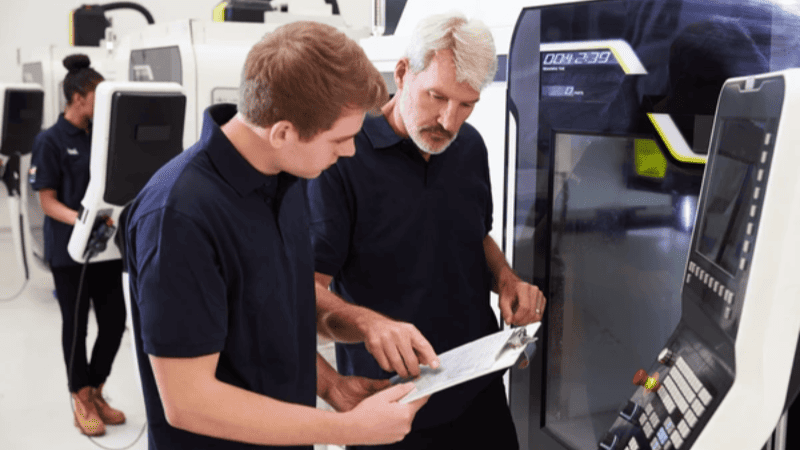
Standardize Identification Methods
Standard labeling, barcodes, or digital IDs for materials and products used for organization are necessary for tracking production. Such standardization avoids confusion as well as promotes relevant data accuracy across teams and departments.
Use Real-Time Data Capture
Make automatic systems the ones with capabilities for capturing real-time production data. Early detection and prevention of defects from becoming major problems can be made possible by real-time insights. Automated capture also eliminates manual errors and improves visibility in the workflow.
Integrate All Manufacturing Systems
This involves the integration of MES, ERP, quality software and supply chain systems. Integration would confirm that information flows seamlessly across operations and give manufacturers a complete picture of their entire production.
Maintain Clear Audit Trails
Document every action and change done by every operator. Strong audit trails support compliance whilst also making investigations easier. This would also reduce risks that are associated with inspections and ensure accountability.
Verify Supplier Data Consistently
Check the quality and traceability of incoming materials. Good supplier verification prevents defective or fake items from getting through the production process. This guarantees product performance and customer safety.
Train Employees Regularly
Continuous training on the traceability tool and approach is necessary. Well-educated operators will ensure accurate entry of data and the proper usage of the systems. Training would enhance efficiency and reduce operational errors.
Implement Digital Labels and Tagging
With RFID, QR code, or bar code usage, tracking becomes more accurate. Digital markers would readily give instant scanning and seamless data updates, and speed time in speedier decision-making with no holdups or delays.
Conduct Routine Traceability Audits
Regular checking on and testing of systems in terms of their traceability is also necessary. Audits would help in the identification of gaps, refining the system in terms of performance improvement, and tightening compliance. It is also encouraging ongoing improvements over the entire production process.
Conclusion
Traceability in manufacturing is important for maintaining consistent quality, preventing defects, and confirming compliance across industries. It provides full visibility from raw materials to finished goods and strengthens operational control at every stage.
Manufacturers who adopt modern traceability technologies gain higher accuracy, stronger supply chain transparency, and improved long-term reliability. To implement an efficient traceability system, contact DEK for expert manufacturing support and customized traceability solutions.
