
Drilling and Tapping Biocompatible Metal Components
In the medical industry, preventing surface contamination and maintaining microstructural stability are both critical. A properly planned approach not only guarantees performance but also protects structural integrity and reliability to operate and comply with regulatory standards.
In this blog, let’s discuss drilling and tapping biocompatible metal components.
What is a Biocompatible Metal?
A biocompatible metal safely interacts with human tissues without causing harmful reactions, so it is suitable for external and internal medical applications, such as implants, surgical instruments, and healthcare devices.
Some of the common examples are stainless steels, titanium alloys, and cobalt-based alloys. These reliable metals combine compatibility and durability to safely perform in sensitive environments and applications.
Challenges of Biocompatible Metals
- As cutting continues, biocompatible metals harden fast. Rapid work hardening can create micro-cracks and surface stress.
- Biocompatible metals have a tendency to concentrate the heat around the cutting zone instead of dissipating it through the material, which impacts tools and alters the material surface.
- As the hole depth increases, chip evacuation becomes more difficult. The pile up of chips can clog flutes and cause scars on internal surfaces or even break tools in the middle of the cycle.
What is CNC Drilling?
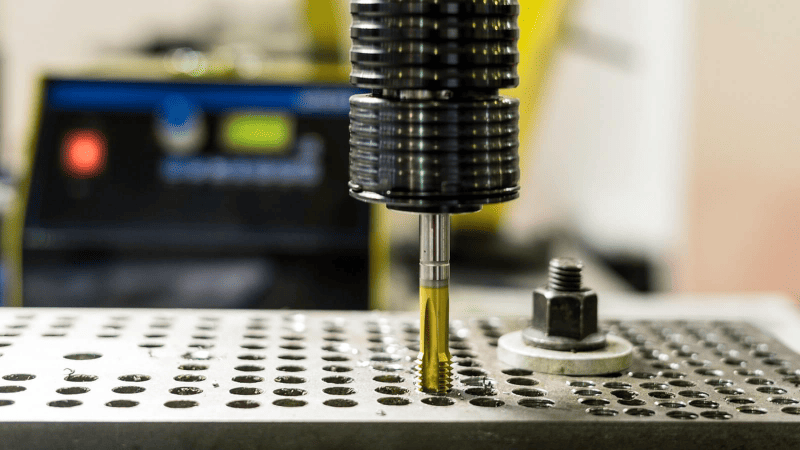
Perçage CNC makes repeatable hole placement and consistent diameters in a variety of biocompatible metal components. This method is ideal for materials that harden rapidly or tend to have concentrated heat. It works because it makes adjustments to coolant delivery, cutting parameters, and peck cycles. This results in high-quality and reliable holes that retain their surface finish and dimensional accuracy.
Advanced Drilling Techniques for Biocompatible Metal Components
High-Pressure Through-Spindle Coolant
Heat control is critical to protect material property and surface integrity in biocompatible metals. Coolants directed through the drill spindle precisely deliver fluid to the cutting zone. This minimizes thermal buildup in materials such as stainless steel and titane. Stable cooling limits work hardening, reduces tool wear, and preserves dimensional accuracy.
Peck Drilling Cycles
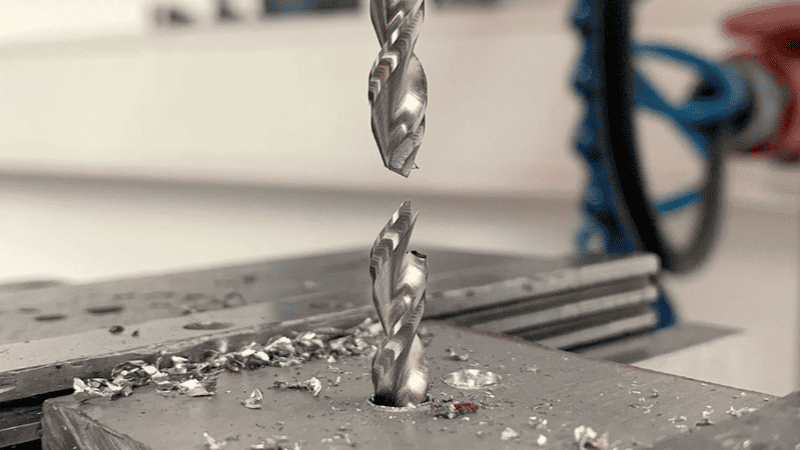
Chips can build up in the holes and block the tool when drilling. This is when we use peck drilling, which helps by slightly pulling the drill out at intervals. This technique removes chips before continuing the drilling. It helps reduce burr formation and keeps stable cutting forces.
Micro-Drilling Specifications
Specialized micro-drills and controlled feeds are essential when we are working on holes that are extremely small for medical parts demands. We need to be strict in spindle speed and feed rate because even minor deviations can damage tools and produce oversized holes.
What is CNC Tapping?
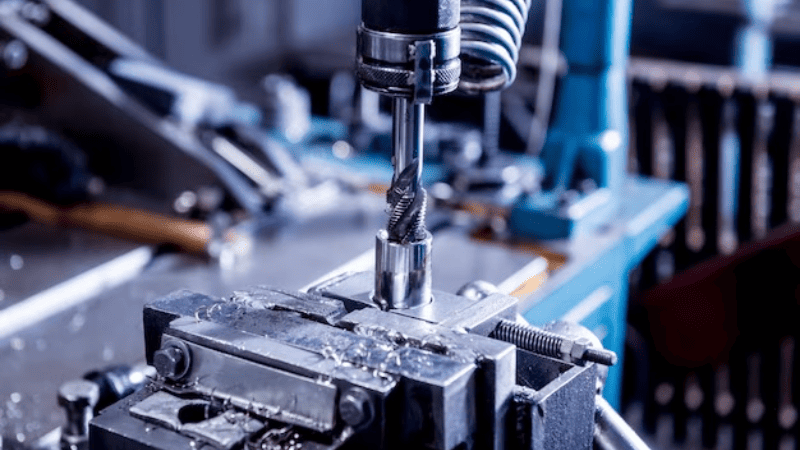
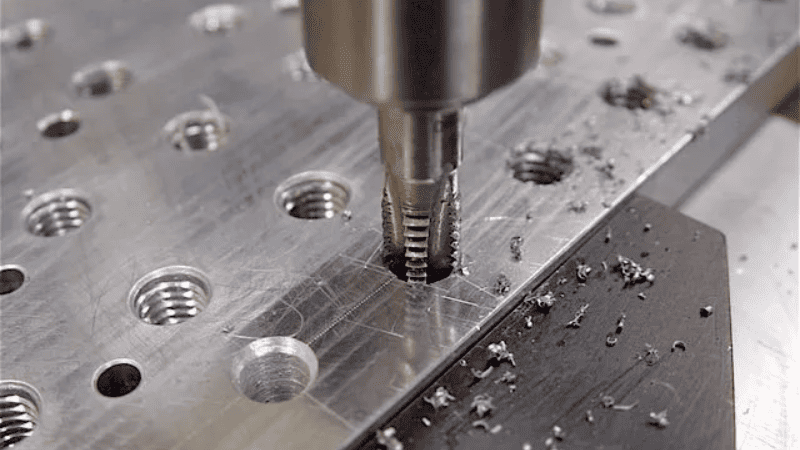
CNC tapping helps by using programmed spindle rotation, tool motion, and feed to deliver consistent threads across a variety of components. In biocompatible metals, thread formation must be precise because any surface irregularities or residual stress inside holes can impact corrosion resistance and performance.
It is helpful for metals with low ductility. We achieve reliable thread quality while keeping up with dimensional integrity by controlling entry, exit, and chip flow.
Precision Tapping for Biocompatible Metal Components
Cut Tapping vs. Form Tapping
Cut tapping offers tighter tolerances and flexibility with different alloys by removing material to create threads. On the other hand, form tapping displaces material to form threads without cutting. Careful method selection must be based on tolerance requirements, thread size, and alloy properties.
Thread Quality and Burnt-In Stress
Burnt-in stress is induced by improper sequencing and excessive friction. This compromises the parts’ fatigue resistance and long-term implant stability. Consistency in process monitoring maintains accuracy, strength, uniformity, and fit.
Lubrication and Sterility
There are applications where sterility is critical, which is why using appropriate lubricants is important. These lubricants must be easy to remove, compatible with post-processing requirements, and meet operational and environmental standards.
Residual control is critical in medical components manufacturing because any remaining contaminants can interfere with sterilization and affect biocompatibility.
Critical Tooling Selection When Drilling and Tapping Biocompatible Metal Components
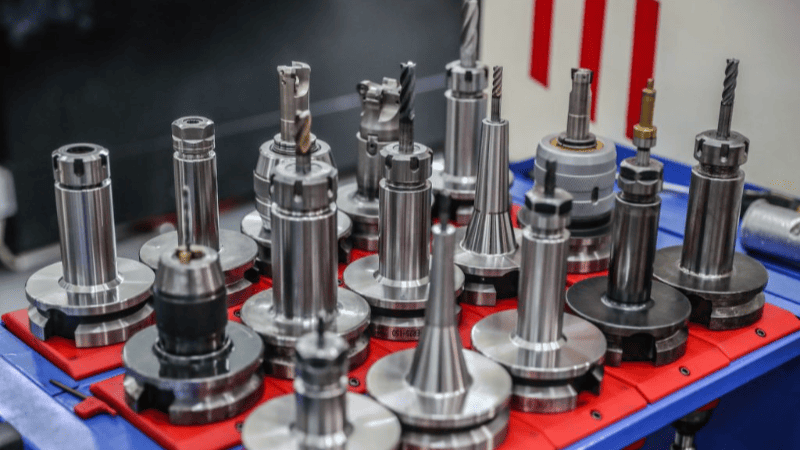
Carbride vs Cobalt Drills
Carbide drills are ideal for parts that have interrupted cuts where resistance is necessary to prevent failure. On the other hand, cobalt drills are good for short runs. Selecting the proper drill material reduces thermal distortion and burr, which is important for an implant-grade hole.
135° vs. 118° Point Angles
Chip formation, hole geometry, and surface finish are influenced by point angle. 135° angle reduces burrs in harder alloys and provides better centering. The 118° angle is efficient in standard drilling and soft alloys. The proper angle contributes to accurate hole diameter, clean entry, and minimal surface defects.
Specialized Tap Geometries
Tap geometry must match the hole type and alloy material to maintain thread quality, ensure repeatable results on complex parts, and prevent tool breakage. The one that is ideal for through-holes is the spiral point taps. It directs chips forward to prevent clogging.
For blind holes, spiral flute taps work by pulling chips out of the hole. Choosing the proper tap geometry reduces the risk of micro-tearing and maintains thread integrity. These factors are critical to secure fastener engagement in biocompatible metal component assemblies.
CNC Drilling and Tapping Capabilities for Biocompatible Metal Components
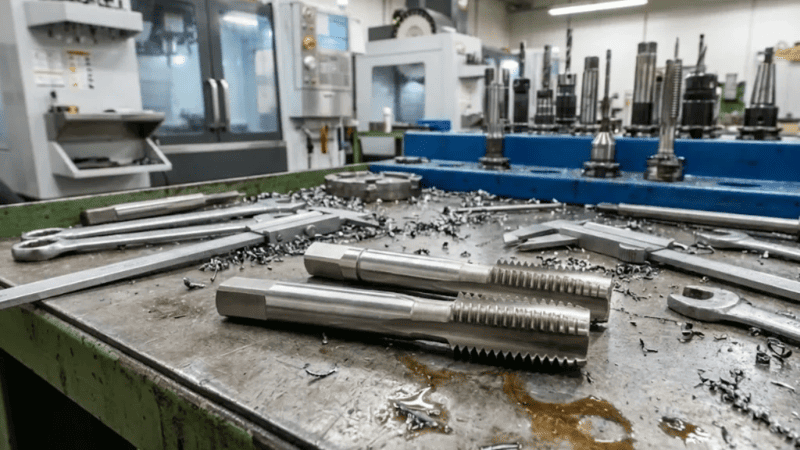
Drill Diameters
Depending on the requirements, machine and tooling, drill diameters typically range from holes below 0.5mm to bores exceeding 25mm. Even in work-hardening alloys, consistent hole geometry can be achieved through rigid fixturing and high-speed spindles.
Thread Sizes
The threading capacity ranges from fine miniature threads to larger coarse threads used in load-bearing assemblies. Both are unified standards and can be achieved by precisely controlling read depth and pitch diameter.
Material Processing
With optimized cutting parameters, biocompatible metals such as stainless steel, titanium alloys, cobalt-chrome, and nickel-based alloys can be machined. The factors to consider are stable torque control and coolant delivery to prevent surface damage and rapid hardening.
Automation Level
In terms of automation, modern CNC platforms use automated tool changers, tool monitoring, and in-process probing. Single setup synchronized drilling and tapping cycles, and complex hole positioning are offered by multi-axis systems.
Suitable Biocompatible Metal Components for CNC Drilling and Tapping
Alliages de titane
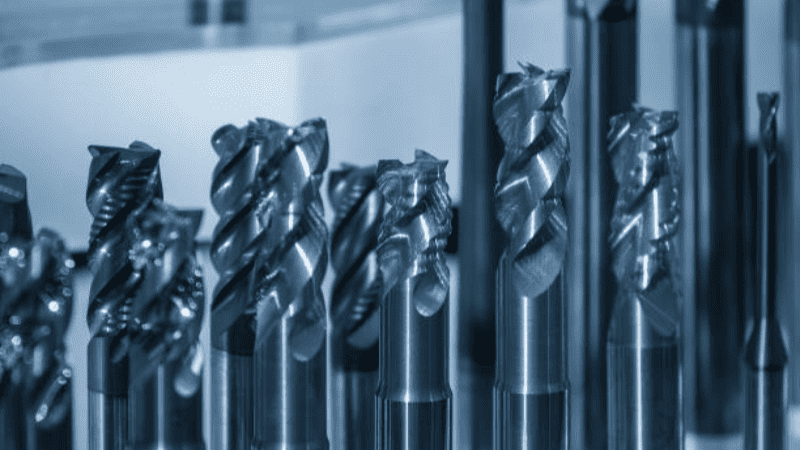
Widely used in medical components, titanium alloys are the right choice because of their strength and corrosion resistance. But it is important to note that to maintain hole and thread quality during the process, the careful control of feed rate, spindle speed, and coolant delivery must be a priority because the toughness and tendency to work-harden of this material may be an issue if not handled with proper consideration.
Acier inoxydable
Austenitic and martensitic stainless steels are used in biocompatible metal components due to their toughness and chemical stability. One consideration is that they heat up quickly during machining, so the tooling and cooling selection are crucial to prevent tool and surface damage and prevent burrs.
Cobalt-Based Alloys
Due to their exceptional fatigue strength and wear resistance, cobalt-based alloys are used in high-load biocompatible metal components. When drilling and tapping these material types, controlled feeds, the right chip evacuation, and specialized tooling are required to maintain thread accuracy and surface integrity.
Benefits of CNC Drilling and Tapping Biocompatible Metal Components
Consistent Precision
The accurate positioning of each hole and thread while repeating it consistently is all thanks to CNC control. Because even in small production and even in complex geometries, it improves parts interchangeability and reduces errors.
Reduced Tool Wear and Material Damage
Work hardening, burr formation, and heat buildup are all minimized by CNC processes. This is because of their capabilities to control feed, spindle speed, and depth. This preserves the integrity of hard-to-machine materials and also extends tool life.
Process Efficiency and Repeatability
Thanks to CNC’s automated sequences, they allow large-scale runs without compromising quality. These automations make CNC drilling and tapping streamline workflow, ensure repeatability, and reduce setup time. All these benefits maintain surface finish demands and tight medical-grade tolerances.
Disadvantages of CNC Drilling and Tapping Biocompatible Metal Components
High Equipment and Tooling Costs
The initial setup and maintenance of Machines CNC and specialized tooling for biocompatible metals require a significant amount of investment. It can be expensive for small-scale production compared to a simple manual setup.
Sensitivity to Process Parameters
The ductility of metals, high or low, demands precise control over speed, feed, and depth. This means any minor discrepancies may lead to thread distortion, surface defects, and even tool wear. This requires skilled operators to closely monitor the process necessary to maintain compliance with medical-grade tolerances.
Heat and Chip Management Challenges
With alloys that have low thermal conductivity, heat gets retained in the cutting zone. This makes it complicated for fine threads and deep holes in terms of chip evacuation. Without proper chip control and cooling methods, dimensional accuracy and surface quality can be compromised. This will potential warrants rework.
Applications of Drilling and Tapping in Manufacturing Biocompatible Metal Components
Implants orthopédiques
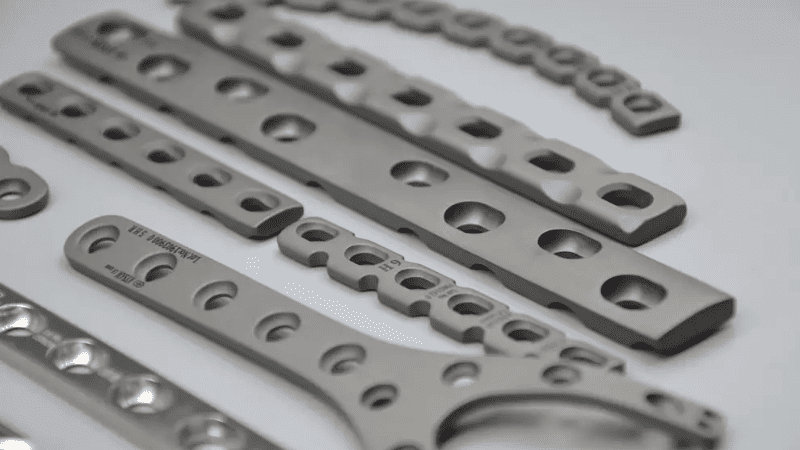
Drilling and tapping are both necessary in producing cobalt-chromium and titanium orthopedic implants, such as fixation systems, joint components, and bone plates. These components need precisely machined threaded holes to ensure mechanical stability, long-term performance, and secure fastener engagement when used within the human body.
Dental Implants
Accurately tapped internal threads that allow proper abutment correction are required in biocompatible titanium implants. Tolerances need to be strictly tight to ensure osseointegration stability, maintain structural reliability, and prevent micro-movement.
Instruments chirurgicaux
For modular assembly and replaceable components, medical-grade stainless steel instruments need drilled and tapped features. Controlled machining helps ensure compliance with sterilization standards and maintains corrosion resistance.
Spinal and Trauma Fixation Systems
Dimensional precision must be maintained to guarantee locking screw compatibility of threaded plates, holes in rods, and anchors. Drilling and tapping ensure repeatable results of these components designed for load-bearing applications.
Medical Equipment and Implantable Assemblies
Diagnostic devices and implantable housings fabricated from biocompatible alloys requires high- precision tapped features. Maintaining tread accuracy and surface integrity are both essential for durability, safety, and regulatory compliance.
Conclusion
CNC drilling and tapping of biocompatible metal components require repeatability, precision, and reliability in performance. Considering materials, proper tooling, and process control are key considerations to get the desired results.
Ici, à DEK, we provide expertise in drilling and tapping with consistent and quality results. To enhance the efficiency, accuracy, and long-term durability of your critical biocompatible metal components, contact us today.
