
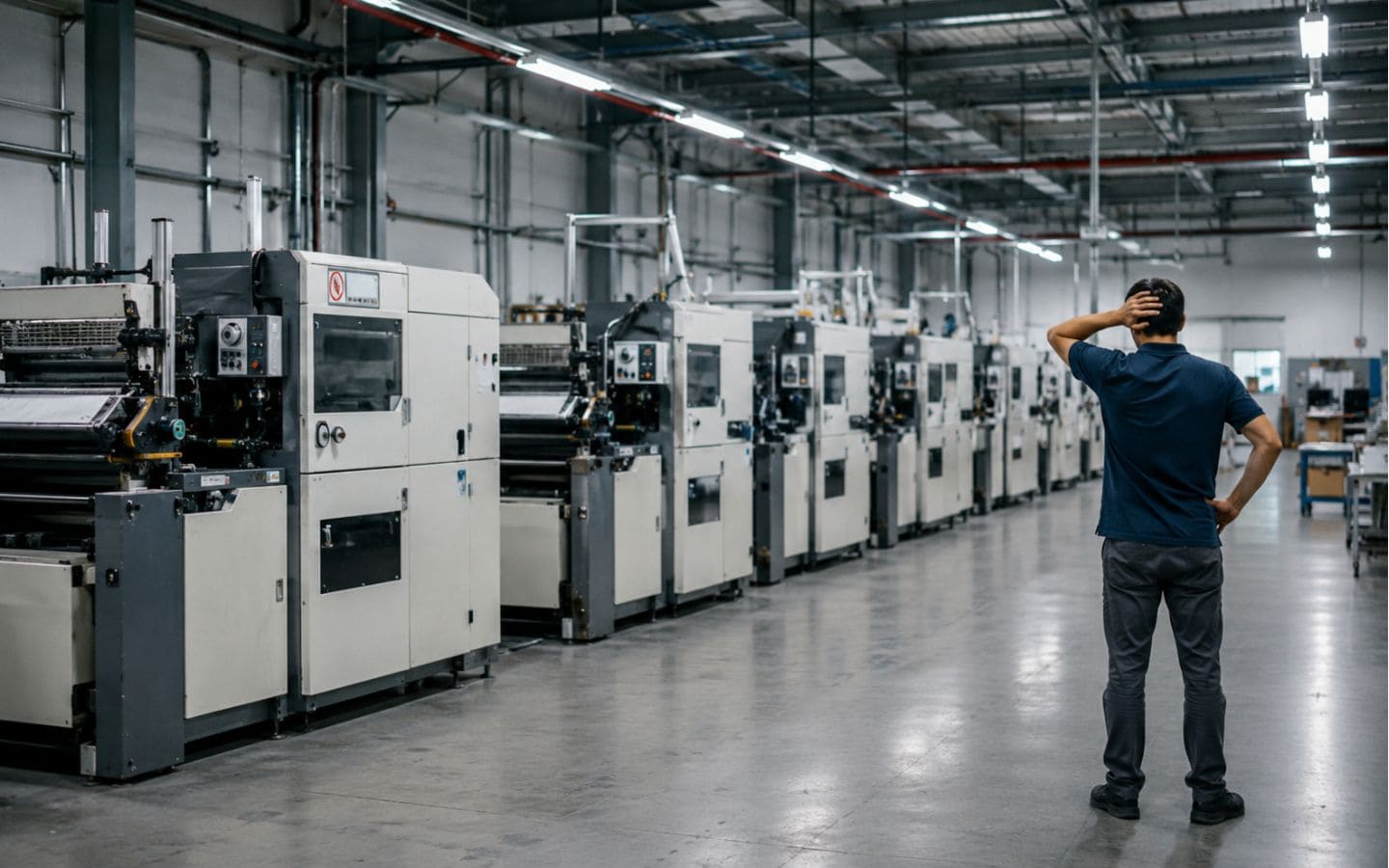
In manufacturing, many people believe that expansion entails adding more machines, which leads to more output and, in turn, growth.
Yet after adding new machinery and expecting things to speed up, a few months down the road, you see that nothing much has changed, and your lead time still isn’t any better. What generally becomes clear is that it’s not a machine problem but a system problem. Eventually, the system takes precedence over the equipment.
The Myth of “More Machines = More Output.”
From the very beginning, the reasoning seems simple: if a machine produces a certain number of parts every day and you add a new machine, which essentially increases your available spindle hours, then your output should increase predictably. Unfortunately, this is rarely true in real-world production settings.
A machine will only manufacture parts if everything else in the process chain is ready, including clear drawings, complete CAM programs, prepared tooling, validated fixtures, and supplies. If even one of those items is delayed by a single minute, the machine will have to wait that long, sometimes much longer. Unfortunately, those wait periods are sometimes overlooked when determining starting capacity.
When someone adds machines, the bottlenecks that existed before the new equipment was installed are simply relocated to another area of the shop.
There's a quote by Peter Drucker that comes to mind, which I believe is appropriate in this context: “Efficiency means doing things right; effectiveness means doing the right things.” Hence, while an increase in machinery can enhance efficiency in each point of production in the shop, without effective coordination, efficiency gains will be minimal.
The Real Constraints Behind Slow Growth
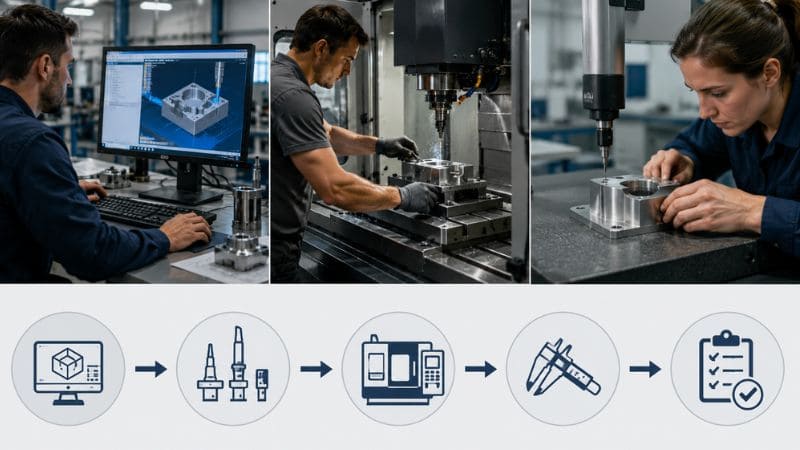
I frequently notice that small businesses have difficulty scaling due to operational limitations; these limitations are rarely mechanical but are largely caused by inefficient workflow systems and insufficient team capabilities.
Programming constraints are very common. Poorly programmed parts result from programming errors made by the programmer during the translation of design intent into an efficient toolpath, incorrect tooling-strategy calculations, and a failure to verify tolerances before machining. As the number of machines in operation increases, so does the amount of programming effort.
Another common limiting issue is setup. A job cannot be started until the tool is ready, the fixture is placed and examined, and the offsets for the tool and fixture are confirmed.
The third issue to be addressed is the importance of inspection during the production of machined products. With tighter tolerance values, more time is required to measure and record inspection data. When the volume of inventory to be inspected exceeds the QC inspection capacity, deliveries are delayed.
Each constraint stands alone, but they connect through the workflow. Improving one constraint without considering the others typically provides no insightful gain.
Hidden Costs That Eat Into Productivity
More machines mean an immediate increase in hidden running expenses. There will be more tooling to stock, and without proper management, differences in tool condition and offsets will become more significant. Fixture development will proceed much faster than intended, and it must always be handled in order to get things done.
There is now more maintenance planning to do, as any failure affects numerous jobs at once. With more overlap, even slight issues can have serious ramifications for scheduling, resulting in senior staff spending less time developing the process and more time coordinating.
What I’ve Seen Across Machine Shops
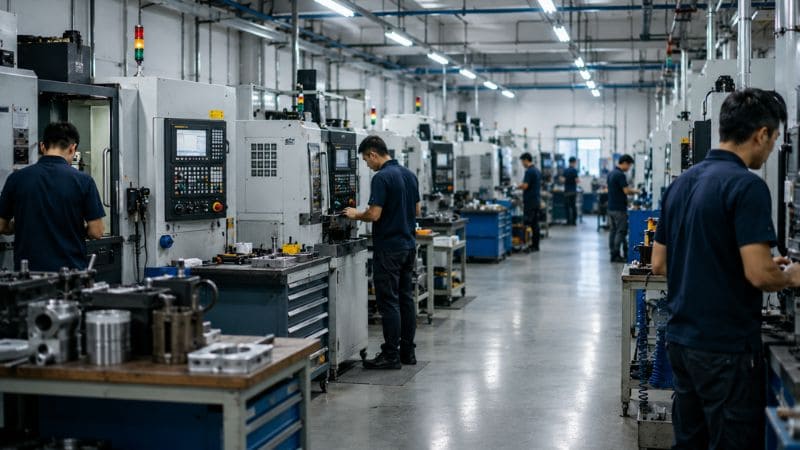
The trend is quite common from one region to another. The number of machines increases faster than the ability to operate and manage them.
Shops purchase new machines without having enough manpower in programming. Fixtures are not yet defined when operations are scheduled. Operators wait for further instructions since documents are still incomplete. Sometimes, machines stay idle not because there’s no work but because the preceding process hasn’t been optimized yet.
There is another form of low utilization that is hard to detect: inefficient operation under the guise of activity. Macchine are functioning, but they’re operating inefficiently because they stop frequently due to minor issues. From afar, everything may look fine in the shop, but there’s a constraint when it comes to productivity.
A DEK, we’ve managed to reverse the paradigm. Instead of purchasing machinery before optimizing our process, we consider it the last thing we need. That way, the utilization rate will naturally increase after other things are in place.
What Actually Drives Sustainable Growth
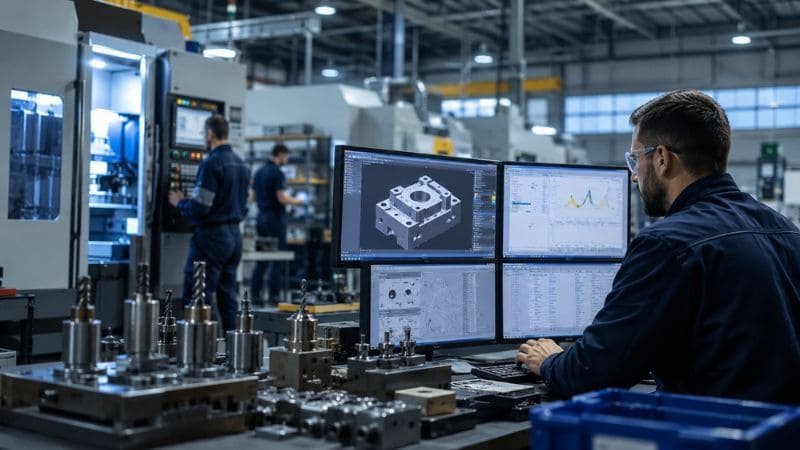
Sustainable growth arises through flow optimization, not capacity improvement alone.
It starts with good quotes. Precise cycle time estimates, reasonable setup assumptions, and proper planning form a solid basis for sustainable growth. Inaccuracies in quoting will propagate through the entire process.
Setup optimization is one of the most powerful tools for expanding capacity. Standard tooling, modular fixtures, and detailed setup sheets shorten changeover times. These measures accumulate over time. Eventually, they may produce higher capacity gains than a new machine purchase.
Engineering support is vital too. Reliable programs, checked toolpaths, and revision control minimize uncertainties on the factory floor. Operators have more time to complete their tasks without delays due to troubleshooting.
Inspection is another critical element of scaling operations. Inspections must be planned systematically, optimized for measurement, and properly reported. Inspection will not become a bottleneck if its integration into the production process is done well.
As Henry Ford said, “Nothing is particularly hard if you divide it into small jobs.” This quote inspires me a lot when I think about manufacturing processes. Growth is never one decision; it’s actually many decisions put together.
When Adding Machines Finally Makes Sense
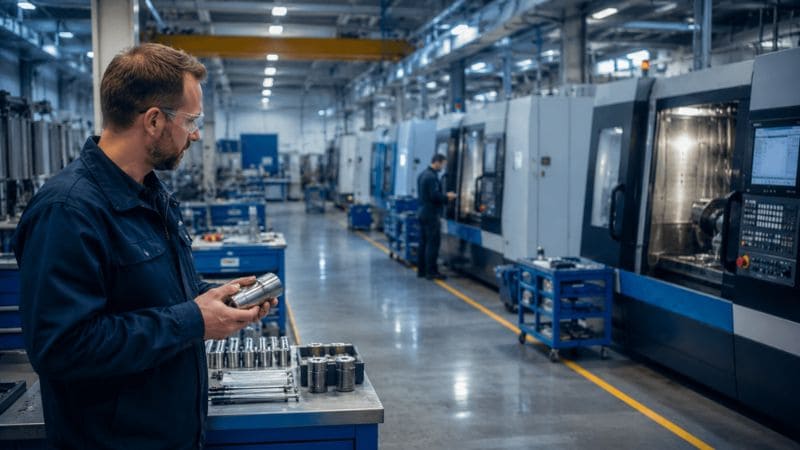
However, there comes a point when adding machines makes sense, but only when you've mastered it enough.
First of all, your workflow must be well defined with very little variation between expected results and actual outcomes. Also, your setup process should be consistent, with documentation and tools in place for it. There has to be a balance between programming capabilities and the rate at which jobs have to be added.
Consistent quality performance is another indicator, indicating that the majority of items pass quality check on the first attempt and require little reworking. The schedule will also be more predictable.
In many cases, workshops will work with other organizations to handle additional workloads at this point. This technique allows for expansion within your organization, thus adding machines is a sensible next step in providing value.
Under these conditions, new capacity integrates seamlessly and contributes immediately to output.
My Perspective
The mistake I have seen myself making in the past is similar to one commonly made by other businesses. Thinking that installing machines leads automatically to growth can be misleading. We had several instances where we upgraded our machines when the internal process was not yet ready for it and, hence, got into trouble.
In my view, machines are just amplifiers. They do not solve process problems; they only point them out. As long as the quotation is precise, programs are stable, setups are reliable, and inspections are consistent, then capacity is manageable.
I no longer measure success by counting machines in my plant, but rather by how efficiently we execute the entire process at all levels of production. This is because experience has shown me that growth comes from efficient execution, not machines.
