

Over the years, working with numerous U.S. CNC shops, I’ve observed a common pattern. Many average shops believe a major factor hindering their growth is the unavailability of advanced machines.
But from experience dealing with many of them, I have a different insight to share. Many of these shops suffer from insufficient quality control and poor engineering work.
Coupled with inadequate communication and documentation processes, labour overwork and burnout, a lack of preventive planning, and numerous other issues.
And while many continue to struggle with these problems, a few top shops are learning to overcome them with the right strategies. And this helps them maintain a workflow balance and generate more revenue.
In this blog, we will explore these patterns. From the challenges most average shops face to how high-performing shops maintain a smooth workflow.
The Challenges Most Shops Share
Many shops I’ve worked with consistently complain of skilled labour shortages, which affect productivity.
Many also deal with poor engineering work, quality control, and a lack of scheduling flexibility. All of these hinder growth and income generation.
Skilled labor shortages are slowing growth
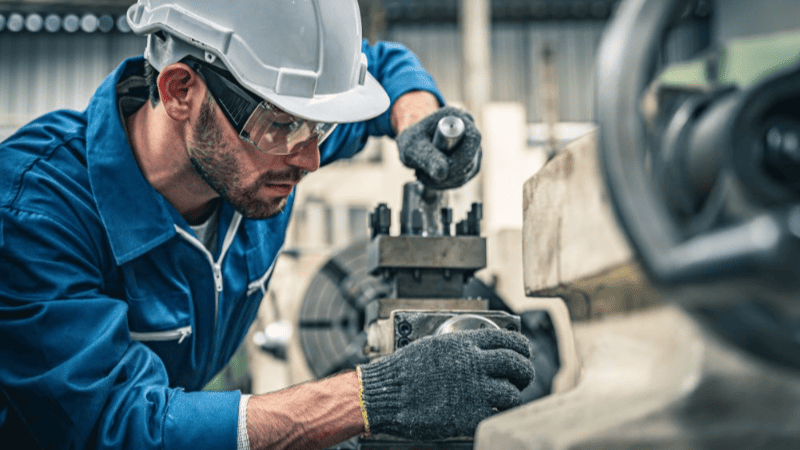
This is one major challenge that everyone has talked about, and I’ve observed in many U.S. shops. Many find it challenging to recruit new skilled machinists, and even those who are available are gradually aging.
Is it about being equipped with advanced Macchine CNC? Even the shops with them lack skilled operators, making production inefficient. And it is evident in the popular saying, “Machines don’t make parts, people do”- Gene Haas.
Engineering and QC are becoming bottlenecks, not machines
While many average shops complain about machines and equipment, the actual bottlenecks lie in the engineering work and quality control process.
Design iterations, drawing clarification, and incomplete inspection all contribute to slow production rather than machine speed.
Scheduling instability causing missed opportunities
Over the years, I’ve learnt that scheduling flexibility matters. I’ve seen many shops lose opportunities due to a lack of schedule variability.
Emergency jobs. Shift in deadlines. Fast prototyping options are often overlooked by most shops, resulting in poor delivery.
Even shops with advanced CAM software, machines, and experts are unable to meet this need. The result is that most shops lose new opportunities and even lose recurrent customers.
What High-Performing Shops Consistently Do Well

High-performing shops, however, have learned to take the proper steps and processes, which bring them more positive results.
From thorough documentation to effective communication and maintaining internal capacity for high-margin jobs.
Document processes to reduce variation
Most of the time, what differentiates a high-performing shop from an average shop is the documentation process.
Most top shops document everything, from material sourcing to fixture, speed, and feed control, as well as the inspection process. Just name it.
This helps them eliminate mistakes and variation, adhere to industry standards, and enhance smooth quality checks.
As noted by Taiichi Ohno, “Without standards, there can be no improvement.” Proper documentation and adhering to standards equals growth.
Communicate clearly between engineering and machining
Achieving success most often lies in the effectiveness of communication. This is a common attribute I’ve found with most top shops. They keep their teams intact with a smooth communication flow.
From consistent meetings to digital and physical check-ins, they maintain good communication between the engineering and machining teams. The result is fewer mistakes and errors, as well as shorter lead times.
Protect internal capacity for profitable or repeat work
Most high-performing jobs also understand the importance of maintaining internal capacity for profitable and recurrent jobs. They maintain their advanced facilities and team for high-margin, consistent jobs.
This creates room for a smooth workflow, generates more revenue, and prevents burnout. Other low-margin jobs, quick design and iteration, and rapid prototyping are outsourced to keep the workflow intact.
The Patterns Behind Shops That Struggle
Depending on one or two machinists, a lack of preventive planning, incomplete inspections, inadequate traceability, and other upstream processes contribute mainly to the struggles faced by most average shops.
Too dependent on a few senior machinists
Many striving shops are too dependent on a few senior machinists. These shops usually have one or two machinists. On days when they aren’t available, production is disrupted, deadlines are missed, and customers are lost.
Constant firefighting instead of preventive planning
I’ve learned over the years that many top shops provide proper preventive measures compared to those that struggle. And this is what sets them apart: average shops take more corrective steps, which in most cases would have led to a crisis.
They spend time and funds putting out fires rather than preventing them. This draws back the production process, leading to inefficiencies.
Adding machines without fixing upstream processes
In my conversation with many average U.S shops, one primary concern they raise is the unavailability of advanced machines.
These shops believe productivity and growth lie in investing in 5-axis CNC machines, whereas most of them haven’t fixed issues with inspection and traceability, fixturing, and engineering. And at the end, machines matter, but processes matter most.
How External Support Strengthens the Best Shops
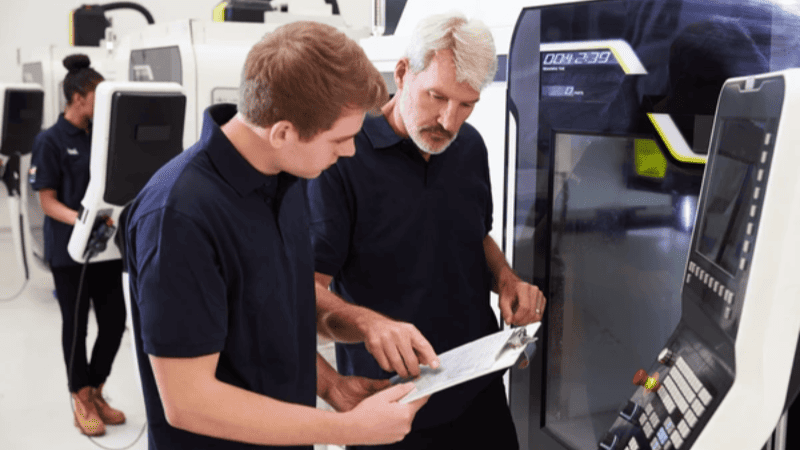
And while average shops are consistently overworking their few machinists, high-performing shops are consistently collaborating with external partners to prevent burnout, improve workflow, and scale their business.
Outsourcing overflow stabilizes internal workflow
One common trick I’ve found with most top shops is that they don’t overwork their teams and machines. Instead, they selectively focus on specific high-profit and recurring projects, while outsourcing others to external parties.
This helps them maintain a healthy workflow, keep the schedule intact, prevent burnout, and eliminate risk and mistakes.
Parallel prototyping shortens development cycles
Many top shops also prioritize outsourcing prototyping jobs to partners. This allows engineers and machinists to focus on a full production run without getting strained out. In fact, it creates an avenue for them to take on more jobs and generate more revenue.
Trusted partners reduce risk when quoting larger projects
With trusted, reliable parts, many high-performing shops have been able to deal with high-grade customers. They aren’t afraid to accept complex projects.
They believe in their partner's capacity to deliver exact part specifications right on time. This helps them build the confidence to quote larger, complex projects. With reliable partners by the side, quality, precision, and quick turnaround become a habit.
Many teams I’ve worked with use DEK quietly to maintain consistency
High-performing shops understand the importance of collaboration, which is why many top U.S. shops are quietly yet consistently partnering with DEK. No rush or missed delivery.
No burnout or machine breakdown. Just an efficient partnership that generates outstanding results. From quick turnaround times, quality, and tight tolerance parts to increased revenue.
What I Personally Took Away From Visiting So Many Shops

After visiting many shops, I've gotten to understand that achieving the required precision isn't an issue, but maintaining consistency with it is.
Advanced machines are great, but effective communication, a healthy work culture, and maintaining flexibility are best.
Precision is rarely the problem—consistency is
With many years of experience working with various shops, I’ve seen them achieve tight-tolerance components. So precision is really not the challenge, but consistency is.
While these shops can achieve the required precision, many struggle to maintain tight tolerances across multiple production batches and among machinists.
Therefore, there’s still a need to invest in a consistent, precision-driven production process.
Culture and communication matter more than equipment
I’ve learned that acquiring machines, software, and tools most of the time isn't enough. I've seen top shops lose process control due to ineffective communication.
A toxic work environment brings more misfortune, even when there are enough experts and machines to do the work.
Unhealthy workplace relationships and poor communication can disrupt workflow more than we imagine, from little errors to significant mistakes. All this brings a setback to many CNC shops.
A shop’s future depends on how well it handles volatility, not how many machines it owns
In some cases, the workflow doesn’t go as expected or planned. This isn’t even about machine or software unavailability.
Client rescheduling, scaling, or emergency order, late material delivery, and other unforeseen circumstances could occur at any time.
While many shops are unable to handle this variability, those that can are those with designed preventive measures and those that acknowledge flexibility and volatility.
My Perspective
In my experience working with over 100 CNC shops across the U.S., one pattern I’ve noticed and confirmed is that most average shops follow the same routine, while top shops also adhere to similar strategies. And what do we expect from that? The difference is clear, and the result is glaring.
Most struggling shops are constantly worried about machine unavailability, whereas many also face issues with expert shortages, poor quality control processes, and a lack of preventive planning, among other problems.
This slows down growth, disrupts workflow, and hinders revenue generation. Top shops, on the other hand, are aware of what proper strategizing entails, and they take active steps towards achieving it.
Many of these shops value consistent documentation, communicate effectively, and maintain their internal capacity for high-margin profitable jobs. They value healthy collaboration with external partners.
All of these combined help them maintain a healthy workflow and generate more profit. These shops understand that the right tools and machines matter, but what matters most is the right strategy, which is inherent in their success story.
