
What I Learned From Visiting 200 Manufacturing Companies
Compared to the previous year, many customers across various industries now require more complex parts with tighter tolerances, comprehensive documentation, and traceability, as well as fast turnaround times.
While this is a significant change, many average manufacturing companies lack the structure and system to meet this need.
A skilled labour shortage, coupled with ineffective planning, documentation, and quality control processes, inadequate communication, and a lack of discipline, among other factors, contributes to this problem.
And rather than addressing the root issues, these average shops continue to invest in new machines. Top-performing factories, on the other hand, understand the importance of a balanced structure.
They have a stable workplace culture, with values that emphasize consistent planning, communication, and collaboration with external partners. They focus on processes and people, not just machines, which yields more revenue for them.
This blog, therefore, helps you explore this trend. I’ll explain all I’ve learned from visiting 200 manufacturing companies across the globe.
The Similar Challenges Across Nearly All Factories
Based on my experience visiting 200 manufacturing companies, I found that they all share the same challenge. Different countries, different accents and regions, but the same problem is repeatedly raised.
Growing complexity in customer requirements
Compared to a few years ago, customers no longer have simple requirements; they now come with more complex ones. They want tighter tolleranza parts with very detailed documentation, 100% inspection, and traceability.
They want the system to be fully flexible to accommodate other priorities that may arise, while still delivering right on time. Customers don’t just want simple drawings; they want multiple ones that meet several requirements.
This complexity not only affects machining but also puts pressure on the whole company's system, from communication to inspection and process planning, and so on, which eventually causes delays and several reworks.
And this is evident in the saying “Complexity is the enemy of reliability”- Shigeo Shingo
Shortage of skilled technical talent
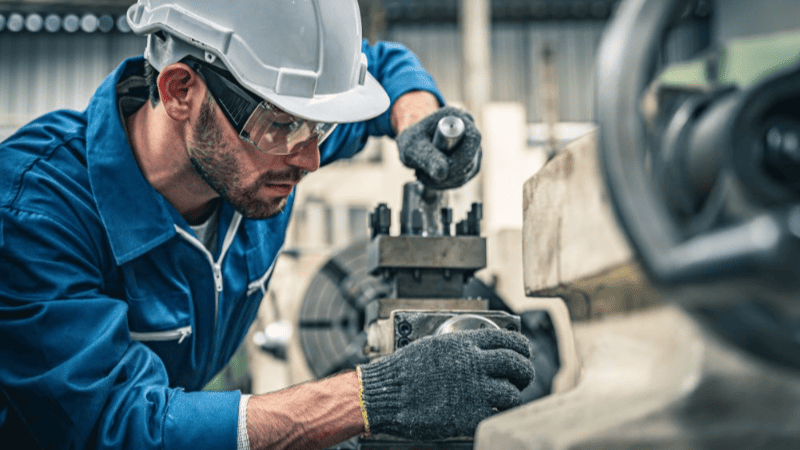
From my conversations with many manufacturing companies, one critical challenge that many factories consistently mentioned is the shortage of skilled technical talent. Many companies lack this.
The technical experts available are aging and retiring, while the few younger ones joining the system have insufficient practical knowledge.
When these senior technical talents become unavailable, then production processes are disrupted, leading to poor workflow and inconsistencies.
Constant pressure on delivery and cash flow
Many customers prefer to have their orders delivered within a few days. They all want their project prioritized. This puts more pressure on the whole system. To meet tight schedules, many manufacturing companies rush orders and overwork their staff.
The result of this is usually the need for rework and reiterations. With more rework, deadlines are missed, deliveries are delayed, and payment is postponed.
Variation increases as companies add more people or machines
With an increase in employees and machines, growth is anticipated. However, in most cases, that isn’t the case.
Beyond simply adding more people and machines, setting and following specific structures is crucial. With more operators, instructions are interpreted differently.
A new employee brings in varying knowledge and training that alter the factory system. Machines are set up differently.
While growth is expected, variations occur when there aren’t set standards and structures.
What High-Performing Factories Consistently Get Right

High-performing manufacturing companies take a different route compared to struggling companies. They understand the principle of task ownership, value workflow documentation, review data weekly, and maintain a stable and precise communication flow. The result of this is a stable system that generates real outputs.
Clear ownership for engineering, production, and QC
Out of the numerous manufacturing companies I’ve visited, I’ve seen top-performing ones clear out ownership for processes. Operations and tasks are divided and owned. Everyone knows who handles the drawing review; the programmers are known for their expertise in their job.
Controllo qualità personnel are also recognized. Everyone takes ownership of their roles, and when issues arise from any task, the right person or people are held responsible.
With that, decisions are made more quickly, employees maintain discipline, and workflow is better balanced.
Documented workflows that reduce dependence on individuals
Top manufacturing companies don’t rely solely on individual knowledge. However, they keep a documented workflow that keeps the system going.
They have a machine set up and an operation sheet, a quality control plan, and several other documents that outline a company’s processes.
When a new employee joins the factory, they can refer to these documents for guidance. Additionally, when a senior technical expert leaves, the knowledge they possess remains within the company.
Leaders who review data weekly instead of managing by instinct
Many top manufacturing leaders I’ve met don’t only depend on instinct. They value data and review it consistently. They follow up and analyze delivery performance, including weekly updates on target and goal met, as well as reiterations.
These kinds of reviews help them identify trends, provide signals for emerging issues, and make more informed decisions.
And as Peter Drucker noted, “What gets measured gets managed”. It is easy to manage a system with consistent workflow analysis and review, compared to one without it.
Stable communication loops between customers, engineering, and machining
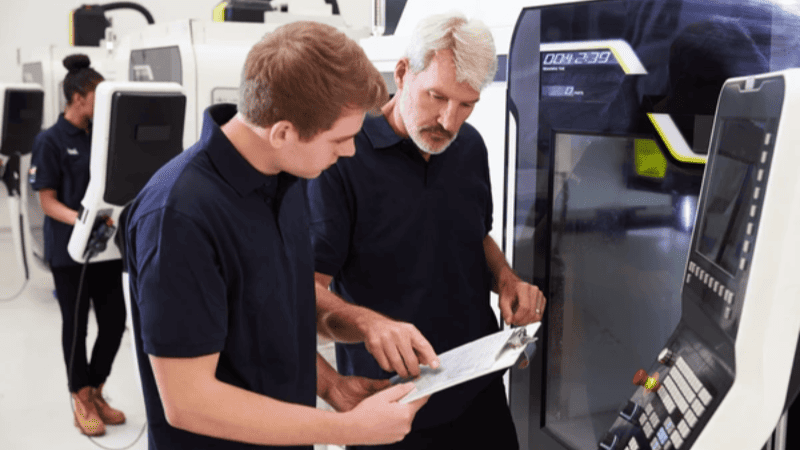
One common trend I observed during my visit to top-performing manufacturing companies is that they value effective communication.
The machinist is consistently communicating with the engineering team. Any urgent changes from the customer are communicated quickly before machining begins.
Consistent communication is handled with priority, not as a distraction. This helps eliminate errors and mistakes while maintaining the workflow.
The Warning Signs of Factories That Struggle
Over the years, I’ve learned that many struggling manufacturing companies often fail to recognize the warning signs that inhibit their growth. From overly depending on their top talented employee to leaving root problems unsolved and a lack of planning, there are several issues.
Processes live only in senior employees’ heads
From my visits, I observed that many struggling factories typically have a few highly talented employees on whom they depend solely. Without these employees, certain operations would not be carried out.
The primary input and performance of companies often rely on their employees’ memories, and as a result, they are usually overworked and stressed. As this continues over time, delivery becomes increasingly complex as production is disrupted.
Quality problems repeat because root causes are never closed
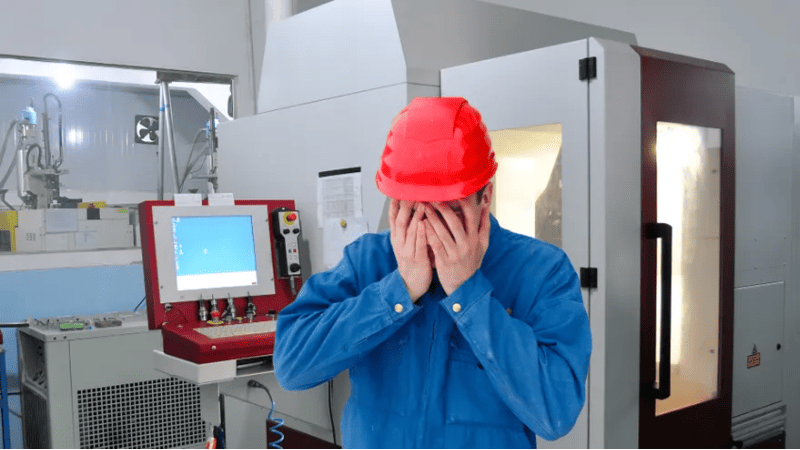
Many manufacturing companies repeatedly focus on the same issues without resolving the root causes. There’s inadequate documentation, inspections are insufficient, employees lack discipline, and the communication flow is inconsistent.
These are real issues that affect output and bring about errors and mistakes. Components are reworked repeatedly when the underlying issues that cause them are left unresolved.
Daily operations depend on firefighting instead of planning
Struggling manufacturing companies often lack proper planning, while much attention is paid to emergency situations, without measures being taken to prevent them.
These companies consistently deal with firefighting since preventive plans aren’t taken to avoid them. When meetings are organized, everyone discusses past crises rather than discussing steps to prevent them from happening again.
This keeps most factories at one point; no real progress is made, but rather back-and-forth struggles.
New machines purchased, but old problems remain unsolved
While many issues persist, most striving companies believe that new machines and equipment can solve them. However, there are limitations to the problems that new machines could solve.
Processes that aren’t structured, ineffective communication, inadequate documentation, planning, and inspection are real issues that machines might not fix.
And without resolving them, growth becomes difficult, even when advanced CNC a 5 assi machines are available.
The Most Surprising Lessons I Didn’t Expect
My visits to numerous manufacturing companies around the world have taught me many valuable lessons. While machines play an essential role in production, people matter, and the company culture matters more.
Small teams with strong discipline outperform bigger factories

I’ve met smaller manufacturing companies with fewer than 20 employees that were delivering amazingly well, compared to bigger factories with more than 50 team members.
What strikes the difference is a clear communication pattern, focus, and discipline among staff, as well as smooth workflows. In essence, the number of staff usually doesn’t matter, but their efficiency goes a long way.
People issues cause more delays than machine issues
An unforeseen machine breakdown causes a delay. No doubt. However, people also cause delays in production, delivery, and the overall system.
Miscommunication, errors resulting from unclear information, indiscipline among staff, and inefficient inspection and communication processes cause more setbacks than machine delays.
Right from the quoting, planning, and engineering stages, people contribute more to production delays than machines.
Culture determines consistency more than equipment brand
I’ve met many manufacturing companies with few sophisticated machines that are performing well, and I've also seen factories with many advanced Macchine CNC and tools that are still struggling.
Equipment is most of the time not the real problem; the company culture is. When everyone understands the company’s established standards and follows them diligently, the system begins to work, and growth occurs.
The factories that grow steadily are the ones that say “no” most clearly
Manufacturing companies that consistently grow do not accept all projects. They recognize their strengths and limits and follow accordingly. These factories aren’t afraid to say no to projects that don't align with their processes, schedule, and capacity.
Not because they are weak, but because they value their reputation and trust. Accepting all projects without delivering as agreed breaks trust and hinders long-term collaboration.
How External Partners Strengthen These Factories
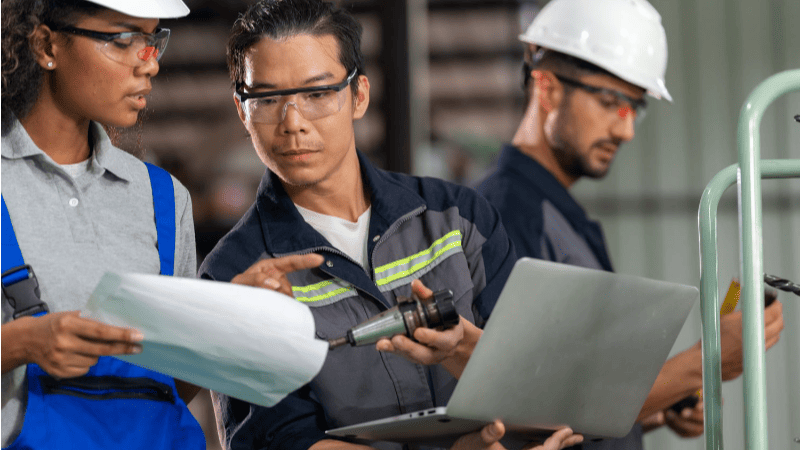
While many average shops are still striving, many top shops leverage trusted partners to enhance productivity. No burnout. No machine breakdown. Just a consistent and reliable collaboration that yields enormous returns.
Reduce chaos by absorbing unexpected peaks or urgent jobs
Even top-performing manufacturing companies experience surprises and urgent orders, from quick prototyping to urgent iteration and emergency orders.
While this happens, they preserve their internal capacity to maintain a schedule and avoid burnout.
They understand that flexibility is beneficial but can cause breakdowns when not managed effectively. As such, many of the unexpected orders are outsourced to the right partners.
Provide capability breadth without risky investment
Top manufacturing companies don’t just accumulate machines; they invest in those that are consistently utilized and then outsource projects that exceed their capacity.
The result of this is a win-win situation. More projects are accepted and outsourced to external partners, resulting in increased revenue generation. No Rejections. No delays. Just a healthy partnership that brings outstanding results.
Offer second opinions on manufacturability and process stability
Over the years, as a manufacturing CEO, one truth I’ve observed still remains: external teams notice and detect flaws that internal engineers might not see.
They are like a second set of eyes for your internal staff. They provide suggestions that improve designs and manufacturability, and detect mistakes that prevent long-term risks.
Healthy collaboration builds effective output. And outsourcing doesn’t equate to weakness; it actually strengthens both partners.
Many companies I visited quietly leverage DEK to stay reliable without overstretching their teams
Even as average manufacturing companies continue to struggle, many top-performing companies are quietly and consistently partnering with DEK.
These factories don’t overwork their staff and machines; instead, they leverage a reliable partnership with us.
The result is the generation of more revenue and a balanced workflow. They accept more projects, outsource, and get more income. It’s as simple as that.
My Perspective
Over the years, I’ve visited many manufacturing companies across the world. One thing has become clear: achieving excellence in the machining industry doesn’t happen by chance; it requires intentional, accurate, and consistent effort.
Many average shops struggle with ineffective planning and communication, a lack of discipline and a structured system, inconsistent workflow, and a shortage of talented professionals.
They continue to invest in machines and equipment rather than solving real problems. This slows down their productivity and revenue generation.
Many top manufacturing companies, on the other hand, build upon their strength. They maintain a workflow balance, value effective communication, planning, and documentation.
They maintain a healthy workplace culture and partner with reliable external teams. Rather than focusing solely on machines, they pay attention to both people and processes.
The result is a system that consistently yields positive results and generates more income. And this is what sets top-performing shops apart from the average struggling shops.
