
Microfluidic Chip Manufacturing Service
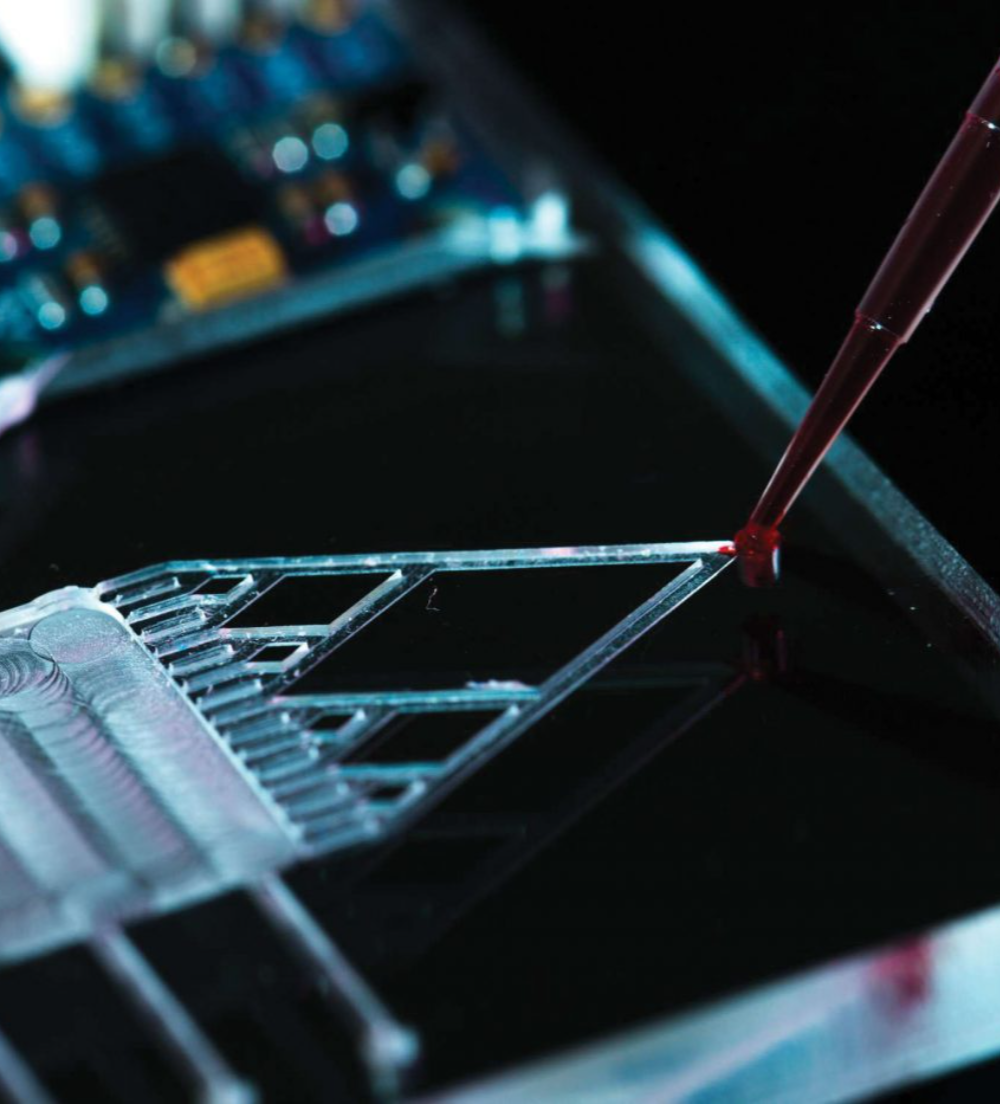
Microfluidic chip manufacturing services give you precise, trusted, and flexible solutions for making advanced liquid-control systems, helping growth in healthcare, research, and various industrial fields.
At DEK, each chip is made with exact measurements, quality materials, and advanced modern methods. We support projects from prototype to production, ensuring steady results and fast turnaround. Our team works closely with you to optimize layouts, integrate special features, and meet strict needs in medical, laboratory, and industrial projects.



introduzione
Microfluidic Chip Manufacturing | Innovative, Precise, Consistent
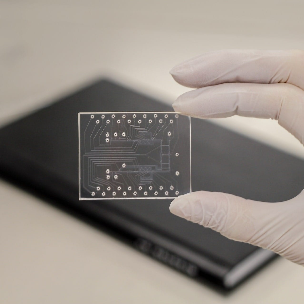
DEK provides innovative microfluidic chip manufacturing with advanced engineering, tight tolerances, and consistent performance, enabling accurate fluid handling for cutting-edge diagnostics, life sciences, and industrial microfluidic applications.
DEK provides innovative microfluidic chip manufacturing with advanced engineering, tight tolerances, and consistent performance, enabling accurate fluid handling for cutting-edge diagnostics, life sciences, and industrial microfluidic applications.
With DEK, you get more than just microfluidic chip production — you get a complete manufacturing partner. We use advanced tools like CNC micromachining centers, precision laser cutters, photolithography systems, and cleanroom assembly areas to create chips that are accurate, consistent, and contamination-free. Every process is handled with care to meet the most demanding performance and quality requirements. Our team also offers design for manufacturability (DFM), rapid prototyping, bonding, sealing, and surface finishing.
We can add custom channels, sensors, or ports to fit your unique requirements. With fast turnaround and strict quality checks, we make sure your chips perform perfectly from the first prototypes to full-scale production.
Key features:
- Multi-layer chip fabrication
- Ampia gamma di materiali
- Tolleranze dimensionali ridotte
- Scalable production
- Documentation and traceability
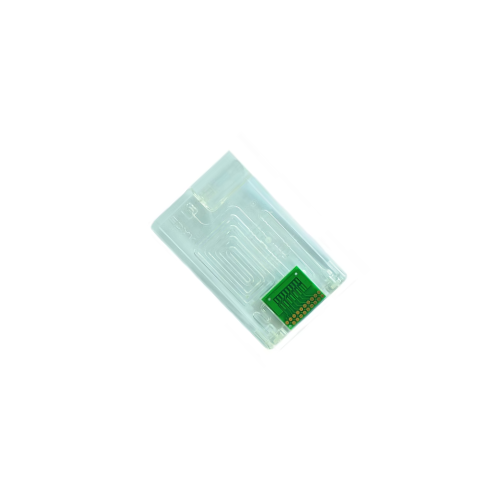
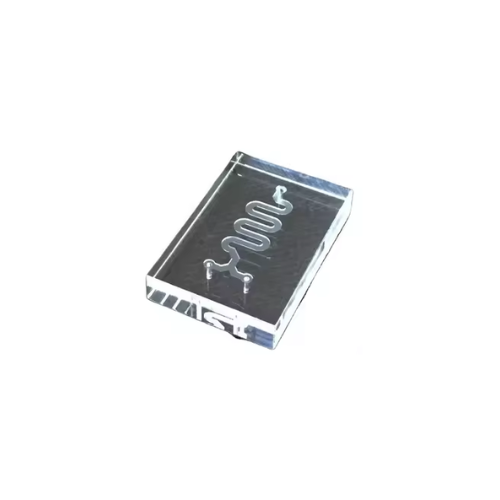
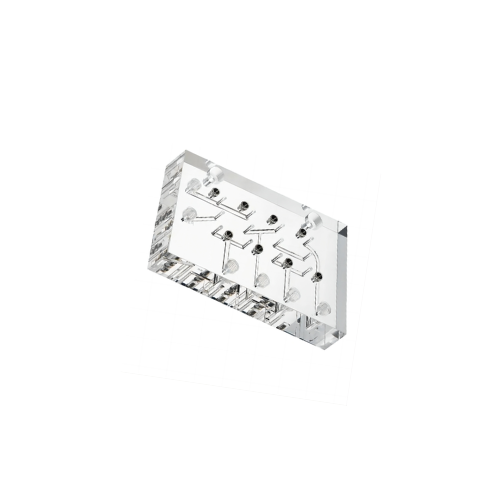
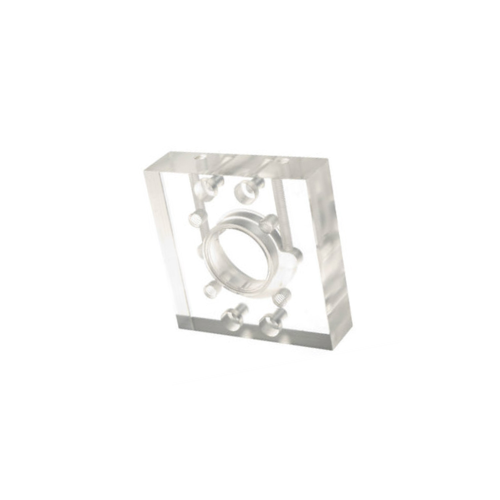
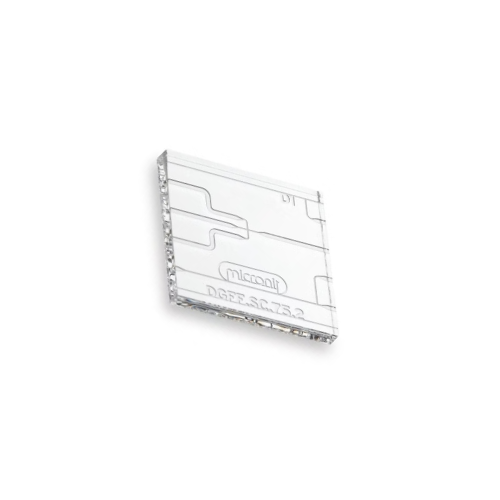
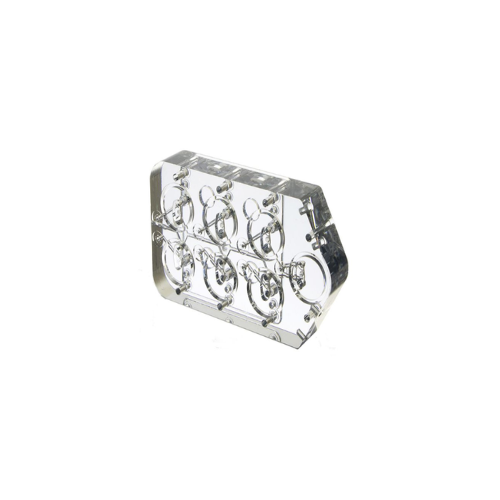
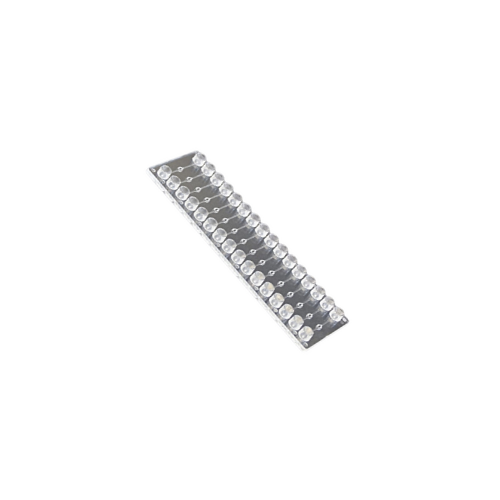
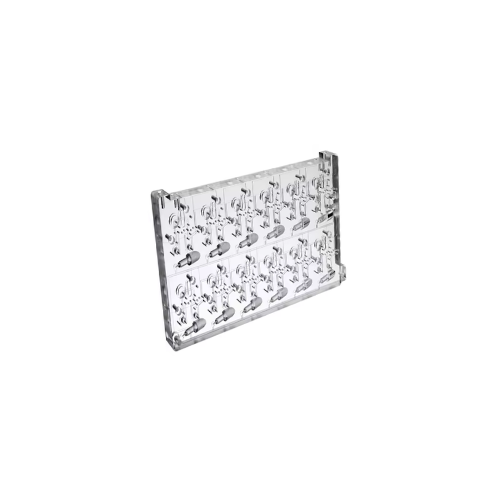
I materiali for Microfluidic Chip Manufacturing
Metalli
Plastica
Alluminio
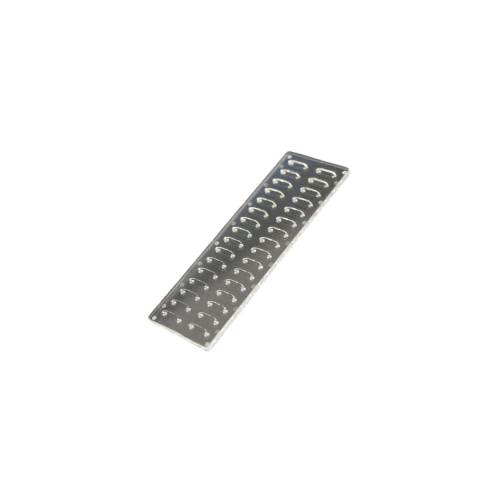
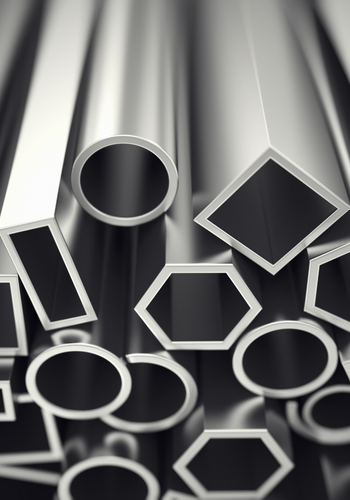
Aluminum is valued for its light weight, excellent machinability, and good thermal conductivity, making it ideal for microfluidic chip manufacturing in portable or temperature-sensitive systems. DEK uses precision milling to produce aluminum chips with smooth, accurate channels that ensure efficient fluid flow. Its fast heat dissipation supports thermal regulation in research and testing environments.
Aluminum chips are also corrosion-resistant and easy to transport. Common parts include portable diagnostic chips, heat-regulated testing chips, and rapid prototype development chips.
Leghe
6061-T6, 7075, 5083
Ottone
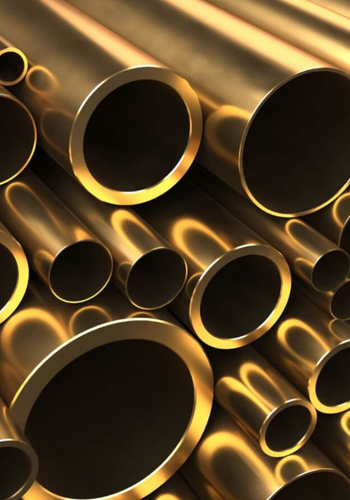
Brass offers excellent machinability, moderate strength, and natural antimicrobial properties, making it useful for certain fluid-handling applications in microfluidic chip manufacturing. DEK precisely machines brass to form smooth, consistent channels that resist wear and allow accurate fluid control. Its corrosion resistance and bright finish add both function and visual appeal.
Brass chips are reliable in educational, laboratory, and industrial uses. Common parts include demonstration flow chips, non-corrosive fluid testing chips, and durable reusable channel chips.
Leghe
C360
Rame
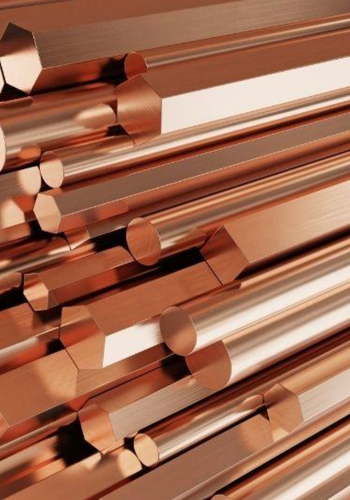
Copper offers exceptional thermal and electrical conductivity, making it valuable for microfluidic chip manufacturing that involves integrated heating or electrical sensing. DEK machines copper with high precision to create channels and embedded features that enable accurate temperature control and signal transfer. Its natural antimicrobial properties add benefits for certain sensitive fluid-handling applications.
Copper chips perform well in scientific, medical, and industrial systems. Common parts include thermal control chips, electrically monitored fluid chips, and antimicrobial test chips.
Leghe
C110, CuCrZr
Acciaio inox
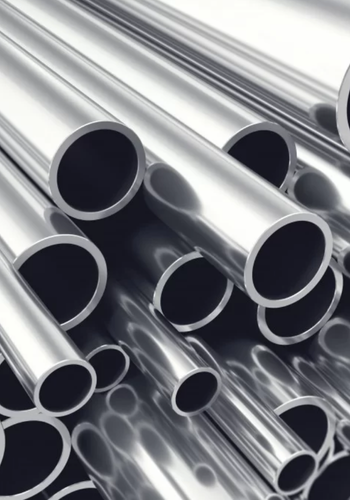
Stainless steel delivers strength, corrosion resistance, and long service life, making it a go-to material in microfluidic chip manufacturing for pressurized or reactive fluid systems. DEK machines stainless steel with precision, ensuring channels remain dimensionally accurate over time. Its resistance to rust and mechanical wear supports consistent performance in tough environments.
Stainless steel chips work well in chemical, pharmaceutical, and industrial research. Common parts include high-pressure testing chips, chemical-resistant flow control chips, and temperature-regulated reaction chips.
Leghe
SS 316L, SS 304, SS 430
Titanio
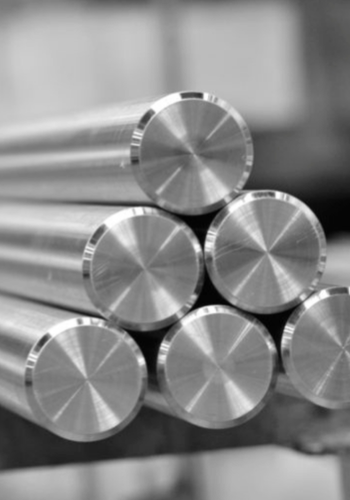
Titanium combines lightweight strength, corrosion resistance, and biocompatibility, making it a premium choice in microfluidic chip manufacturing for sensitive or long-term fluid applications. DEK uses specialized machining to create titanium channels that remain stable under pressure and temperature extremes. Its resistance to saline and aggressive chemicals enables use in marine, biomedical, and industrial systems.
Titanium chips offer both durability and purity. Common parts include seawater analysis chips, high-purity reaction chips, and extreme-environment monitoring chips.
Leghe
Grade 5, Grade 2
Acrilico
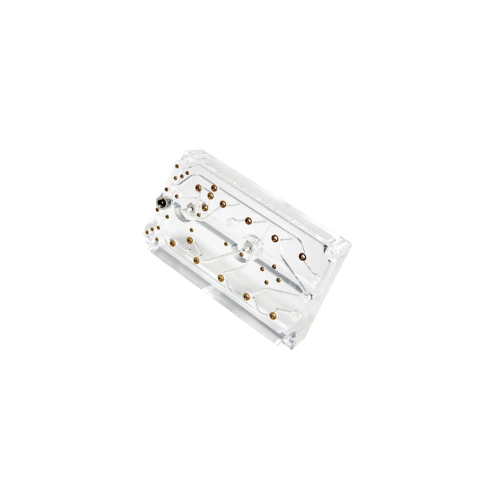
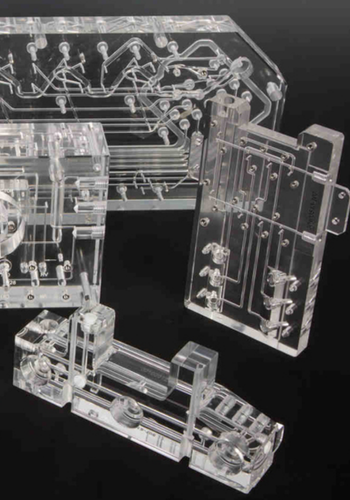
Acrylic, or PMMA, is a clear, strong plastic often chosen for microfluidic chips because of its excellent optical clarity and easy machining. It allows users to see fluid flow inside channels, making it ideal for visual analysis and testing.
At DEK, we use precision cutting, milling, and polishing to create smooth channels in acrylic chips. This ensures accurate fluid movement and prevents blockages. Acrylic chips are cost-effective, lightweight, and suitable for both prototypes and production. Common parts include flow analysis chips, optical testing chips, and educational demonstration chips.
PC
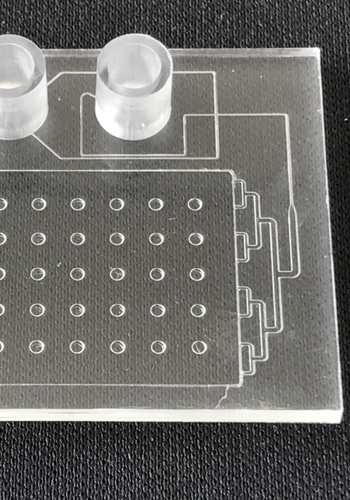
PC, or Polycarbonate, is a tough, transparent plastic that offers high impact resistance and stability, even under stress. In microfluidic chip manufacturing, it is used when chips need to handle higher pressures without cracking.
DEK uses advanced machining and molding to create precise microchannels in polycarbonate, ensuring leak-free operation. Its clarity supports optical detection, and its strength allows for repeated use. PC chips from DEK are ideal for durability, safety, and clear observation. Common parts include pressure testing chips, rugged field-use chips, and optical detection chips.
PTFE
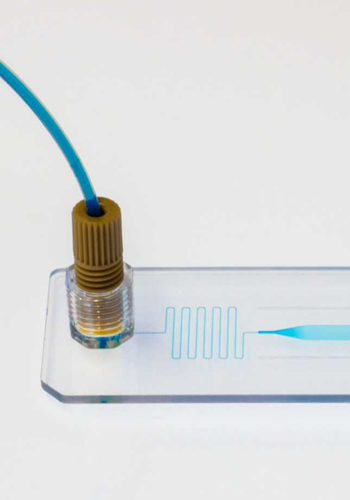
PTFE, often known as Teflon, is a high-performance plastic with exceptional chemical resistance and extremely low surface friction. It is the preferred choice for handling aggressive chemicals, high-purity fluids, or preventing fluid adhesion.
DEK uses advanced machining techniques to produce precise PTFE channels while preserving its smooth, non-reactive surface. This ensures fluids move freely without contamination or buildup, even during extended use. PTFE also withstands extreme temperatures and harsh environments. Common parts include chemical reaction chips, biohazard handling chips, and precision dosing chips, each designed for reliable performance in challenging conditions.
Immediato e Citazioni precise

Non utilizziamo strumenti di quotazione automatizzati online, perché sono molto imprecisi. Le piattaforme di quotazione online si basano esclusivamente su calcoli basati su importi di taglio e coefficienti fissi, e non tengono conto delle reali sfumature di lavorazione, come la deformazione del materiale dopo il trattamento termico, gli stretti requisiti di tolleranza, la rettifica dopo il trattamento termico, ecc. Di conseguenza, i calcoli automatici dei prezzi possono portare a delle imprecisioni, aumentando i costi.
Ma da DEK potete stare tranquilli!
I nostri preventivi sono convenienti e accurati perché disponiamo di un team di ingegneri meccanici professionisti che esaminano meticolosamente ogni disegno. Questi ingegneri vantano oltre 10 anni di esperienza e possiedono una profonda competenza in materia di programmazione, funzionamento delle macchine, post-elaborazione, proprietà dei materiali e altro ancora. Vi assicuriamo preventivi accurati entro 6 ore.
I nostri vantaggi
Oltre 2300 ingegneri Amore Lavora con noi

Complex Microfluidic Designs
DEK specializes in creating chips with intricate channel networks, multi-layer structures, embedded sensing elements, and precise alignment features. Our advanced equipment allow us to fabricate designs that enable complex fluid routing, mixing, and detection.

Costo-efficacia
By optimizing production workflows, reducing material waste, and leveraging precision fabrication technologies, we provide competitive pricing that keeps projects on budget.

Standard di qualità certificati
DEK operates under ISO 9001:2015 and ISO 13485 certifications, ensuring strict adherence to international quality management systems. These standards guarantee that each microfluidic chip meets precise dimensional, functional, and material specifications.

End-to-End QA
We maintain a thorough quality control process across all manufacturing stages. Incoming materials undergo inspection (IQC), production steps are monitored (IPQC), and final products are checked before shipping (OQC).

Finiture personalizzate
We offer bonding for multi-layer assembly, sealing for leak prevention, specialized coatings for chemical resistance, and precision polishing for improved optical clarity. These treatments allow your chips to meet specific technical needs, extend their service life, and operate reliably.

Imballaggio professionale
Every chip is packed in clean, protective materials to prevent contamination or damage during transport. We use secure methods such as anti-static bags, foam inserts, and labeled compartments to ensure safe handling.


Il nostro Processo di ordinazione
Invia RFQ
Inviare RFQ con disegni 2D/3D e requisiti dettagliati tramite e-mail o modulo online.
Recensione e preventivo
Il nostro team di ingegneri esaminerà attentamente ogni disegno e fornirà un preventivo accurato entro 6 ore.
Confermare l'ordine
Confermate il preventivo, i dettagli e il programma di consegna, quindi firmate il contratto.
Produzione
Organizzare il processo di produzione, avviare la programmazione e la lavorazione.
Controllo qualità
Rigoroso controllo di qualità durante la produzione e l'ispezione finale.
Imballaggio e spedizione
Imballare i pezzi, applicare le etichette di identificazione e iniziare la spedizione.
Inviare RFQ 222
Recensione e preventivo
Confermare l'ordine
Produzione
QC
Consegna
FAQ
Microfluidic Chip Manufacturing Domande frequenti sull'acquisto
Ottenere un preventivo accurato Per i vostri prossimi progetti
Non importa se il vostro progetto è complicato o semplice, se è in metallo o in plastica, riceverete un preventivo accurato entro 6 ore.
Richiedete un preventivo oggi stessoConoscere Microfluidic Chip Manufacturing
What is Microfluidic Chip Manufacturing?
Microfluidic chip manufacturing is the process of creating miniature devices with tiny channels that control and move very small amounts of liquid. Using precision fabrication methods, these chips can be made from PDMS, glass, silicon, or thermoplastics. They are used in many industries for fluid analysis, testing, and processing, enabling high accuracy in compact formats. This technology supports innovation in medical diagnostics, life sciences, chemical testing, and industrial applications where controlled liquid handling is essential.
These chips can also be tailored with special features like integrated sensors, surface treatments, and bonding techniques to match specific performance needs. The manufacturing process allows for quick prototyping, scalable production, and seamless integration into automated systems.
What are the Advantages of Microfluidic Chip Manufacturing?
Microfluidic chip manufacturing offers high precision and repeatability for fluid control on a micro scale. It supports complex layouts and custom features, with material choices suited for chemical resistance, optical clarity, or biocompatibility.
Some advantages include:
- Extremely low sample and reagent usage
- Rapid analysis and processing times
- Compatibility with sensors and detection systems
- Flexible material and finishing options
- Strong reproducibility between batches
- Ability to integrate multiple functions into one chip
When Do You Need Microfluidic Chip Manufacturing?
You need microfluidic chip manufacturing when your project requires accurate control of very small liquid volumes. This is essential for point-of-care diagnostics, laboratory testing, chemical analysis, and environmental monitoring, where precise fluid handling directly impacts the reliability of results. The technology is especially useful when space is limited or when processes need to be miniaturized for portability or faster operation.
It is the ideal solution for achieving fast results with minimal sample use, integrating multiple tests into one device, and creating portable systems for on-site testing. Microfluidic chips also excel in processes that involve controlled mixing, separation, or reactions, making them a practical choice for both experimental research and large-scale commercial applications.