
I have had the privilege of speaking with manufacturing owners, engineers, and production managers across the country in the last few years. The common thing I am starting to hear is that everything seems heavier these days, including the workload, as well as the complexity behind the workload.
At the same time, I am starting to hear the term AI more and more, not as a catchphrase, but as a solution. The one thing I am hearing the most is, “Can AI really help us?” Well, from what I have seen, the answer is yes, just not in the manner in which you might think.
Why Manufacturing Has Reached a Breaking Point
Most factories today are operating under pressure from multiple directions.
Labor is the first challenge. Skilled machinists and experienced engineers are harder to find, and even harder to retain. Many teams are running leaner than they should.
At the same time, the work itself has become more demanding. Parts are more complex. Materials are less forgiving. Documentation requirements are stricter. A simple job ten years ago now involves layers of verification.
Then there’s speed. Customers expect faster turnaround, but internal resources haven’t grown at the same pace. So teams stretch. And eventually, something gives; usually time, quality, or people.
What AI Can Solve Immediately

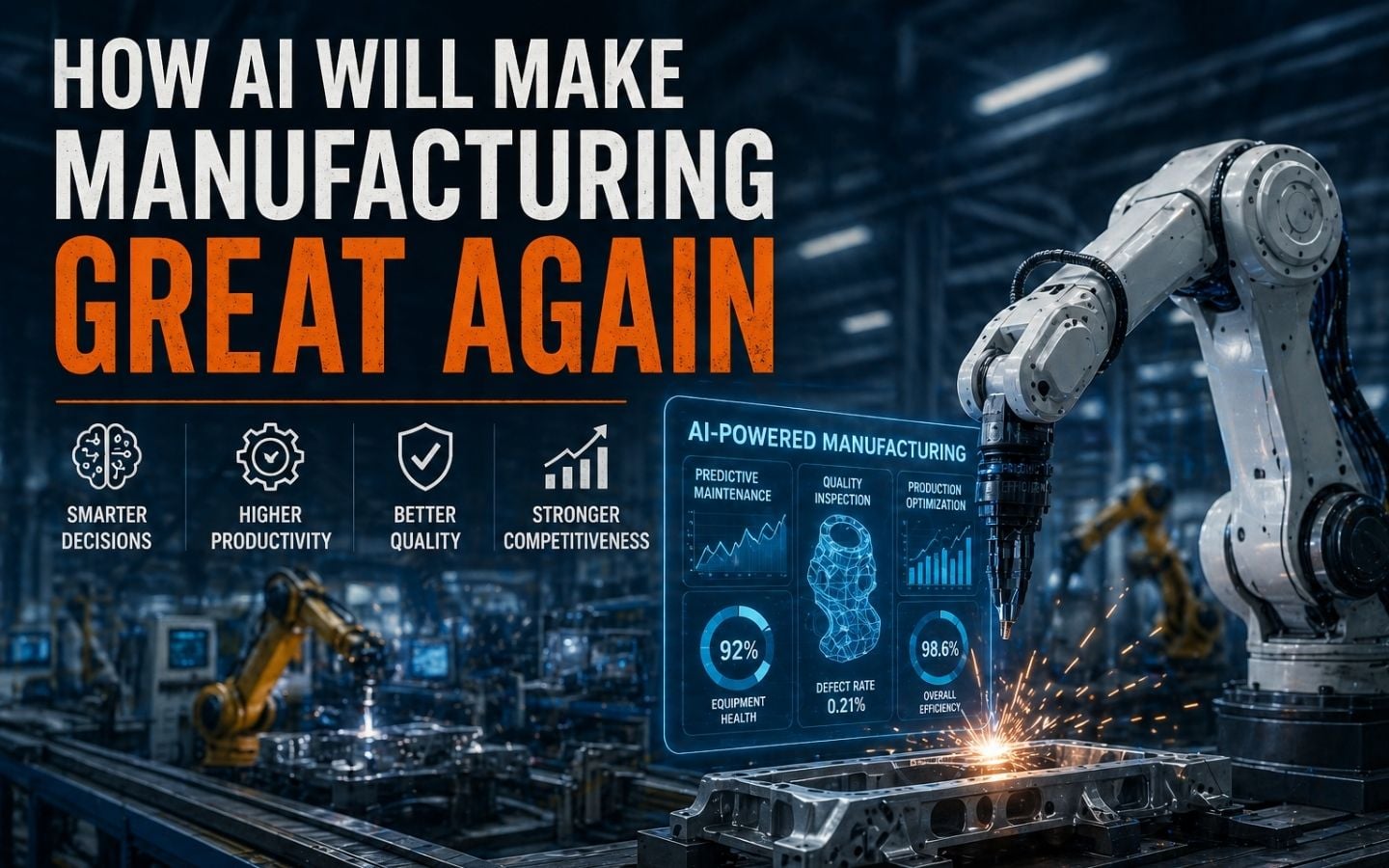
I see AI making a real-time impact, not on machines but on workflows.
A lot of engineers today spend a lot of time on repetitive tasks, such as reviewing drawings, preparing CAM files, and generating quality control reports. And this is where AI can enter to handle a large portion of the team’s workload, since it does not require deep thinking every time.
It also assists in minimizing rework. When process planning relies more on data, mistakes are detected sooner. Not eliminated, but meaningfully reduced.
The problem is not always with the people but with the system that surrounds them. As W. Edwards Deming said, “A bad system will beat a good person every time.” The beauty of using AI is that it is a chance to change the system, not just to work harder within it.
Another consideration is scheduling. Many industries still rely on experience and intuition to plan production. AI can identify less-obvious bottlenecks, particularly when multiple jobs compete for the same resources.
Above all, it provides visibility. We don't need more reports, just better ones. Teams can stay updated without adding more administrative effort.
Where AI Will Transform the Factory Floor
Quality control will become more predictive. AI-powered quality control will begin to foresee faults rather than simply respond to them.
Schedules will become more flexible. Scheduling will no longer be a fixed weekly schedule; rather, it will begin to alter in real time based on machine status, delays, and other factors.
Inspection will become more tightly related to machining. Feedback loops between inspection and machining will begin to shorten, making them faster and more precise.
Throughout the manufacturing process, team collaboration will improve. When teams use the same data environment, communication becomes clearer, simpler, and more direct. Less back and forth, and fewer assumptions.
What AI Cannot Replace
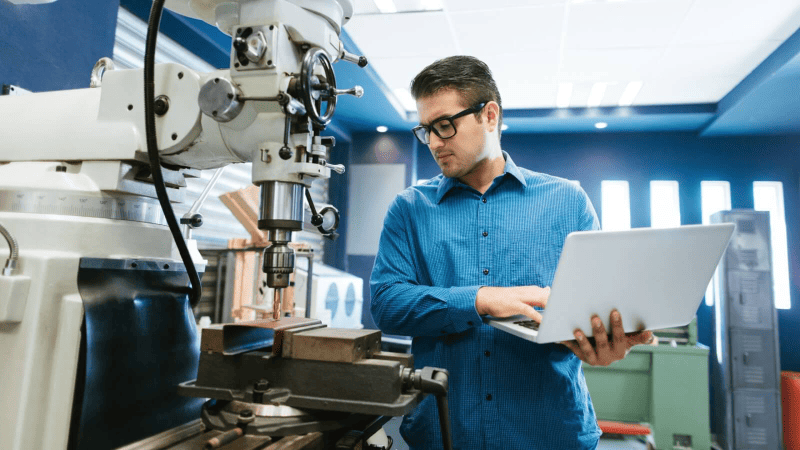
Many start to overestimate AI’s capabilities, but we cannot fully rely on it, especially in manufacturing.
Engineering judgment remains human. Knowing how to make a part, compare materials, and understand trade-offs requires expertise.
It is still the machinists or the engineer who is responsible when unforeseen events happen.
Customer relationships also don’t change. Building trust requires regular communication and accountability, which AI can assist with but cannot replace.
And mostly, leadership decisions, which are rarely straightforward. The strategies involve managing uncertainty. There is no algorithm that can fully guide you through that.
Why Small and Mid-Sized Factories Benefit the Most
Small and medium-sized factories are well-positioned to benefit from AI technology. Unlike larger businesses, small facilities do not require vast teams to function properly, so any incremental improvement in efficiency is crucial.
A smaller workforce enables a small or medium-sized institution to make choices faster. With fewer levels of management to negotiate with and no need to communicate with a large staff across numerous layers, these facilities may quickly experiment with new technology and make necessary adjustments.
Flexibility is also one of the most important benefits that small and medium-sized manufacturers can obtain. They can take a more progressive approach to modernization, avoiding the costly purchase of capital equipment and, in many cases, simply improving the use of existing data.
How Leaders Should Prepare Their Teams
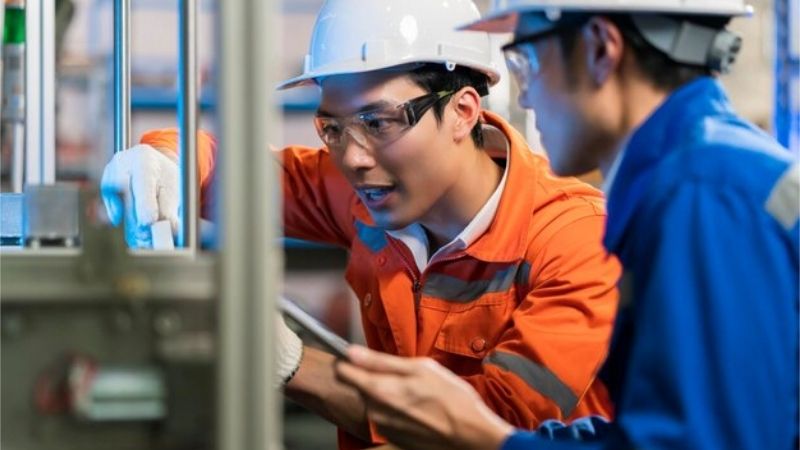
Tecnologia is just one piece of the puzzle. The bigger challenge lies in how teams actually adapt to it.
The first step is training. People don’t have to become AI experts overnight, but they do need to know how to use these tools in a smart, practical way.
Workflows need to evolve, too. If AI is just treated as a simple add-on, it won’t really bring much value. Instead, it has to be woven into everyday operations.
At the same time, leaders should rethink their priorities. Spending less time on repetitive tasks and more time tackling the problems that actually help the business grow is key.
Finally, culture is important. Data transparency leads to better accountability. This may cause discomfort, but it is extremely necessary for development.
The industry is still figuring out how to apply AI effectively, and I often find myself thinking about something Roy Amara once said: “We tend to overestimate the effect of a technology in the short run and underestimate the effect in the long run.”
That feels particularly appropriate right now. AI is not a fast answer, but it could be one of the few instruments that can gradually relieve the pressure teams are feeling today.
Conclusione
My view of AI is that it will not substitute manufacturing processes, but instead will provide a much-needed correction.
Over many years, we have continued to add to the complexity; however, we have failed to provide sufficient support for the workers tasked with handling it. AI offers us the opportunity to correct this situation.
AI is not going to solve every issue in a short amount of time, but AI will allow good teams to have the necessary room to concentrate on what they do best.
