
Elongation at Break: Definition and How It Works
Elongation at break generally refers to the stretching of a material before actual fracture. This property aids engineers and manufacturers in assessing flexibility, ductility, and stress performance. Hence, the elongation at break is an essential mechanical property of materials to evaluate their behaviour under tensile load.
The elongations at break tell you how suitable a material would be for aerospace applications and components such as automotive and medical devices, which require an accurate balancing of rigidity and flexibility for structural safety.
What is Elongation at Break?
Elongation at break is basically the strain, or how much longer in percentage a material grows, right before a creeping break. It directly tells about ductility-shows how much stretching a material can withstand before it fractures.
In simple words, higher elongation means greater stress and strain absorption before a crack. This property is important for components that are subjected to dynamic loads. Fluctuating loads, such as frames of vehicles, seals, joints built up using the 3D-printing method, and mechanical connectors.
Formula of Elongation at Break

The elongation at break formula is:
Elongation at Break (%) = (ΔL / L₀) × 100
Where:
- ΔL = change in length (final length − original length)
- L₀ = original length of the material sample
You can use this stretching at break calculation to determine material ductility in laboratory testing or design analysis.
Importance of Elongation at Break
Allungamento a rottura represents the behavior of materials when stressed. Elongation under heavy load is identical to flexibility, while lower elongation is breakable. Thus, high elongation polymers are capable of absorbing shocks and preventing sudden breakage. Metals with lower elongation have rigidity and strength. Composites are tested for the two balances of strength and stretchability.
Thus, the break elongation percentage is also required to determine the material, whether for construction or mechanical use.
Example Values for Different 3D-Printed Materials
Different materials for 3D printing possess very different elongation at break. Presenting average engineering values below:
| Materiale | Elongation at Break (%) | Remarks |
| PLA | 5–10% | Brittle and rigid |
| ABS | 10–30% | Moderate flexibility |
| Nylon | 100–300% | High ductility |
| TPU | 300–600% | Excellent flexibility |
| PETG | 15–25% | Balanced performance |
PLA elongation at break is less than that of TPU, which is preferred for flexible parts.
Materials You Can Test for Elongation at Break
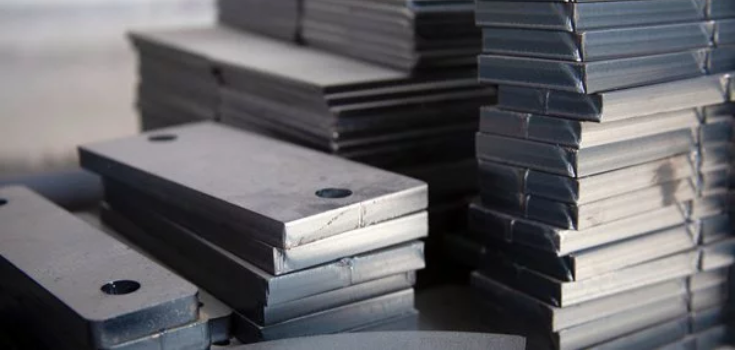
Acciaio
Steel elongation at break generally ranges from 10 to 25%, depending on the grade and treatment; this property ensures flexibility and toughness, allowing steel components to withstand better cracking under stress.
It becomes crucial in construction, automotive, and pipeline applications where incessant strain is imparted.
Textiles
In textiles, elongation at break is an indicator of the stretch a fabric possesses before tearing. It affects comfort, fit, and durability. At the same time, natural fibers such as cotton tend to have lower elongation than synthetic fibers.
Nylon and spandex have higher elongation characteristics that make them suitable for sportswear, upholstery, and technical fabrics.
Metals and Metal Alloys
Metals, including alluminio, copper, and stainless steel, are tested for elongation to assess their ductility. The higher the elongation, the better the formability and impact resistance.
This allows manufacturers to choose the appropriate alloy for the shape, bend, or roll processes in aerospace, automotive, and structural applications..
Polimeri

Polymers such as HDPE, PLA, and nylon show a large variety of elongation. While HDPE is mostly flexible and ductile, PLA is much more rigid.
In this sense, polymer elongation helps decide the appropriate plastics for packaging, electrical insulation, and 3D printing, where a specific limit for deformation is required.
Rubbers
Rubbers and elastomers show very high elongation, usually exceeding 500%. This flexibility allows them the unique ability to stretch and recover over and over again without breaking.
This makes rubber ideal for applications that require elasticity, resilience, and long-lasting performance, such as seals, gaskets, tires, and medical tubing.
Factors Affecting Elongation at Break
Temperatura: Elevated temperatures increase the amount of elongation. The reason is the softening of the material.
Velocity During Testing: High velocity strains can restrict the movements of molecules and so reduce elongation.
Composite Fillers: The addition of glass or carbon Fibers makes the composites stiffer but stronger, reducing flexibility.
Fiber Orientation: In Fiber-reinforced materials, the orientation of Fibers causes great variation in elongation characteristics.
Understanding these aspects helps you in optimizing the elongation at break test so that you can get accurate and consistent results.
Common Testing Standards

Some of the most important standards of the elongation test at break include:
ASTM D638: for the plastics and polymers
ASTM E8 / E8M: for the metallic materials
ISO 527: for the general tensile testing of plastics
So, by conforming to these, the test results will be consistent across laboratories.
Instrument Used to Determine Elongation at Break
The Universal Testing Machine (UTM) is the principal device for measuring elongation at break. Tensile loading of a specimen is controlled while identifying the precise point of failure. Extensometers or laser-based sensors detect very small changes in the length of the specimen.
Highly advanced digital systems record stress-strain curves, which help in the accurate evaluation of both tensile strength and elongation.
The Relation Between Tensile Strength and Elongation at Break

The tensile strength determines how much stress a material can take before it fractures. Elongation at break determines how much it can stretch before reaching that breaking point.
In simple words, materials with extreme tensile strength have lower elongation. On the other hand, materials with less tensile strength have high elongation. For example, hardened steel has a high tensile strength but low elongation, while rubber shows the contrary.
Conclusione
Elongation at break shows how materials react to stress, presents crucial data on ductility, flexibility, and safety. It ensures that selected materials perform reliably in their focused environments, from soft polymers to strong alloys.
DEK specializes in advanced material testing and CNC machining services. Our team can now help you undertake high-precision measurements for elongation at break. Mechanical properties to ensure that your products meet precise performance requirements for quality and durability.
Domande frequenti
Strain at break vs elongation at break, what is the difference?
Strain at break indicates the full extent of deformation along a single length, while elongation at break presents that deformation as a percentage of the original size.
Elongation at break vs tensile strength, what are the differences?
Tensile strength measures the stress prior to fracture; elongation shows how much the material will stretch before breaking.
Which materials show high elongation?
Rubbers, thermoplastic elastomers, and soft polymers such as TPU and silicone show high elongation. Such elongation properties are attributed to flexible molecular structures.
