Gear Shaving: Process and Principles
Gear shaving is a cost-effective and efficient finishing process crucial in eliminating defects and errors in the tooth profile. The method ensures gear tooth accuracy, smooth surface quality, and enhances overall gear performance.
This post will help you understand all you need to know about its process, principles, and lots more.
What is Gear Shaving?
This is a finishing process used to remove a small layer of material from a gear tooth by utilizing a serrated cutter with a cross-axis angle.
It is usually carried out after gear hobbing but before heat treatment to eliminate tooth profile error, ensure accuracy, and smooth surface quality.
How the Gear Shaving Process Works
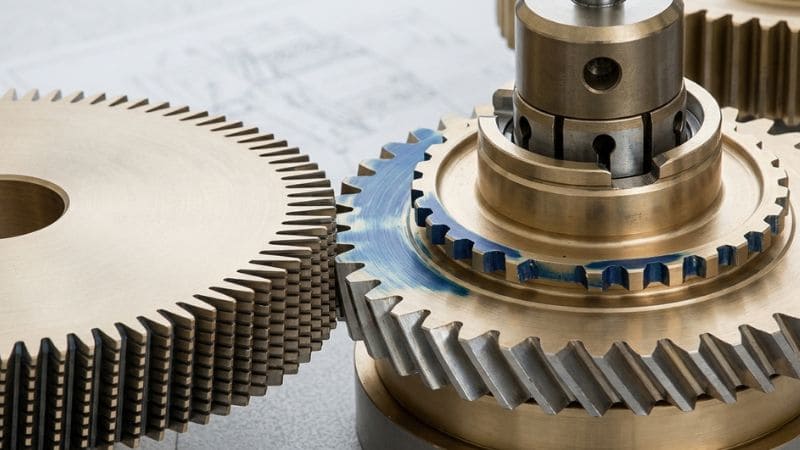
Material Removal Mechanics
The gear shaving process starts with the cutter and the gear moving in a rotational direction. Usually, the cutter is designed with a sharp edge that helps remove materials from the gear as it slides through it.
Fine Chip Generation
Compared to rough machining, the gear shaving operation only generates small and thin chips. As such, friction can be eliminated during the process. The gear teeth also maintain durability and a smooth surface.
Final Dimension Calibration
At this stage, the gear tooth shaving machine draws the tool nearer to the gear. With that, only a little distance is kept till the specified gear thickness, profile, and dimensions are obtained.
Elastic Deformation Management
Because of the force and pressure applied during machining, gears are prone to elastic deformation, which affects their accuracy.
However, with the use of CNC gear shaving machine software, these variables are controlled so that the gear profile meets specifications once the pressure is released.
Feed Rate Optimization
The feed rate indicates how fast or slow the cutter slides through the gear. As such, it must be optimized to obtain a smooth finish. The slower the feed rate, the better the surface quality.
Types of Gear Shaving Process
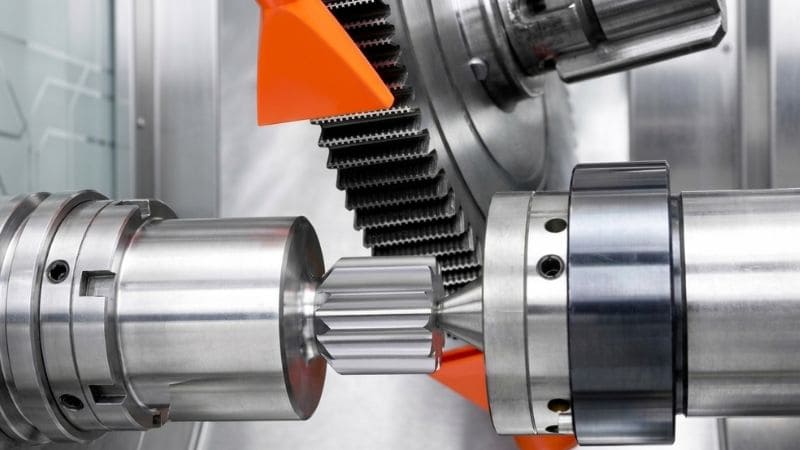
Axial Shaving Method
In this technique, the gear cutter moves parallel to the gear axis to remove chips. Axial shaving is a traditional method, and it’s commonly used for helical gears and spurs. Beyond that, it is efficient for large-volume production.
Diagonal
Here, the cutter slides through an angle across the gear tooth to form a diagonal path. With this, wear is evenly spread across the gear shaving tool, which helps prevent damage. Moreover, a better surface finish and precision are achieved.
Underpass Shaving
This method allows the tool to pass under the gear axis to enable better contact between them. Although the process is quick, the cutter surface must be relatively wider than the gear.
Plunge Shaving Method
The plunge method works by feeding the cutter into the workpiece without any axial movement.
It is the fastest method and valuable in high-volume automotive gear production. However, accurate control is needed to prevent tool wear and ensure precise material removal.
Principles Behind Gear Shaving
The gear shaving principle follows a cross-axis path between the tool and the gear. Usually, the cutter is optimized at an angle from 5 degrees to 15 degrees while the machine begins a sliding movement.
As the cutting tool and the gear make contact and slide, they apply pressure, which causes the tool to remove a small layer of material from the workpiece.
This helps eliminate errors in the tooth profile, helix angle, etc., ensuring it comes out with a smooth surface and is accurate. Without setting this particular angle, the gears will only rotate without any cutting.
Gear Shaving Tools and Cutter Design
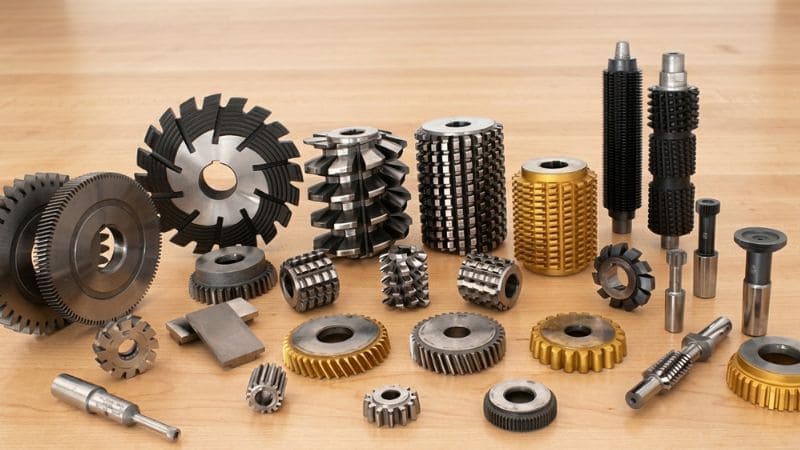
Serrated Tooth Geometry
The gear shaving tool is designed with serrated teeth, which serve as its cutting edge. This helps the tool enhance cutting performance, eliminate wear, and remove fine chips from the gear.
High-Speed Steel Grades
Many gear cutters are produced with tough high-speed steel, including M2 and M35, which helps them maintain resistance to forces, wear, and pressure across long machining cycles.
Specialized Coating Options
To improve tool life, prevent friction, coatings like Titanium nitride and Titanium aluminum nitride are applied on gear cutting tools.
Gear Hobbing and Shaving Integration
The two processes are utilized together in the machining process to achieve high-quality gears.
Pre-Shaving Hobbing Needs
Usually, gear hobbing is carried out on the component before shaving so that the gear profile is formed first. After that, shaving is done to achieve the required tolerance level and surface finish.
Managing Finishing Allowances
After the hobbing process, a acabado allowance of about 0.02mm to 0.06mm must be left on the tooth. This is what shaving works on, as it eliminates unnecessary marks and errors so as to get the specified dimensions.
Tooth Profile Preparation
This is done after gear hobbing but before shaving. Tooth profile preparation helps remove major defects and errors, correct misalignment, and ensure an efficient gear shaving process.
So the entire manufacturing process follows from blanking, hobbing, tooth preparation, shaving, and heat treatment.
Advantages and Limitations of Gear Shaving
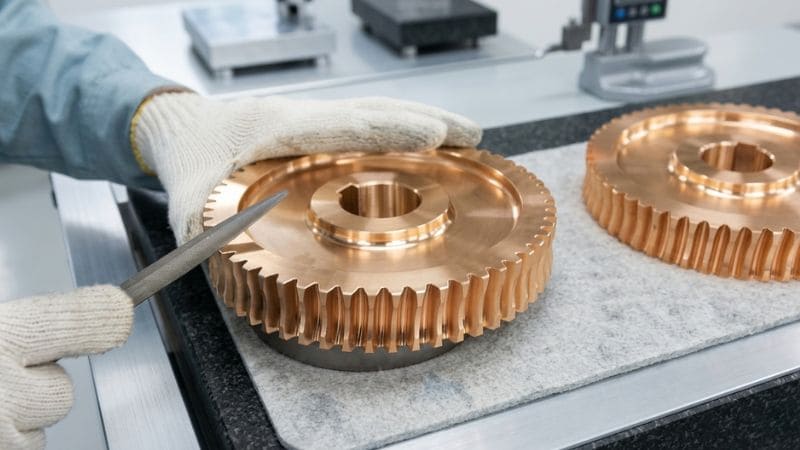
Ventajas
Reduced Cycle Times
Compared to grinding, gear shaving is relatively fast, enabling manufacturers to produce large batch gear volumes in less time.
Low Tooling Costs
Although the cutters used might be expensive, they can be sharpened and maintained across many production cycles. This helps reduce the cost per unit piece of each component.
Less Vibration and Noise
The method works on the tooth profile to generate a perfect finish. As such, it generates minimal noise and vibration compared to roughing techniques
Profile Correction Flexibility
It also allows manufacturers to adjust small errors made in the tooth profile without affecting precisión.
Limitations
Material Hardness Constraints
It is not a suitable process for very hard materials. As such, it must be done before heat treatment when the alloy is soft.
Limited Material Removal
Though it also removes material, it’s not sufficient for large material removal. As such, it cannot correct major machining defects from the hobbing process.
Risk of Tool Damage
When the pre-shaved engranajes have burrs or hard areas, or there are a lot of machining forces, the tool is prone to damage.
Applications of Gear Shaving in Manufacturing
- Automotive Transmission Gears
- Industrial Gearbox Components
- Precision Home Appliance Gearing
- Gears for High-Speed Planetary Sets
- Aerospace Auxiliary Gear Drives
- Gears for Agricultural Equipment, like tractors and harvesters
Conclusión
Gear shaving remains a valuable technique for high-volume gear production as it offers cost-effectiveness, speed, and efficiency. Beyond that, it's a perfect method when precision and surface quality matter.
Choosing the right gear manufacturing partner is vital for a successful project. Whether you require gear shaving, shaping, or hobbing or other related processes, DEK is here to serve you. We offer only quality and durable components across the world, and our processes are completely documented. Póngase en contacto con nosotros ahora.