
Custom CNC Racing Parts: Materials, Tolerances, and Finishes
Custom CNC racing parts are made to meet design limitations that cannot be fulfilled by standard components. It is often encountered when there are restrictions in weight, packaging, or tighter control is needed over surface condition and geometry on repeated mechanical loads.
In this guide, we will focus on the practical considerations in terms of material selection, tolerances, and finishing processes, particularly on how materials handle mechanical stress sustained in racing environments.
Why Racing Cars Must Use CNC Parts
To ensure consistent performance under vibration and high stress, racing vehicles require parts with extremely high tolerances. CNC machining consistently achieves ±0.005 mm accuracy on critical components like drivetrain interfaces, suspension links, and engine mounts. The process also allows the use of advanced materials like high-strength steels, aluminum alloys, and titanium without compromising mechanical properties.
CNC Machining Capabilities Used for Custom Racing Parts
Fresado CNC
The use of CNC milling to remove material from a block allows precise machining and shaping of contoured and flat spaces, pockets, and slots using cutting tools. These complex geometries that are often important for structural brackets, engine mounts, and suspension components can be handled by multi-axis mills.
Torneado CNC
To produce cylindrical shapes such as wheel hubs, shafts, and bushings, Torneado CNC rotates the workpiece against a stationary cutting tool. Through this, we achieve tight and consistent diameters that are needed for rotating assemblies and drivetrain components that are expected to be under loads and high speeds.
Mecanizado multieje
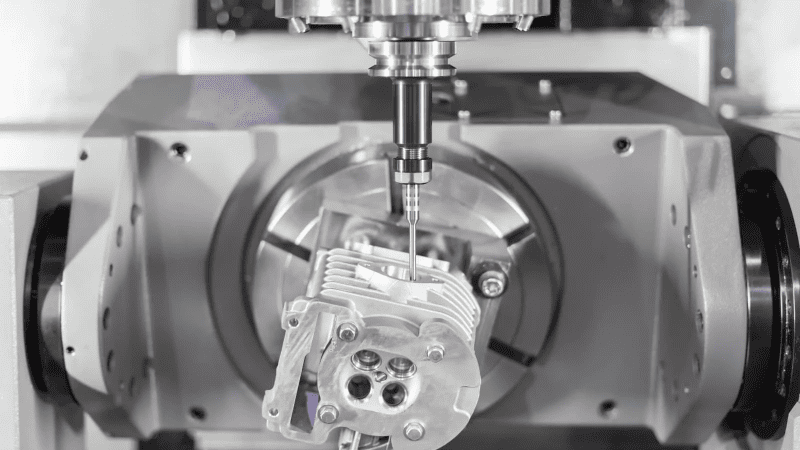
A 3-5 axis system is what we use to produce complex geometries in a single setup. This machining method is making simultaneous movements of the workpiece or tool along three or more axes. This capability reduces errors from multiple repositionings and is important to produce aerodynamic components, suspension links, and intake manifolds.
EDM & Wire Cutting
EDM and wire cutting use controlled electrical sparks to remove material from conductive metals to create precise, hard-to-reach features, slots, and internal corners in hardened alloys and tool steels that are difficult or impossible to produce using traditional machining.
Common Materials Used For CNC Racing Parts
Aleaciones de aluminio
For lightweight and structural components, we commonly use aluminum 6061 and 7075. The material properties of these alloys make them suitable for chassis components, engine brackets, and suspension links.
Stainless Steels
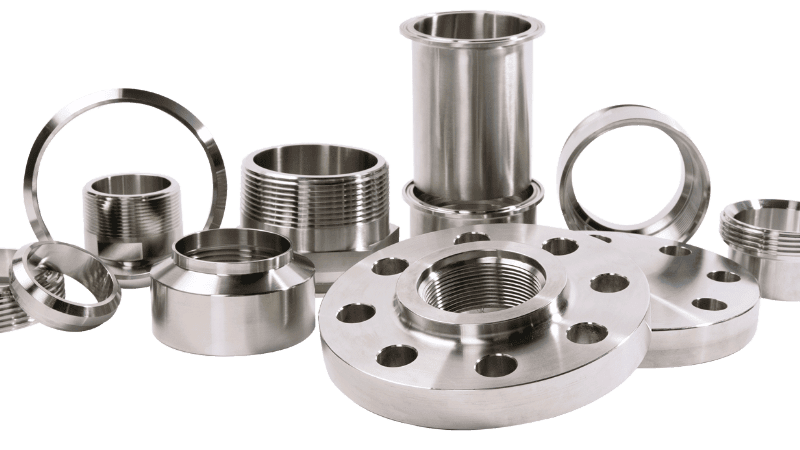
Parts requiring corrosion protection, strength, and resistance to wear use stainless steel grades such as 17.4 PH and 304. They are typically used in exhaust components, fasteners, and high-load brackets that require heat and vibration resistance and durability.
Steels
A material that offers exceptional toughness and fatigue resistance is needed for gears and drivetrain shafts. We use alloy steels like 4140 and 4340 for high-stress components that are expected to carry repeated loads without failure.
Latón
For components used for tight-tolerance assemblies, we use brass C360. This material is ideal for fittings, brushings, and small precision components that require stability, good machinability, and corrosion resistance.
Cobre
For components like electrical connectors and heat sinks that require thermal or electrical conductivity, we go to cobre as the reliable material choice. It has ductility and excellent thermal transfer, which results in smooth and durable machining.
Fibra de carbono
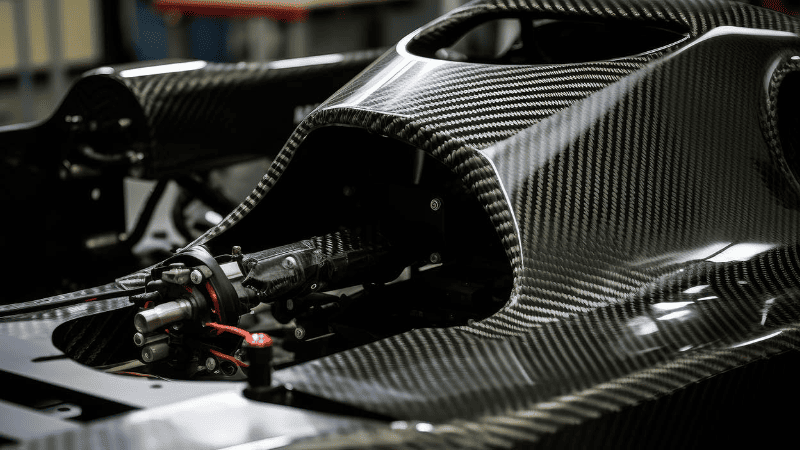
Weight reduction is critical in racing cars, which is why we use carbon fiber composites that are stiff but lightweight. This material is ideal for non-load-bearing supports, structural panels, and aerodynamic components.
Engineering Plastics
Lightweight components like guides, bushings, and housings need materials that combine machinability and dimensional stability. Materials such as UHMW and POM (Delrin) are used for these wear-resistant components. This material also supports parts that interface with metals without adding a significant amount of weight.
Critical Tolerances in Machining Racing Parts
Standard Precision
To ensure parts assemble consistently without having unwanted mechanical play, we keep a standard tolerance of ±0.01 mm. This range is for general components that require fit and alignment, but are not performance-critical.
Engine & Drivetrain Tolerance
Crankshafts, pistons, and camshafts are components that require tighter control. We apply a tolerance of ±0.005 mm or better. That is to ensure smooth rotation, minimal friction, chamber sealing, and proper combustion. Wear and vibration affect reliability and efficiency, which is why high-precision machining is required.
Thermal Expansion in Bearing & Press Fits
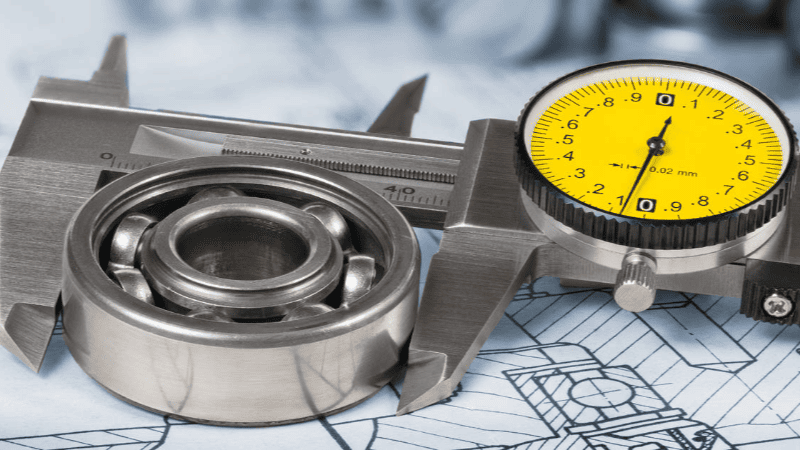
We prevent excessive looseness or seizure under racing conditions by calculating clearance fits based on interference and operating temperature. This is critical for components that are subjected to repeated thermal cycles, which is why we consider material expansion in high temperature areas like press-fit shafts and bearing bores.
Geometric Dimensioning (GD&T)
For us to accurately define concentricity, perpendicularity, flatness, and positional accuracy of critical features of components like suspension or drivetrain sub-systems, we use GD&T principles. It allows us to take control over orientation, form, and location beyond linear tolerances and ensure complex assemblies.
Specialized Surface Finishes
Type II vs. Type III Anodizing
We utilize Type II anodizing for color coding and light corrosion resistance. On the other hand, Type III is used for higher wear resistance. Type III also provides surface hardness for parts that are exposed to friction and contact, like engine parts and suspension mounts.
Ceramic Coatings (Cerakote)
We use ceramic coatings on brake components, engine covers, and fasteners that are exposed to friction and high-heat. It is applied to improve chemical protection and wear resistance.
DLC (Diamond-Like Carbon)
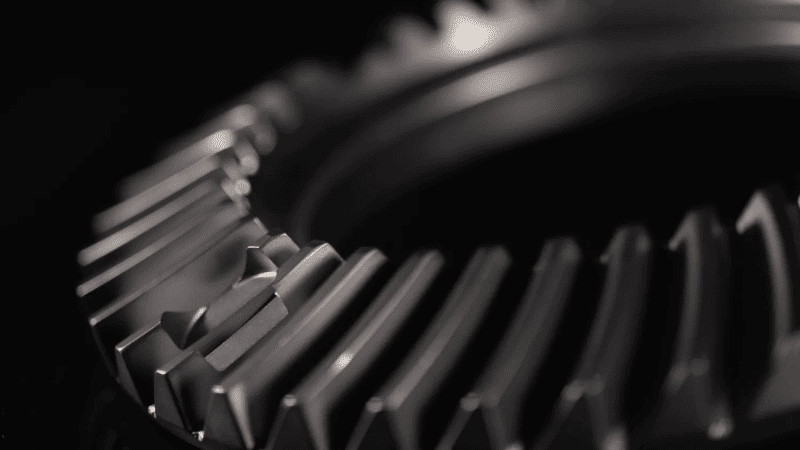
To improve parts’ mechanical efficiency and reduce wear, DLC coatings are used because they offer extreme hardness and low friction. We apply this to cam lobes, shafts, and sliding components.
Niquelado químico
Electroless nickel plating is used for fasteners, gears, and bushings that need sturdy surface protection. We use this to achieve uniform wear and corrosion resistance on aluminum or steel parts with complex geometries.
Powder Coating and Polishing
We use powder coating to give chassis and structural components corrosion protection and aesthetic finish. Polishing is used to support precise mating surfaces and is applied to stainless steel parts and aluminum to improve appearance and reduce friction.
Design Tips for Racing Parts
Espesor de pared
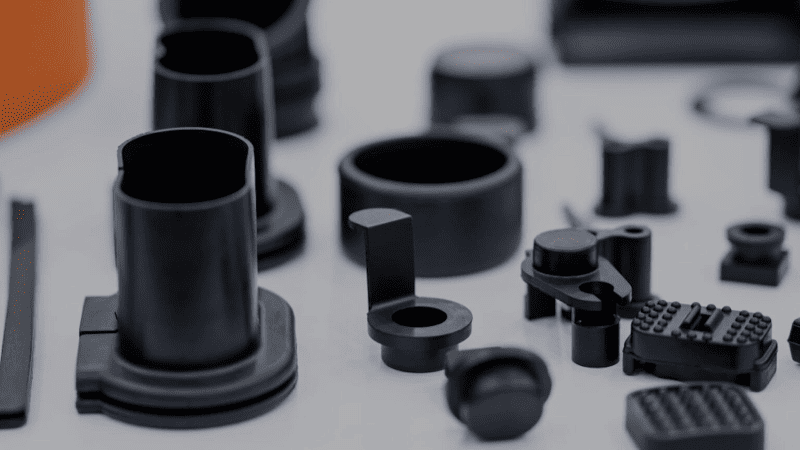
In terms of reducing stress concentrations to prevent warping during thermal cycling and machining, we ensure that we maintain uniform wall thickness where possible.
Fillets and Radii
Stress gets concentrated in sharp corners. Adding fillets and corner radii improves part strength and increases tool life.
Tolerancias
Particularly for press-fit and mating surfaces, we lean towards realistic tolerances to ensure consistency in assembly and performance.
Elección de materiales
We go for composites or alloys based on factors like wear requirements, load, and temperature. Material choice impacts strength, weight, and thermal behavior.
Machinability Consideration
Avoiding anything that can complicate production or compromise component quality like over intricate internal geometries and extremely thin walls help achieve design features that are applicable with CNC capabilities.
Applications of CNC Racing Parts
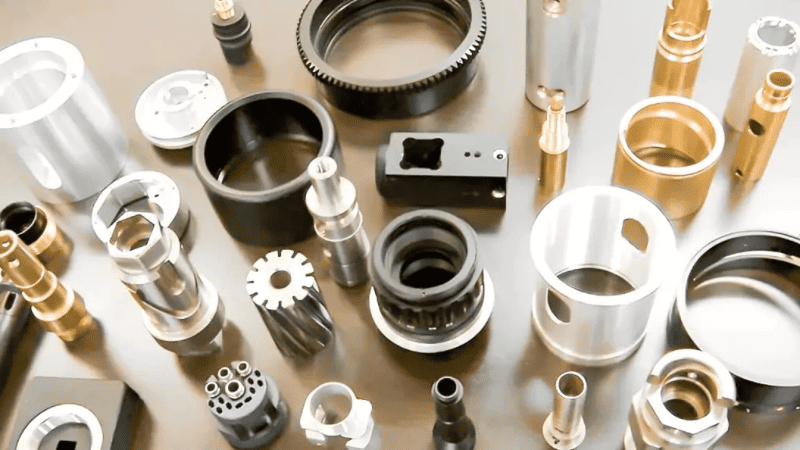
Custom Racing Builds
CNC racing parts accommodate non-standard suspension configurations and drivetrains for custom racing builds. They often require components that match specific and unique layouts rather than standard and predefined dimensions.
Dirt Bikes & Off-Road Racing
CNC-machined racing parts in dirt bikes and off-road racing are generally exposed to repeated loads, vibration, and impact. These parts are commonly used when alignment and strength must be maintained even in harsh conditions.
Superbike & Track-Day Upgrades
CNC parts refine fit, adjustability, and alignment for superbike and track-day applications. Parts like control hardware and mounting interferences rely on CNC for consistency in geometry and performance in high-speed operations.
Conclusión
CNC racing parts play an important role in producing components that are consistent in performance, precise fit, and structurally reliable, even in demanding racing applications. Understanding factors like machinability, methods, material selection, tolerances, and finishes influences a more realistic approach to achieve real-world usability.
Working with an experienced manufacturer is essential, as application-specific and precision requirements matter. Partner with DEK for custom CNC racing parts engineered to exact specifications to support your development and production needs.
