Carburizing vs Nitriding vs Carbonitriding: ¿Qué es mejor?
When repeated stress or wear is a factor in designing components, choosing the right treatment can make or break the lifespan and performance. Carburizing vs Nitriding vs Carbonitriding is more than just a comparison; it's about aligning each process to load requirements, production limitations, and the geometry of each part.
Familiarization with each method’s nature in real-world conditions helps experts plan the structure, optimize efficiency, and prevent wear. Considering these factors ahead of time while selecting the right process ensures performance, saves money, and avoids failures.
What is Case Hardening?
Components that are exposed to high stress often experience surface failure first before the core is affected. Case hardening addresses issues like this by increasing hardness while keeping a tough core. This is helpful for parts to resist fatigue and wear without getting prone to cracks and brittleness.
In this case, we consider the extent of the hardened layer. It should be considered that deeper cases increase the distortion that will complicate machining, while shallow cases are prone to wear quickly. By precisely balancing surface properties, we can tailor part performance to appropriate operating conditions and stresses.
¿Qué es la carburación?
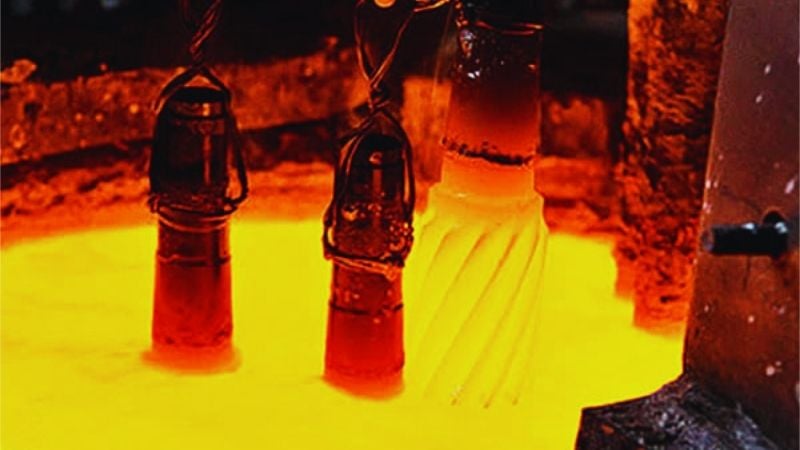
When we need a steel part that can keep up with tough real-world conditions, we turn to carburizing. This method helps us strengthen the external surface of steel components, making them wear-resistant but still durable to the core.
It works by heating steel parts in a carbon-rich environment to make the carbon atoms diffuse into the surface. That is how a harder layer is created. When the desired carbon depth has been diffused, the part is cooled rapidly. This transforms the surface into a hardened layer without sacrificing the strength of the core.
Advantages of Carburizing
- Provides a tough surface that is resistant to wear and can handle contact stress and friction.
- It extends the lifespan of parts.
- It allows us to balance the hardness and depth of the surface layer that matches production limitations and required performance.
¿Qué es la nitruración?
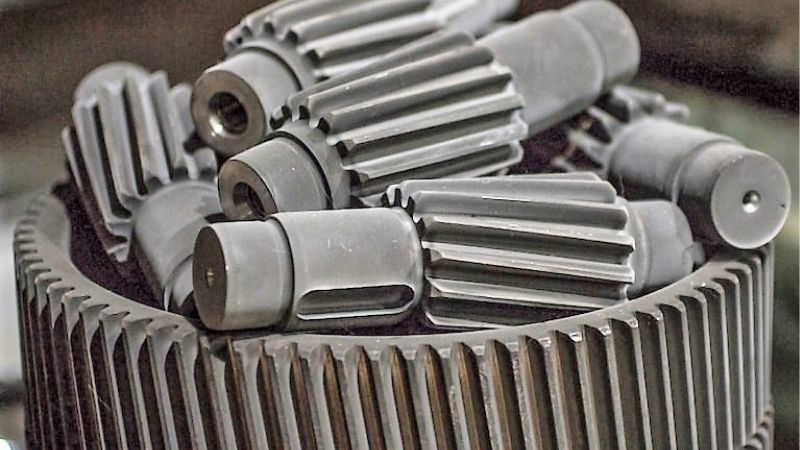
We apply nitruración when we need a component to achieve toughness without exposing it to extreme temperatures that could distort its geometry.
Nitrogen is introduced into the alloyed steel surface by using plasma, gas, or a salt bath. Alloy elements such as aluminio and chromium react with nitrate. And this is how they form hard nitrates in the outer layer. Because this process does not use high temperatures, the core remains ductile, so rapid cooling is usually not needed. This helps maintain dimensional accuracy and minimize distortion.
Advantages of Nitriding
- It creates a hardened surface that is improved to resist wear and fatigue even when exposed to cycles of stress.
- Good dimensional stability, no warping.
- We can control the case hardness and depth by balancing the duration of treatment and its environment.
- It improves certain alloy steels’ corrosion resistance to meet the requirements of high-precision and performance applications like automotive, aerospace, and tooling components.
¿Qué es la carbonitruración?
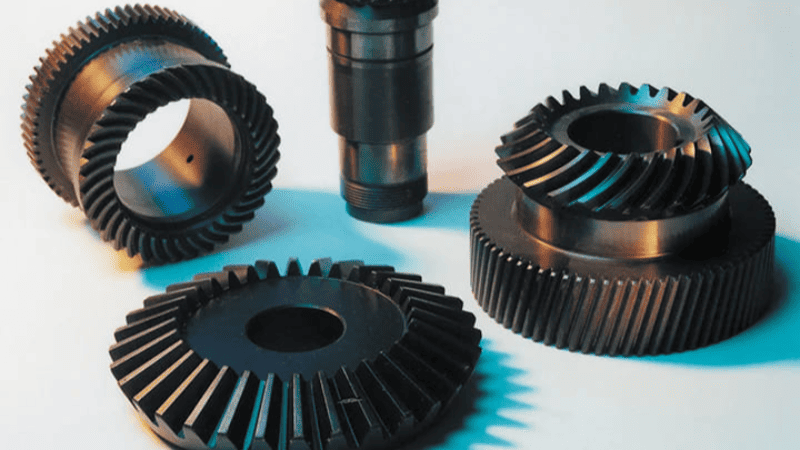
If we need a material to be hard and wear-resistant in a shorter cycle, we choose carbonitriding. This process uses a combination of carbon and nitrogen on the low-carbon steel surface. This is often done in a gas or salt bath environment.
The hardened outer layer is formed through simultaneous diffusion of carbon and nitrogen at a lower temperature than carburizing. Quenching transforms the surface into a hardened layer after treatment without losing the core’s ductility. Atmosphere composition, temperature, and time adjustments give us control over the surface and case depth depending on the part’s geometry.
Advantages of Carbonitriding
- Can be used for complex components
- It is hard enough to resist fatigue and wear while limiting distortion.
- We can customize the surface hardness and case depth to make it appropriate for the operational demands of each part.
- The lower temperature process reduces thermal stress and machining corrections.
- Suitable for large-scale production where precision, efficiency, and performance must be in perfect balance.
Comparison Table of Carburizing vs Nitriding vs Carbonitriding
| Criteria | Carburizingg | Nitruración | Carbonitruración |
| Elements | Carbon | Nitrogen | Carbon & Nitrogen |
| Profundidad | Deep | Shallow | Shallow to Moderate |
| Temperatura | Alta | Bajo | Moderado |
| Refrigeración | Rapid | Not Rapid | Rapid |
| Materiales | Low-carbon alloy steels | Nitride-forming alloy steels | Low-carbon steels |
| Aplicación | Gears, Shafts, Heavy-load parts | Valve, Pistons, Precision Tooling | Automotive parts, small gears, fasteners |
| Estabilidad dimensional | Moderate, Possible Distortion | Very High, Moderate | Low Distortion |
Carburizing vs Nitriding vs Carbonitriding, Which is Better for You?

In the carburizing vs nitriding vs carbonitriding comparison, there is no best answer if the crucial factors are not considered. Because the right process always depends on the geometry, operational demands, and production constraints.
When to Choose Carburizing?
We choose carburizing when a high-load bearing capacity needs deep case hardness. This is applicable for heavy-duty axles, shafts, and gears because surface wear in these components is the main concern. In this process, significant carbon diffusion can be achieved with higher temperatures. The results generally create a hard outer layer while maintaining a tough core with manageable distortion.
When to Choose Nitriding?
For components that cannot tolerate warping, such as precision tooling, hydraulic pistons, and valve parts, nitriding is the preferred choice. When components need surface precision and dimensional stability, they can benefit from this method’s nitrogen diffusion at low temperature. If we look at nitriding vs carburizing, this process gives shallower case depths, but the process preserves the core microstructure and avoids quenching.
When to Choose Carbonitriding?
When the surface requires minimal distortion and moderate hardness in high-volume small parts production, carbonitriding is what we rely on. Especially ideal for parts that require consistency in surface wear resistance without intense finishing. Parts like small gears, fasteners, and automotive components benefit from this process. The balance in durability and efficiency is achieved by using a combination of carbon and nitrogen at lower temperatures.
Conclusión
The right surface hardening method is not a random choice but a decision that is based on the component’s geometry, stress profile, and production needs. When used in the appropriate demand, carburizing,g nitriding, and carbonitriding offer various advantages that balance core toughness and surface durability.
DEK can guide you in choosing the right process for your precision high-performance components. We can help you ensure that our production processes are aligned with your parts specifications. To enhance efficiency, durability, and long-term performance, Contacto hoy.