
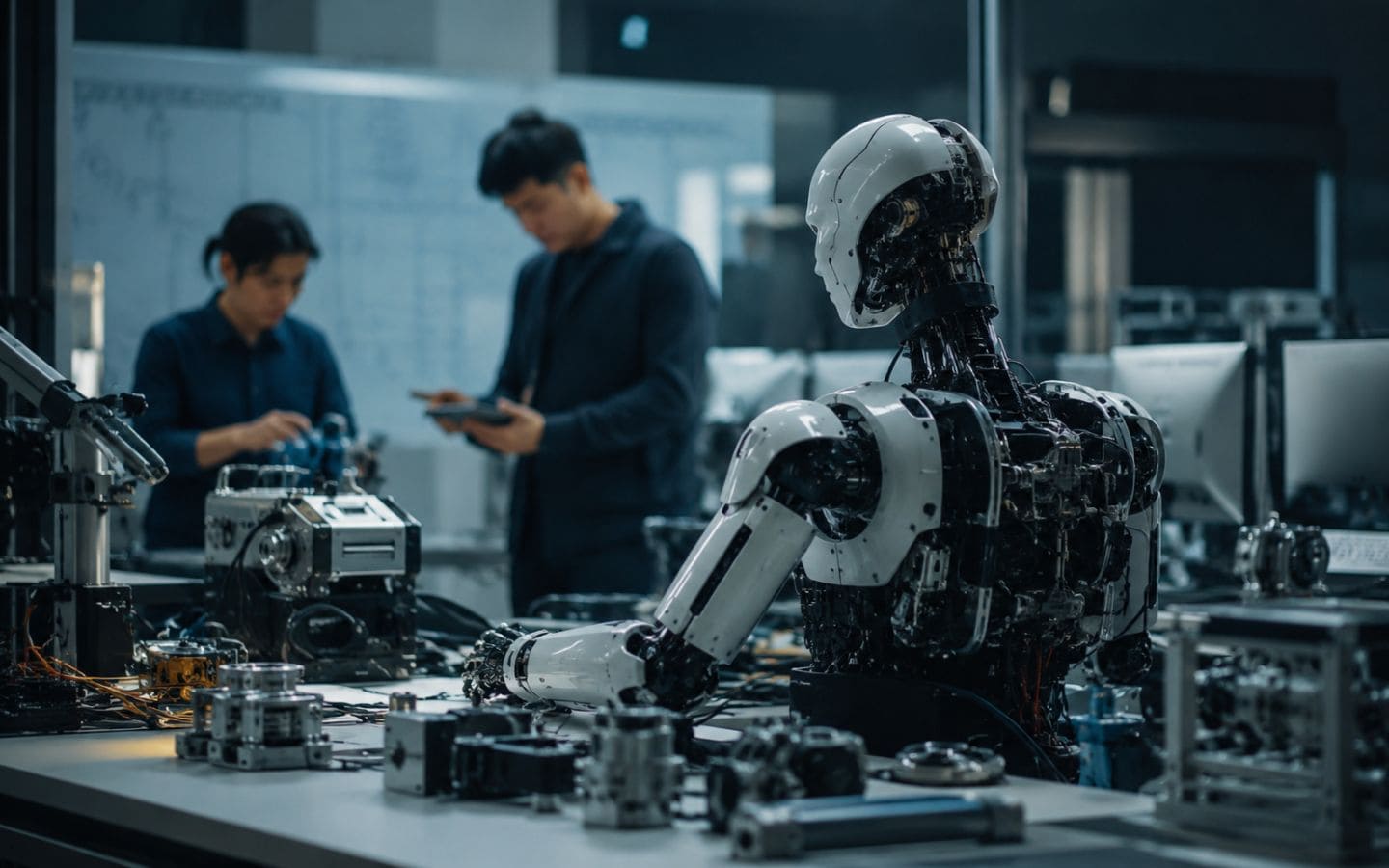
The AI robotics space is progressing rapidly.
Each week, there seem to be new advancements within the realms of machine learning, computer vision, and autonomous systems. Investors are optimistic, entrepreneurs are aggressive, and technology is advancing at an incredible rate.
However, when speaking with robotics groups, I find that a different problem is more often the case. The problem isn't always the AI; it's building and developing the actual product hardware that keeps up with the technology.
Such is the reality of robotics. Regardless of how smart the technology gets, its progression is dependent on hardware.
Why Hardware Is the Limiting Factor in AI Robotics
Something I've realized about AI robotics is that software and hardware develop at entirely different paces.
Software engineers can make changes much faster than mechanical systems can. Code changes can be coded, tested, and implemented in hours, while hardware changes need to be physically manufactured before they can even be implemented at all.
Here's when development starts to slow down for projects. A coding problem could easily be solved the same day it was identified. However, a mechanical issue could result in an entire prototype test run and analysis, adding a lot more time into the process.
This problem gets amplified when the timelines for hardware and software development diverge. It has happened more than once that while AI developers have been willing to proceed further, delays have occurred due to the lack of a proper bracket, housing, or actuator assembly to be tested. The rate of robotics development, after all, depends on how much dependable hardware one has.
As Henry Ford once wisely noted, "You can’t build a reputation on what you are going to do." This quote seems to carry extra weight in our day and age. While ambitious plans and great demos generate buzz, what is going to determine long-term success is being able to build, test, and deliver working systems on a regular basis.
The Bottlenecks Most Founders Overlook
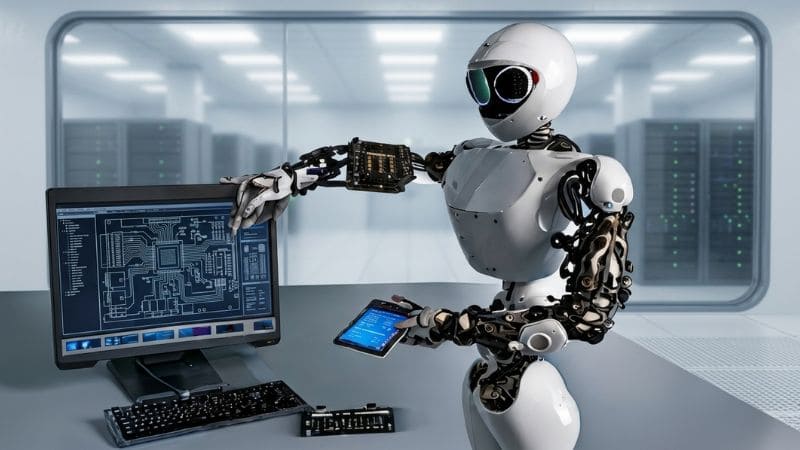
Most companies working on robots are started by very gifted programmers, scientists, and designers. The reason for their establishment is due to these people being experts.
However, some aspects of manufacturing cannot be realized right away at the beginning of the process.
This can be seen in lead times. People expect that once the design work is completed, the necessary parts will automatically get assembled. What they do not take into consideration is the fact that certain parts require machining and several revisions in order to function properly.
Tolerance management is another problem.
On a CAD drawing, everything is perfect. On the production floor, everything is produced within tolerances. And if there are interactions between many components inside an assembly, the tolerances add up. Even a minor discrepancy in dimensionality can influence the fit and function, accuracy of movements, vibration properties, or system performance altogether.
In fact, I remember one case when people spent weeks trying to find the reason for certain software behavior but eventually discovered that the culprit was mechanical.
Another underestimated problem is durability. The product might work fine under laboratory conditions but fail due to vibrations, temperature variations, or prolonged usage.
This is what the difference is between making something that works one time and making something that works a thousand times.
And this is exactly when manufacturing becomes as valuable as engineering.
What I’ve Observed Working With Robotics Teams
During my years of working with robotics teams, I have interacted with companies ranging from those that are in the early stages of designing their products to others that were preparing to undertake large-scale production.
A common trend has emerged.
While early-stage robotics teams have excellent knowledge about software-related tasks, most lack sufficient knowledge concerning machine work, tolerancing, fixture design, and production.
This is quite normal since designing and building robots involve diverse skill sets and only few startups master all of them.
What usually surprises many is how often small mechanical problems cause large developmental challenges.
There have been instances where engineers spent several weeks trying to debug problems in their software systems before finding out that the core of the problem was related to an aspect of tolerance of the components in the machine's physical assembly.
This leads to wasted engineering efforts.
One thing I have also noticed is that many new companies try to find help from manufacturers only after being under a lot of time pressure. At this stage, the goal is not only to get the hardware made but to recover time during development.
Getting manufacturing involved earlier makes these issues much easier to deal with.
Why Many Robotics Startups Struggle to Scale Production
Creating a good prototype is an accomplishment. Scaling up the production process brings about new obstacles.
At first, most efforts are centered on making the project work technically. When the demand increases, all attention goes to making sure that the product performs consistently.
The process is generally more challenging than expected.
Robotic devices tend to change very fast. New components are installed, assemblies are fine-tuned, and the performance criteria keep changing. Internal production facilities usually have a hard time keeping up with the pace of innovation.
Moreover, quality issues start to become increasingly relevant.
It is relatively easy to adjust a robot while creating a prototype. Adjusting hundreds of robotic devices proves to be much harder. Small differences in dimensions can affect how well the robotic device works.
Supplier risk adds to the list of issues.
For many new businesses, it is common practice for them to depend on one provider for machine processing or components when they are at an early stage of operation. Although this makes it easier to coordinate things for now, there is potential danger if production needs increase. This could lead to problems with timelines, customer satisfaction, and revenue.
When production needs to be increased, the limitations become apparent, as everything involved with putting it together is put under strain.
Scaling demands the development of stronger systems, not just more parts.
How Leading Robotics Teams Break Through the Bottleneck
The robotics firms that grow into successful businesses usually handle manufacturing quite differently.
Whereas they don't see manufacturing as a buying activity, but as a strategic skill.
Close cooperation with capable machine shops is frequently among their core strengths. The ability to accommodate changes and adjustments while maintaining high standards becomes crucial in a dynamic environment where the design continually develops.
Parallel prototyping is another feature common to many top teams.
Whereas most teams prototype in a serial fashion, trying one design idea after another, they test multiple paths to the same solution at once. Though this entails more management effort, it often proves quicker and lowers risks considerably.
DFM reviews are no less critical in this process.
The top teams take manufacturability into account much earlier in the design process and not after engineering decisions have been made, thus foreseeing any possible problems beforehand.
Other firms have taken to developing hybrid capacity strategies that involve blending internal resources and external manufacturing sources.
It brings to mind an insight by Taiichi Ohno, one of the key creators of the Toyota Production System, who noted, “Without standards, there can be no improvement.”
Innovation is crucial, but long-term sustainability comes only through reliable systems, established standards for quality, and discipline in manufacturing.
What AI Robotics Needs for the Next Growth Phase
For the industry's forthcoming growing era, it is critical not just to improve AI but also to have faster access to accurate components and manufacturing facilities that may aid in enabling rapid development cycles.
Furthermore, as technology advances, suppliers must be able to manage increasingly complex demands, such as thin-walled constructions, sophisticated geometries, precision-machined assembly, and tighter tolerances.
Better communication between design and production engineering is required to guarantee that engineering intent is promptly realized in products, resulting in speedier validation and innovation to market. Otherwise, hazards develop when the two parties do not communicate well.
Scalable quality systems will become more and more important.
As robotics firms scale from dozens to hundreds or even thousands of robots, it becomes crucial to have inspection methods, traceability solutions, and process controls in place.
The future of robotics lies not only in more intelligent machines, but in more robust manufacturing processes.
My Perspective
When it comes to talking about the future of robotics, the subject of AI always comes up. This is to be expected, as AI is evolving rapidly and is capturing a lot of attention.
Well, in my view, the next big thing in robotics is not the evolution of AIs to tell the robots how to think, but the construction of factories to let the robots come alive.
Innovation gets attention; manufacturing gets results. Ultimately, whether or not robotics can be advanced will depend on whether engineers can turn their ideas from theoretical concepts into practical implementations.
The major industry players of the next ten years may not be those that build the most amazing robot. They will be the ones that can produce such a creation in volume. The winners of the next generation of robotics will not be decided by engineers in models; they will be decided in factories.
And the companies that can do both are going to redefine the industry.
