
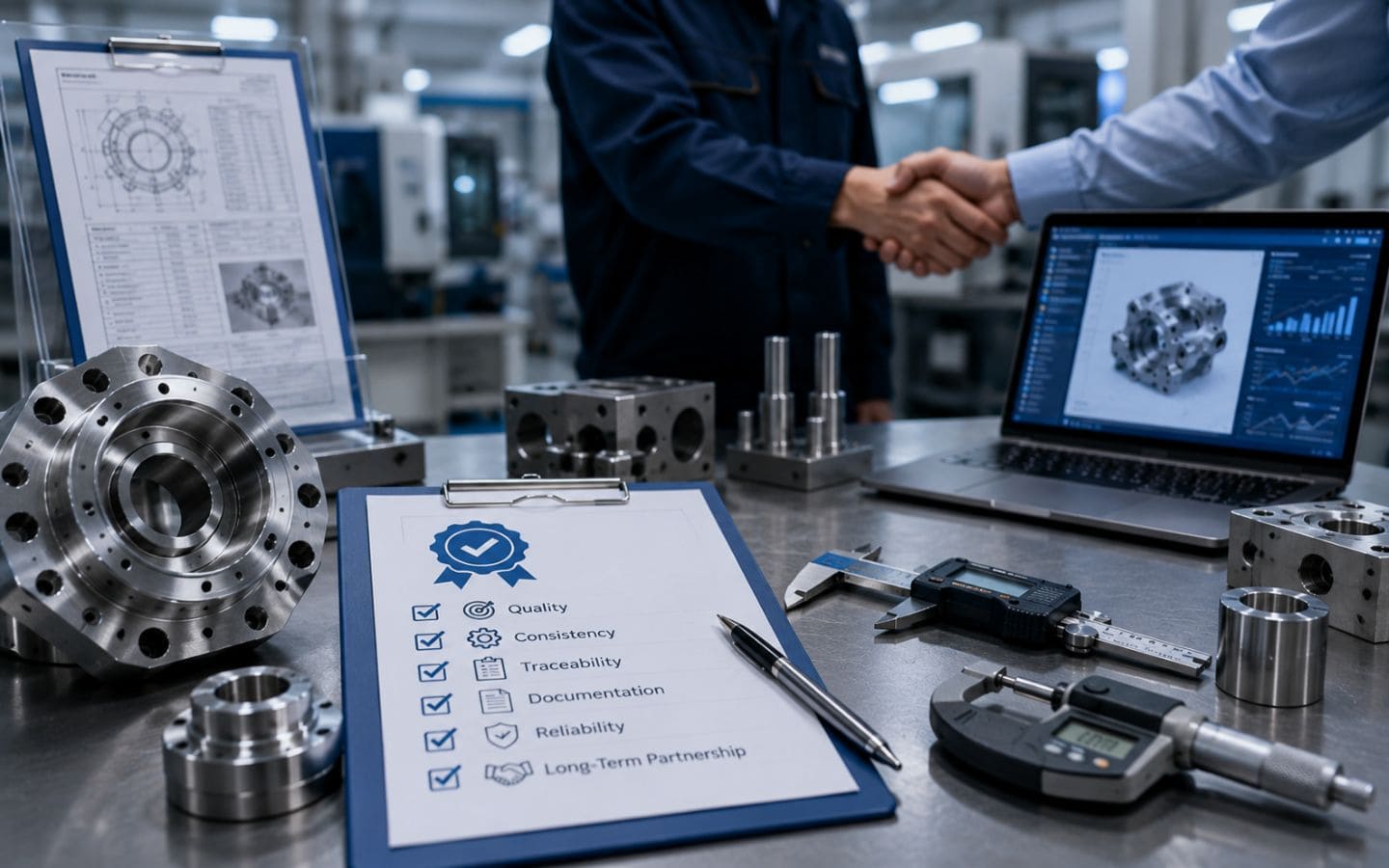
As I've run DEK over many years, the same pattern has emerged in quoting cycles, production schedules, and customer relations. And it doesn't matter how big or little the company is, what industry it is in, or where it is in the world; it all boils down to more than one definition: how the customer defines value.
To some customers, value is defined almost entirely in terms of price. For others, value is defined by consistency, documentation, and long-term reliability. When I first started in this area, I treated all customers the same way, regardless of how they defined value; but, with time, I saw that this produced confusion and tension throughout engineering, manufacturing, and customer communications.
What I have found over the years is that putting more effort into servicing quality-driven customers makes sense. It isn’t because price doesn’t matter; it is just that “good work” means different things. When that can be agreed upon, engineering, machining, and inspection are much easier.
The True Cost of Serving Price-Driven Customers
A price-oriented client is not necessarily a "bad" one. There are some who have genuine constraints. However, when price becomes the main consideration, it affects the dynamics in ways that are not always obvious in quotations.
One result is that the margin is squeezed while complexity stays the same. In machining, complexity does not correlate with cost at all. High tolerances, challenging metais, and complex fixturing are still necessary regardless of price. When margins shrink without the complexity decreasing, it is internalized through planning, tools, and capacity.
The second consequence is mismatched expectations. The fewer engineering conversations before the project, the more assumptions will be left unresolved. Unresolved assumptions can later manifest themselves in discrepancies that should have been caught earlier.
Supplier turnover is another source of instability. When clients focus on price, they strive to get the most out of each order rather than the entire relationship. From the standpoint of the store, this entails learning and onboarding anew whenever similar parts are purchased.
In the long run, this leads to the formation of an unstable system. This was best expressed by one of America's quality pioneers, W. Edward Deming, who once stated, "Without data, you're just another person with an opinion." Without process data and stability, choices are reactive rather than proactive.
Why Quality-Driven Customers Build Long-Term Value
While price is not an issue for customers who prioritize quality, they ensure it does not interfere with technical decision-making.
The first thing that stands out when dealing with them is the importance of process consistency. The questions relate to the inspection process, fixture repeatability, material traceability, and variance reduction.
Instead of haggling over cost, the talks tend to focus on engineering, with discussions of feature hold, tolerances, and ways to reduce variance within the batch. This means that both sides have the same goal, and there is no need to prove anything.
It creates more consistency, which is very important since having all the requirements known from the start eliminates any disturbances during the production process.
In addition, customers who focus on quality return with modifications to previous projects, which helps improve the tooling process, reduce cycle time, and improve inspection.
My Experience Working With Both Types of Customers
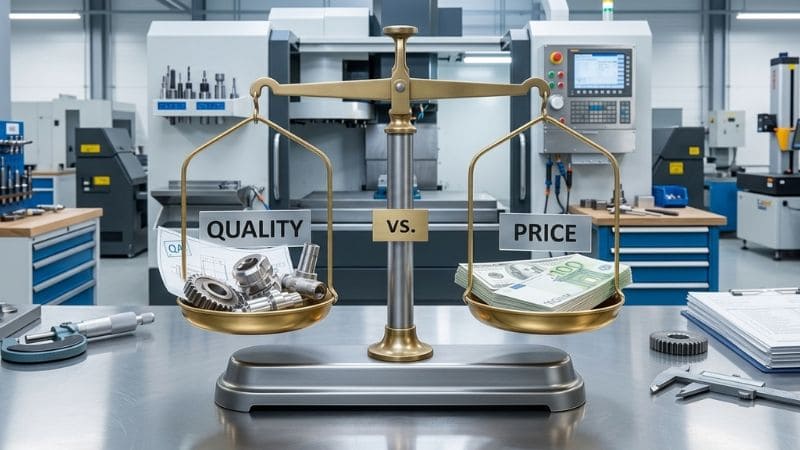
We've done projects at DEK that required dealing with both ends of the spectrum, and the differences become clear once production begins.
A price-sensitive alliance may begin on a favorable note, but these partnerships are more vulnerable to minor changes. Even if these are within the tolerance limit, minor cosmetic or time issues can quickly escalate. This happened several times when relationships ended due to a single error caused by misplaced expectations.
In quality-sensitive partnerships, an issue entails identifying the core cause rather than assigning blame. This shifts the partnership's problem-solving strategy dramatically.
DEK's longest-standing customers are all from the latter group. Our clients stay with us not because we offer the cheapest option, but because we understand the process.
Communication becomes more streamlined with time. Lead times are widely recognized. Specifications evolve along conventional lines. There is nothing to explain that has not already been explained.
Peter Drucker famously stated, "Culture eats strategy for breakfast." When it comes to production, the culture in which you conduct your company operations will be considerably more important than any agreement or procedure manual.
Operational Benefits of Quality-Centric Partnerships
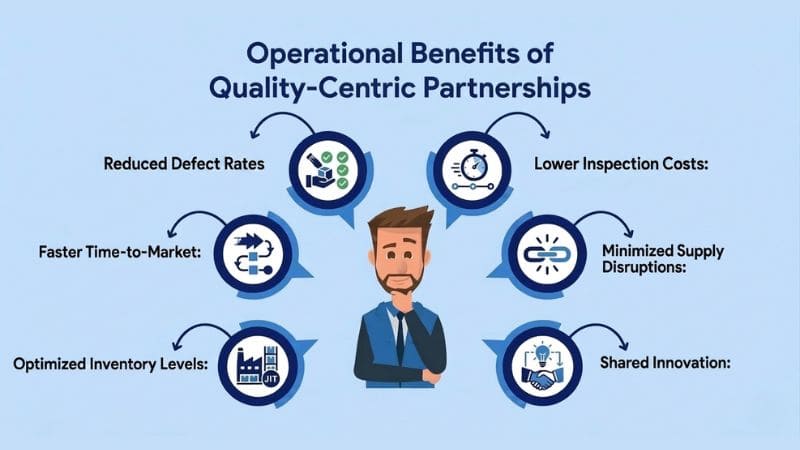
Internally, quality-conscious customers are the least disruptive to operations.
Communication is cleaner because the requirements are so well-known. There is less interpretation on the shop floor, and this leads to fewer interruptions in production.
It’s even more stable. Quality-conscious clients tend to make and keep their timelines. This permits better machine priorities and less urgent changes.
This stability is a relief for the engineering, QC, and project teams as well. Rather than being in a constant reactive mode, teams are able to focus on executing and improving processes.
Capacity planning also gets better. Redoing work generates historical data, which makes cycle time, tooling wear, and inspection load more predictable.
The impact isn’t efficiency for efficiency’s sake; it’s stable operations that enable continuous improvement.
How Quality Customers Improve Your Organization
One of the key benefits of quality customers that often gets forgotten is that they help increase your organization's internal standards.
As external standards rise and remain stable, the internal processes adapt to those expectations. The engineering department starts thinking of better tolerance and fixturing. The QC department comes up with new inspection practices. Documentation becomes the rule, not the exception.
In essence, the customers calibrate your organization in a certain way. Higher expectations make you move towards achieving them, while inconsistent or poor expectations usually make your system focus on efficiency.
For instance, at DEK, one of the most stringent verification processes was developed in response to a customer requesting higher traceability than the process we had in place initially.
This is also where relationship development extends beyond the scope of a single endeavor. High-quality connections can lay the groundwork for bigger regional and functional collaboration models, as I demonstrated in Why Top U.S. Machine Shops Partner with Asian Manufacturers. Finally, the conversation shifts from "choosing a supplier" to "building distributed capability."
Choosing the Right Customer Mix for Sustainable Growth

Sustainable growth does not mean quantity alone. It means quality improvements in the execution of work that benefit the organization.
We focus on projects where the capabilities make us unique. Precision work, repeated work, and complicated cooperation are known to build systems. Commodities are known not to do so.
That is not an indication that cost-conscious customers are always avoided. It indicates the need for a balance between the two. Stability results from a base of quality partnerships, with other work used to keep capacity up.
What we avoid is commoditizing the machining function. When that happens, decisions get made not based on capability but on an hourly rate.
The result we seek is one where precision, dependability, and capability are built into value. In that case, pricing supports capability, not replaces it.
My Perspective
Manufacturing is not merely transactions; it’s a capability gained through thousands of small choices under pressure.
That’s clearly reflected in how they approach their needs, their handling of exceptions, and their long-term partnerships.
When dealing with quality-driven customers, it’s not easy and does not provide any respite. But it ensures that there is enough stability so that they can build over time, and not have to start from zero each time there’s a new project.
Em DEK, while evaluating our partnership with our clients, it’s more about the clarity in our engineering discussions and the trust gained through execution.
That’s precisely why I choose to work with quality-driven clients. It’s not that they eliminate problems, but they ensure the right problems are solved.
