Nitriding vs Carbonitriding: Qual é o melhor?
The point of comparing nitriding vs carbonitriding is to clarify what each thermochemical process does to modify steel surfaces. Although both introduce nitrogen, they differ in achievable case properties, compound layers, and diffusion behavior.
In this blog, get a clear view of when nitriding or carbonitriding is the more appropriate choice for high-demand operations.
What is Nitriding?
Nitriding hardens surfaces by diffusing nitrogen into the outer layer of steel at relatively low temperatures. Through this, hard nitrides form within the surface to improve wear resistance and strength without distorting or changing the structure of the steel.
Dimensional accuracy is preserved, and distortion is at its minimum because the process occurs below the steel’s transformation temperature. We typically use nitriding to alloys with elements such as molybdenum, chromium, or aluminum that readily form stable nitrides.
Common Methods of Nitriding
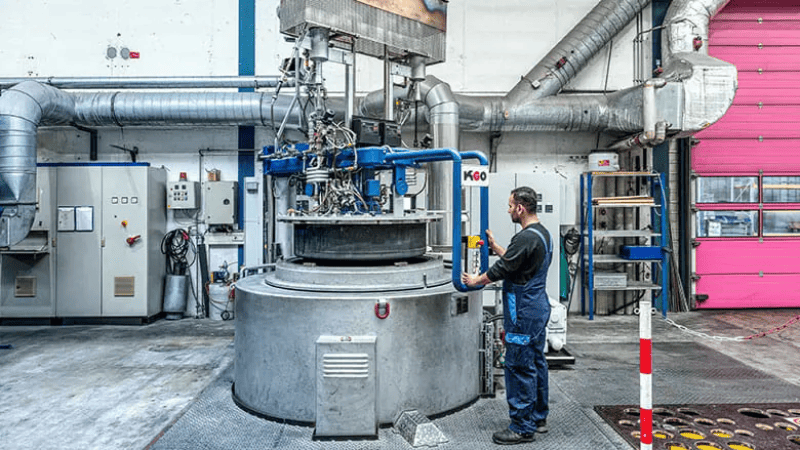
Gas Nitriding
This method uses ammonia gas sealed in a surface to introduce nitrogen to the steel surface. Through the nitrogen’s gradual reaction with the steel, a hard surface layer is formed. We can control how deep and hard the layer becomes by adjusting the nitrogen concentration and the furnace temperature.
Plasma Nitriding
Ionized nitrogen in a low-pressure chamber produced by electrical discharge is the nitrogen introduced by plasma nitriding. Steel surfaces are penetrated more efficiently by nitrogen ions. As a result, it allows better control of surface hardness, faster treatment, and reduced edge effects on complex components.
Salt Bath Nitriding
The immersion of steel in a nitrogen-rich molten salt is how this method works. When nitrogen diffuses into the surface, it forms a hard layer with dependable fatigue and stress resistance. This process is preferred for components that require consistent surface properties for the entire part/
What is Carbonitriding?
This is a thermochemical surface treatment where both carbon and nitrogen are diffused into steel at elevated temperatures. The presence of both elements hardens the surface more and increases wear resistance while maintaining a ductile and tough core.
The method is used in low-alloy and low-carbon steels to increase fatigue performance and load-bearing capacity. In comparison to nitriding, carbonitriding creates a shallower case but makes the cycle time faster, which makes it more cost-effective and applicable for high-volume components production.
Why Add Nitrogen?
Nitrogen is added to increase hardness and wear resistance without affecting the core properties. When it combines with alloying elements, nitrides are formed that reduce surface deformation and improve fatigue life.
Another benefit is that nitrogen can enhance oxidation and corrosion resistance in some steels. It may also help maintain dimensional stability. To meet specific performance requirements for industrial parts, we can modify the surface layer by controlling nitrogen content and delamination depth.
Key Differences Between Nitriding vs Carbonitriding
Temperature and Distortion: Nitriding vs Carbonitriding
Nitretação is done at lower temperatures to minimize distortion and maintain dimensional accuracy. The temperature is typically around 500-550°C. Carbonitriding, on the other hand, needs higher temperatures for faster diffusion but may also cause a greater risk of distortion on parts. The temperature ranges from 780 to 900°C.
Case Depth and Hardness Profile: Nitriding vs Carbonitriding
We get shallow and uniform hard cases with a gradual hardness gradient in nitriding. While carbonitriding produces slightly deeper cases. These results from carbonitriding show higher surface hardness, it gets steeper hardness drop toward the core.
Wear and Friction: Nitriding vs Carbonitriding
Both methods offer great wear resistance, but the nitrogen-rich surface from nitriding gives lower-friction performance even when subjected to repeated sliding. Carbonitriding creates a harder layer, which is effective against highly abrasive operations.
Fatigue and Impact: Nitriding vs Carbonitriding
Carbonitriding can improve surface hardness, but it can affect the impact toughness when the process is not controlled. Nitriding strengthens fatigue life without affecting ductility core, and that makes it ideal for parts that are under consistent cycle stress.
Applications of Nitriding vs Carbonitriding

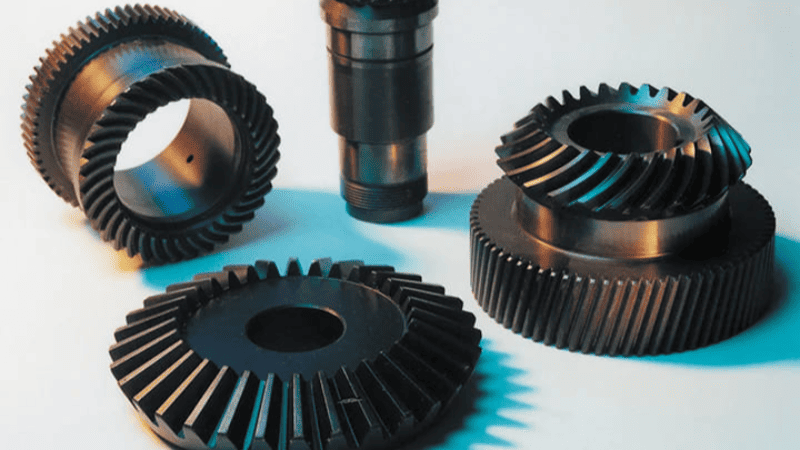
Nitriding has proven its integrity in parts where long fatigue and precise dimensional stability are required. It is used in parts such as valve components, camshafts, crankshafts, and gears. Carbonitriding is the ideal pick for parts where a harder surface and faster production are needed, such as low-alloy shafts, pins, and fasteners.
Conclusão
Comparing the features and advantages of nitriding vs carbonitriding helps you pick the appropriate treatment for your parts. Nitriding is on the side of precise and low-distortion hardening of alloy steels. While carbonitriding, on the other hand, offers speedy results and high surface hardness for low-alloy parts.
DEK offers expertise in precision heat treatment services that perfectly align with your project requirements. Reach out to us today and allow us to help you achieve optimal performance and long-term reliability for your components.