
CNC Machining Stellite: Process, Grades, Applications
CNC machining Stellite involves advanced operations of turning, milling, and drilling to shape this very hard cobalt-chromium alloy into precise and durable parts. Stellite is known for extreme wear resistance and hardness. It is used in industries where reliability and heat tolerance are of utmost importance.
At DEK, we combine our CNC knowledge with deep material expertise to ensure Stellite parts meet stringent dimensional requirements. Also, the performance criteria for aerospace, oil, and power-generation applications.
O que é o Stellite?
Stellite is a cobalt-based superalloy made for extreme wear, corrosion, and high-temperature environments. Its main constituents are cobalt, chromium, tungsten, and carbon. It gives rise to microstructures capable of retaining their strength and hardness even under severe operational conditions.
Stellite is used for parts under constant friction or pressure, like valve seats, cutting tools, and turbine blades. The materials are difficult to machine, but with our CNC ability, we can guarantee precision and quality.
Why is this Alloy Called Stellite?

The term Stellite finds its extraction from the Latin term stella. Its meaning "star" symbolizes the brilliance and exceptional performance of the alloy itself. In the early 1900s, it was developed by Elwood Haynes to survive wear and oxidation at high temperatures.
Stellite is now, well into the present, regarded as a "star" alloy in modern engineering. Its strength has always been aspired to as a benefit in various engineering fields. The versatility and strength of this alloy are trusted in CNC applications across many industries.
Properties of Stellite
A combination of hardness, strength, and stability under high temperatures, Stellite is the most reliable material for demanding environments. It retains its properties even under severe thermal and mechanical stress.
Chemical Composition Table
| Elemento | Typical Percentage (%) |
| Cobalt (Co) | Equilíbrio |
| Crómio (Cr) | 25–35 |
| Tungsten (W) | 10–20 |
| Carbono (C) | 1–3 |
| Níquel (Ni) | Up to 3 |
| Ferro (Fe) | Up to 3 |
Mechanical Properties Table
| Imóveis | Valor |
| Hardness (HRC) | 45 – 62 |
| Densidade (g/cm³) | 8.4 – 9.4 |
| Tensile Strength (MPa) | 700 – 1500 |
| Ponto de fusão (°C) | 1260 – 1410 |
| Elastic Modulus (GPa) | 210 |
Maquinação CNC Processo Stellite
Maquinação CNC Stellite includes different operations, and these include the following:
Torneamento CNC

Torneamento CNC of Stellite usually starts with the making of cylindrical components. Since Stellite is extremely hard, we make use of carbide and ceramic inserts with sufficient cutting resistance.
The secret lies in using slow speeds and constant feed rates that avoid chipping of the tool. The use of coolants keeps the temperatures down and improves surface quality during the turning operation.
Fresagem CNC
Fresagem CNC of Stellite requires rigid setups and sharp tools because the material tends to work-harden. DEK keeps a constant engagement with the tool and avoids all dwell time. The use of coated carbide end mills greatly reduces friction and thereby extends tool life. In most instances, climb milling delivers a better surface finish and minimizes tool vibration.
Perfuração CNC
Drilling Stellite can be very difficult, given the hardness of the material. Cobalt or carbide drill bits with a small feed increment are utilized. The coolant should be in a continuous flow to ensure the effective removal of chips. Peck drill cycles, especially in large holes, ensure accuracy and tool safety.
Diferentes graus de Stellite
The production of Stellite machined parts can be done from different grades of Stellite. Every grade is characterized by its properties, hence fitting it for different applications. Some of these grades of Stellite include:
Stellite 1

Stellite 1 is the hardest and most wear-resistant grade that is best for severe abrasion and erosion environments. We use it for valve seats and cutting edges that have to withstand constant friction. Its hardness makes for somewhat difficult machining, requiring special tooling and low speeds.
Stellite 6
This one is generally the most utilized. It stabilizes abrasion resistance against the ability to machine. It is both erosion and moderate impact, which makes it the first choice of pump shafts, bearings, and other engine components. Stellite 6 is machine-finished by CNC turning and milling. Stellite 6 is robust in both dimensional and positional stability.
Stellite 12
Stellite 12 tends to set very well but is also tough. It is used in the construction of parts to be exposed to metal-to-metal wear. We use it particularly as valve trim and seats because there isn't much lubrication involved. CNC milling and grinding help deliver bright and good quality to this grade.
Stellite 21

Stellite 21 has a higher ductility than other grades, but its corrosion resistance is extremely good. It is usually used for medical implants or aerospace components. Such chemical equipment, such as mechanical parts, comes into use. Improved machinability makes it a smooth CNC machine-suitable option for both turning and drilling.
Stellite 31
Stellite 31 is synonymous with super strength and oxidation resistance at very high temperatures. These properties make it preferable for components. The turbine blades, cutting tools, and the majority of power generation equipment. The unique balanced composition allows for precise CNC machining without sacrificing the care necessary to survive in demanding conditions.
Vantagens da Stellite na maquinagem CNC
The Stellite CNC machine parts have different benefits. Some of these are given below:
Resistência ao desgaste

Wear Resistance is the main benefit of Stellite after continued exposure in aggressive environments. It maintains the necessary dimensions and surface integrity against friction and rough mechanics.
Resistência à corrosão
Resistência à corrosão protects against the chemical damage from working acids and the high moisture conditions. It is preferred for its components in the oil, gas, and marine industries, where corrosion protection is important.
Funcionalidade para temperaturas extremas
It has more than 500°C, where Stellite retains its strength and hardness. Most alloys tend to soften due to heat. In this case, Stellite remains stable and suitable for use in aerospace and high-temperature manufacturing parts.
Força

Stellite is strong in its flexible characteristics; it performs quite efficiently under mechanical load. Thus, it is suitable for use in parts experiencing pressure, impact, and operational forces for a long time.
Desafios para peças usinadas com Stellite sob medida
There are certain challenges mentioned below with respect to Stellite CNC-machined components, although they are beneficial.
Elevado desgaste da ferramenta
Due to the hardness of Stellite, cutting tools quickly wear out. They require frequent replacement and slower machining speeds that are necessary to keep up accuracy.
Gestão do calor
The heat collection during cutting would affect the tool and the workpiece. We manage that through the momentum of cutting refrigerant at quite high flow rates, feed rates to prevent thermal distortion.
Custo elevado

Stellite machining causes higher costs because of tool wear, longer machining cycles, and the requirement for special tooling. Usually, the cost is balanced due to the high longevity of parts.
Tips for Stellite CNC Machining
Here are some of the essential tips that can help manufacture Stellite machined parts efficiently:
Use High-Quality Tools: Always use carbide or ceramic cutting tools to handle the hardness of Stellite to minimize tool wear during machining.
Optimize Cutting Parameters: Maintain moderate speed and feed rates to reduce friction, heat generation, and damage to the tool.
Apply Proper Coolant: Use an effective coolant or lubricant for heat control and an improvement in tool life and precision.
Adopt Advanced Toolpaths: Use techniques like adjust milling or step drilling for better chip removal during machining.
Ensure Setup Stability: It should be a strict CNC setup to resist vibrations and hardness in keeping close tolerances.
Monitor Tool Wear: Inspect and replace worn tools regularly to preserve part quality and dimensional accuracy.
Add Finishing Processes: Improved surface quality and extended component life are the effects of polishing, coating, or grinding.
Rely on Skilled Operators: Skilled operators understand the behavior of this unique material, ensuring consistently accurate results.
Acabamentos de superfície para peças maquinadas com Stellite
The surface initially would be machined, followed by other surface finishing processes that improve appearance, precision, and efficiency.
Retificação
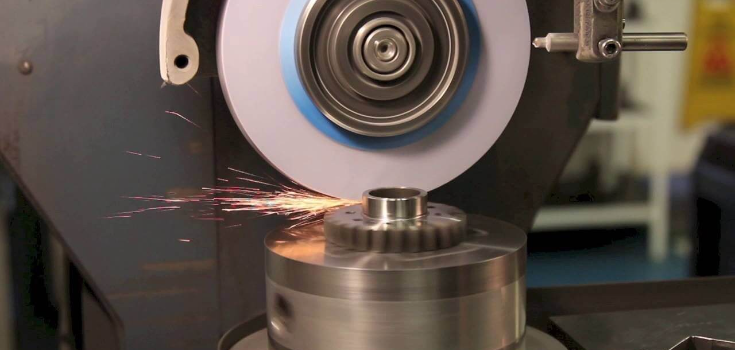
Grinding is important for tight tolerances and a fine surface finish of Stellite workpieces. For high-quality work, we use either diamond wheels or cubic boron nitride (CBN) abrasives. For good quality work, we ensure very slow feed rates and light passes to prevent overheating.
Polimento
It takes away minute defects and improves the part's surface. I use fine abrasive compounds to represent mirror-like finishes used for aerospace or medical components.
Revestimento
These are further improved by the applications of such coatings as chromium or ceramic. They improve wear and oxidation resistance. Reduced friction and much longer life of parts are added advantages of coating, especially in high-temperature environments.
Aplicações da maquinagem CNC com Stellite
CNC machining of Stellite parts can be used in many structures requiring precision and durability, along with heat resistance. Some important applications are as follows:
Aeroespacial

Applications of Stellite in the aerospace industry include turbine blades, valve seats, and wear rings. This material can do well even at extreme temperatures. It will prove reliable during in-flight operations.
Médico
Stellite is found in medical implants and surgical tools. Prosthetic parts are used for their biocompatibility and corrosion resistance. It guarantees safe, long-lasting, in-body performance.
Petróleo e gás
With respect to oil and gas, they feature components like valve trims, seats, and nozzles made from Stellite. Oil and gas have small, harmful, and destructive qualities under high-pressure conditions.
Produção de energia
In power generation, Stellite serves steam turbine blades, sealing surfaces, and control valves within a power plant. High temperatures and oxidation resistance enhance operational efficiency and the strength of components.
CNC Machining Stellite Services at DEK
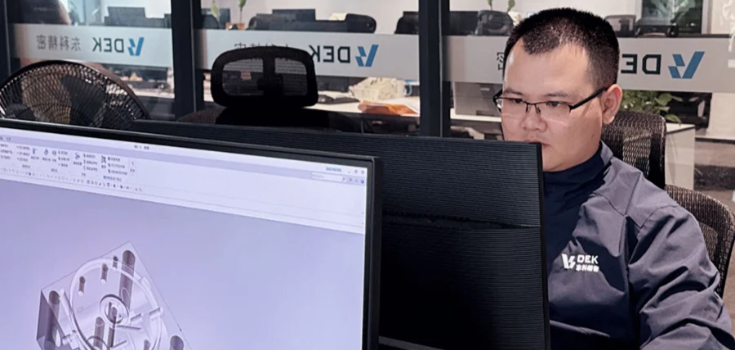
At DEK, we provide professional CNC machining services for Stellite materials used in challenging industries. These industries include aerospace, oil, and power generation. Our team guarantees structural accuracy, high surface quality, and strength through accurate milling, turning, and grinding.
Partner with DEK for the best machining solutions for your Stellite parts. Our advanced CNC technology and customer-oriented service ensure that all parts are guaranteed to reflect superior workmanship, consistency, and value.
Conclusão
CNC machining Stellite requires advanced machines and good knowledge about the material. DEK provides both and fits your projects to the highest possible standards of precision, performance, and efficiency. Our engineers put in front good DFM advice that contributes to enhanced productivity cost-effectively while maintaining world-class accuracy.
FAQs
Which stellite type is most often used?
Because it offers a balance between hardness, corrosion resistance, and machinability, Stellite 6 is the most often used. In fact, it is the alloy used in numerous industrial applications, such as valve seats and bearings.
Is it difficult to machine stellite?
Stellite is difficult to machine because of its hardness. Carbide tools with the right feed rate and the required steady coolant flow would make the tasks easier.
Is stellite superior to 316 stainless steel?
In terms of heat and wear resistance, stellite performs better than 316 stainless steel. Stainless steel is the material of choice in production because of its superior machining qualities and low cost.
