
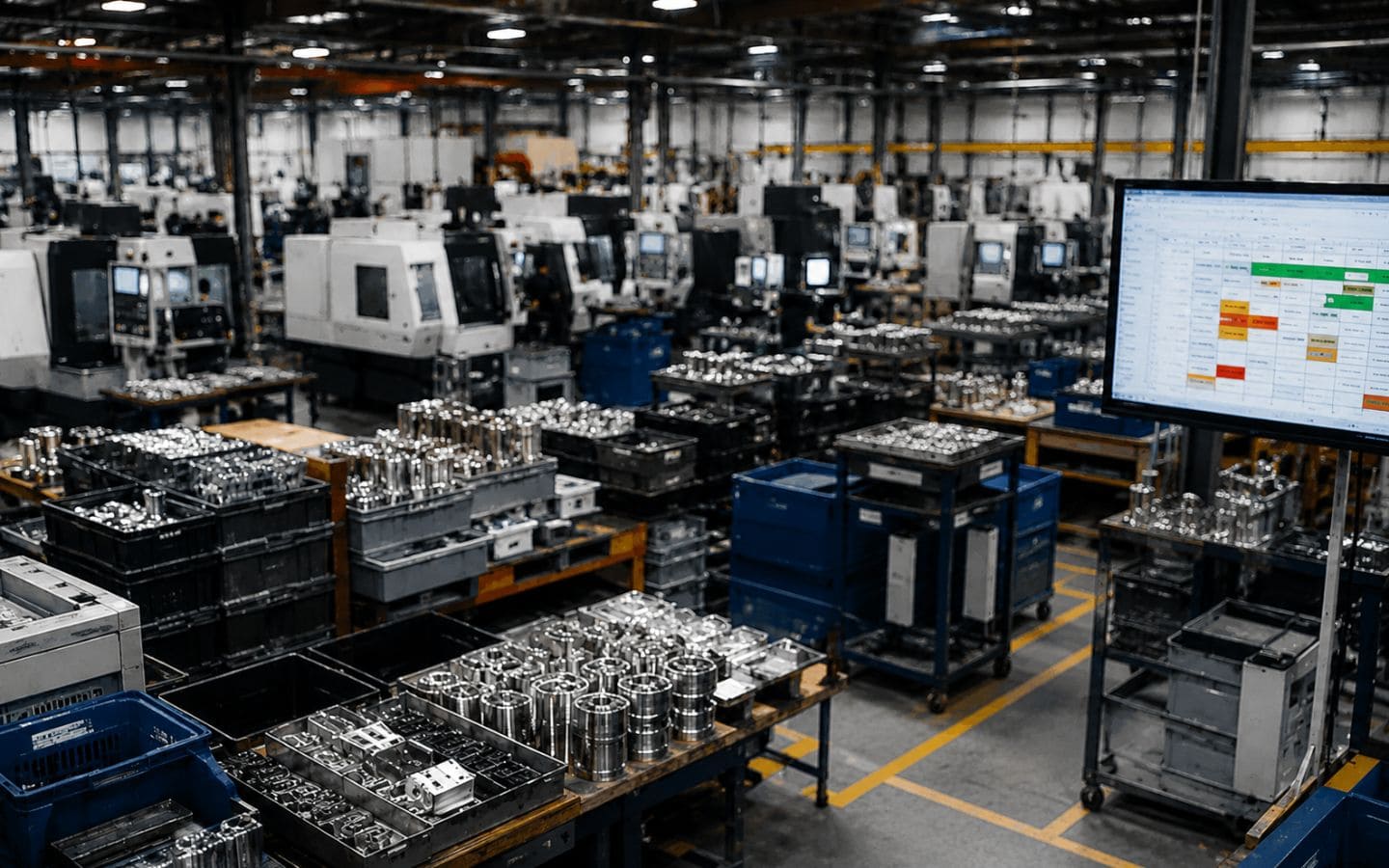
Over the years, one thing I've observed is that the risks manufacturing leaders are most worried about are often the easiest to spot. Disruptions in the supply chain, labor shortages, rising material costs, and quality concerns continue to be frequently discussed because their effects are felt quickly.
Harder risks to identify are those that rise unnoticed beneath the surface. They just don’t materialize overnight; they don’t show up in any management reports until the impact is just too big to hide. In some instances, they are seen coming in bad times, before their established customers and sales channels dry up, but far too frequently they take shape during periods of growth, when booming sales and growing customer relationships make it seem all is heading in the right direction.
I’ve seen great companies that have tread water in manufacturing not because they didn’t have the technology, the talent, or the customer demand, but because changing workloads made it harder and harder to stabilize the business.
The risk I’m talking about is capacity instability.
The Risk Hiding in Plain Sight: Capacity Instability
Manufacturing requirements rarely follow a set pattern. Requirements may fluctuate dramatically from one month to another. The request from a large client becomes urgent. The debut of a new product surprises everyone. Several projects that were supposed to take place over the course of a quarter are unexpectedly delivered all at once.
Internal capacities are typically developed for regular conditions rather than peak conditions.
When conditions need immediate response, engineering, machining, purchasing, and quality functions bear the brunt of the burden. Deadlines are hurried through. Priorities change every day. Capabilities are stretched far beyond their capacity.
At first glance, everything appears to be under control for the corporation. Errors accumulate over time. Commitments are difficult to keep. Customers notice delays. Finally, the cost of overload becomes apparent.
Why Most CEOs Don’t See This Risk Early Enough

Capacity instability is usually not obvious during the early phase of growth since small teams can always make up for structural deficiencies through sheer hard work.
During the initial years of operations, volatility does not appear to be a systemic issue. It just seems to be something that can be addressed right away. Employees will come in and put in extra hours to remove any bottlenecks. Management will address any problems related to scheduling. Engineers will shift gears as they see fit to make sure progress is still being made.
And, slowly but surely, this approach will create a subtle yet important distortion. Leadership will come to believe that success depends on their ability to respond quickly to any change rather than maintain stability.
This line of thinking is unsustainable at scale.
If an organization runs seamlessly with ten projects ongoing, the problem may be faced when there are fifty projects ongoing. The complexity does not double; it multiplies from engineering to planning to manufacturing and quality.
Early growth may be built on different systems from those needed for scalability.
And the move won't fail abruptly; it will be gradual. Until such time as variance becomes an event rather than something managed by the organization.
How Capacity Instability Damages the Entire Organization
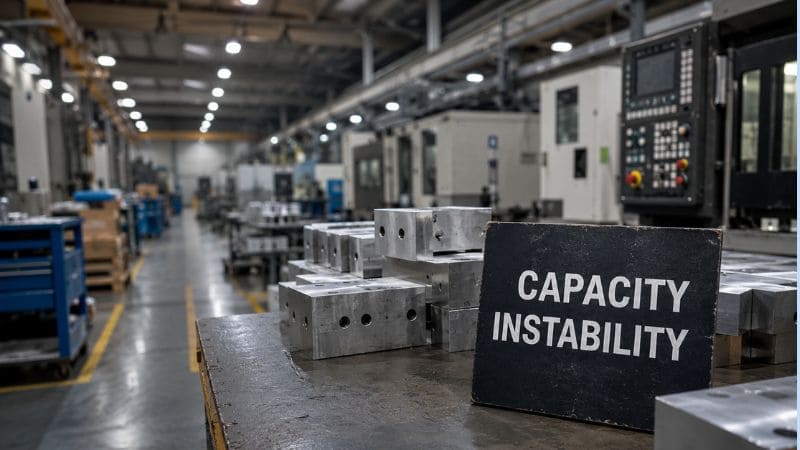
The repercussions of unstable capacity never remain contained within one department.
Engineering tends to experience the initial effects of this problem. As deadlines draw nearer and projects compress, engineers have little time left for proper reviews. Design issues, which could have easily been spotted, go unnoticed until it's too late and rework is needed.
However, the problems do not stop here and now spread to the factory floor itself. With pressures growing ever higher for machine operators, there is a tendency to rush set-up operations, resulting in decreased predictability and lower production rates.
Controlo de qualidade is often the last bottleneck. More problems are arising because the increasing variability creates more work for the inspection teams without slowing down the production line. At this stage, the managers tend to look for a problem in individual performance, but it should be approached from a systemic point of view.
As W. Edwards Deming once put it, "A bad system will beat a good person every time." I have seen very competent engineers, skilled machinists, and diligent inspectors trying to cope under circumstances that are not intended by any process. It is simply hard to be consistent if the capacity is unreliable.
As a result, it is always the customers who suffer from poor internal capacity management during such moments as product launch, ramp-up period, or urgent shipment. And when the capacity-related problem turns into a customer issue, it does much harm already; it ruins confidence and destroys trust built over years.
What I’ve Observed Across Manufacturing Companies
This observation applies in any business sector and irrespective of how large a plant is.
Workflows within the shopfloor become inefficient, with work being executed via urgent exceptions all along the week. What started out as an action to relieve pressure becomes permanent overtime, and firefighting becomes a mode of operation. Changes within scheduling cause disruptions elsewhere within engineering or production.
The one observation to note is that this does not have anything to do with equipment limitation.
Despite some of the best-equipped manufacturing factories I have ever seen, I still observe that these shops struggle amidst high variability. Modern machines increase productivity, yet they do not make the workflow efficient enough to prevent such inefficiencies. When throughput is increased without process control, it only causes the problems to appear sooner than expected.
In our experience at DEK, it's quite common to have manufacturers come in with major customers lost due to fluctuations, not because of a lack of capability, but a lack of capacity to keep up with the changes in demand. Maquinação capabilities were there. But what happened was that the shop's capabilities failed amid overload circumstances.
Capability will not ensure stability. It is capacity that makes capability possible.
The Strategic Alternative Most CEOs Ignore
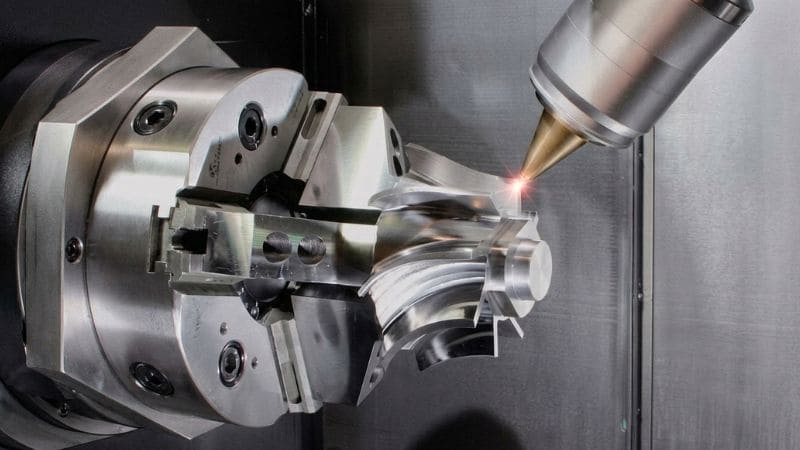
One of the most successful strategies that I have seen is the creation of hybrid manufacturing structures.
Unlike companies that try to do everything themselves, leading manufacturers are capable of developing a flexible system that enables them to increase their capacity when necessary. They know that being resilient does not mean controlling all resources. It means accessing the appropriate resources when needed.
Outsourcing some operations can help them build prototypes, perform special tasks, accommodate increased production, or address any other demand-related issues. As a result, they can provide sufficient room for their internal specialists while preserving their ability to complete orders in a timely fashion without rushing everyone to solve problems.
Moreover, such organizations are capable of creating reliable engineering and manufacturing procedures. With proper planning, communication, and transparency regarding quoting, engineering, scheduling, machining, and testing, they can avoid working under pressure.
Here's where organizations usually get trapped. As stated by Peter Senge, "Today’s problems come from yesterday's solutions." Overtime work, expediting, and continuous schedule rearrangement may be helpful in the short run but will not resolve the underlying problem. Often, such measures become part of the business operation model and make it difficult for companies to deal with capacity issues in the future.
Most outstanding manufacturers do not rely on accurate forecasting. Rather, they establish an infrastructure that enables them to change course when forecasts are incorrect.
The goal is not to allocate additional resources to handle higher loads.
Rather, it is to create a business model that can remain stable despite changes in demand levels.
How Forward-Thinking CEOs Reduce This Risk
One of the most progressive executives that I ever had the pleasure of working with viewed capacity as something beyond production capacity. They viewed it as an operational issue.
First of all, they identified where bottlenecks occur. In most cases, this happens in areas that one would not suspect. It depends both on the company's product mix and sophistication levels as well as timing.
Secondly, they introduced flexibility into the execution process. When demand fluctuates unexpectedly or goes up significantly above projections, the increased pressure is not placed solely on internal processes. Some of it goes to outside partners to make sure that the delivery is reliable and that capacity levels remain sustainable.
Thirdly, while others might try to expand capacity through investments in equipment, the most progressive companies will build up their workflow. Through better planning and tighter process control, companies manage to stabilize their operations even further than capacity management could.
In addition to this, there are companies that strategically consider their customers' structure. By spreading out over several products or industries, they manage to find more stability and balance.
What matters here is not merely the growth of the company's capacity. What really matters is growing sustainably.
My Perspective
The more I work with manufacturers, the more I tend to differentiate between two concepts that many people consider equal – activity and stability.
Factories do not sleep. They operate all the time. The systems keep functioning, schedules are fully packed, and staff members never rest. This might seem like a good sign, but mere activity does not mean much.
The ability to deal with a high level of variance is what sets successful factories apart from unsuccessful ones.
There are companies that excel when the environment is constant. And then there are those that consistently perform when priorities change, when last-minute engineering changes happen, or when workload changes occur unexpectedly.
Through experience, I have found this to be the true test of superior performance in manufacturing.
It’s not size.
It’s not capability.
It’s sustained capability under stress.
