
How Tungsten and Titanium Compare In Strength and Weight?
There is a difference when looking at how tungsten and titanium compare in strength and weight. One is known for its amazing weight and difficulty to break. The other is famous for staying strong while staying very light. This contrast renders each metal beneficial for distinct tasks.
It is a trade-off between the two. You can either select the heavy mass of one or the light movement of another. Both are top choices when you want a very high pressure without failure.
What is Tungsten?
Tungsten is a huge metallic element that has high density and a high melting point. Its melting point is higher than that of any other pure metal, so it does not melt even when heated. Actually, its weight is quite the same as gold.
Because this material is tough and heat-resistant, experts use it in parts that must not melt or wear down. It is used in heavy drill bits, weights, and high-heat engine components. It is chosen when a project needs something that remains strong and heavy.
Advantages and Disadvantages of Tungsten
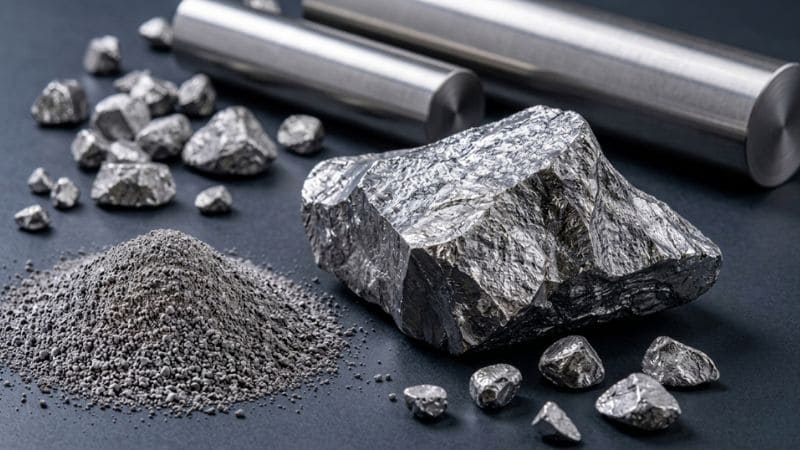
Upsides
Resistant to Extreme Heat
This metal remains solid at temperatures that would melt most other metals. It is a leading choice for components that will endure in nearly incandescent engines or industrial furnaces.
Unrivalled Weight
It may be small in size, but it has great weight. Thus, it is ideal for balancing heavy machinery or creating compact loads that hold their place.
Exceptional Scratch-Proofing
A scuff/ dent to the surface is almost impossible under normal usage due to its hardness. This makes sure that the accuracy parts stay completely smooth after a few years of friction.
High Rigidity
It does not tire or bend under a massive amount of pressure at any time. This stiffness keeps components exactly in their locations during fast execution.
Downsides
Significant Fragility
Though very tough, it can crack or break if something strikes it with a sudden, sharp force. It does not absorb shock well and, thus, cannot be used in high-vibration conditions.
Less Malleable
It is difficult to cut or shape it with normal tools. Manufacturing parts using this material is a slow and expensive process compared to common metals.
Oxygen Attack in High Heat
Although the metal won’t melt, it will burn or “rust” quickly if it comes in contact with air while hot. It frequently requires a vacuum or special gases for protection during its use.
Heavy Market Charge
Finding and cleaning this material can be very hard and costly. As a result, the final components become significantly more expensive than many metal equivalents.
Common Applications of Tungsten
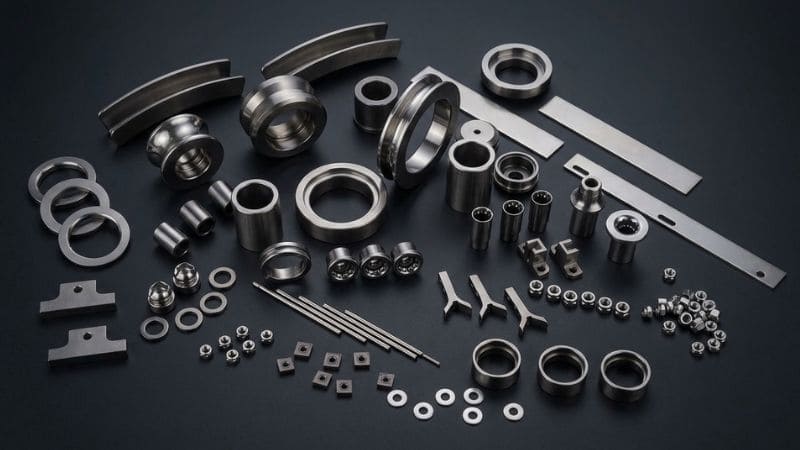
Components For High Heat Engines
It’s used in rocket engines and jet engines because it can survive very high heat. It remains solid while other materials would simply melt away.
Durable Cutting Instruments
A lot of industrial drills and saws use this metal to cut steel. Because of their hardness, the blades stay sharp even after prolonged usage.
Weighting Material
It’s small enough to fit in tighter spaces while still being heavy enough for use. You will find it in balancing the wings of an airplane.
Glass to Metal Seal
It expands when heated at almost the same rate as glass. It makes it suitable for airtight seals in specialized laboratory apparatuses.
Radiation Shield
Due to the high density of this metal, it blocks rays very effectively. It is commonly utilized in hospitals and medical facilities to shield against X-ray machines.
O que é o titânio?
Titanium is a lightweight, strong metal known for its silver color and strength. Despite being as strong as several kinds of steel, it is about half as heavy. This makes it one of the most important choices in case any project requires something tough but light.
It is also very resistant to damage from the environment. It won’t rust or wear out, even if it’s submerged in salt water or harsh chemicals. As a result, it finds application in everything from high-performance jets and medical implants to specialized tools that must last for decades.
Advantages and Disadvantages of Titanium
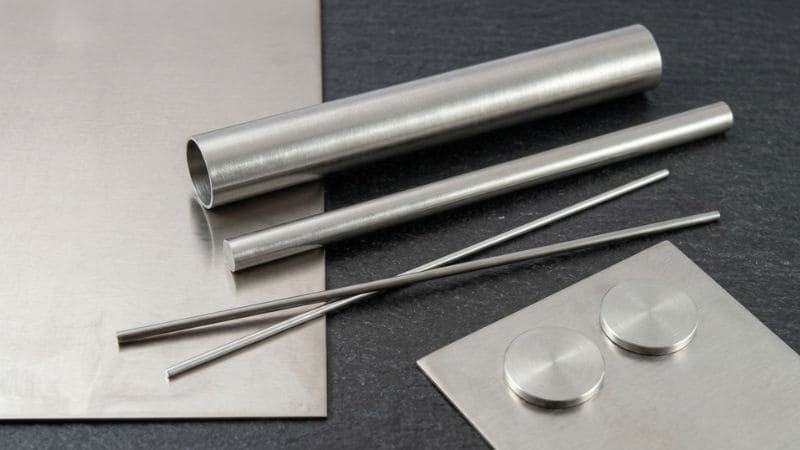
Prós
Strong yet Lightweight
This metal has a strength comparable to many steels and weighs almost half as much. The first choice for components that need to be strong without adding extra weight.
Extreme corrosion resistant
Titanium doesn't corrode or damage when it comes into contact with salt water or chemicals. This makes it ideal for underwater equipment or medical instruments residing within the body.
Biocompatível
The body does not recognize this metal as a foreign object. Due to this, a multitude of applications for use have taken place already in bone pins.
Can withstand high temperatures
This metal can withstand extreme temperatures better than aluminum and other metals. It helps to remain equipped with ease in the hot parts of jet motors and exhaust systems.
Contras
Expensive to Produce
Extracting and refining this metal is complex and costly. Because of this, it takes on a much higher cost than more common metals like steel or aluminum.
Desafios na maquinagem
Its extreme hardness and poor heat conductivity quickly wear down cutting tools. It takes specialized equipment and slow working speeds to shape complex parts.
Galling and Abrasion
When titanium surfaces are rubbed over each other during assembly, they tend to seize or stick to each other. To avoid this, it often requires special coatings or lubricants to keep operating smoothly.
Struggles in Casting
When in liquid form, this metal quickly reacts with oxygen. Creation of cast parts requires a vacuum or inert gas that adds a high cost to the job.
Common Applications Of Titanium
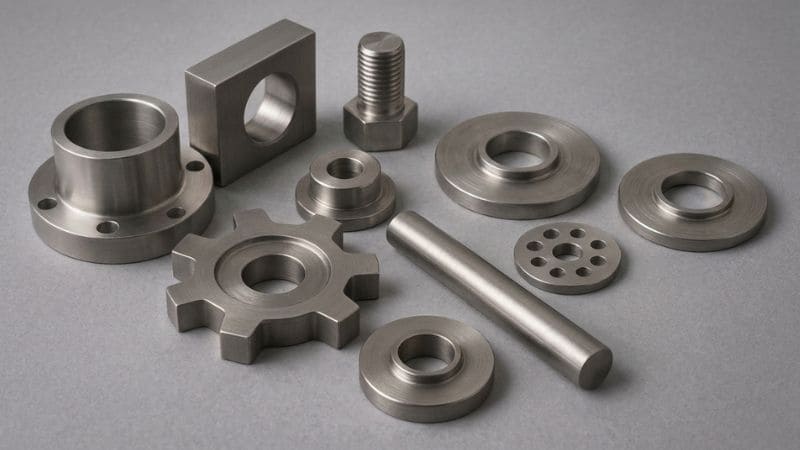
Aircraft
We use titanium for jet wings and engines due to its lightweight and strong features. These components can withstand higher speeds, and aircraft burn considerably less fuel.
Surgical Implants
The body doesn’t reject titanium, making titanium for dental screws and hip replacements possible. It remains solid within us without any negative reactions.
Underwater Gear
Titanium won't rust, not even in salty ocean water. That is the reason why it is best suited for underwater pipes and submarine hulls. It can withstand harsh conditions for decades.
Athletic Equipment
What is the first thing that comes to mind? Manufacturers use titanium so gear stays tough and light. That gives athletes extra power and speed, as it does not weigh them down.
Production Industry
Chemical facilities utilize titanium for their tanks and pipes, especially where acids are involved. Leaks are not an issue as acids cannot eat through it.
Comparison Table: Properties of Tungsten and Titanium
| Caraterística | Tungsténio | Titânio |
| Common Use | Drill bits, Heavy Weights | Medical gear, Sports, Aircraft |
| Densidade | Very High- 19.25 g/cm³ (almost twice heavier than lead) | Low- 4.50 g/cm³ (approximately 60% of the density of steel) |
| Força | Extremely hard, Rigid | Strength-to-Weight Ratio: High |
| Durabilidade | Scratch-proof, Brittle | Impact-resistant, Tough |
| Ponto de fusão | Extremely high - 3,422°C (highest of all metals) | High - 1,668°C (high but half that of tungsten |
| Biocompatibilidade | Low -not for medical use | High - body implants-safe |
| Resistência à corrosão | Bom | Superior |
| Machining Level | Difficult | Challenging |
Comparison of Tungsten and Titanium Weight
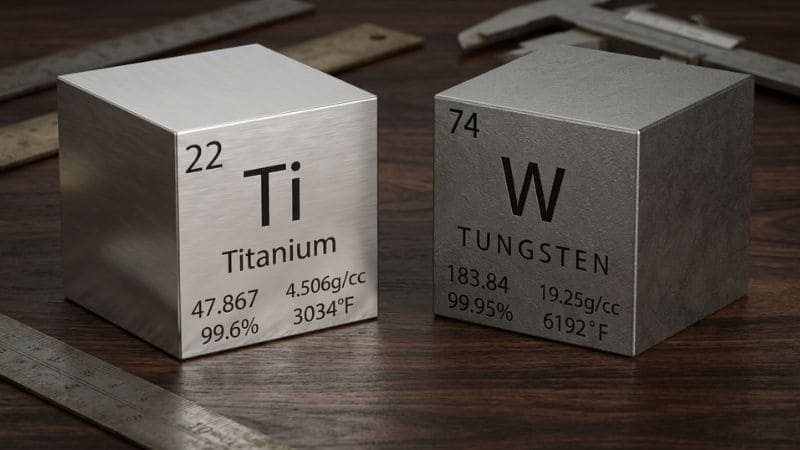
The primary distinction between these two metals is in their weight. Tungsténio is very dense; it is nearly as heavy as gold with a density of 19.25 g/cm³. A small cube of it would feel much heavier in your hand than you think it should be for its size. This is ideal for scenarios where considerable weight is needed but not much space is available.
Titanium in contrary. Its lightweight nature, which weighs around half that of steel, is well known. Having only a density of 4.50 g/cm³, it is lighter than what one would expect of a strong beam. As a result, it is the “go-to” choice for anything that needs to get off the ground or to fly, where every extra pound makes things more difficult.
Tungsten and Titanium Strength Comparison
When we think of strength, it can be helpful to think of hardness vs. toughness. Tungsten is the king of hardness, mighty with a melting point of 3,422°C (6,192°F). It is extremely hard to scratch, dent, or bend. Nonetheless, it is also brittle because it is so stiff. If you hit a piece with a solid hammer, it will break like glass, rather than bend.
Titânio is durable in another way. It may be less hard than tungsten, having a significantly lower melting point of only 1,668°C (3,034°F), but it is much tougher than it is. It can withstand a strong blow or heavy load and can bend a little without causing damage. The "strength-to-weight" ratio of this is one of the best in the world, meaning it gives the most bang for the buck.
Other Key Distinctions Between Tungsten and Titanium
Soldabilidade
It is easy to weld titanium, but due to the risk of becoming brittle, it must happen in a room without air. Welding of tungsten is much more challenging due to its very high melting point, which often causes cracking of the surrounding metal due to cooling.
Maquinabilidade
We describe it as the ease with which the metal is machinable using conventional machining processes. It includes turning, perfuração, boring, milling, grinding, etc. These may involve the application of a cutting tool primarily.
Magnetismo
Neither metal can be pulled by a magnet, as they are regarded as non-magnetic. This means they’re safe to use in special medical places like around MRI machines, where no magnetic interference can be introduced.
Resistant To Corrosion
Titanium is a global champion in fighting corrosion from saltwater or acids. Tungsten also has good stability, but does not develop the same protective “skin” as Titanium. Because of this, it may start to wear down with prolonged exposure to strong chemicals.
Resist High Temperature
Tungsten wins in extreme heat, as it stays solid, unlike other metals, which can melt into a puddle. Titanium is better at withstanding heat, but it does become weak at a certain temperature.
Tungsten or Titanium: Which One To Choose?
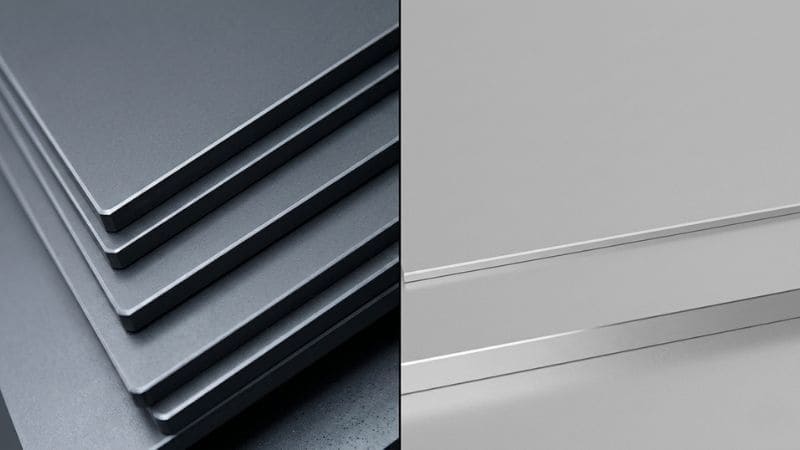
Choosing the best metal wholly depends upon your project objectives and goals. Neither material is “better” overall, as they solve completely different problems. You must decide whether to save weight or add extreme durability.
Pick Tungsten in case:
You require maximum weight to achieve small dimensions.
Choosing it offers the load-bearing strength of steel at the weight of plastic.
Heat is a principal factor.
Use this quote when your parts will be subjected to temperatures that will melt anything else like it.
One of the priorities is scratch resistance.
Nothing beats its extreme hardness for tools or objects that need to stay smooth and shiny despite heavy use.
Choose Titanium if:
Losing weight is important.
Weight strength is crucial for whatever you are building, whether it needs to fly, run fast, or be carried.
The surroundings are cold.
It cannot rust, so it is a better option for underwater use, or that is exposed to chemicals.
Involves human contact.
Due to its biocompatibility, it is the norm for medical implants as well as high-comfort jewelry.
Conclusão
Although tungsten and titanium are both elite metals, they serve different functions. When extreme weight or heat resistance is needed, tungsten is the answer, whereas titanium is the answer for lightweight strength that never rusts. What you choose will entirely depend on the needs of your project.
Choosing the right material helps your equipment last longer and perform better. Contactar a DEK today for a fast quote if you seek expert assistance sourcing these high-performance metals.
