
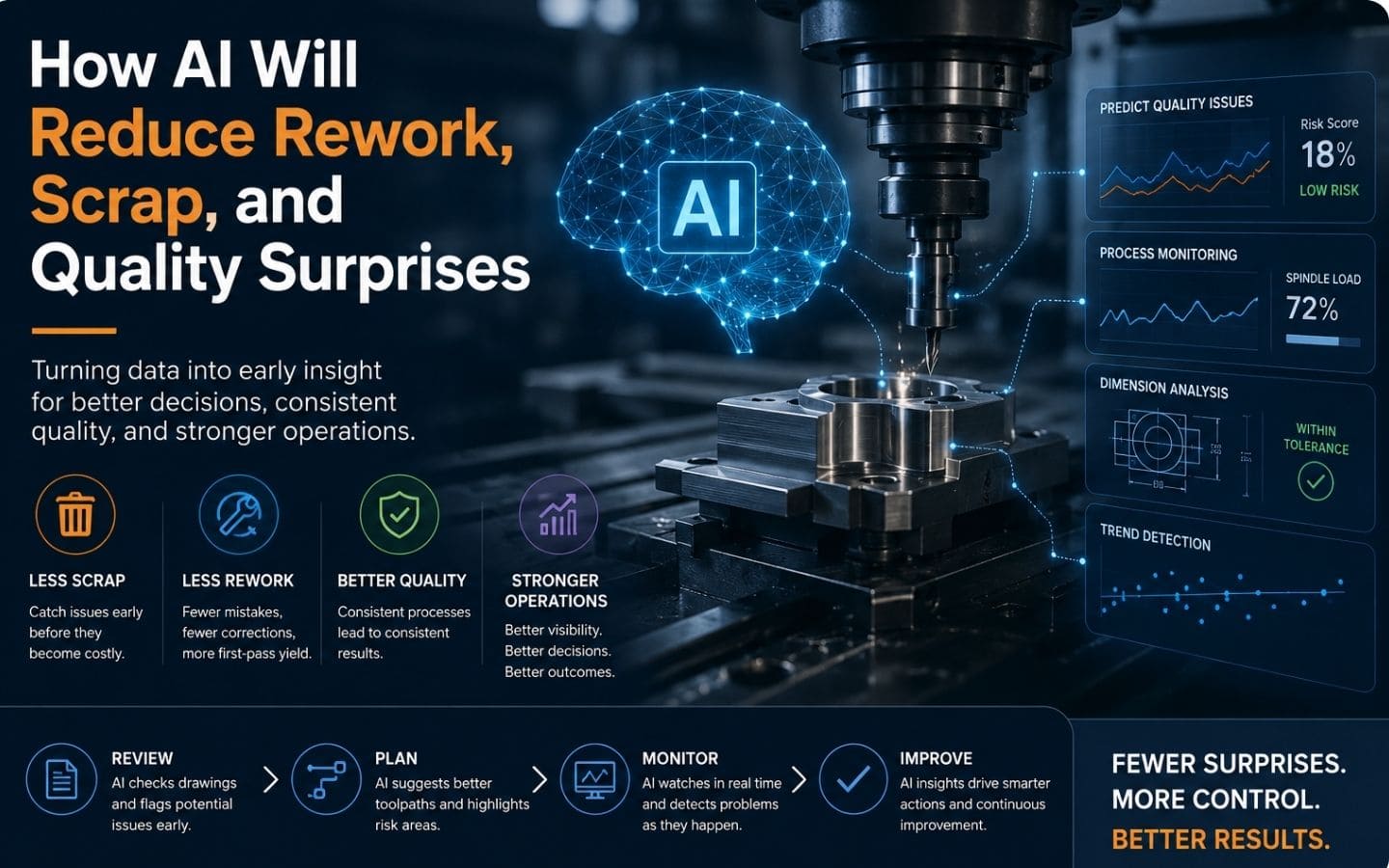
Over time, I've noticed that the bulk of manufacturing quality concerns aren't the result of dramatic failures but rather of recurring minor faults that develop over time. For example, one coder might understand "tolerance" differently from another. There may have been a successful setup done once, but it was never fully recorded. A certain toolpath may have appeared to be correct at first, but it now introduces a progressive modification with each run.
In high-mix situations like ours, rework and scrap are often caused by a series of minor irregularities that accumulate over time. This is why I do not consider AI futuristic or experimental, but rather a very real and practical tool. AI will help us reduce minor errors that divert time, resources, and faith from our operations.
Why Quality Problems Persist in Modern Manufacturing
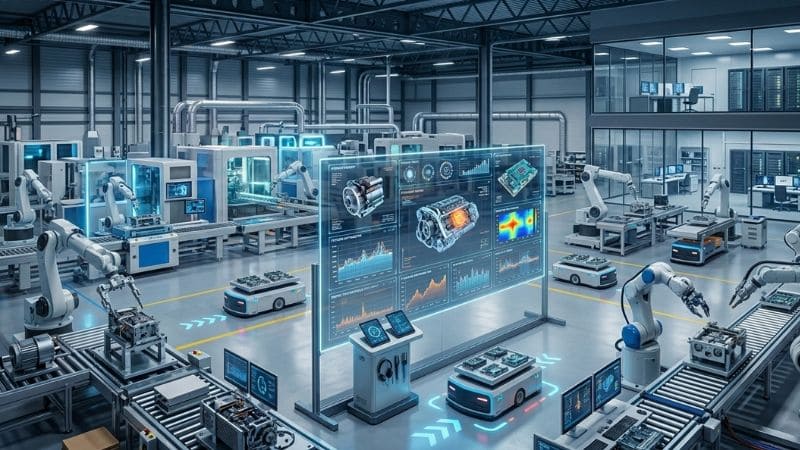
Today's manufacturing process is far more difficult than ever before. Manufacturers must work to tighter tolerances, use a wider range of materials, and produce more sorts of short-run parts than ever before. Engenharia resources are also being spread thinner, increasing the possibility of quality concerns arising—even in a professionally maintained manufacturing site.
When manufacturing in high-mix conditions, the likelihood of human mistakes increases. Furthermore, most production processes still rely heavily on tribal knowledge rather than reproducible techniques.
Furthermore, most engineering departments do not have enough staff to thoroughly analyze every single detail of every drawing or production process prior to manufacturing; as a result, most quality faults are discovered during the manufacturing process rather than before it begins.
Where AI Helps Before Production Starts
AI plays an important role in the development of a new product before production begins. The use of AI has already been proven beneficial for drawing reviews because AI can routinely identify tolerances that are easily missed, flag dimensions that are overly tight, and provide warnings of possible instability or distortion due to geometry. The engineer is not replaced by AI; instead, AI provides the engineer with an additional focus that never gets tired or hurried.
AI can also assist in process planning by providing predictive insight into safe toolpaths as well as highlighting areas where there may be material risk or where variation is most likely to occur within the process. Even small changes during the process-planning phase can eliminate significant amounts of rework after production has begun.
According to Taiichi Ohno, "Costs do not exist to be calculated. Costs exist to be reduced." The great opportunity to reduce waste before production begins is the first place to put this idea into practice.
How AI Improves Quality During Production
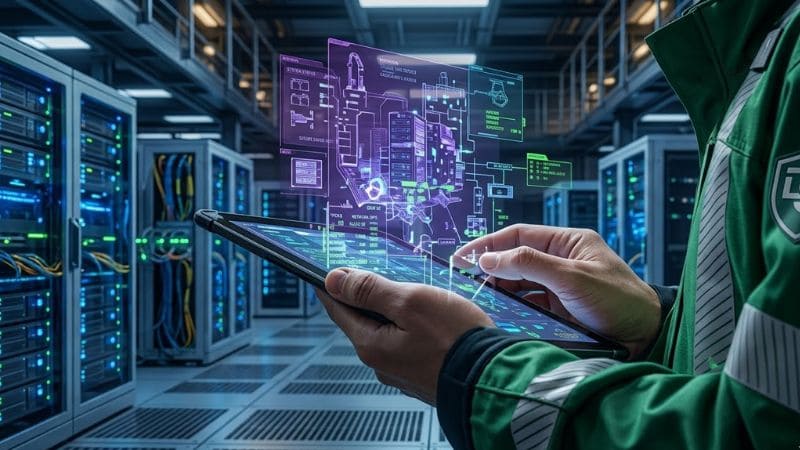
As production gets underway, maintaining consistency becomes the key obstacle. Two different operators may carry out the exact same job the same way, using the same machines and tools to create an identical part, yet they may produce slightly varying results from each other, particularly in short production runs.
AI can help solve this issue by providing real-time monitoring and analysis of machine activity and performance and detecting patterns that humans may not be able to see immediately. In lieu of finding out about quality issues during a post-production inspection, an AI-driven system will be able to provide early trend indicators of quality for the part as it is being produced.
Another tool that helps to decrease variation among operators is digital checklists. When operators are provided with consistent, repeatable process steps to follow throughout the course of the production procedures, variations in results between machine operators tend to be minimized naturally.
Reducing Scrap Through Better Process Visibility
Scrap isn’t typically the result of a single mistake. It’s often the result of a series of small mistakes that are not caught soon enough.
What AI does well is visibility. Instead of waiting until inspection time to understand what’s happening, teams can see problems emerging very early. Feedback is no longer delayed. Corrections are no longer delayed. And accumulated errors are no longer common.
This really ties into something Peter Drucker once pointed out: “You can’t manage what you can’t measure.” While AI doesn’t make manufacturing flawless, it does help spot issues much earlier. And just that early visibility alone can change the way teams operate.
The Impact on QC and Inspection Teams
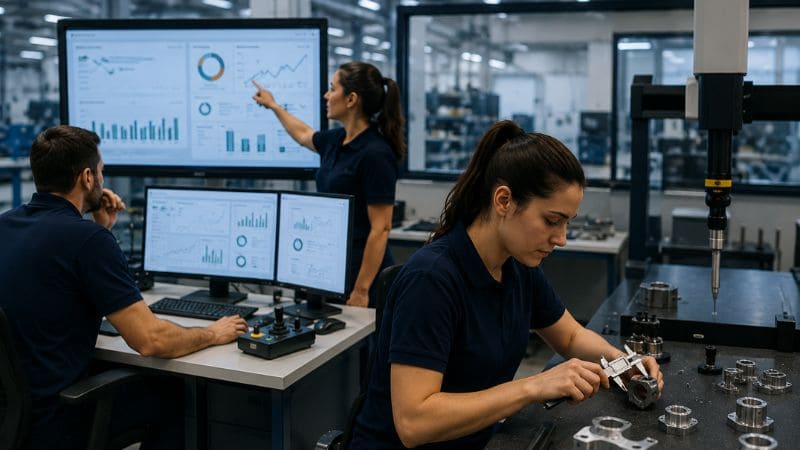
One of the biggest misconceptions about AI is that it replaces humans. I think it shifts where their focus is.
Quality teams today spend a lot of their day documenting, reporting, and trying to make sense of what happened. With better data and better systems, they can focus on prevention, not reaction.
Inspection teams, instead of reacting to defects, can design systems that prevent defects from ever occurring. I think that’s a better use of their time, and I think that’s a more sustainable use of their time in the long run.
How Leading Shops Are Already Using AI
What’s fascinating is that the most innovative shops aren’t really implementing AI in innovative ways. They’re implementing it in small ways.
Some are embedding it in drawing reviews and programming. Others are creating basic dashboards that display information for operators about what’s most important at that time. And many are taking it one step at a time, one process at a time, one machine at a time.
The change may be quiet, but it is consistent, which is usually the case for genuine change in manufacturing.
My Perspective
I don’t think AI will ever eliminate the need for rework entirely. Manufacturing is inherently risky, variable, and full of surprises. But I do think AI has the potential to minimize the occurrence of minor, avoidable errors that slowly erode efficiency and self-confidence.
From my perspective, the true benefit of AI is not about saving material or time. It’s about achieving more reliable processes and establishing trust between people. And in the end, trust is what sets stable manufacturers apart from those who are constantly fighting to stay afloat.
