
Electrical Conductivity of Aluminum: Um guia completo
Aluminum is one of the important metals due to its lightness, stability, and high electrical conductivity. Even though the aluminum conductivity is less than that of copper, it provides a good compromise in terms of performance, weight, and cost. These properties favor its use in aerospace, automotive, and electrical engineering applications.
In this blog, you will learn about aluminum conductivity statistics, what made them change, and why they are still a popular choice in CNC machining and industrial applications.
What is Electrical Conductivity?
Electrical conductivity provides a material’s ability to enable the flow of electric current. Metals such as aluminum and copper manage electricity efficiently because of their free-moving electrons.
The higher the conductivity, the easier it is for an electric current to flow through any material. The units of measurement of conductivity are given in Siemens per meter (S/m). The practical use of the resistance would be compared against thermal features by an engineer to evaluate a material's overall performance in an electrical system.
Aluminum as a Metal

Aluminum is a non-ferrous metal with a perfect blend of strength, corrosion resistance, and conductivity. With 2.7 g/cm³ of density, it is lighter than most metals but possesses considerable mechanical stability.
Due to its natural oxide layer, aluminum also survives corrosion perfectly and can perform under extremely difficult conditions. This property combination has made aluminum an important material for CNC machining, milling, and turning applications in diverse manufacturing industries.
Can Aluminum Conduct Electricity?
Sim, alumínio is a highly electric-ready material. Being a bit scant of outer electrons, aluminum allows for quick electric current conduction across an electric field. Therefore, the electrons are free to move.
Approximately 61% of copper conductance is achieved in aluminum. Light and cost-effective, making the gain in weight and material cost becomes critical. Due to this, aluminum finds common usage in electric wiring, bus bars, and power cables.
How to Measure Electrical Conductivity of Aluminum?
The conductivity of aluminum is tested using a conductivity meter or an eddy-current testing device. This measures how well electrical current can flow through materials under defined conditions.
The conductivity is expressed mostly in percentage of the International Annealed Copper Standard (%IACS). This is useful for industrial quality checks for aluminum grades, effects of heat treatment, and suitability for machining applications, like milling and CNC component manufacturing.
How Does Aluminium Conduct Electricity?

Aluminium is a metal, and like all metais, it can conduct electricity due to the freedom of electrons in its atomic structure. When a voltage is applied, these electrons can then move freely, thereby allowing steady current flow throughout.
O crystalline structure of aluminum provides a very low resistance to electron conduction. Thus, the whole mechanism for energy transfer gets facilitated very efficiently. Because aluminum has low density, it can serve as an applicable material for lightweight electrical systems while maintaining high conductivity and strength.
Behavior of Aluminum with Other Metals
| Metal | Electrical Conductivity (S/m) |
| Prata | 6.67 × 10⁷ |
| Cobre | 6.41 × 10⁷ |
| Ouro | 4.90 × 10⁷ |
| Alumínio | 4.08 × 10⁷ |
| Ferro | 1.12 × 10⁷ |
Why is Copper More Conductive than Aluminum?

Copper is more conductive than aluminum because of its denser atomic structure, which has lower electrical resistivity. The atoms of copper facilitate the electrons to move freely, thus giving better conductivity. Aluminum has less density, as a result offering more usage in applications where weight saving and cost-effectiveness are important.
So, in compact systems, copper has an edge, while in larger and high-voltage applications such as transmission lines, aluminum performs way better.
Comparison Table of Electrical and Physical Properties: Copper vs. Aluminum
| Imóveis | Cobre | Alumínio |
| Conductivity (% IACS) | 100 | 61 |
| Electrical Conductivity (S/m) | 6.41 × 10⁷ | 4.08 × 10⁷ |
| Densidade (g/cm³) | 8.96 | 2.70 |
| Peso | Elevado | Baixa |
| Custo | Elevado | Baixa |
| Resistência à corrosão | Moderado | Elevado |
| Common Use | Wiring, electronics | Power lines, heat sinks, automotive |
Factors Affecting Electrical Conductivity of Aluminum
Purity and Grades
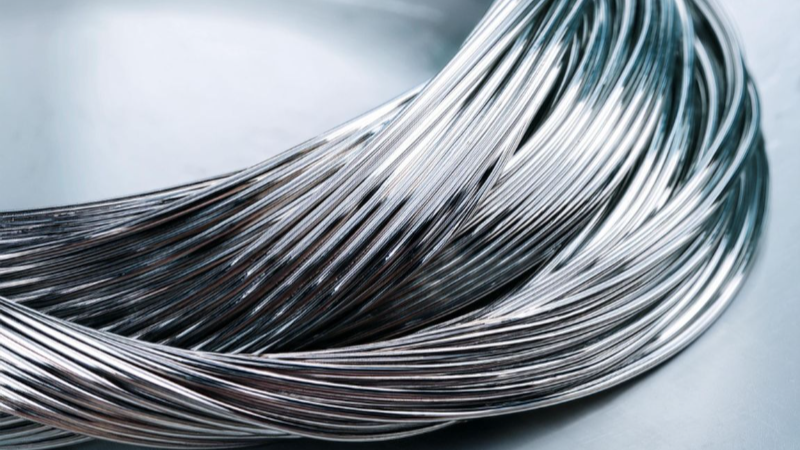
Aluminum purity has a great effect on its electrical performance. High-purity aluminum (at 99.99 percent) has excellent conductivity properties. The impurities, silicon or magnesium, hinder electron motion.
Pure aluminum has about 64 percent IACS, while most alloys have an IACS range between 30 and 50 percent, depending on their composition.
Composição da liga
Aluminum alloys are useful in parts machining in CNC because they increase strength and workability. But because of the copper, zinc, and magnesium alloying elements, the conductivity will be decreased a little bit.
However, engineers will choose alloys that have a fair balance between electrical performance and mechanical strength.
Surface Treatments
Surface finishings, such as anodizing, cause an oxide layer that protects the surface against corrosion, but which reduces conductivity a little. And then electroplated with silver or nickel, which will improve both conductivity and durability.
On the CNC machine, surface treatment must be controlled. Hence, a good electrical and mechanical outcome can be achieved.
Aluminum Grades Conductivity Table
| Aluminum Grade | % IACS (Approx.) |
| 1050 | 61 |
| 1100 | 59 |
| 3003 | 43 |
| 5052 | 35 |
| 6061 | 40 |
| 7075 | 33 |
Advantages of Aluminum Electrical Conductivity
The advantages of aluminum in electrical utilities are:
- It can combine high conductivity with low density, thus reducing the weight of power systems.
- Its naturally occurring oxide layer makes for a very good corrosion resistance, thereby extending the lifetime of products.
- Easier machining through CNC milling and turning allows for complex shapes and precise designs in aluminum.
- The cost-effective and recyclable advantages made it stronger as a sustainable and versatile material in modern manufacturing.
Limitations of Aluminum Electrical Conductivity
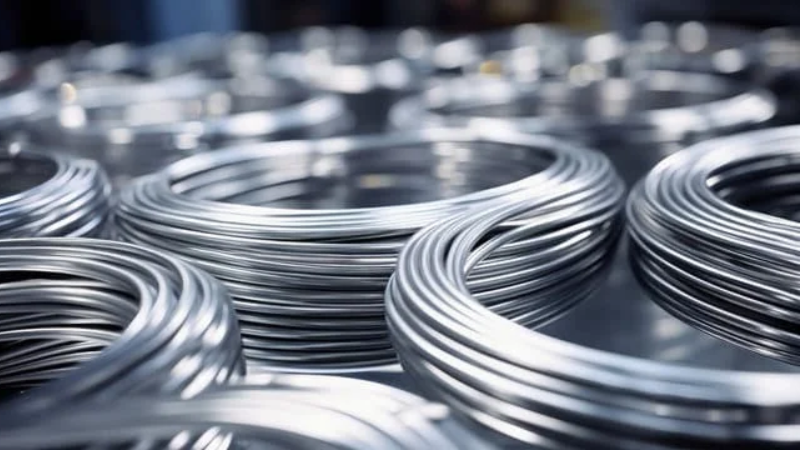
Aluminum generally does well under most conditions, but has some disadvantages. For instance, its conductivity is lower than copper’s, requiring larger wire diameters to carry equivalent current loads.
The oxide layer, while protective, can serve as an insulator if not properly handled. In some high-stress environments, aluminum also needs to be reinforced with special alloys or surface treatments.
Applications of Aluminum in Electronics and Electrical Products
Electrical and Electronics Industry
Aluminum is an important material used for power transmission lines, bus bars, and housing circuit boards. High conductivity and low weight make it ideal for energy-efficient and cost-effective electrical infrastructure.
Automotive and Transportation
Aluminum is used in automotive and electric vehicle manufacturing to increase fuel efficiency by reducing overall weight because of its reliable conductivity and heat dissipation.
It is the preferred choice for the manufacture of battery connectors, charging systems, and electronic enclosures.
Aeroespacial e Defesa
Aerospace applications are demanding on aluminum serves as a material that provides an excellent balance between conductivity and structural strength. Antenna components, signal shielding, and wiring systems for aircraft applications require precision and low weight.
Equipamento médico

In AV medical manufacturing, aluminum ensures reliable and safe electrical performance of diagnostic devices and imaging systems.
CNC-machined aluminum parts provide dimensional stability and corrosion resistance while maintaining conductivity in sensitive medical environments.
Conclusão
Aluminum’s electrical conductivity, integrated with its light weight, corrosion resistance, and machinability, makes it a crucial material across many industries. From CNC machining to power transmission, aluminum continues to show its stability and cost efficiency in demanding environments.
DEK specializes in precision aluminum machining and delivers expert DFM feedback to help optimize your design for maximum conductivity and manufacturability. Partnering with us will guarantee great performance as well as accuracy and precision in production for every project.
FAQs
Why is aluminum a popular choice for conductive applications?
Aluminum is widely used in conductive applications due to its excellent balance of conductivity, weight, and cost. It is not as conductive as copper; its lightness makes it ideal for large-scale power lines, transformers, and busbars. It also resists corrosion, ensuring long-lasting performance in demanding environments.
Is aluminum a good conductor of electricity?
Yes, aluminum is a good conductor of electricity. Its conductivity is about 61% that of copper, but because it weighs only one-third as much, it offers a high conductivity-to-weight ratio. This makes aluminum a preferred material for electrical transmission, where both efficiency and reduced weight are critical.
Are aluminum conductors safe for outdoor use?
Yes, aluminum conductors are safe for outdoor use when properly installed and protected. They naturally form an oxide layer that prevents corrosion, which enhances their durability. With correct fittings, connectors, and weatherproof insulation, aluminum wiring performs reliably in outdoor and industrial electrical systems.
