
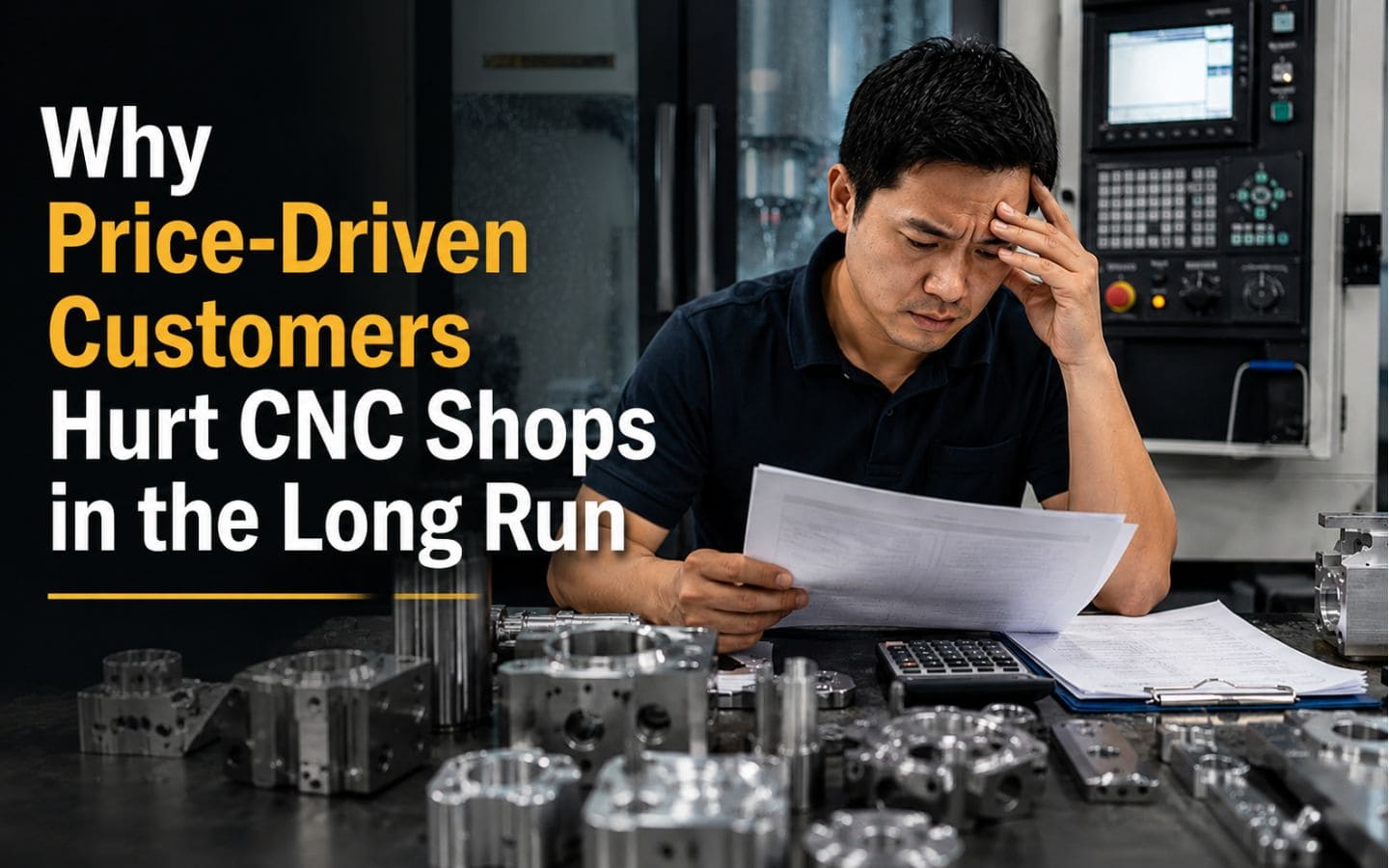
After years in manufacturing, I know busy isn’t always growing.
I've watched CNC shop owners run machines 24/7. They have busy employees, and they receive dozens of requests for quotes. Spectators assume these companies have to be doing well. Still, many find they can’t increase profit margins, broaden capacity, or even look ahead with certainty.
Most of the time, the problem was not the technology or the tools. It focused on their clients, rather than themselves. A few clients can create stability, growth, and long-term options. Others just set off endless price wars that prevent any real progress.
How Price-Driven Behavior Distorts Manufacturing Work
Manufacturing is a complex process that requires precise machining, tight tolerances, and time-consuming inspections. Customers who believe the lowest choice is the best may have concerns about its impact on production.
I’ve seen customers demand tight tolerances, complex machining, and multiple inspections, while expecting quick turnarounds and low prices. Some simply send RFQs to a bunch of vendors and choose whoever is cheapest. Other times, an organization completely ignores critical things like the maker’s skills, commitment to quality, and domain expertise. The only thing they want is to cut costs.
In doing this, buyers lose that important personal link with suppliers. Instead of trusted partners, suppliers become just data entries. Yet, genuine success comes from teamwork. Prioritizing prices over relationships will actually leave you worse off because what you save on initial costs, you usually lose later on.
The Operational Damage That Price Buyers Create
From what I've seen, price-driven customers rarely show the extent of their damage right away. It crops up later, in delayed schedules, more clarifications, last-minute changes, and endless little interruptions that make production way harder.
Also, there's the issue of unpredictability. When clients always go for the cheapest option, predicting order flow becomes a real hassle, and planning steady production gets nearly impossible.
In the long run, everyone feels the strain. While lots of energy goes into dealing with constant issues and cost hassles, not enough focus is put on improving processes or future growth. For any CNC shop, trying to thrive in that is super tough.
The Financial Trap Hidden Behind “Low Price” Work
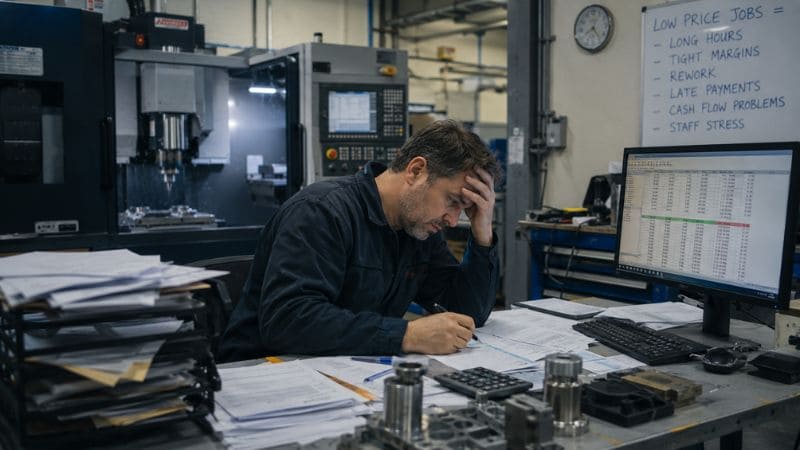
A lot of shops say they'll take low-margin jobs because some cash flow is better than none. That might work for a little bit. But problems pop up when these low-margin gigs get way too big.
For a shop to stay competitive, work at a good margin requires continuous investment, such as new tools, new equipment, new software systems, automation, and training. It's these investments that boost efficiency and keep things ticking.
And where does the dough for these upgrades come from? Solid profit margins.
If those margins start sliding, growing tough. Instead of focusing on what's next, you're stuck trying to make existing stuff work.
I've seen this play out. Shops operate at full capacity yet are broke 'cause most of their stuff isn't priced right. Production was running, but the company was not generating enough profit to secure its standing.
Cash flow can be a hidden challenge too. The more work a shop produces with low margins, the more it strains its cash flow. Customers who are primarily concerned with price have no loyalty. They quickly cancel orders and contracts, leaving the shop with unpredictable demand.
This makes it hard to plan ahead.
A shop must be prepared to deal with low-margin continuous work while investing in process improvements.
What I’ve Seen After Working With Hundreds of CNC Customers
From my experience with manufacturers for aerospace, робототехника, medical devices, and industrial equipment, and more, I have noted a few trends.
Businesses that are constantly seeking the cheapest jobs to survive tend to have unstable customers.
They constantly lose customers and have to spend time searching for work because they operate in a constant bidding war for quotes and have no repeat jobs.
What's interesting is that many of these businesses have highly developed machining skills. But what is lacking is the work to match their skills, leading to an abundance of machining jobs.
Shops that tend to grow steadily tend to focus on something other than the price.
These shops rely on skills to develop a good reputation and clientele, and customers are educated on what to expect.
Most machining businesses operate within the same constraints. What makes these businesses exceptional is the trust that has been established within their customer base, and the loyal customers help these businesses grow through word of mouth.
Because of the exceptional trust that has been established with their customer base, these shops are able to sidestep the constant bidding war. Instead, they focus on the work to be done and, most importantly, the value that can be added. At DEK, we have found that our best partnerships have occurred in the highest-demand sectors.
Why Quality-Focused Customers Build Real Growth
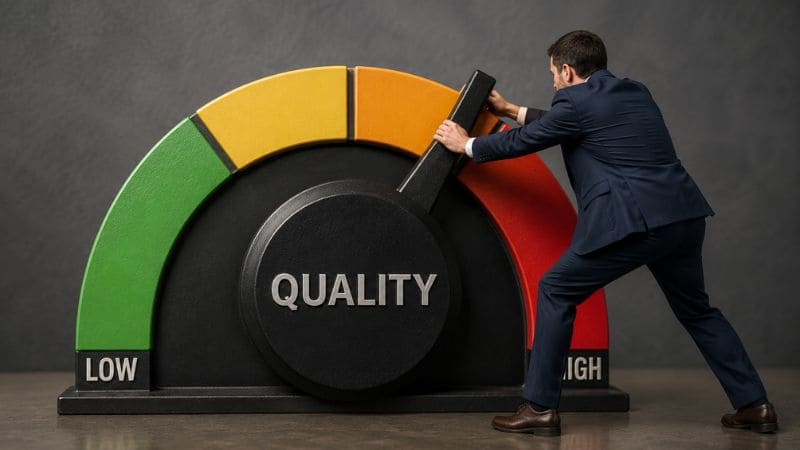
After spending time with manufacturers in all sorts of industries, I’ve seen how real customer relationships aren’t just about chasing the lowest price.
Warren Buffett nailed it when he said, “Price is what you pay. Value is what you get.” That’s what matters in manufacturing. Customers who only care about the numbers usually overlook what really makes a difference: things like smart engineering help, steady quality, on-time shipments, and just having a solid partner you can count on.
Customers who care about quality see things from a different angle.
They understand that a low-cost quote is insufficient to make things work. They want for actual engineering support, tight process control, thorough inspection, and on-time deliveries.
And because they pay attention to these details, their projects function more smoothly. There's no drama and fewer surprises.
How Shops Can Shift Away From Price-Driven Work
Moving away from price-driven work needs patience and discipline.
First, companies have to change how they position themselves in the market. If a store markets itself mainly as the cheapest choice, that's who they'll get—people solely interested in prices. It’s tough to compete just on that since someone else is always ready to undercut you.
It works better to highlight aspects that build long-term value, like engineering skills, quality control, inspection processes, consistent production, and reliable delivery.
Peter Drucker had it right when he said, “There is surely nothing quite so useless as doing with great efficiency what should not be done at all.” That hits home for CNC shops trying to chase after low-margin jobs. They could excel at landing cheap deals, yet if those can’t drive investments, stability, and future growth, then being super efficient won’t strengthen the business.
Most importantly, shops need to become selective. An RFQ does not always equal a good opportunity. Companies sometimes need to turn down RFQs that don’t align with the company’s strengths, margins, or long-term goals. Sustainable growth comes from having the right customers, not more orders.
Заключение
I've learned to cherish a shop's customers as much as its machines.
In the near run, merely accepting price-sensitive jobs can keep a shop active. However, it can stifle a shop's growth and render it unstable. If employment and contracts are only won by the lowest bidder, investing in workers or processes is pointless. It can also undermine the type of manufacturing culture that supports and sustains the business when market conditions change.
The best CNC shops are not the ones who always make the cheapest offer. Those shops made a name for themselves by their customers choosing to return to them because they fulfill their needs for a high level of quality, consistent reliability, and high levels of technical capability. When customers see a company this way, the orders become secondary, and they can make long-term plans to grow.
Growth in manufacturing is about making a business customers will choose to return to, even in the face of cheaper competitors, rather than making a business that has a constant flow of work.
