
What the Next Generation of Machine Shops Will Look Like
Over the years, I’ve observed some trends with successful shops. Whether small or large, these shops have a calm working system that generates consistent good results over time.
When I think about what next-generation shops will be like, I know these shops will build on the already working system and more. Next-generation shops will appreciate AI technology rather than fear it.
They'll stay digitally connected, invest in multi-skilled talent through consistent training, value effective quality control and inspection, inculcate strong leadership, and much more.
Instead of handling all jobs in-house, they consistently collaborate with reliable partners to meet the increasing demand of their customers.
With this, processes will become clear and smooth. Burnout is eliminated while revenue continues to grow. In this blog, I'll elaborate further on what you can expect from next-generation machine shops.
The Shift From “Machines First” to “Process First”
While machines are a good investment, many future shops will invest in processes that will generate consistently great results over time. Planned workflows. More stable, new customers, and more success.
Future shops invest in workflows before equipment
In the previous years, growth followed a simple strategy. As shops take on more projects, they invest in more machines and talent, and that works. In recent days and years to come, process matters more than machines do.
How is inspection and traceability carried out, and how effective is communication?. And how is the workflow planned? All of these factors have a crucial impact on lead time and delivery efficiency.
Consistency and repeatability become the core competitive advantage
Consistency and repeatability become the core key to success. Shops that win are those that can maintain the same quality, precision, and durability across multiple batches.
Even when there are varying machinists and engineers within a shop, they consistently deliver a repeatable result that keeps customers loyal to the brand.
And why will this be possible? There’ll be a stable and documented workflow that consistently generates the same high-quality output.
Digitally Connected from Quote to Shipment
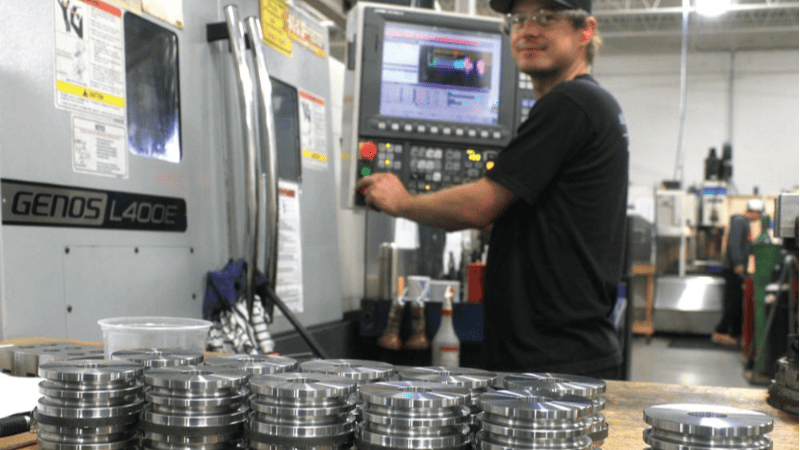
Future shops will significantly benefit from digital systems that enhance productivity and efficiency. From real-time job tracking to automatic documentation to sharing a digital thread.
Real-time job tracking instead of whiteboards
I’ve seen shops use whiteboards, and it worked for them in the old days. In recent times, when demand and job complexity are high, it no longer works.
Next-generation shops will prioritize real-time tracking using digital systems. From engineering и обработка to quality inspection, everyone will have access to the same tracking information simultaneously.
This will eliminate interruptions and mistakes and enhance delivery. And as Andrew McAfee noted, “the biggest gains from digital technology come when it makes work visible.”
Automatic documentation for QC, tooling, and revisions
While many shops still treat documentation as an extra task, future shops will include documentation as an automatic process for quality control, tooling, revision, and updates.
Everything gets documented as the process is carried out. They are integrated into the workflow and not treated as additional tasks. This makes traceability easier and detects errors earlier.
Engineering, machining, and QC share the same digital thread
I’ve learnt over the years that the more disconnected departments are within a shop, the more mistakes they make.
With the same digital thread, machining and engineering quality control will benefit from the same platform, allowing them to make informed decisions effectively.
Communication becomes faster, and updates are shared quickly. This reduces misunderstanding and mistakes while enhancing production speed.
AI-Enhanced Engineering and Programming
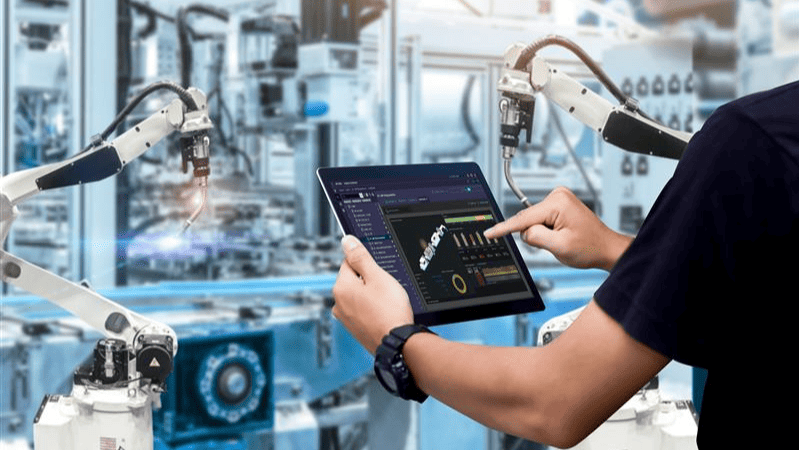
AI will not replace experts, but it will enhance their activities. From engineering to programming and machining, AI tools will enhance production efficiency and productivity.
Automated drawing checks and tolerance validation
Future shops will benefit more from AI-enhanced engineering. These technologies will help experts detect conflicting tolerance, automate drawing checks, and analyse unrealistic specifications and surface requirements.
It will help future shops detect risk early. This means fewer errors, less scrap work, and no rework.
CAM suggestions that reduce variation between programmers
With more programmers within a shop, there are bound to be variations for a single component.
CAM systems are capable of enhancing tool paths, feeds, and identifying strategies for best programming practices. This helps reduce variation while improving consistency and more accurate results.
Faster feasibility evaluation for complex parts and materials
While many average shops still rely heavily on expertise and instincts in determining the feasibility of a project, other shops are taking a new turn.
In fact, future shops will incorporate AI, along with human experience, in evaluating the manufacturability of complex parts.
From material behavior to tolerance specifications and machining risk, AI feasibility tools will provide relevant information more quickly for better decision-making.
A Workforce Built on Multi-Skill Talent

When a workforce is built on multi-skilled individuals, experts begin to understand processes and strategies that extend beyond their professional scope.
This helps them detect faults early, facilitates effective collaboration across departments, and enhances overall productivity.
Machinists who understand engineering, not just machines
Based on years of experience, I can say that the talent issue in manufacturing isn’t only about availability, but also about the depth of knowledge. Future shops will focus on expanding the understanding of experts beyond the traditional scope.
Machinists understand the tolerance range and its importance, why fixtures are used, and generally grasp design strategies beyond just milling. This will help detect errors early and enhance communication with the engineering team.
Engineers who understand fixtures, toolpaths, and tolerance stack-ups
Multi-skilled engineers also make production easier. They understand fixtures, toolpaths, and tolerance stack-ups.
This helps them make designs that can be easily manufactured with better performance. The result is less rework, reiteration, and improved work speed and efficiency.
Continuous training replaces “tribal knowledge.”
Rather than rely on one or two experts for a crucial task, future shops will invest in consistent training. Knowledge will no longer be bottled in people's heads.
Adequate documentation of processes will enhance continuous training and learning. Learning will be viewed as an integral part of the job, rather than an occasional task.
Quality Moving to the Front of the Process
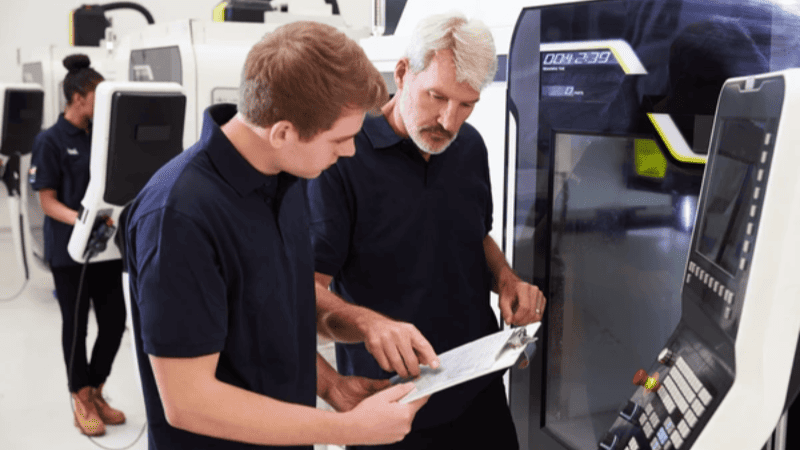
The inspection process shouldn’t just be an after-machining step, but a significant part of the manufacturing process.
Many shops are now integrating inspection directly into their entire production process, and in the years to come, this will become a standard rather than an option.
In-process measurement is becoming standard
I’ve seen many average shops carry out inspections only after machining. This process is usually inefficient, as it is bound to result in more issues and financial loss.
Modern shops do inspection at every stage, from before to during and after machining. They validate critical measurements and features directly during the process. This reduces scrap work and rework, and encourages faster lead times.
First-article discipline applied even for prototypes
Many shops still don’t see reasons to apply first article inspection to прототипы. Next-generation shops will change that mindset.
And it will be seen as a standard and not an option. This will help them detect errors and problems from the start, before scaling to production.
Shops investing more in metrology than in additional spindles
I’ve seen many advanced shops today invest immensely in metrology and inspection processes rather than adding more machines. These are shops that prioritize quality and go to great lengths to achieve it.
They believe that detecting variations and problems early could save more funds and time, rather than requiring extra capacity.
Quality control, thus, becomes an integral part of the process rather than an additional burden. And this is evident in the saying, ‘Quality doesn’t happen by accident; it has to be planned’ – Joseph M. Juran.
Flexible Capacity Models Instead of Full In-House Load
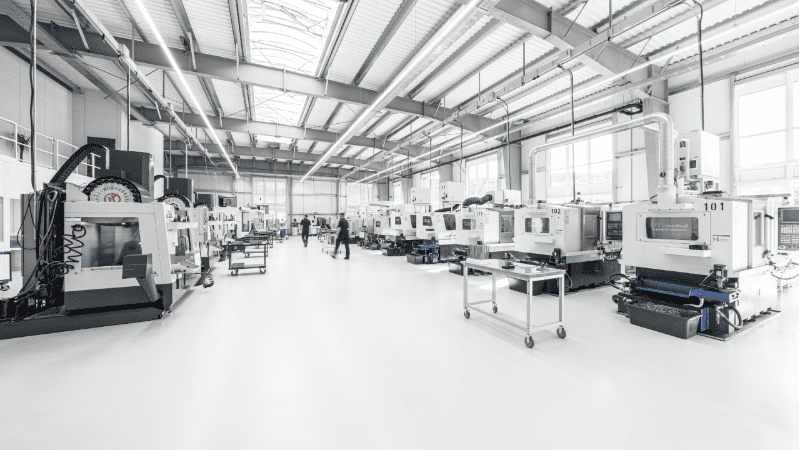
As many shops grow, full in-house capacity becomes insufficient, and as such, many are integrating reliable partners into their business. This helps them maintain stability while meeting the complex demands of customers.
Hybrid internal–external manufacturing is the default
Many modern shops today do not buy into the idea of doing everything internally. In fact, it's no more efficient. These shops consistently leverage external partners to meet their targets.
Core projects are handled in-house, while other specialized operations are outsourced to a reliable partner. No overwork. No burnout. But just a seamless collaboration.
Peak loads absorbed by reliable partners to maintain stability
For many traditional and average shops, stability is difficult. On days when project demands are high, these shops strain their capacity.
Next-generation shops will differ in that they will handle fluctuations with strategic approaches. Partnership with external teams will help them maintain stability and balance workflow.
Many modern shops already integrate partners like DEK into their regular schedule
And while many shops are still overworking their capacity and battling with stability, many modern shops are consistently partnering with DEK.
They view us not as an emergency plan, but as a significant part of their business. Steadily and regularly, we build a strong life-long partnership.
Faster Iteration Cycles for High-Change Industries
Specific highly innovative industries like robotics, UAV, and MedTech require shops that can meet their unique demand in terms of flexibility.
These industries are evolving every day, and as designs are bound to change. Shops that can meet their demand are standardized ones with a balanced system that can manage changes effectively.
Robotics, UAV, and MedTech require weekly, not monthly, revision cycles
Robotics, UAV, MedTech, and other innovative industries value fast and consistent production cycles. For these industries, designs are not static, and revisions are expected to be made weekly, not monthly.
Shops serving them are those that can accommodate this flexibility. No rush, but just a strategized and balanced system that can handle changes effectively.
Shops built for agility rather than fixed long-run production
One truth is that many average shops aren’t designed to manage flexibility. Any little changes disrupt workflow. And it is where modern shops thrive.
The system is designed to accommodate flexibility while maintaining a healthy workflow. Programming updates, inspection changes, and tooling requirements are adjusted as needed without causing any issues.
Small batches executed with production-level consistency
Even when customers order small batches, the same level of discipline, quality, and consistency is maintained. This is because some standards and systems enable efficient production, regardless of the quantity ordered.
Leadership Focused on Systems, Not Heroics
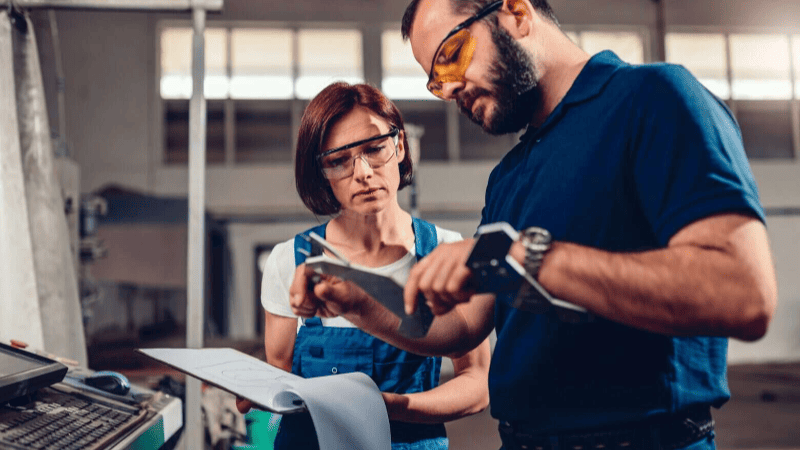
When everyone understands their role and carries it out as expected, then a working system is possible. From owners to managers and team members, accountability becomes easier when the culture is stable and standardized.
Owners shifting from “problem solver” to “system designer.”
Another strategy I’ve noticed in many modern shops' values is their system of leadership. Instead of leaders constantly resolving issues, they focus on building systems that prevent such problems from arising.
They are system designers instead of problem solvers. They value effective communication and balance their workflow rather than constantly firefighting.
Managers trained to lead, not just supervise
And for the managers, they understand their role. They are trained to lead, not to operate machines or supervise. They set a system that ensures everyone carries out their task and is accountable for it. Communication is intentional, and processes are clear.
Culture built around clarity, accountability, and communication
Similarly, many modern shop systems aren’t only built on clarity, but also on accountability and effective communication. Everyone understands their role and carries it out even without supervision.
Communication within and among departments is fast, and processes are clear. This kind of work culture fosters a calm balance system, rather than a pressured one.
My Perspective
Based on my extensive experience, I would say that many thriving shops today aren't accumulating machines, but rather those building systems. So what do we expect the next generation of shops to be like?
The next generation of machine shops will utilize more efficient processes and systems that yield exceptional results. These are shops that value digital connections among teams.
From documentation to QC and tooling, processes will be automated. They’ll inculcate AI technology into their workflow, develop multi-skilled talents, invest in quality control, and build strong, effective leadership.
And rather than overworking their capacity, they’ll leverage external partners and view them as part of their business, not an option. And in the end, what will matter most is how shops operate rather than what they own.
