
For most of my career, I thought capacity was something you measured with the number of machines you had under your roof. It took me years, many painful investments, to understand my error. Capacity is not equipment. The capacity to respond when customers change their designs. When lead times crash, or when tolerances unexpectedly tighten beyond what last year's equipment could handle.
We once thought that owning everything made sense. Today, complexity moves on faster than the rate of depreciation of equipment. No factory can be good at everything. It is acceptable to say that.
This attracted a rethinking of manufacturing, not as a closed system but as an open ecosystem. The core of strategic outsourcing lies beyond mere cost saving. These companies remain relevant in an industry that never stops changing, and they are the ones who learn how to master it.
Why In-House Capacity Isn’t Enough
Well, once in a while, having more machines meant more growth. Product complexity is growing, tolerance is tightening, and customer timelines are reducing. Internal capacity is reduced. Every job appears different, every fixture is distinct, and every engineering loop is unknown.
Now, the issue is not that factories do not have machines. The actual work has changed. All decisions but one must be made under pressure, and horsepower is the last thing to consider. Internal resources are pressured by skilled labor shortages, investment risk, and demand cycles that are almost unpredictable.
Rising Product Complexity
Walk into any modern aerospace or MedTech shop, and it's an immediate realization. Parts are becoming convoluted, tolerances are narrowed, geometries are increasingly demanding. Customers don't ask any longer if you can machine titanium. They ask if you can do it with a five-axis setup to ±0.01mm tolerance, with every step properly documented.
Owning machines is not synonymous with owning capability. The tool paths change. New alloys arise, and every enhancement consumes time, money, and talent. This is where most factories fail, not on capability but on pace.
Skilled Labor Shortages
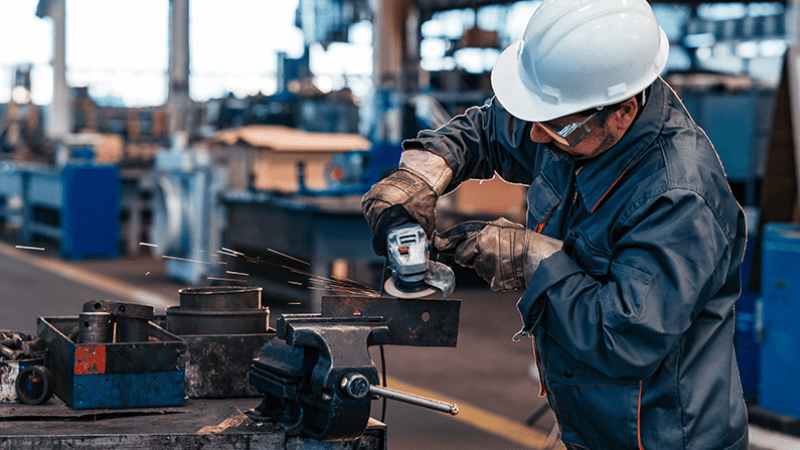
Every factory owner I speak with laments the same frustration. Finding experienced machinists is harder than just buying a CNC mill. We can buy machines, but knowledge can only be earned. Today, a lot of that knowledge is retiring faster than it can be replaced.
Strategic outsourcing introduces something that most businesses critically need. We need skills without the oppressive waiting for hiring cycles to catch up.
Higher Risk in Equipment Investment
Buying a five-axis mill, inspection suite, or проволочная электроэрозионная обработка line is also a much more complex process. Each machine comes with its own risks. Will the customer still need that capability in two years? Will tolerances tighten again? Will the part geometry change?
The doubt with such an investment comes not because machines are expensive. It is due to the wrong investments being permanent. On the contrary, outsourcing turns that fixed risk into flexible capacity.
What Strategic Outsourcing Means
Strategic outsourcing is not a fire drill; it is a structural decision. It means manufacturers can increase capability without a matching increase in payroll, floor space, or business risk. In other words, it is a form of modular capacity. They will behave as though it is actually part of the factory, even if it does sit outside the building.
This is not for the cheaper sourcing of something. This is about adding capabilities that would have taken the firm years to develop internally. The external can then look after variable, specialized, or unpredictable activities. When used effectively, outsourcing turns constraints into options.
Flexible, On-Demand Capacity
It's not about pushing on the full load from time to time, when schedules can no longer contain it. Instead, it is about the utilization of that second hand with your merging production rhythm. You don't own it, yet it behaves as if it were your own.
As a big advantage, utilization during quiet months will be displayed. Outsourced capacity confirms you do not spend on machines or labor you are not using. It scales down quietly when demand drops, without adding cost, and transforms to the fullest without negotiating. This kind of elasticity is impossible in-house.
Expanded Capabilities Without New Hires
A small robotics start-up has no metrology expert on staff, nor a fixture designer. Outsourcing becomes all the stronger by filling those gaps. The expertise is here for the taking, not an added cost in terms of salaries, benefits, bonuses, or anything. Most shops completely underestimate the amount of growth lost from skill gaps.
This is where outsourcing comes into the picture and helps to eliminate such bottlenecks. Instead of developing such skillsets inside, one shall keep on borrowing the skillset as much as they need.
Internal Focus on Core Work
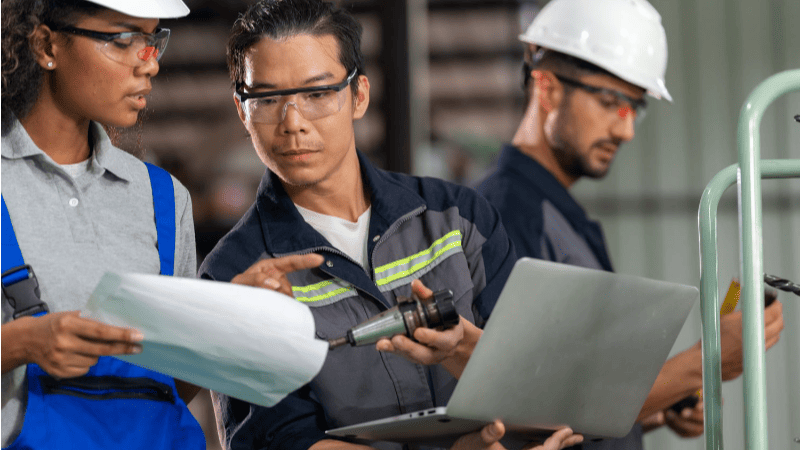
Every manufacturer has a core specialization. Some have devoted themselves to producing tight rotating parts, while others are leaders in medical housings and molds. Strategic outsourcing lets the engineers do what counts and what they do best.
It enables clarity and focus for decision-makers who sit at the top. The engineers are solving problems daily, and they develop a deep understanding. That's when cycle times can be expected to go through the floor.
Scrap rates drop to new lows, and creativity makes a reappearance. It's the outsourcing that effectively maintains the environment. It always filters out noise, so the organization grows to what it was naturally built for.
Strategic Advantages
Manufacturers embracing this approach do not merely add capacity. They reconfigure the process by which value moves through the business. Projects are completed faster due to tighter engineering loops, earlier appearance of fixtures, and earlier surfacing of decisions. Teams spend less time waiting and more time building.
Faster Development Cycles
Speed is now a competitive advantage. Customers do not wait for long development paths anymore. Strategic outsourcing removes internal delays. These fixtures appear sooner, prototypes arrive faster, and engineering loops tighten.
The real gain here is not just getting parts faster. It's getting decisions faster. With shorter feedback cycles, ideas mature rapidly, and projects stay ahead of schedule without burning internal teams.
Scalable Capacity Without Heavy Spending
Growth should not be dependent on adding buildings, inspectors, or debt. The outsourcing environment becomes clear as a scale model that allows for growth in capacity without an associated financial burden. It behaves more like software that is agile and iterative, rather than like steel equipment you must buy longer before it starts to return any income.
This takes away the stress of timing investments. Instead of betting on demands years in advance, manufacturers scale on their own time, not when they are forced to. It is a protection against uncertainty and a vehicle for disciplined expansion.
More Consistent Quality
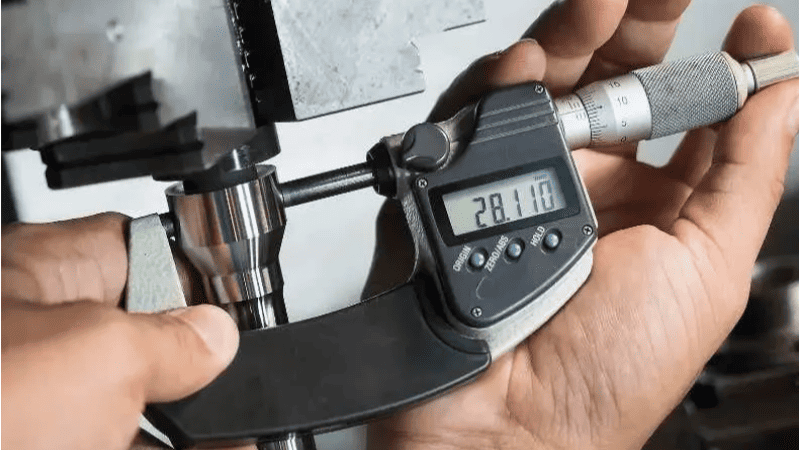
Качество is not dependent on locality or ownership. It arises through documented setups, approved tolerances, and controlled inspection workflows. A good outsourcing partner will always provide structure and will therefore enhance consistency instead of lessening it.
Good partners create mutual discipline. They reveal the gaps in your company that you are not aware of. Fixturing habits, inspection cycles, or assumptions about surface finish call for greater practice over time for your own internal company.
Misconceptions That Slow Adoption
Manufacturers often hesitate to outsource because old beliefs still get in the way. The most common one is that work outside the building is of lower quality. In reality, quality comes from good standards, not zip codes. Ownership does not guarantee control; discipline does.
The second misunderstanding is that hiring out will weaken in-house capabilities. Engineers cooperate with external teams and hence gather internal knowledge. Teams cannot handle every task, so they must optimize the ones that count.
Outsourcing ≠ Lower Quality
The myths surrounding this industry are huge. People think outsourcing incurs a compromising quality. My experience shows that quality follows discipline. Alliance partners exceed internal processes. Strategic partners are preferred due to their standards rather than pricing.
The question is not about whether it is 'inside.' The right question is: Is it controlled? Geography stops being of value when the criteria become clear and the flows are repeatable.
Control Comes from Standards, Not Ownership
Many factories believe that control only exists when parts are within their walls. Control comes from engineering clarity, drawings, tolerances, reports, and communication loops, not from physical proximity. Ownership feels safe, but documented expectations create safety. Distance becomes irrelevant when specifications are clear.
External Capacity Strengthens Internal Teams
Outsourcing does not weaken the internal competence; it refines it. Engineers learn tooling philosophies, coatings, and smarter setups through collaboration. There is mutual knowledge flow.
Internal teams will evolve from constantly putting out fires to actually doing real engineering over time. Once they have reliable engineering partners, improvements start immediately. That mentality builds capability faster than any machine ever could.
How Leading Industries Apply This Strategy
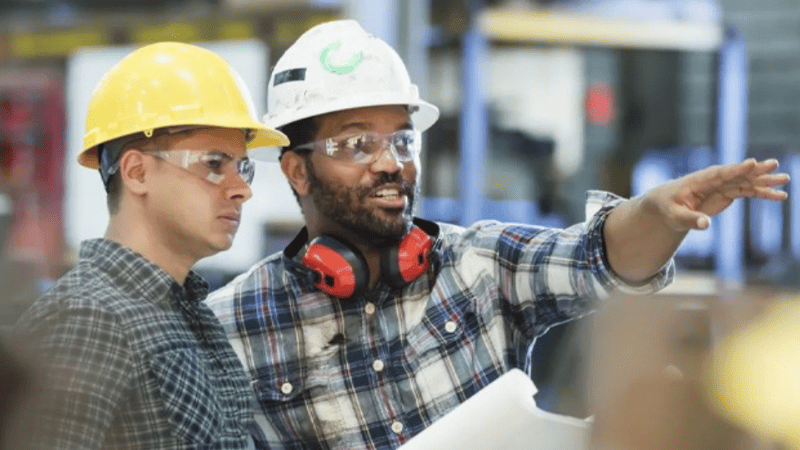
Some industries adopted strategic outsourcing long before others realized it was an option. External capacity gives them scalability without risking compliance.
MedTech and Aerospace Use Documented, Reliable Partners
These sectors cannot risk capacity failures. Traceability, certifications, and documented workflows are survival requirements. For them, outsourcing isn’t cost-driven. It ensures compliance and reduces exposure.
The right partner becomes an extension of their audit trail. It’s not a vendor relationship. It is shared responsibility with measurable outcomes.
UAVs, Robotics, and Semiconductor Rely on Fast Engineering Cycles
Refinement has sped up in these industries. Weekly designs and internal retooling for every single change prove inefficiency. Outsourcing would be the case for flexible engineering cycles.
In these environments, sensitivity is wealth. The benefit is not the by-product, but the ability to adjust without having to rebuild the infrastructure.
Many Tier-2 Companies use DEK as Quiet External Capacity
Many of the collaborative partnerships have never been advertised on marketing brochures. Most often, tier-2 companies will quietly use performance to speak for itself instead of publicity with their external capacities. Although the end customer may receive parts, the source remains invisible.
Competitive advantages are not advertised to the world. For this purpose, companies have to protect their own proprietary mechanisms instead of advertising.
How to Implement Strategic Outsourcing

Implementation does not begin with a purchase order. It begins with an understanding of what slows your internal systems. Identify the work that often disrupts your testing fixtures, or activities that deploy engineering hours with little contribution to core production.
These are suitable for strategic outsourcing. Once identified, the communication shifts from commercial to technical. At that moment, outsourcing ceases to be a gamble and becomes a well-regulated extension of your operation.
Start With Non-Core or Variable Components
The prototype brackets can be tested with structures to have lower volumes for production revision. Components are frequently changed. It is not in presentations that trust is built. It is in performance. Gradually, more critical work can be transferred over with little trepidation, as processes, quality, and communication are already in place.
Establish Engineer-to-Engineer Communication
When you set tolerances, you are literally setting expectations with measurable clarity and an inspection workflow. Engineers who communicate earlier eliminate errors before they hit the machine.
Build a Hybrid Model
In the future, factories won’t choose between in-house and subcontracting, as they will use both. In-house handle superior, high-value, stable work. On the other hand, external partners handle instability. This hybrid technique decreases emotional judgment, and changes in the market become manageable instead of overwhelming.
Резюме
A factory’s advantage is no longer having the most machines. It is about knowing when not to use them. Strategic outsourcing is not a shortcut; it is a shift in mindset. Manufacturers that choose performance over ownership, and teamwork over working alone, will drive the next decade of manufacturing growth. Свяжитесь с нами now to get a quote.
