
Rake Angle Guide for Machining
Rake angle is utilized in precision machining to control the formation of the chips. This is our most important lever for diminishing cutting resistance and preventing built-up edges. By changing this slope, we can smoothly direct the heat away from the product.
To ensure the production is consistent, we must balance this orientation. By mastering the rake angle, we can achieve optimal shear strain and ensure the stability and predictability of each pass on the shop floor.
What is Rake Angle?
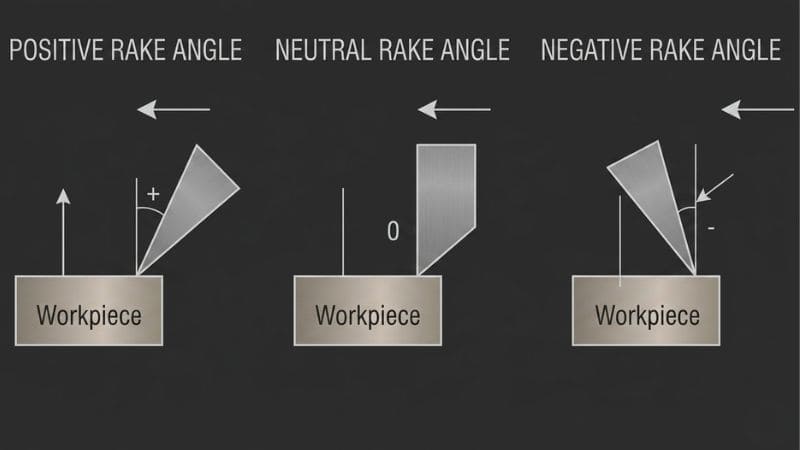
The rake angle refers to the angle produced between the rake face and a line perpendicular to the workpiece at the cutting point. Rake face is the top surface of the tool. This angle is very significant as it influences the cutting force and the life of the tool.
The positive one contains a sharper edge that aids in reducing friction and energy. A negative rake angle strengthens a tool through insert contact pressure directed toward the insert body. This is excellent for tough alloys and non-linear cuts.
Why is Rake Angle Critical in Machining?
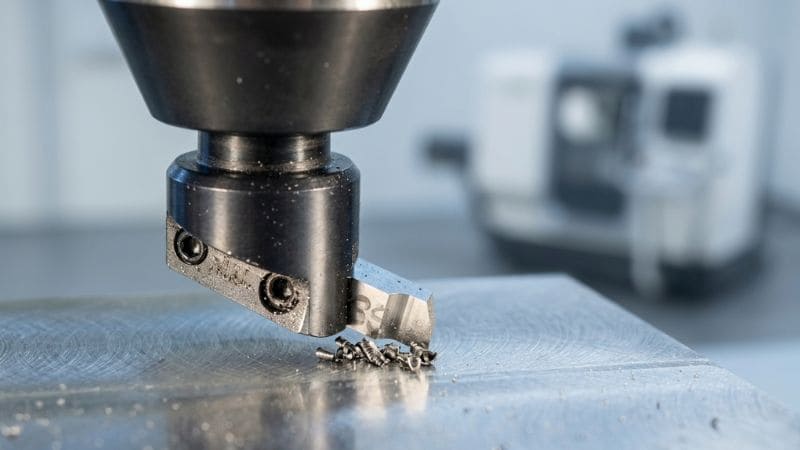
We consider rake angle as the basic regulator of cutting force. When the angle is very shallow, we get too much friction and "plowing" instead of clean shearing. This raises the temperature at the tool-chip interface. On the other hand, widening the angle results in a thinner tool tip, causing it to break prematurely under load.
Besides tool life, this shape governs the surface integrity of the component produced. Adjusting a cutting tool's rake angle helps to regulate the shear strain. This ensures that materials do not tear or work-harden. This is essential when we are bound to tight tolerances and high-grade finishes. The difference lies between a stable and predictable process versus vibration and unpredictable tool malfunction.
Types of Rake Angles
Positive Rake Angle
A positive rake angle makes a sharp, wedge-like shape by sloping away from the cutting edge. By reducing the contact area, this design cuts down on cutting forces and energy use. This helps keep heat from building up and work-hardening. It is great for getting smooth finishes on metals that can bend, like aluminum. The thinner tool tip, on the other hand, is less durable, has trouble getting rid of heat at high speeds, and is more likely to chip if the setup isn't sturdy.
Neutral Rake Angle
In a neutral setup, the rake face is at a right angle to the cutting direction. This is a common setup for threading and forming. This shape cuts in a predictable way and is easier to make or regrind than angles that are hard to understand. It makes more friction, but it gives the edge more strength than a positive angle. Built-Up Edge (BUE) can happen when there is too much pressure, which can eventually ruin the surface finish of the workpiece.
Negative Rake Angle
When the rake angle is negative, it leans toward the cutting edge to make a strong, blunt wedge. For heavy-duty jobs, this is the most reliable setup because it redirects cutting forces into the tool body and machine spindle for the best stability. It is important for interrupted cuts and for working with hard steels and fragile materials like ceramics. The trade-off is that the "plowing" action needs powerful machines to get through a lot of resistance and heat, which often makes the surface finish rougher.
How to Get Rake Angle in a Cutting Tool
Integrated Geometry
The rake angle is often built into the pocket of the tool holder for indexable inserts. The insert's molded shape and the holder's lead and inclination angles work together to create the effective rake.
Измерение
You can use special tools like an optical comparator or a toolmaker's microscope to measure the slope of the rake face against a vertical datum.
Aligning the Machine
The height of the tool in relation to the centerline of the workpiece is very important on a lathe. When you set the tool above center on an OD (outer diameter) turn, it accidentally increases the effective rake, making the cut more aggressive but less stable.
What’s the Difference Between Rake Angle and Clearance Angle?
| Angle Type | Функция | Расположение | Key Consequences |
| Rake Angle | Governs the chip, manages the shear, determines pressure to separate material | Top/face of the tool | Controls what enters the cutting area; increasing it reduces the tool's cross-section and heat dissipation. |
| Clearance Angle | Acts as a friction guard to prevent the tool body from contacting the finished surface. | The side or flank of the tool (relief angle). | Prevents galling or burnishing; increasing it also thins the tool's cross-section, hindering heat dissipation. |
Factors Influencing Rake Angle Selection for Machining Projects
Cutting Speed and Feed Rate
Thermal energy is driven by velocity and chip load. The tool-chip interface generates heat rapidly at high cutting speeds. We frequently opt for a more affirmative perspective to alleviate friction and decrease that temperature. As the feed rate increases, the resultant chip thickness increases, and thus, pressure on the tool face increases.
Tool Material and Strength
Due to the physical properties of our tooling, our geometries are limited. High-speed steel possesses the toughness necessary to withstand very sharp, positive rake angles without snapping. CBN, ceramics, and carbides are harder but much more brittle. When a ceramic insert is ground down to a steep positive angle, it will probably break down.
Workpiece Material
Major factor is the ductility of the substrate. When it comes to soft, gummy materials like aluminum or copper, a high rake angle is required to ensure that there is no built-up edge (BUE) and that the chip is peeled away cleanly. When we use hardened steels, superalloys, or cast iron, the strength of the material in shear is much greater.
Machine Rigidity and Setup
If the setup is springy, even a sharp tool is of no use. For those applications where we have long overhangs or thin-walled parts, the rake should be positive to reduce the cutting forces leading to deflection and chatter.
Surface Finish Requirements
The sharper edge cuts the material more cleanly, which means less tearing on the surface and less stress left behind. A negative rake tends to plow the material, which can make the surface harder by work-hardening, but it usually leaves a rougher, duller finish.
Where is Rake Angle Commonly Used?
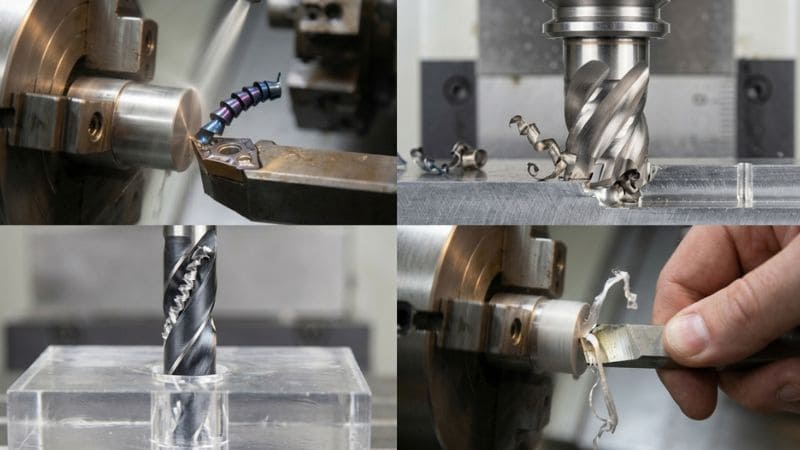
CNC Turning: Used in high-volume operations to manage heat during continuous cutting.
Фрезерование: Determines how the tool responds to the initial impact as it repeatedly enters and exits the material.
Бурение: Defined by the bit's helix, which facilitates chip removal from deep holes.
Broaching and Sawing: Ensures each tooth bites consistently to prevent clogging.
Manual Machining: Custom-ground bits are used on plastics and aerospace alloys to prevent the material from "gumming up" or sticking to the tool.
Impact of Rake Angle on Key Machining Outcomes
Cutting Force and Machine Load
The rake angle allows us to directly control the amount of power we use for cutting. The application of a positive angle lessens the shear area, thus greatly decreasing tangential and radial cutting forces. This decreases the pressure on the axis motors and spindle of the machine.
In contrast, a negative angle accentuates resistance forces, necessitating the application of stronger torque with an enhanced apparatus.
Chip Flow and Removal
The material's exit strategy is dictated by this geometry. When the rake angle of cutting tools is properly selected, chips curl and break away from the job surface. When the angle becomes too flat or negative for a ductile material, there is a risk of “bird-nesting.”
This occurs when long, stringy chips wrap around the tool or part. The rake sharpness helps obtain a tighter chip curl. This helps evacuate the chips in deep-hole drilling or heavy milling.
Surface Finish and Accuracy
The cleanliness of the shearing that is accomplished by the tool, which the work ought to have, depends upon surface integrity. High values of positive rake minimize the plowing effect and give a good finish with low burr formation.
When the rake is too aggressive for the setup, accuracy can suffer; a very sharp tool can “suck” into the work, causing dimensional errors.
Heat and Friction Control
The friction between the tool and the chip is the main source of heat in machining. With a positive rake angle, the contact length between the chip and the tool face reduces, which minimizes the thermal load.
When the shapes are negative, the temperature increases due to a much larger contact area.
Tool Life and Productivity
There is a direct relationship between an insert's posture and its rake angle. A positive rake reduces heat, thus improving the life of soft and thin materials, but may chip in hard alloys.
While a negative rake can generate additional heat, its enhanced durability allows us to exert significantly greater force on the tool and work at faster speeds in harder operations.
What are the Machines and Tools Required for Rake Angle Machining?
CNC Lathes with Tool Turrets
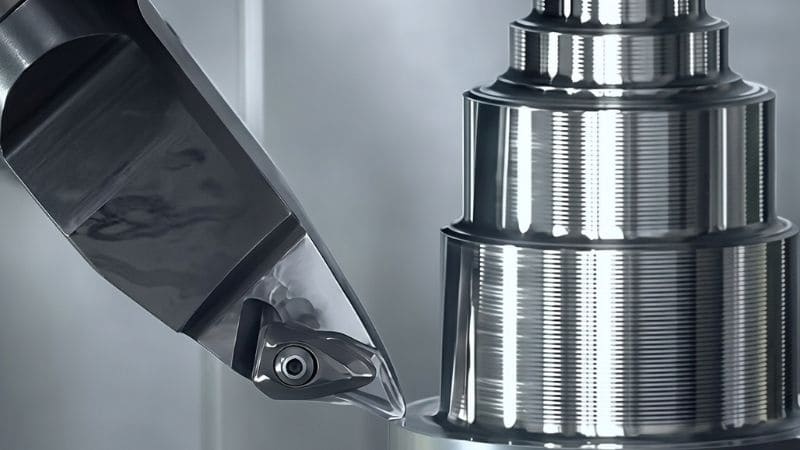
Through these machines, the effective rake can be controlled by changing the centerline height. Use rigid turrets to hold indexable holders at specific angles. Because the pocket of the holder very often dictates the static angle, it is the alignment on the lathe that makes sure the tool interacts with the diameter as designed.
Drill Bit Grinders
To keep the rake angle on cutting tools such as twist drills, specialized grinders are needed. Welded tools are manufactured in heavy-duty machines to ensure the flute helix (rake) is consistent on the cutting lip. Without this accuracy, we can see an uneven chip evacuation and “walking” during entry.
Vertical and Horizontal Milling Centers
The orientation of the insert within the cutter body generates the rake in milling. Horizontal machining centers typically take care of larger, heavier negative-rake face mills for maximum metal removal. Vertical centers provide the agility for high-positive finishing passes.
Metal-Cutting Band Saws
Tooth geometry matters even in basic cutoff operations. Saws for hard alloys have a negative rake to prevent stripping the teeth, while wood or soft-metal blades that have a positive hook clear the chips quickly.
Profile Grinders
They are used for custom tool manufacture and regrinding. The rake face can be accurately positioned at the desired angle so that the rake angle measurement fulfills the shear requirements of a special alloy.
Laser Edging Systems
For ultra-hard materials like PCD or CBN, conventional шлифование is usually inadequate. By ablating the material with our laser systems, we are able to generate sophisticated chip-breaker geometries and precise rake angles that cannot be manufactured using mechanical wheels. This will keep the edge sharp without causing the micro-cracking found in thermic grinding.
Table Highlights for Different Materials
| Материал | Rake Angle | Geometry Preference | Назначение |
| Aluminum and Alloys | +15° to 30° | High Positive | Prevents BUE/galling |
| Brass and Bronze | 0° to -5° | Neutral/Negative | Prevents tool from digging into soft material |
| Чугун | 0° to +5° | Neutral | High abrasion resistance |
| Закаленная сталь | 0° to -10° | Negative | Tool protection from high-impact forces |
| Низкоуглеродистая сталь | +10° to +15° | Positive | Balanced chip flow |
| Нержавеющая сталь | +5° to +10° | Positive | Reduced friction heat/work-hardening |
| Титановые сплавы | 0° to +10° | Positive | Minimized chemical reactivity/tip heat |
Practical Tips for Choosing the Right Rake Angle
Evaluate The Ductility Of The Material
To see if it is soft and stick like 6061 Алюминий, use a positive rake. If the item is brittle or hardened, go negative to protect the edge.
Assess Your Rigidity
If your setup has a long overhang or the workpiece is thin, use a positive angle. Doing this limits cutting forces and prevents chatter. Use negative rake on stiff, powerful setups.
Chip Monitoring
If the chips are long and stringy, increase the positive rake to promote better curling. If your tool is chipping or “sparking” while you work on the rake, it may be too sharp. Try a more neutral/negative orientation.
Observe the Centerline
Turn down a токарный станок to change the rake of the tool. By placing the tool slightly above center, rake will increase, but clearance will reduce, and always check rake angle measurement after changing the tool.
Choose The Right Tool Material
Don’t give a steep positive rake to a ceramic or extremely brittle carbide insert. Since the materials benefit from compression, stick to negative or neutral geometries to prevent disastrous tool breaking.
Заключение
Finding an optimal rake angle is a balancing act between edge strength and cutting efficiency. By learning this geometry, we will reduce the mechanical stress and prolong the life of our tooling. Tuning remains our main adjustment lever for improving process stability, whether for achieving a mirror finish or bulk material removal.
Just like machining, finding a partner that delivers precision is everything. Связаться с компанией DEK today for expert advice and quality results to help with your next project.
