

Over the years, I’ve learnt that manufacturing market experience cannot be overlooked if success is to be achieved. But beyond that, factories need to accept AI technology to build efficiency. When human expertise begins to appreciate AI, real change comes.
While many shops today haven’t fully accepted this trend, many thriving shops are already integrating AI into their systems. From engineering to QC and production, AI offers a lot.
It helps detect issues earlier by studying and analysing data. It simplifies complex workflows, help team make better decisions, and generates consistent quality results.
In short, it assists many factories in meeting the ever-increasing demand of customers, thereby generating more revenue.
With AI integrated system, the structure and processes become more balanced and effective. In this blog, I'll elaborate further on how AI is redefining the manufacturing market.
Why Manufacturing Is the Perfect Ground for AI Transformation
The manufacturing market requires complex workflows and systems across engineering, QC, and production. AI-automated structures help simplify processes, meet rising customer demand, and improve efficiency.
Complex workflows with many repetitive decisions
Manufacturing market makes repetitive decisions every day for a smooth workflow. The engineer goes through the drawing. Quality control inspects parts and decides how they should be done.
Machining set up follows the same procedure. AI becomes perfect here, as it can easily analyse patterns and derive simple logic that makes work faster and more efficient.
High variability between jobs, people, and processes
The high variability between jobs, people, and processes also makes AI important in the manufacturing market. While one job could require extremely tight tolerances, another is specific about the material used.
Presence of different machinists and programmers also brings forth varying results. AI can analyze patterns, materials, the machines used, and associated risks to provide the best recommendation.
Rising pressure on delivery, cost, and labor efficiency
Customers demand a relatively fair price with fast delivery. Finding new talent is difficult, and even managing the current ones isn’t easy.
Relying entirely on the few available experts is a risk in itself. And this is where AI comes in. With it, shops can distribute knowledge, make better decisions without overworking the available professionals, and meet customer demand.
Where AI Is Already Creating Immediate Impact
Many thriving shops are already incorporating AI into certain aspects of their workflows. From programming to scheduling and quality management, AI improves work efficiency.
Automated drawing checks and tolerance validation
I’ve seen many shop inculcate AI at the drawing stage for review. AI can detect extremely tight tolerances and features that might be difficult to produce even before programming begins. This eliminates delay, rework, and unnecessary cost.
Smarter scheduling that adjusts to real-time shop conditions
Over the years, I have come to understand that many shops follow processes based on schedules. While this is quite good, unforeseen issues usually change the narrative.
Machine breakdowns, tool wear, etc., all disrupt processes. AI schedules, on the other hand, study the current work conditions and help experts adjust to meet deadlines.
CAM assistance that reduces programmer variation
Different programmers can work on the same component and still deliver varying results. This leads to inconsistencies in the machined part, varying machining cycles, and increased risk.
With AI-assisted CAM tools, programmers can identify the optimal feeds, speeds, and tool paths based on past success. This reduces variation while delivering quality output.
Early detection of quality drift before scrap occurs
When shops appreciate AI systems, they are bound to detect quality shifts early. AI can easily evaluate processes and detect flaws that could lead to actual issues later.
When an inspection process or programming procedure begins to fail, AI notifies the team before it becomes a real problem.
The Shifts AI Is Creating Inside Engineering Teams
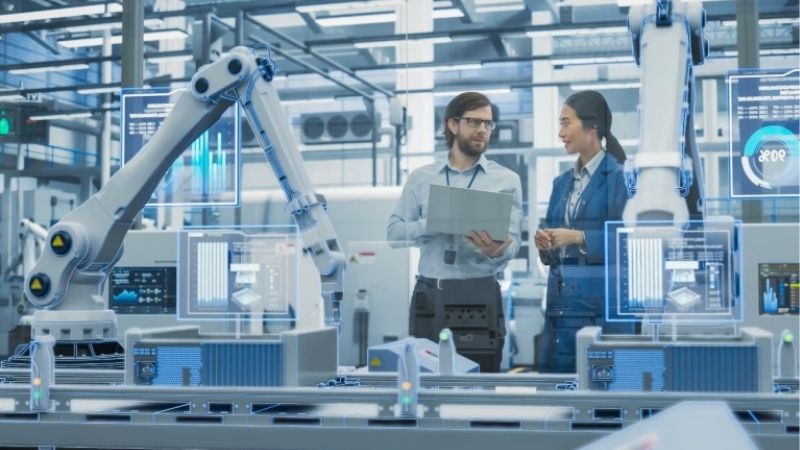
The engineering teams aren’t left behind. Beyond eliminating engineering errors, AI enhances DFM feedback and supports knowledge distribution and communication, benefiting engineers.
Engineers spend less time on manual corrections
Engineers spend a lot of time making corrections that can be avoided. Tolerances are adjusted over and over.
Drawings are analyzed, and design for manufacturability is consistently checked. With AI engineering systems, professionals focus on the real job as AI reduces the need for corrections.
Faster DFM feedback and feasibility evaluation
Many shops wait for DFM feedback from top-level engineers, who are usually busy. AI systems help analyse design feasibility even at the early stage of development, during quoting or early review. This makes decision-making faster and eliminates late design changes.
Junior engineers gain senior-level support through AI recommendations
As companies include AI into their processes, AI learns what works. Based on that, a junior-level engineer receives senior-level guidance, knowledge, and support from AI, following practices that have worked in the past. This improves knowledge distribution while reducing overdependence on a few experts.
Cross-functional communication becomes more data-driven
When AI is added to the system, conversations and information sharing become data-driven rather than being mere opinions.
Engineering, machining, and quality control are on the same page because they share the same data, making decision-making easier and evidence-based.
How AI Is Changing Production and QC

AI is changing how the Production and QC teams carry out their operations. From detecting potential issues to enhancing planning and documentation and improving consistency, there is a lot to expect.
Predictive insights on tool wear, machine behavior, and setup risk
At the production level, AI helps detect potential risk early from machine behaviour and set up risk to tool wear.
It evaluates the materials and machines used, milling conditions, and so on, to detect any flaws or errors. Teams then work based on this to prevent risk.
Automated inspection planning and documentation
Rather than relying too heavily on individual output for inspection control, Al now helps analyse critical features and tolerances, and potential QC risks.
Beyond that, it can be automated to streamline inspection planning and documentation, enhancing efficiency and consistency.
Real-time alerts reducing rework and late-stage surprises
AI detects errors early and alerts teams before they become real problems. It observes when tolerance specifications aren’t met or when processes begin to shift. This helps reduce rework and scrap work and prevents late delivery.
More consistent setups, even with multiple shifts or new operators
With multiple operators and work shifts, there are likely to be variations in setup. However, with an AI-inclined system, the setup maintains consistency since AI provides guidance. This ultimately improves repeatability and quality of outputs.
The Organizational Changes Manufacturers Must Prepare For
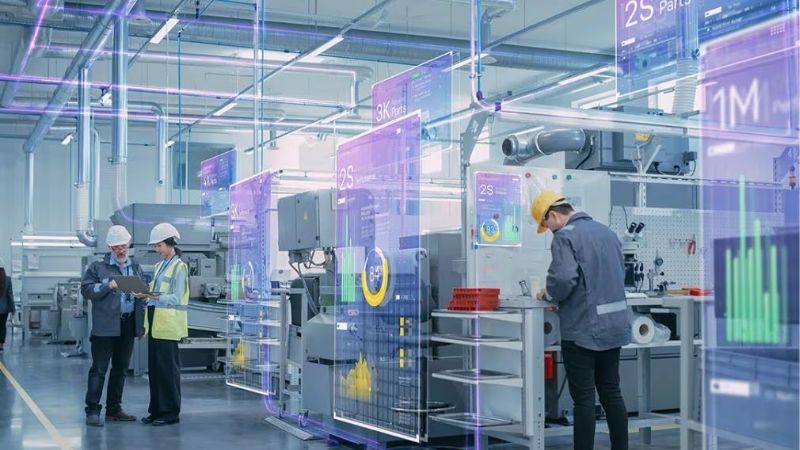
When AI is used, there are bound to be changes that many shops aren’t ready for. Shops that consistently appreciate AI and achieve great results with it are the ones that understand how it really works.
Clear workflows so AI can support, not add chaos
AI works based on structure. With a clear workflow, AI supports the system in improving processes and yielding more output.
When the structure itself lacks discipline and is disorganized, generating results even with AI becomes difficult.
It adds more chaos rather than improving systems. And as Shigeo Shingo noted, “technology without discipline is wasted investment”.
Teams trained to interpret AI guidance, not blindly follow it
From experience, I’ve seen many thriving shops today improve systems with AI. These shops understand the logic behind its usage.
Teams are trained to interpret whatever recommendations AI gives. They question its output when needed and do not blindly follow it. Finding a balance between human judgment and AI suggestions gives more positive results.
Leadership shifting from firefighting → system design
As AI prevents potential risks and firefighting, systems begin to change. Less time is spent on fixing issues while leaders focus more on building systems that work. And this is how thriving shops continue to succeed.
Culture moving toward transparency, metrics, and continuous improvement
With AI systems, performance and areas of weakness become visible. Metrics are clear, and companies must be willing to use them for continuous improvement. Companies can easily identify processes that are working and those that require adjustment.
What I’ve Observed Across Shops Adopting AI

Over the years, I’ve observed that shops that adopt AI follow a similar pattern. They all have an organized system, value highly varied projects, and aren’t afraid to leverage AI to analyze their weaknesses.
Shops with mature processes see the fastest gains
Shops with an organized system and standards see results faster. These are shops with effective Quality control processes, production setups, documentation, and planning and communication strategies. They already have a working structure that AI builds on.
High-variation environments benefit more than high-volume ones
High-volume production shops focus more on repeatability and consistency, and they are optimized for this. Shops with low- to medium-volume orders and varied projects benefit more from AI.
Every job is unique, and this is where the challenge lies. AI helps analyse these challenges, improves decision-making, and production efficiency.
AI exposes process weaknesses that were previously invisible
With AI, companies begin to see where the real issues are. They know their strength and weaknesses. It's easy for humans to make guesses and give opinions without concrete evidence.
AI studies and analyzes data and pinpoints patterns that lead to issues. Weak quoting, ineffective setup, and inspection become visible.
At DEK, integrating AI into engineering reduced ECO cycles and improved first-pass yield significantly
Integrating AI into our engineering system didn’t replace human effort; it enhanced it. From earlier risk detection to clearer drawing reviews, AI helped reduce ECO cycles while improving first-pass yield, making engineering and production flow more smoothly.
Why AI Will Redefine Competitiveness in the Next Decade

In years to come, the result will be glaring. AI-automated shops will remain the most competitive in the industry, while traditional shops will continue to strive.
Customers will expect faster turnaround and fewer surprises
Customers won’t only focus on fast turnaround times, but they’ll also demand a stable system with consistent quality and precision, on-time delivery, and no delays.
Shops with an AI-integrated system will be able to attain this level of stability and gain customer satisfaction.
Shops with AI-assisted workflows will outpace those relying solely on experience
Human expertise matters in the manufacturing market, but in most cases leads to overdependence on a few professionals.
AI systems help distribute knowledge faster. As such, it's easy to grow teams and deliver consistent quality results when everyone combines human experience with AI guidance.
Supply chains will favor consistent, data-driven manufacturing partners
The best supplier won’t be only those that deliver quality or the best price, but consistency will begin to matter.
Customers will begin to focus on data-driven manufacturing market partners that can deliver the same excellent outcomes over time. And this is evident in Andrew Liveris's saying: “Manufacturing competitiveness is built on consistency, not cost alone.”
The gap between modern and traditional factories will accelerate every year
While many modern, thriving factories continue to appreciate AI and incorporate it into their systems, many traditional shops are still stuck with accepting the new technology.
And the result is that these modern shops will continue to grow year in, year out, leaving behind the traditional shops.
My Perspective
Although many factories today have not yet integrated AI into their systems, the truth remains that we can never underestimate the importance of AI in manufacturing market workflows.
I’ve seen shops invest in sophisticated machines, improved fixtures, and employee training, and even at that, still make mistakes that are discovered during inspection or after delivery.
And this is where AI can come in. It can help detect errors early, study and analyse data to suggest what works.
When human input is integrated with AI guidance, then immense growth happens. Workflow becomes balanced, and processes are improved, and this is what differentiates thriving shops from striving ones.
